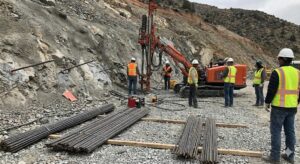
Are you tired of losing drill holes to collapsing soil and wasting hours on casing? This downtime kills your project budget and puts your crew at risk every single day.
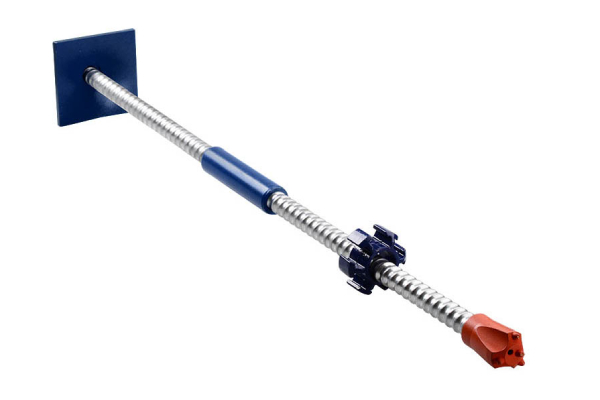
A Self-Drilling Anchor (SDA) is a specialized bolting system that uses a hollow threaded bar to drill, install, and grout in one continuous operation. It eliminates the need for casing in unstable ground by keeping the reinforcement bar in the hole from start to finish.
I have spent many years on sites where the ground felt like it was made of loose sand and broken glass. We used to spend three days doing a job that should take one. Then I saw how an SDA system works. It changed my whole approach to geotechnical engineering. If you want to stop fighting the ground and start controlling it, you need to understand how this tool works. I will explain the mechanics, the parts, and the field secrets that make this system the industry standard for tough ground.
How Does the Unique Structure of an SDA Bar Prevent Hole Collapse?
Standard drilling fails when the soil is too loose to hold its shape after you pull the drill bit out. You end up with a blocked hole and a useless bolt.
The SDA bar acts as the drill string and the final reinforcement simultaneously. Because the bar stays in the ground throughout the entire process, the hole never has a chance to collapse or fill with debris before the grout is applied.
The Engineering Behind the Hollow Core
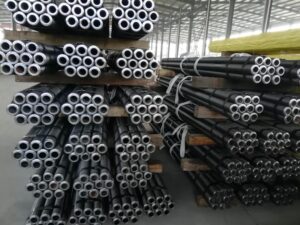
I often get asked why we use a hollow bar instead of a solid one. The answer is simple: flow. The hollow center of the bar is a high-speed highway for air, water, and grout. When I am drilling into fractured rock, I pump water or air through that center hole. This flushes the rock chips out of the way. If the chips stay in the hole, the bit gets stuck. The hollow bar makes sure the path is always clear.
The steel we use is also very special. We use high-strength carbon steel that goes through a cold-rolling process. This creates a continuous thread over the entire length of the bar. Why does this matter to you? It means you can cut the bar at any point and still use a coupler or a nut. On a busy site, you never have the exact length you need. With an SDA bar, I can just cut it or join two bars together in seconds. It is like having a modular building block for ground support.
Physical Properties of Standard SDA Bars
| Bar Type | Outer Diameter (mm) | Inner Diameter (mm) | Ultimate Load (kN) | Thread Direction |
|---|---|---|---|---|
| R25 | 25 | 14 | 200 | Left Hand |
| R32 | 32 | 18.5 - 22 | 210 - 360 | Left Hand |
| R38 | 38 | 19 - 21 | 500 | Left Hand |
| R51 | 51 | 26 - 33 | 550 - 800 | Left Hand |
| T76 | 76 | 45 - 51 | 1200 - 1900 | Right Hand |
Why This Structure Saves You Money
When you use a traditional bolt, you have to buy the drill rod, the bit, the casing, and the bolt itself. That is four different pieces of steel. With my SDA system, you only buy the bar and the bit. You save money on shipping. You save money on storage. Most importantly, you save time. On a highway project last year, we saved about 40% on labor costs just by switching to this "all-in-one" structure. Your drill rig also works less hard, which means fewer repairs.
Why is the Grout-to-Soil Bond the Real Secret to SDA Load Capacity?
A bolt is only as good as its grip on the ground. If the grout does not fill the voids, the bolt will pull right out under pressure.
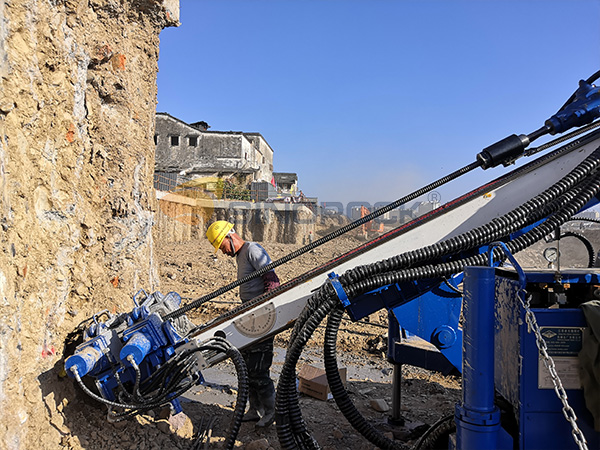
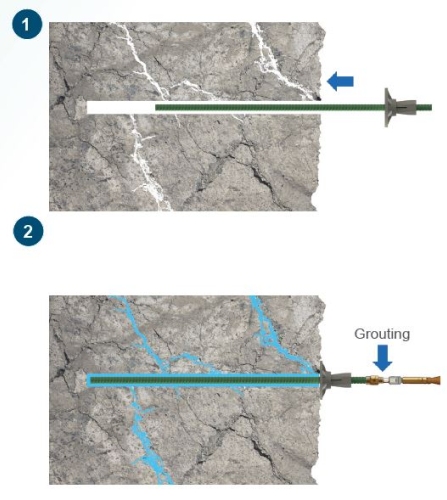
The SDA system uses "simultaneous grouting" to create a massive bond. As you drill, grout is pumped through the bit and forced into every crack and pore in the surrounding soil, creating a reinforced "root" structure.
The "Drill-and-Grout" Method Explained
In my experience, the biggest mistake people make is waiting until the end to grout. With an SDA, you grout while the bit is still turning. This is what we call "dynamic grouting." The rotation of the bit mixes the grout with the loose soil. It creates a composite material that is much stronger than just steel or soil alone. It is like turning the earth into a solid block of concrete.
The pressure from the grout pump is also a key factor. When I see the grout coming back out of the top of the hole, I know the hole is full. This "return flow" is your guarantee that there are no air pockets. Air pockets are where rust starts and where bolts fail. By forcing the grout in under pressure, you ensure that the entire length of the bar is protected and bonded.
Grout Mix Requirements for Maximum Strength
| Property | Requirement | Why it matters |
|---|---|---|
| Water/Cement Ratio | 0.40 to 0.50 | Ensures flow without losing strength |
| Cement Type | Portland Cement (Type I/II) | Standard strength and availability |
| Grout Pressure | 5 to 20 bar | Forces grout into soil pores |
| Curing Time | 24 - 48 hours | Reaches design load capacity |
The "Root" Effect in Loose Soil
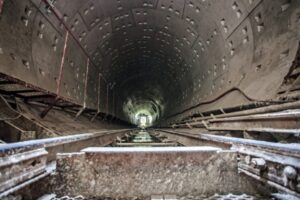
Imagine a tree root growing into the ground. It is not just a straight stick; it has tiny hairs that grab the dirt. The SDA bit has flushing holes that act like these hairs. The grout sprays out at high speed and fills the tiny cracks in the rock. This creates "mechanical interlock." When the wind blows or the slope shifts, the anchor holds because it is part of the ground, not just sitting in it. This is why I trust SDA bolts for bridge foundations and heavy tunnel roofs.
How Do You Pick the Right Drill Bit for Different Soil Conditions?
If you use a bit meant for soft clay in hard granite, you will destroy your equipment in minutes. If you use a rock bit in sticky clay, the hole will clog.
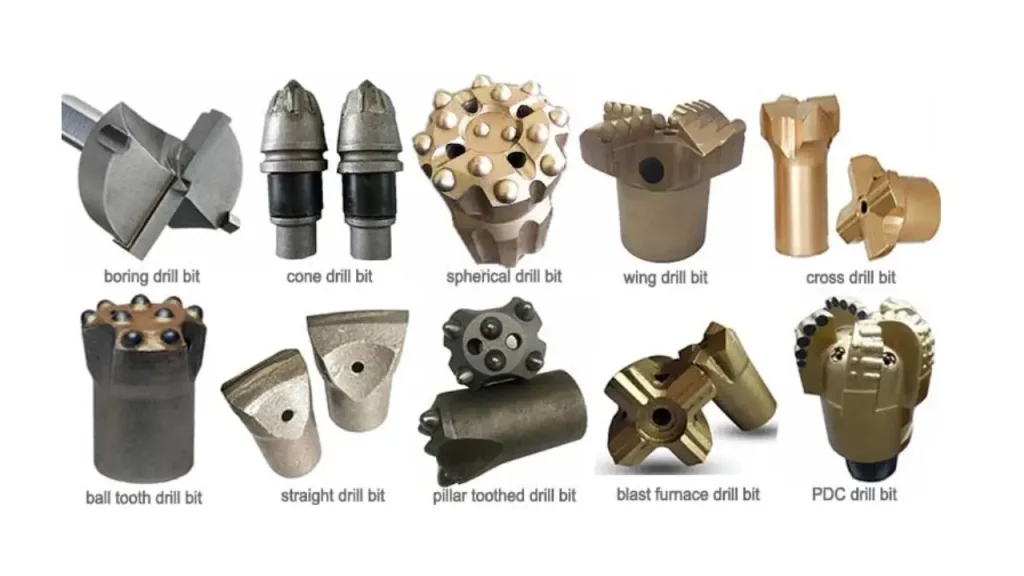
Selecting the right SDA bit requires matching the bit material and shape to the hardness and abrasiveness of the ground. Hardened steel cross bits work for soil, while tungsten carbide button bits are necessary for hard rock.
The Science of Bit Geometry
I have worked on projects where we went through fifty bits in a week because the contractor tried to save money on cheap steel. That is a bad move. For hard rock, you need "Button Bits." These have small, round tungsten inserts that shatter the rock into tiny pieces. For softer ground, like gravel or weathered rock, I prefer "Cross Bits." They have a sharp edge that cuts through the material like a knife.
You also have to look at the flushing holes. If you are in "sticky" ground like clay, you need large holes so the mud can get out. If the holes are too small, the mud packs in tight. Then the pressure builds up, and your grout pump might even blow a hose. I always tell my team to check the bit every few meters to make sure the holes are clear.
Comparison Table of Common SDA Bits
| Bit Type | Abbreviation | Material | Best For |
|---|---|---|---|
| Hardened Cross Bit | EX | All Steel | Loose soil, sand, soft clay |
| Carbide Cross Bit | EXX | Tungsten Carbide | Medium rock, shale, limestone |
| Carbide Button Bit | EY | Tungsten Carbide | Hard rock, granite, basalt |
| Clay Bit | Clay | Hardened Steel | Heavy clay, silt, cohesive soil |
Protecting Your Drill Rig
The bit is the first point of contact. If the bit is wrong, the vibration goes all the way up the bar and into your expensive drill rig. I have seen hydraulic motors burn out because a bit was dull. By picking the right bit, you keep the penetration rate high. This means less fuel used and less wear and tear on your machine. It is a small part of the system, but it is the part that does all the hard work. Always carry a variety of bits on your truck because the ground can change in an instant.
What are the Main Components that Complete the SDA System?
The hollow bar and the bit are important, but the anchor will fail if you do not use the right hardware at the surface. You need the whole "kit."
A complete SDA system includes the hollow bar, drill bit, coupler, bearing plate, and nut. These parts work together to transfer the load from the unstable ground to the external support structure safely.
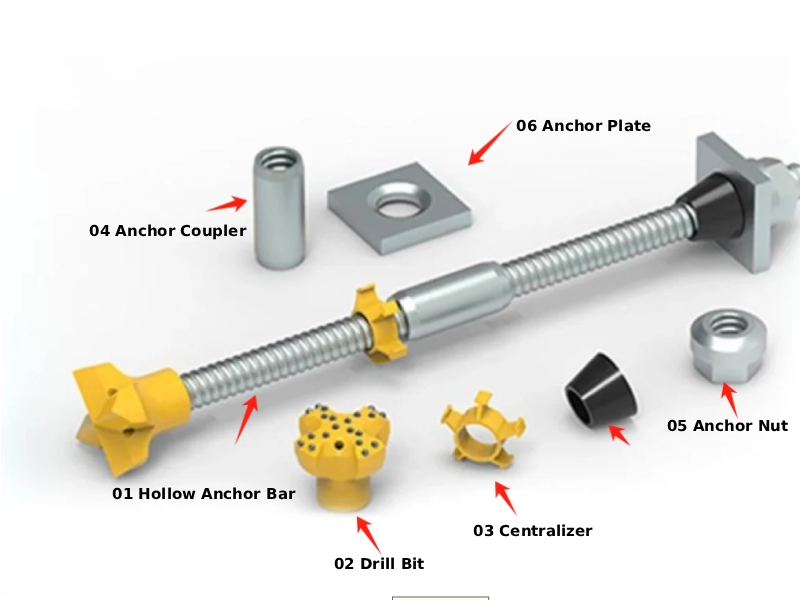
The Role of the Coupler
Most of my projects require anchors longer than 3 or 4 meters. Since bars usually come in these lengths, you have to join them. This is where the coupler comes in. Our couplers are designed with a "middle stop." This ensures that both bars meet exactly in the center. If they do not meet in the center, the energy from the drill hammer will not transfer correctly. You might even break the threads. I always make sure the coupler is tight before we start the next section of drilling.
Plates and Nuts: The Finishing Touch
Once the bar is in and the grout is dry, you need to "lock" the anchor. We use a bearing plate and a spherical nut. The plate is like a large washer that spreads the force across the surface of the rock. The spherical nut is clever because it can tilt. Most drill holes are not perfectly 90 degrees to the wall. The spherical nut allows for about 10 degrees of movement so the load stays centered. This prevents the bar from bending or snapping at the surface.
System Components Specification
| Part Name | Key Feature | Critical Benefit |
|---|---|---|
| Coupler | Seamless steel | High torque resistance during drilling |
| Bearing Plate | Domed or Flat | Prevents "punching" through the rock face |
| Spherical Nut | Self-aligning | Adjusts for angled drill holes |
| Centralizer | Plastic or Steel | Keeps the bar in the center of the hole |
Why Quality Control Matters
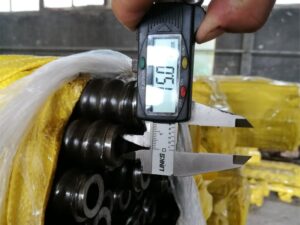
I have seen cheap nuts strip their threads under load. That is a disaster. If a nut fails, the whole anchor is useless. That is why we use forged steel for our accessories. We test every batch to make sure the threads match the bars perfectly. When you are standing under a tunnel roof that is being held up by your anchors, you do not want to worry about the quality of the steel. You want to know it was made to handle the pressure.
How Do SDA Systems Compare to Traditional Rock Bolts in the Real World?
Many engineers stick to what they know, but old methods often cost more in the long run. You have to compare the total installed cost, not just the price of the steel.
SDA systems outperform traditional solid bolts and cased drilling by reducing the number of steps and the amount of equipment needed. They provide a more reliable grout cover, which leads to better long-term safety.
Speed and Efficiency
In a head-to-head race, the SDA wins every time in bad ground. With a traditional bolt, you have to drill the hole, pull the rod, put in the casing, put in the bolt, and then pull the casing out. That is five steps. With an SDA, you drill and grout. That is it. I once did a side-by-side test on a slope stabilization job. The SDA team finished their section three days before the traditional team. That is three days of wages you don't have to pay.
Drilling Equipment Requirements
Another big difference is the rig. To use casing, you usually need a heavy, expensive rig. These machines are hard to move on steep hills or inside tight tunnels. SDAs can be installed with standard top-hammer drills. I have even used small, hand-held drills for SDA installation in tight spots. This flexibility is a huge advantage when you are working in difficult terrain where you cannot get a 20-ton machine.
Comparison Table: SDA vs. Traditional Cased Drilling
| Feature | SDA System | Traditional Cased Drilling |
|---|---|---|
| Installation Steps | 1 (Simultaneous) | 4-5 (Sequential) |
| Equipment Size | Small to Medium | Large / Heavy Duty |
| Ground Condition | Best for unstable/loose | Best for stable rock |
| Grout Quality | High (Pressurized) | Variable (Gravity/Manual) |
| Labor Cost | Lower | Higher |
Long-Term Durability
When I look at a project that has been in the ground for ten years, the SDA anchors usually look better. Because the grout is pumped through the bit, it coats the entire bar. Traditional bolts often have "shadows" or gaps in the grout where the steel is exposed to air and water. Exposed steel rusts. Once it rusts, it loses its strength. The SDA working principle naturally protects the steel better, making it a safer choice for permanent structures like highway retaining walls.
Why is Corrosion Protection Essential for SDA Installations?
Steel and water do not mix. If your project is near the ocean or in acidic soil, your anchors will start to rot the moment they go into the ground.
Corrosion protection for SDAs involves using hot-dip galvanization, epoxy coatings, or double-corrosion protection (DCP) systems. These barriers prevent moisture and chemicals from reaching the steel bar, extending the life of the anchor by decades.
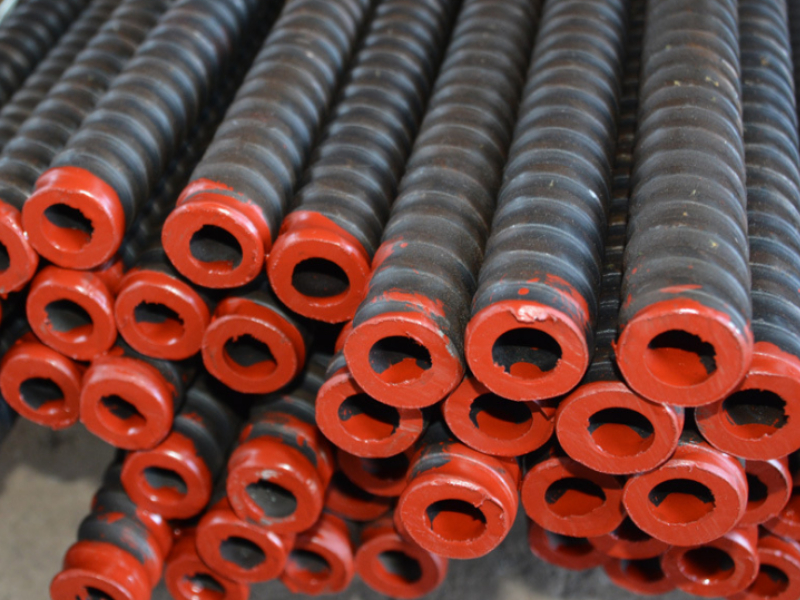
Choosing the Right Coating
I always ask Michael about the environment before we ship the bars. If the site is a dry tunnel, standard black steel might be fine. But if he is working on a sea wall, I insist on hot-dip galvanizing. This is where we dip the steel into molten zinc. The zinc acts as a shield. Even if the bar gets scratched during drilling, the zinc will corrode before the steel does. It is a very tough coating that can handle the friction of the drilling process.
Epoxy coating is another great choice. It is a thick green or grey plastic layer. It is excellent for chemical resistance. However, you have to be careful during installation. If you scrape the epoxy off, you create a weak spot. That is why we also offer "Double Corrosion Protection." This uses a plastic sleeve around the bar. It is the gold standard for projects that need to last 100 years.
Corrosion Protection Methods
| Method | Description | Lifespan Expectancy | Best Use Case |
|---|---|---|---|
| Black Steel | Untreated steel | 5 - 10 years | Temporary support |
| Hot-Dip Galv | Zinc coating | 25 - 50 years | Permanent slopes |
| Epoxy Coating | Powder coating | 50+ years | Highly acidic soil |
| DCP System | Plastic sheath + Grout | 75 - 100 years | Major infrastructure |
The Cost of Failure
I tell my clients that spending an extra 20% on corrosion protection today saves 1,000% on repair costs in the future. Imagine having to re-drill a slope because the bolts snapped due to rust. You would have to remove the old mesh, clear the debris, and start over. It is a nightmare for any project manager. By choosing the right protection level now, you ensure that your work stays standing long after the project is finished.
Conclusion
The SDA working principle is simple but incredibly effective. By combining drilling, installation, and grouting into one step, you solve the biggest headaches in geotechnical work. You save time, reduce labor costs, and get a much stronger bond with the ground. I have seen this technology save projects that were failing due to poor soil conditions. At SDA Rock Bolt, we are dedicated to providing the highest quality bars, bits, and technical support in the industry. Visit us at sdarockbolt.com to see how our systems can make your next project a success.
Would you like me to create a detailed installation guide or a troubleshooting checklist for your field team?