Buyers comparing self drilling anchor bolt 1s from Chinese vs U.S. suppliers face a real dilemma: chase lower prices and risk quality, or pay more and squeeze project margins. Our production line ships both markets, so I see this trade-off daily.
Chinese suppliers of self drilling anchor bolts typically win on upfront price, often quoting US$480–850 per ton, while U.S. suppliers compete on certification, traceability, and shorter lead times. Quality is not determined by country but by the factory's material control, testing, and documentation practices.
The real question is not which country is better CE marking requirements 2. It is which supplier fits your project, risk level, and volume. Let me break down the numbers, the quality factors, and the hidden costs.
How Much Can I Really Save by Sourcing Self Drilling Anchor Bolts from China Instead of the U.S.?
Last quarter, a Chilean tunneling contractor asked me to quote against a North American distributor's offer. The gap surprised even me, so I pulled our export records to compare properly.
Sourcing self drilling anchor bolts from China can cut unit costs significantly, with marketplace pricing running US$480–850 per ton, US$1.45–3.88 per meter, or US$0.99–7 per piece depending on specification. Actual savings depend on volume, material grade, duties, and freight added to the FOB price.
The price spread in the Chinese market is wide. That is the first thing every buyer should understand. A standard hollow bar anchor in carbon steel sits at the low end. A stainless steel version with hot-dipped galvanized couplers sits much higher. Specification drives price more than country of origin does.
What the Real Numbers Look Like
Here is a snapshot of Chinese market pricing pulled from active B2B listings and our own quoting experience:
| Product Type | Typical Chinese Price | Pricing Basis |
|---|---|---|
| Standard self drilling anchor bolts (bulk) | US$480–580/ton | FOB |
| Mid-tier engineered anchors | US$635–655/ton | FOB, tiered by volume |
| Hollow grouted anchor bars | US$1.45–3.88/meter | FOB or platform-listed |
| Standard bolts, per piece | US$0.99–7/piece | Marketplace listed |
| Stainless steel premium bolts | US$11.5–13/piece | Marketplace listed |
Notice the tiered pricing. At our factory, an order of 200 tons gets a meaningfully better rate than 20 tons, because setup, steel purchasing, and container utilization all improve at scale. This is standard practice across Chinese exporters.
Where the Savings Are Strongest
The savings case is strongest for high-volume, standardized orders. Infrastructure contractors buying full container loads of common diameters see the biggest gap. OEM and private-label buyers also do well, because Chinese factories like ours build customization into the base price rather than charging heavy premiums for it.
But be careful. These are mostly FOB prices 3. They exclude ocean freight, duties, customs brokerage, and inland delivery. A 30–40% quoted saving can shrink once landed costs are added. For U.S. buyers specifically, anti-dumping and countervailing duties 4 on certain steel fastener categories can be severe, so classify your product correctly before you calculate anything. I cover this fully in the hidden costs section below.
Will I Sacrifice Quality If I Switch from a U.S. Supplier to a Chinese Manufacturer?
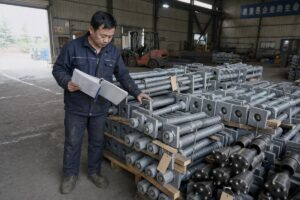
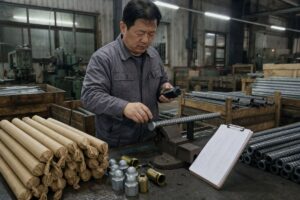
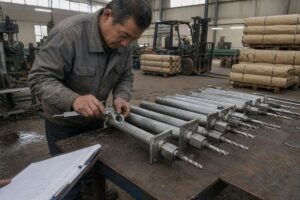
Every batch that leaves our Shandong plant passes tensile strength testing before it ships. I insist on this because one failed anchor in a tunnel costs far more than the entire order.
Not necessarily. Reputable Chinese manufacturers produce self drilling anchor bolts meeting ISO, ASTM standards, and CE certification requirements. Quality varies by factory tier, not by country. The real risks are inconsistent batch quality and weak documentation from unvetted trading companies rather than established manufacturers.
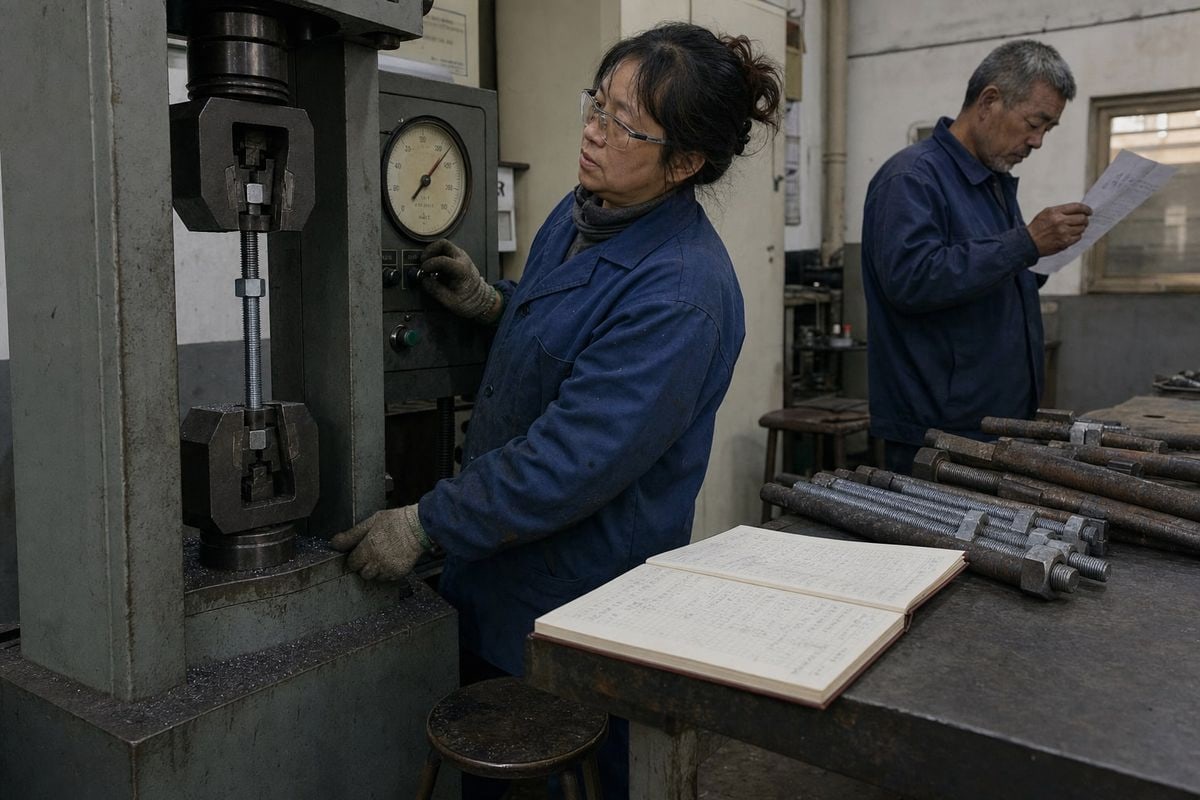
Quality in geotechnical anchoring systems comes down to a handful of measurable factors. Country of origin is not one of them. What matters is whether the factory controls those factors consistently, batch after batch.
The Quality Variables That Actually Matter
In my twenty-plus years in this industry, these are the variables that separate a reliable anchor from a liability:
| Quality Factor | Why It Matters | How to Verify |
|---|---|---|
| Steel grade and alloy consistency | Determines load capacity and safety margin | Mill certificates, third-party testing |
| Thread accuracy | Affects coupling integrity and installation efficiency | Gauge inspection reports |
| Hollow bar geometry and concentricity | Impacts grout flow and drilling performance | Dimensional inspection records |
| Corrosion resistance | Determines service life in aggressive ground | Coating thickness reports, salt spray data |
| Tensile strength and yield performance | Core load-bearing metric | Batch tensile test certificates |
| Batch consistency | Prevents surprise failures mid-project | Manufacturing quality control audits |
Manufacturer vs Trading Company
Here is a buyer objection I hear often: "Chinese quality is a lottery." My honest answer is that it can be, if you buy from the wrong tier. A large marketplace mixes genuine manufacturers with resellers who have never seen a production line. The reseller cannot control alloy consistency because he does not make anything.
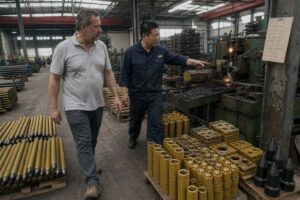
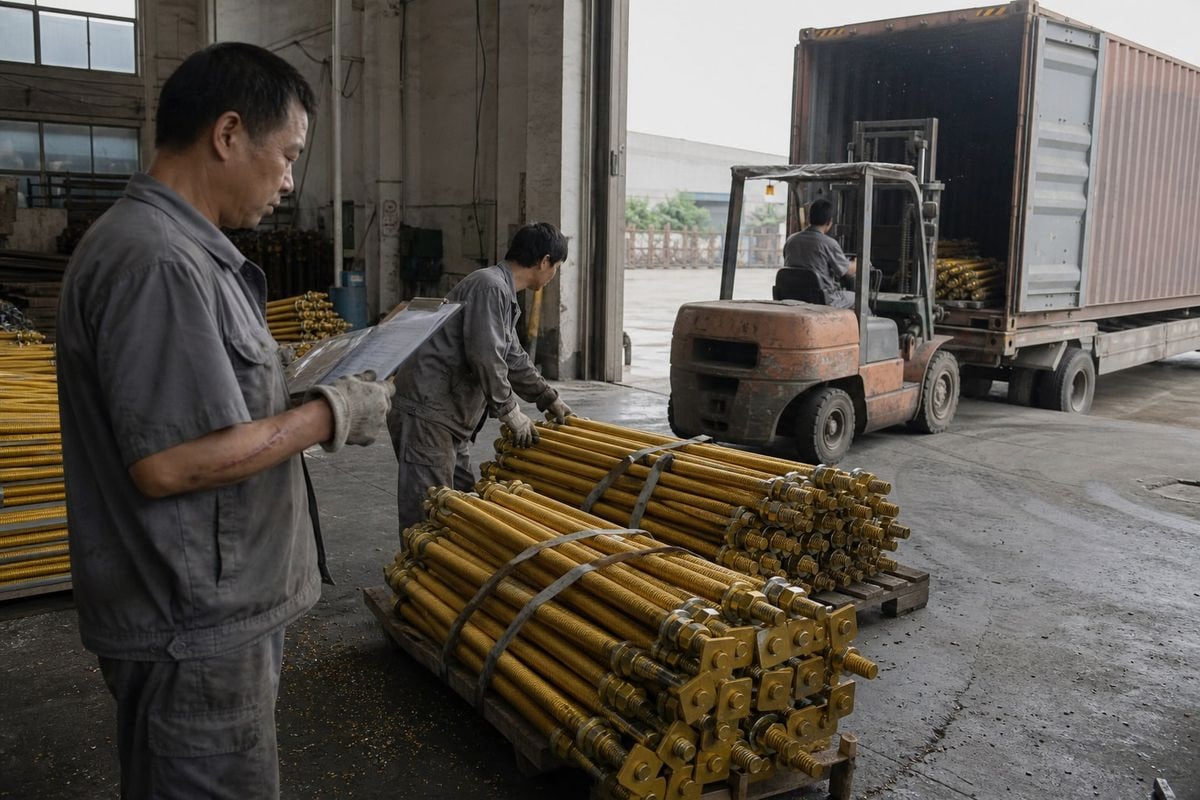
An established manufacturer is different. Our facility produces 30,000 tons annually and holds 2,000 tons of stock, which means every production run follows the same documented process. We export to Norway, Switzerland, Italy, and the USA, and those markets do not tolerate variable quality. The buyers who get burned are usually the ones who chose the lowest per-piece listing without checking whether the seller actually operates a factory.
A fair counterpoint: a higher-priced U.S. supplier does not automatically guarantee superior performance either. Unless the supplier can show material certificates, testing data, and standards compliance, the premium buys nothing. Demand the same evidence from both sides.
What Hidden Costs Should I Watch for When Comparing Chinese and U.S. Anchor Bolt Suppliers?
A hard lesson from our export desk: the cheapest quote on paper is sometimes the most expensive shipment in reality. Duties, inspection failures, and port delays can erase every saving.
Hidden costs include anti-dumping and countervailing duties that can exceed 200% of CIF value on certain steel fasteners, ocean freight, customs brokerage, mandatory export inspection, rework from quality failures, and schedule delays. Always compare landed cost, never list price.
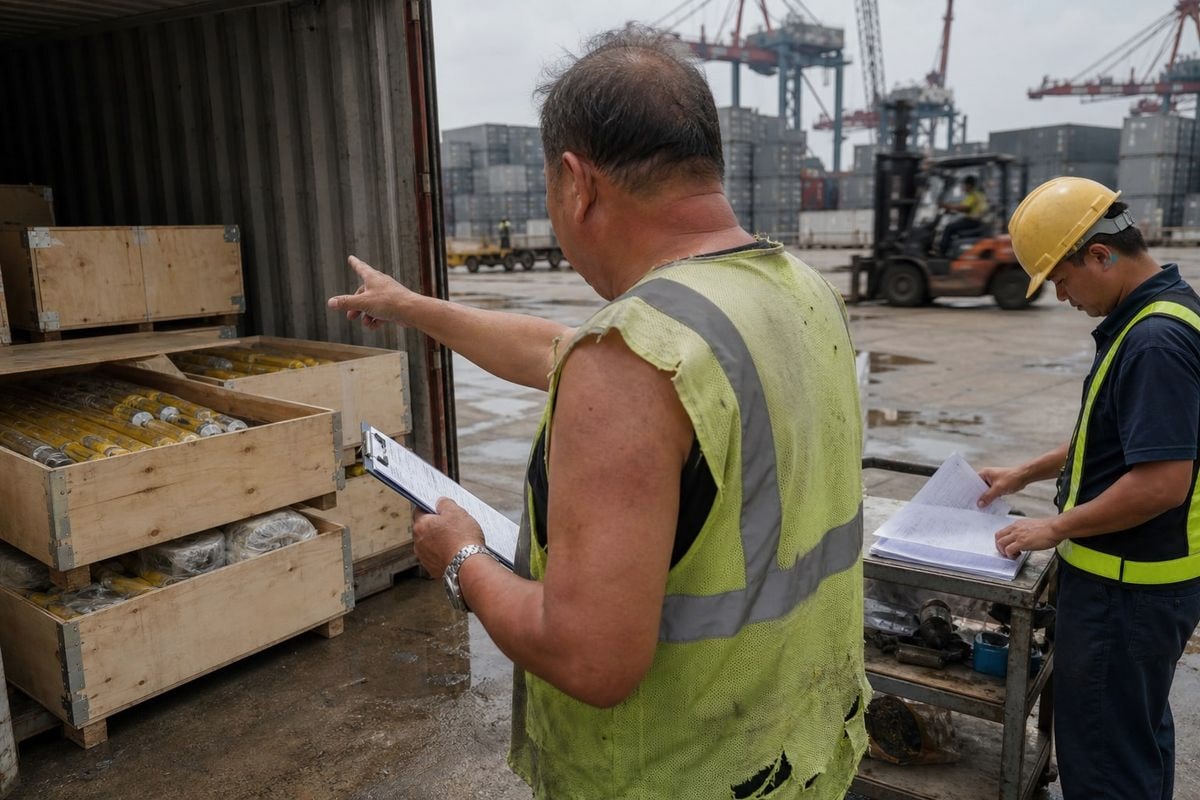
Let me walk through the cost layers that never appear on a quotation sheet, starting with the one that surprises U.S. buyers most.
Duties and Trade Remedies
The U.S. applies anti-dumping and countervailing duties to several Chinese steel fastener categories. In the worst cases, combined duties can exceed 200% of the CIF value. Whether your specific product falls into a covered scope depends on the exact HS classification. Get a binding ruling or a customs broker's written opinion before you commit. Buy America provisions add another layer: federally funded infrastructure projects may exclude imported steel entirely, no matter how good the price is.
Mandatory Export Inspection: A First-Hand Warning
Here is something few importers know. On the Chinese side, whether a product needs mandatory export commodity inspection depends on one thing: the 10-digit HS code's supervision condition. If it carries the letter "B", export inspection is compulsory, and customs will not release the goods without the outbound clearance certificate. Products without the "B" condition need no statutory inspection, though a client's letter of credit or destination-country requirements may still call for a voluntary inspection certificate.
I learned how costly this can get through a real case. A Canadian client bought mirror cabinets made of composite wood from a Chinese factory. The factory never mentioned inspection. When we received the booking documents, we checked the HS code and product name, confirmed with the factory that inspection was required, and arranged it before container loading. That timing saved the shipment. If inspection is arranged after the container is already returned to the terminal, customs treats the inspection report as potentially falsified. The result is a forced return of the shipment, missed vessel schedules, yard withdrawal fees, and possibly customs fines. The same logic applies to any export, including geotechnical products. Verify the supervision condition early, every time.
The Full Landed Cost Picture
| Cost Layer | Chinese Supplier | U.S. Supplier |
|---|---|---|
| Unit price | Low to moderate | Typically higher |
| Ocean freight and insurance | Buyer pays | Usually none |
| Duties / AD-CVD exposure | Potentially severe | None |
| Customs brokerage and clearance | Required | Not required |
| Export inspection and documentation | Must be verified per HS code | Not applicable |
| Lead time risk | 4–8 weeks transit plus production | Days to weeks |
| Rework and claims handling | Slower, cross-border | Faster, domestic |
The takeaway: supply chain logistics can turn a cheap quote expensive. A serious exporter will help you map every one of these lines before you sign, not after the container is stuck at port.
How Do I Verify a Chinese Supplier Can Match U.S. Quality Standards Before Placing My Order?
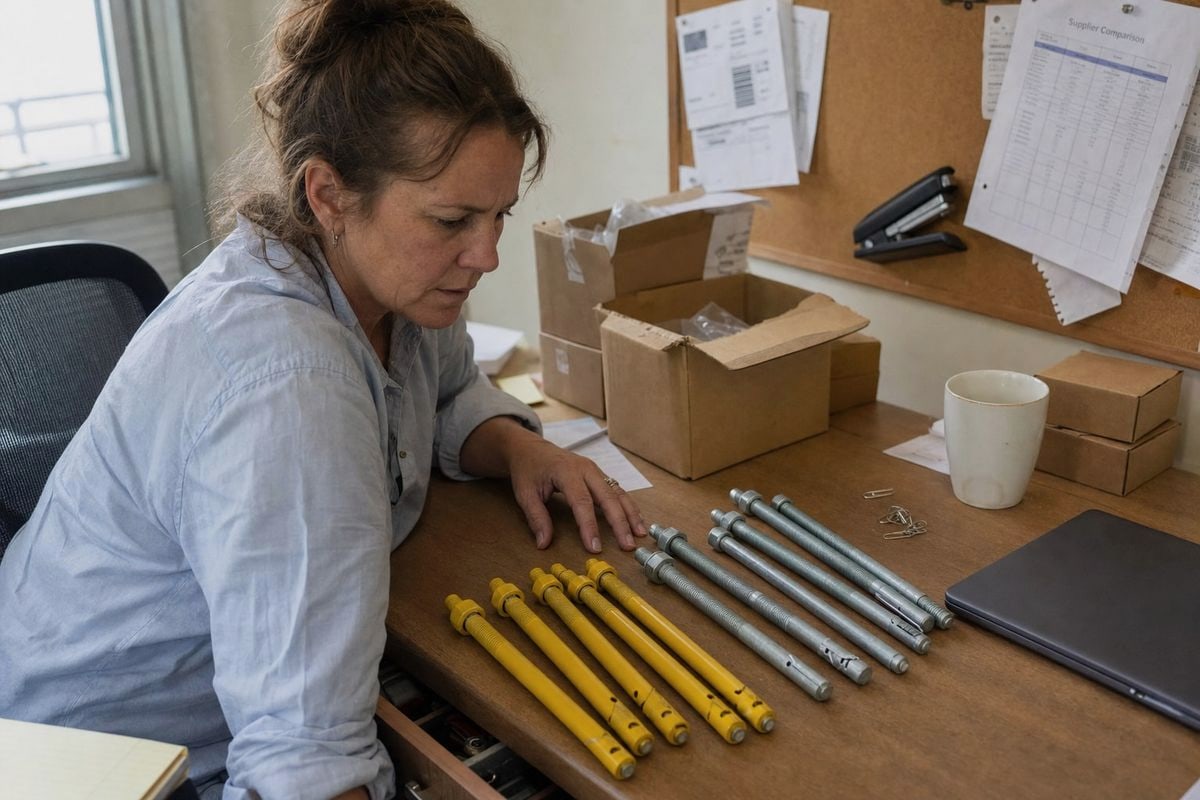
When a procurement manager from a U.S. distributor first contacted us, she asked for our full documentation package before discussing price at all. That is exactly the right order of operations.
Verify a Chinese supplier by requesting mill certificates, tensile strength test reports, ISO and CE certification, and ASTM compliance documentation. Then order paid samples, commission third-party pre-shipment inspection, audit the factory in person or virtually, and confirm material traceability across production batches.
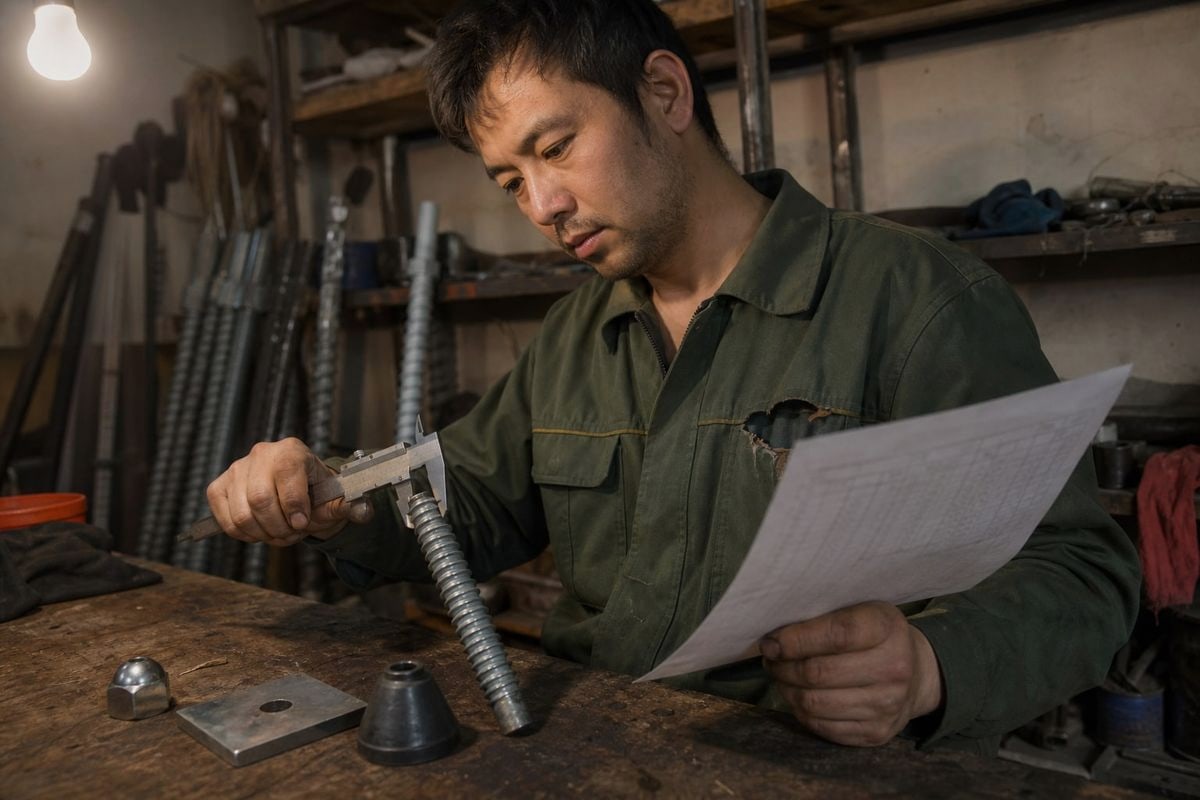
Verification is a process, not a single document. Skipping steps is how buyers end up with anchors that fail load tests on site. Here is the sequence I recommend to every new client, because it is the same process our serious buyers run on us.
The Six-Step Verification Process
-
Confirm the supplier is a manufacturer, not a reseller. Ask for the business license, factory photos with timestamps, and a live video tour of the production line. A trading company cannot show you rolling mills and thread-forming machines.
-
Request the documentation package. This should include ISO quality system certificates, CE certification where applicable, ASTM standards 6 compliance statements, and mill certificates for the steel used in your specific order. Material traceability 7 from raw bar to finished anchor is the mark of real manufacturing quality control.
-
Order paid samples and test them independently. Do not rely on the supplier's own test reports alone. Send samples to a lab in your country for tensile strength, thread gauge, and coating thickness verification.
-
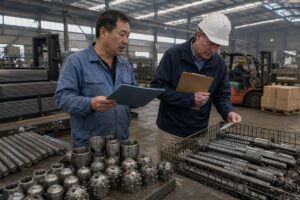
Commission a third-party pre-shipment inspection. SGS, TÜV, or Bureau Veritas can inspect dimensional accuracy, corrosion resistance coatings, and packaging before the container closes. The cost is small against the risk.
-
Check export references in demanding markets. A factory shipping regularly to Norway, Switzerland, or the U.S. has already survived strict buyer scrutiny. Ask for references you can actually contact.
-
Start with a trial order. Place a smaller first order, monitor batch consistency and installation efficiency on site, then scale. Long-term supply relationships are built on repeated proof, not promises.
We welcome this scrutiny at our plant because it filters the market in favor of factories that invest in process control. A supplier who resists any of these steps is telling you something important.
Conclusion
Chinese suppliers win on price and customization; U.S. suppliers win on speed and simplicity. Verify quality evidence, calculate landed cost, and choose the supplier that fits your project risk.
Footnotes
1. Provides a general definition and types of anchor bolts. ↩︎
2. Official U.S. government guidance on CE marking for products entering the EU market. ↩︎
3. Defines Free On Board (FOB) shipping terms and responsibilities in international trade. ↩︎
4. Official U.S. government information on anti-dumping and countervailing duties. ↩︎
5. Replaced HTTP 404 with an authoritative guide on understanding steel grades, which is highly relevant to the article context. ↩︎
6. Official website for ASTM International, a primary source for material standards. ↩︎
7. Replaced HTTP 403 with the general Wikipedia page for 'Traceability', which the original 'Traceability (engineering)' link redirected to, maintaining an authoritative source. ↩︎
8. Defines pre-shipment inspection as a quality control measure in international trade. ↩︎