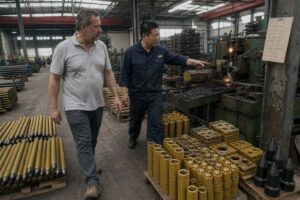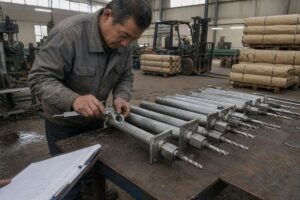
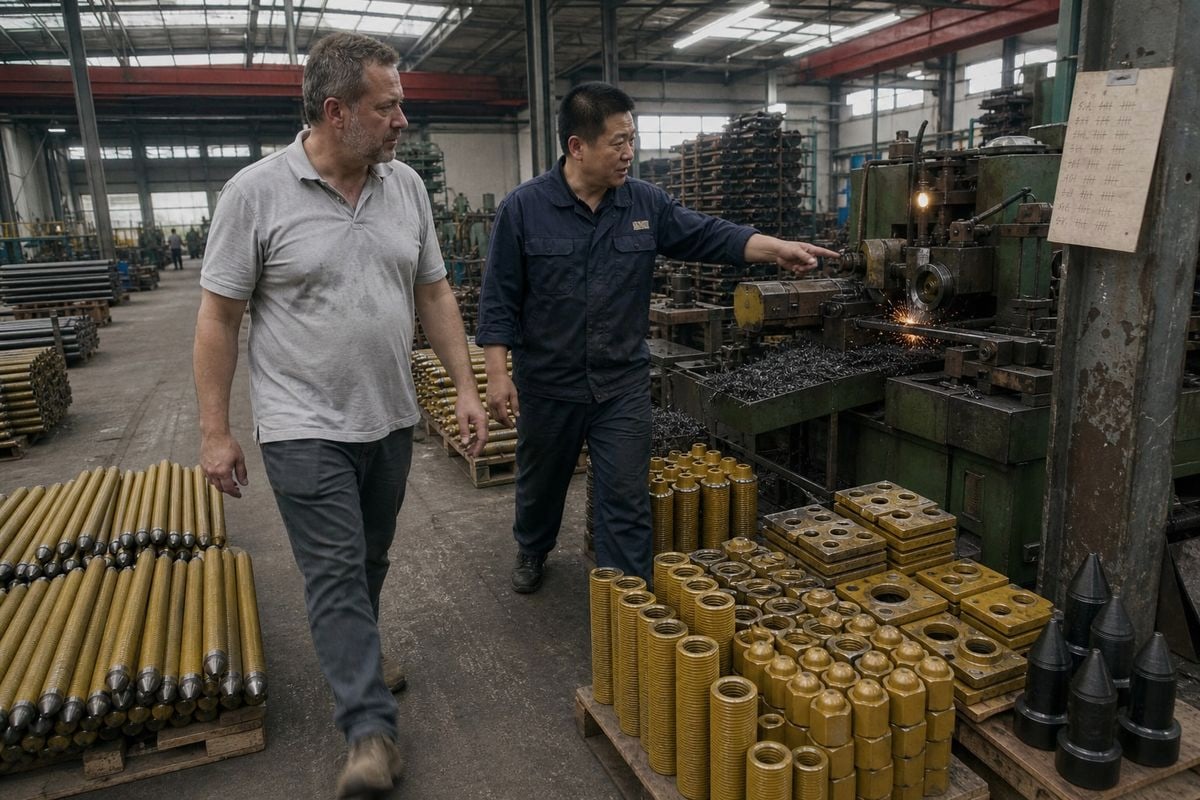
A factory visit to assess self-drilling anchor bolt suppliers in China can make or break your project ASTM compliance documentation 1. I have hosted buyers at our Shandong plant who nearly ordered from a trader instead. One shipment of undersized hollow bars later, they lost a tunnel contract deadline Chinese New Year and Golden Week 2. A structured visit prevents that pain.
To arrange a factory visit to assess self-drilling anchor bolt suppliers in China, contact shortlisted factories 1–3 weeks ahead, send specifications in advance, avoid Chinese holidays, request engineering and QC staff attendance, then audit quality control, production capacity, traceability, and partnership potential onsite.
Below, I will walk you through each stage. We start with preparation, move to onsite inspection, and finish with the questions that reveal long-term reliability.
What Should I Prepare Before Scheduling a Factory Visit in China?
A buyer from Norway once 3 emailed me on a Friday asking to visit our production line the following Monday. We made it work, but he saw a rushed tour, not a proper audit. Preparation changes everything.
Before scheduling a factory visit in China, shortlist verified manufacturers, contact them 1–3 weeks in advance, avoid Chinese New Year and Golden Week, send a pre-visit pack with drawings and specifications, confirm the agenda in writing, and request the factory address in Chinese characters.

Good preparation splits into three tasks: screening suppliers, timing the trip, and sending information ahead. Skip any one of them and your visit becomes a sightseeing tour instead of a supplier qualification exercise.
Screen Before You Fly
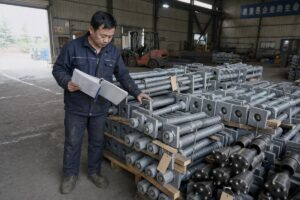
First, verify the company is a real manufacturer. Check the business license and confirm the registered scope includes "production" or "manufacturing." Make sure payments go to a corporate account matching that registration. A trader can show you a rented workshop, so ask for the factory address early and cross-check it against export documents. In my experience hosting EPC contractors and distributors, serious buyers also ask for photos of threading lines and heat treatment equipment before booking flights.
Time the Visit Correctly
Timing matters more than most first-time buyers expect. Contact the factory at least one to three weeks in advance. Share your visit purpose, participant names, and expected arrival time. Then confirm everything in writing a few days before travel.
| Preparation Item | Recommended Timing | Why It Matters |
|---|---|---|
| Initial contact and agenda request | 2–3 weeks before | Ensures engineers and QC leads can attend |
| Pre-visit information pack | 1–2 weeks before | Lets the factory prepare samples and test data |
| Written confirmation | 3–5 days before | Prevents last-minute schedule failures |
| Avoid Chinese New Year / Golden Week | Check calendar early | Factories shut down; you would see an empty workshop |
| Address in Chinese characters | Before departure | Drivers rarely read English addresses |
Send a Pre-Visit Pack
For self-drilling anchor bolts, your pack should include thread dimensions, steel grade, corrosion resistance requirements, load capacity targets, packaging needs, and any material certifications your market demands. When buyers send us this pack early, we prepare comparable hollow bar anchors, tensile test reports, and the right technical staff. That turns a two-hour tour into a real audit.
One more decision: independent visit or sourcing agent? An agent reduces language friction and handles logistics. But if you have a driver and interpreter, an independent visit is cheaper and gives you unfiltered impressions. Experienced procurement managers usually go direct; first-time importers often benefit from an agent for the first trip.
Which Quality Control Processes Should I Inspect During My Visit?
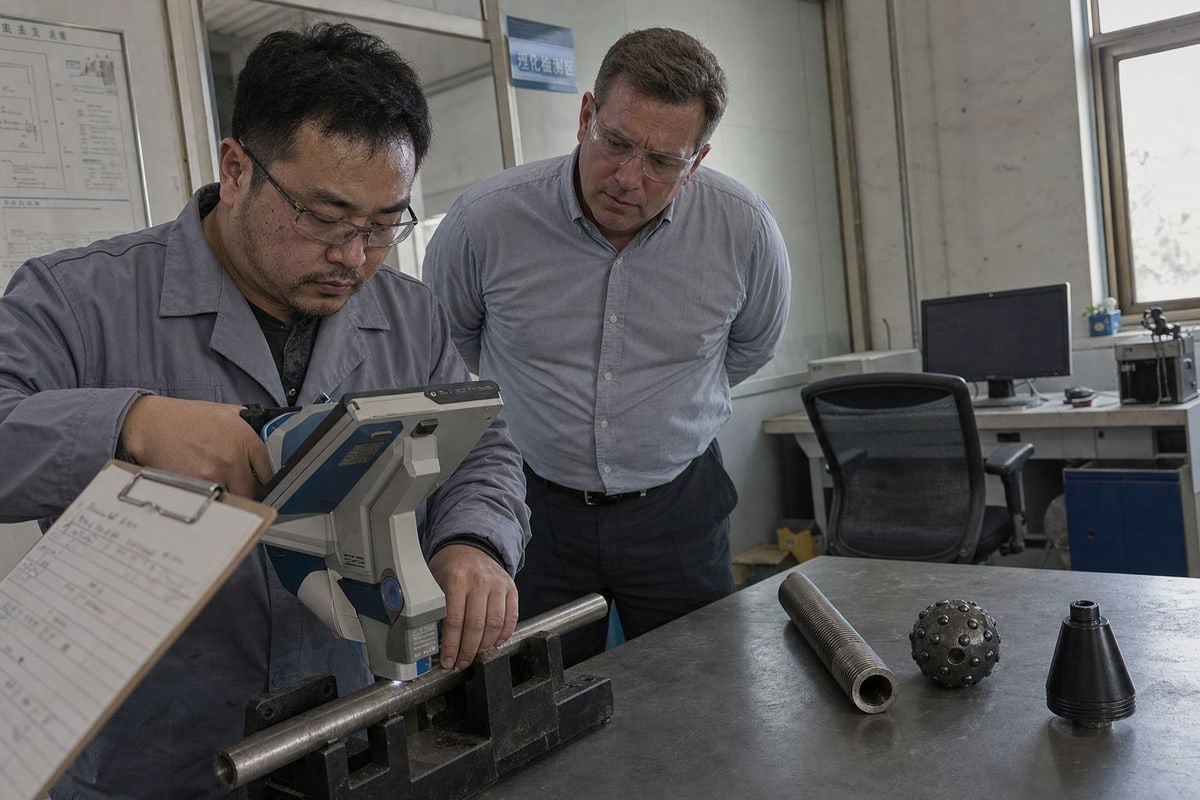
Every quarter, our QC team rejects at least one batch of incoming steel bar because the mill certificate does not match our spectrometer reading. I always show visitors those rejection records. Real quality control leaves a paper trail.
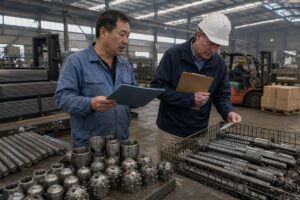
Inspect the full quality management system: incoming raw material inspection, in-process checks on threading and forming, final tensile strength testing, gauge calibration records, non-conformance handling, batch traceability, and valid certifications such as ISO 9001, CE, or ASTM compliance documentation.
Self-drilling anchor bolts are safety-critical components in geotechnical engineering 4. A failed anchor in a tunnel crown or slope stabilization project is not a warranty claim; it is a safety incident. So your inspection must follow the product through the plant, from raw steel to packed cartons.
Follow the Three-Stage QC Chain
Ask the factory to walk you through quality control in the same order material flows.
| QC Stage | What to Inspect | Red Flag |
|---|---|---|
| Incoming inspection | Mill certificates, chemical composition checks, steel grade verification | No incoming records; "we trust our steel supplier" |
| In-process checks | Thread pitch gauges, wall thickness measurement, sampling frequency rules | Operators self-inspect with no documented standard |
| Final inspection | Tensile strength testing, torque tests on couplers, coating thickness for corrosion resistance | No in-house test machine; tests "outsourced when needed" |
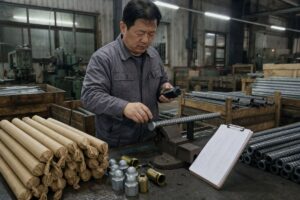
At each stage, ask to see records from last month, not a prepared demo. Genuine records look messy, dated, and signed. Perfect binders printed the week before your visit are a warning sign.
Check Calibration and Traceability
Ask when the thread gauges and the universal testing machine 5 were last calibrated, and who did it. Then pick a finished bundle in the warehouse and ask the team to trace it back: which heat number, which production date, which inspector. At our plant, batch numbers link every hollow bar anchor to its raw material certificate. If a factory cannot do this trace in ten minutes, its traceability system exists on paper only.
Verify Certifications Against Reality
ISO 9001 6 certificates are common. What matters is whether daily practice matches the manual. Ask how a non-conforming batch was handled last quarter. A mature quality management system 7 produces corrective action reports, not just excuses. Also confirm which standards the product itself meets for your market, because certification of the factory and certification of the product are two different things.
How Can I Verify Production Capacity and Delivery Reliability Onsite?
Delivery delays are the pain point I hear most from procurement managers in the USA and Chile. A project crew standing idle at a portal face costs far more than the anchors themselves. Capacity claims must be tested onsite, with your own eyes.
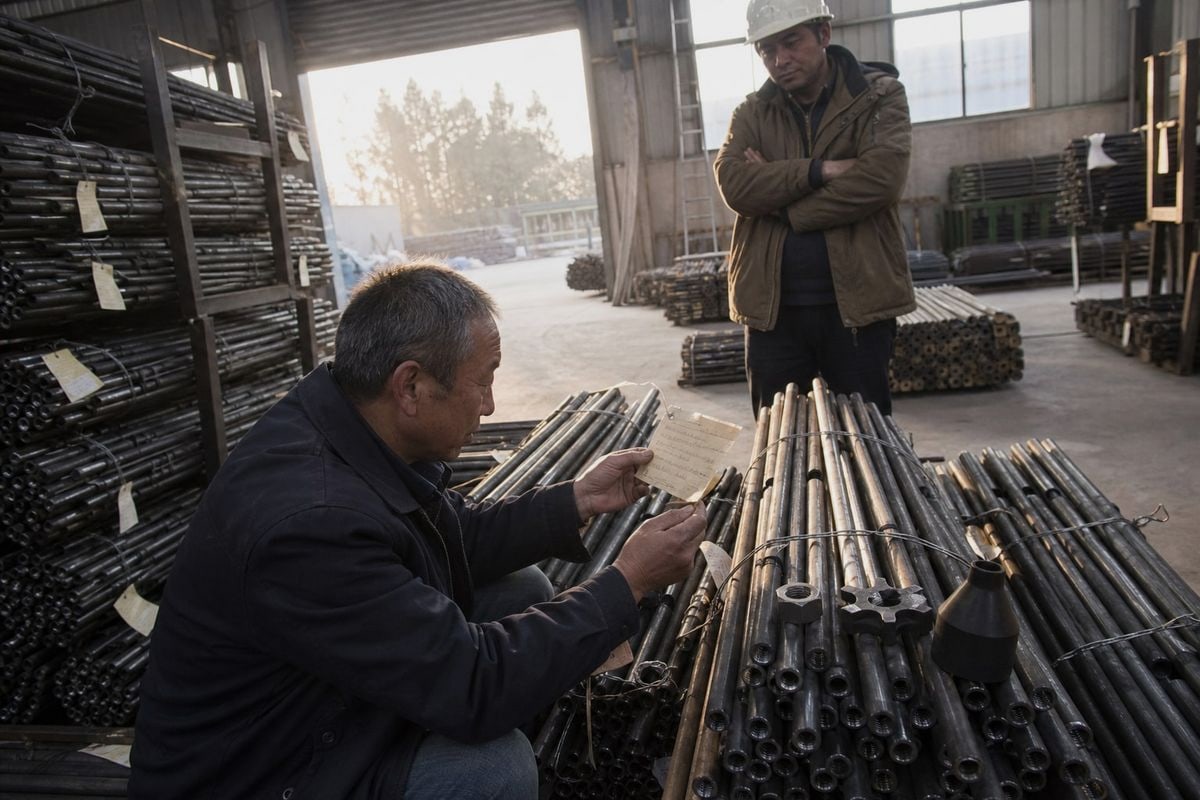
Verify production capacity by counting active production lines, checking machine utilization and maintenance logs, reviewing recent shipping records and export documents, inspecting raw material and finished goods stock levels, and cross-checking claimed annual output against workforce size and equipment.
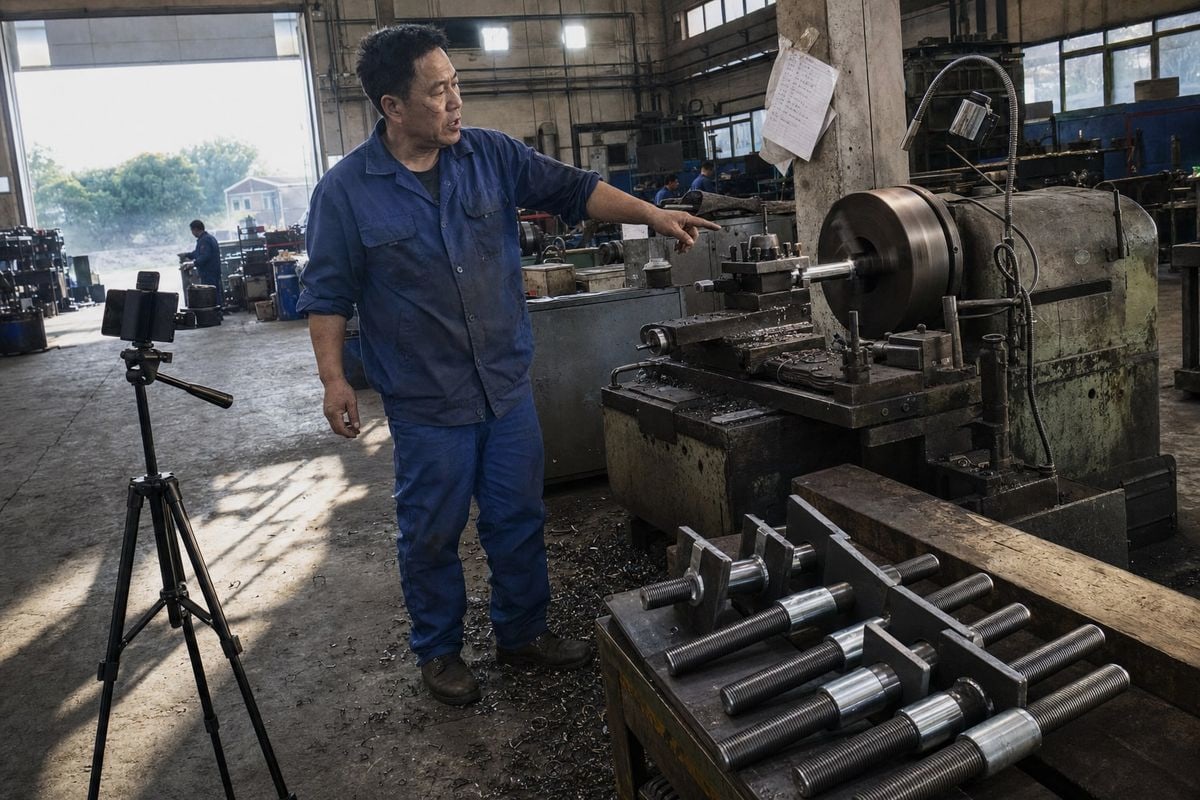
A brochure can claim any number. Our own annual output is around 30,000 tons with roughly 2,000 tons of consistent stock, and I encourage visitors to verify both by walking the warehouse and reading our shipping records. You should apply that same test to every supplier you visit.
Do the Capacity Math Yourself
A simple production capacity assessment works like this. Count the threading lines actually running. Ask the output per shift per line. Multiply by shifts per day and working days per month. Then compare that figure with the sales team's claim. If the numbers do not reconcile, part of the "capacity" is subcontracted, which changes your quality risk entirely.
- Count active lines and note idle machines.
- Ask for output per line, per shift, in tons or pieces.
- Check the production schedule board for current orders.
- Review last quarter's export documents and packing lists.
- Walk the finished goods area and estimate real stock tonnage.
Read the Warehouse Like a Report
The warehouse tells the truth. Look for clear separation of incoming steel, work in progress, and finished goods. Check whether finished anchors are labeled with batch numbers and protected against corrosion during storage. Dusty, disorganized stock suggests slow turnover or poor order management. Ask whether the factory runs an ERP or material tracking system; buyers who ask this question quickly separate mature operations from workshops.
Test Delivery Reliability With Evidence
Ask for three recent orders similar to yours in volume and destination. Request the confirmed lead time versus the actual ship date. A reliable supplier shows you this data without hesitation. Also ask about contingency planning: what happens during raw material shortages, energy restrictions, or port congestion? Factories exporting regularly to Europe, the USA, and Southeast Asia usually have practiced answers, because their customers have already forced them to build resilience.
What Questions Should I Ask to Evaluate Long-Term Supplier Partnership Potential?
The most valuable meeting I ever had with a buyer lasted four hours and never touched price. She asked about our engineers, our failure analysis process, and how we handled a coating defect two years earlier. She has ordered from us ever since. Questions like hers reveal partners, not just vendors.
Ask about engineering depth, OEM and customization capability, experience exporting to your market, technical after-sales support, how past defects were resolved, intellectual property protection, workforce stability, and willingness to support import regulations, documentation, and DDP logistics for long-term cooperation.
Price comparison is easy. Partnership evaluation is harder, because it predicts behavior over years, not one purchase order. I recommend structuring your questions around four themes and insisting the production manager or quality lead is in the room, not only sales staff. Sales-only meetings hide execution risk.
The Four Question Themes
| Theme | Sample Questions | What a Strong Answer Sounds Like |
|---|---|---|
| Engineering depth | Who reviews custom drawings? Can you adjust thread profile or coupler design? | A named engineer joins the meeting and discusses tolerances confidently |
| Market experience | Do you already supply my country? Which standards and import regulations apply? | Specific project references and familiarity with your documentation needs |
| Problem handling | Describe your last customer complaint and the corrective action | An honest account with root cause, containment, and prevention steps |
| Commercial reliability | What are your payment terms, MOQ flexibility, and stock policy? | Clear terms plus willingness to hold buffer stock for repeat buyers |
Probe Customization and Support
For hollow bar anchors used across tunneling, mining, and slope stabilization, your specifications will evolve as projects change. Ask whether the factory offers genuine OEM and ODM services, how they handle private labeling, and how they protect your drawings and proprietary designs. Ask about after-sales technical support too: will their engineers help with installation torque guidance or on-site failure analysis if something goes wrong at a job site?
Watch the Soft Signals
Finally, observe workforce conditions during your tour. Stable, safe, reasonably paid teams produce consistent quality; high turnover produces variation. Note communication quality as well. Bilingual staff who answer technical emails within a day matter enormously once you are managing orders from another time zone. Then keep commercial negotiation for the end of the visit. Price only becomes meaningful after you understand defect risk, capacity, and logistics reliability.
Conclusion
A factory visit is a structured supplier audit, not a tour. Prepare thoroughly, inspect quality control and capacity firsthand, ask partnership-level questions, and compare factories on evidence — not sales polish.
Footnotes
1. Official resource for ASTM standards, crucial for material and product specifications. ↩︎
2. Provides information on major Chinese holidays affecting factory operations and travel. ↩︎
3. Provides official details on CE marking requirements for products in the European Economic Area. ↩︎
4. Explains the branch of civil engineering concerned with earth materials and their behavior. ↩︎
5. Describes the function and importance of a universal testing machine in material testing. ↩︎
6. Official information on the ISO 9001 standard for quality management systems. ↩︎
7. Replaced with a Wikipedia page providing a comprehensive definition of a quality management system. ↩︎