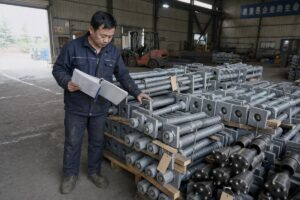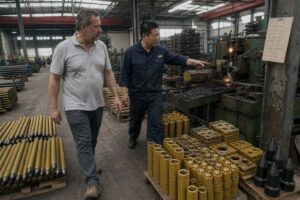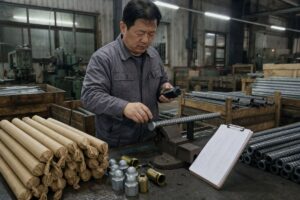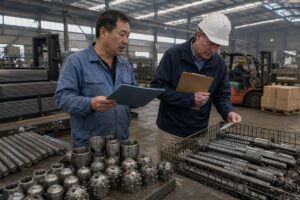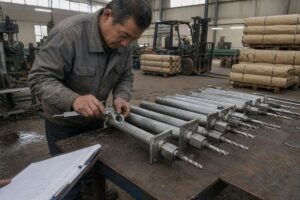
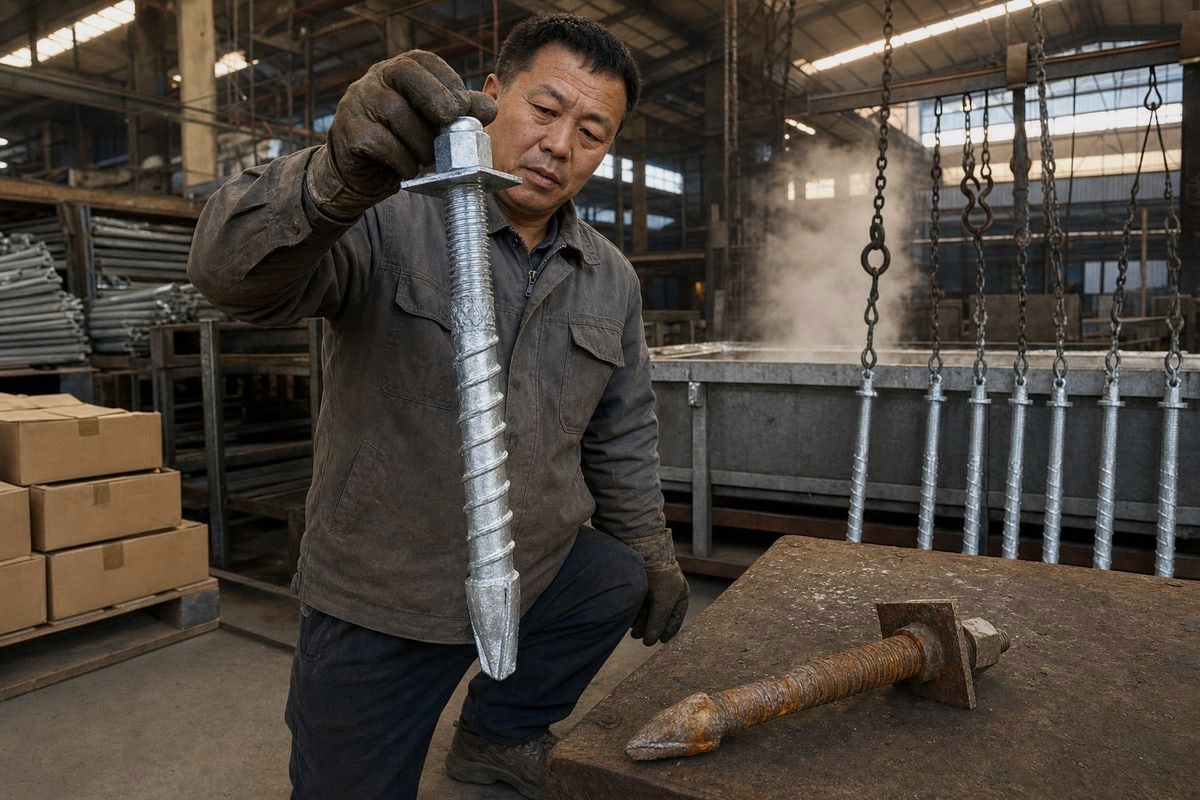
Corrosion protection processes like galvanizing or Dacromet can decide whether a self-drilling anchor bolt lasts five years or fifty. In our Shandong plant, we see this daily.
Corrosion protection processes extend self-drilling anchor bolt lifespan by slowing zinc loss through barrier and sacrificial protection. Hot-dip galvanizing typically delivers 30 to 80+ years before first maintenance, while Dacromet zinc flake coating offers thinner, more uniform protection suited to precise threads and controlled exposures.
The coating you choose is not a detail. It is a lifespan decision. Below, I break down how each process works, what shortens service life, and how to [verify quality before you buy](https://sdarockbolt.com/?p=2936).
How does galvanizing compare to Dacromet coating for extending self-drilling anchor bolt lifespan in corrosive environments?
A tunneling contractor in Norway once asked me to quote the same anchor bolt with two coatings. The price gap surprised him. The lifespan gap surprised him more.
Hot-dip galvanizing generally extends self-drilling anchor bolt lifespan the most in severe outdoor and soil exposure, because its thick, metallurgically bonded zinc layer provides both barrier and sacrificial protection. Dacromet zinc flake coating performs well in salt spray tests but carries less anchor-specific long-term field data.
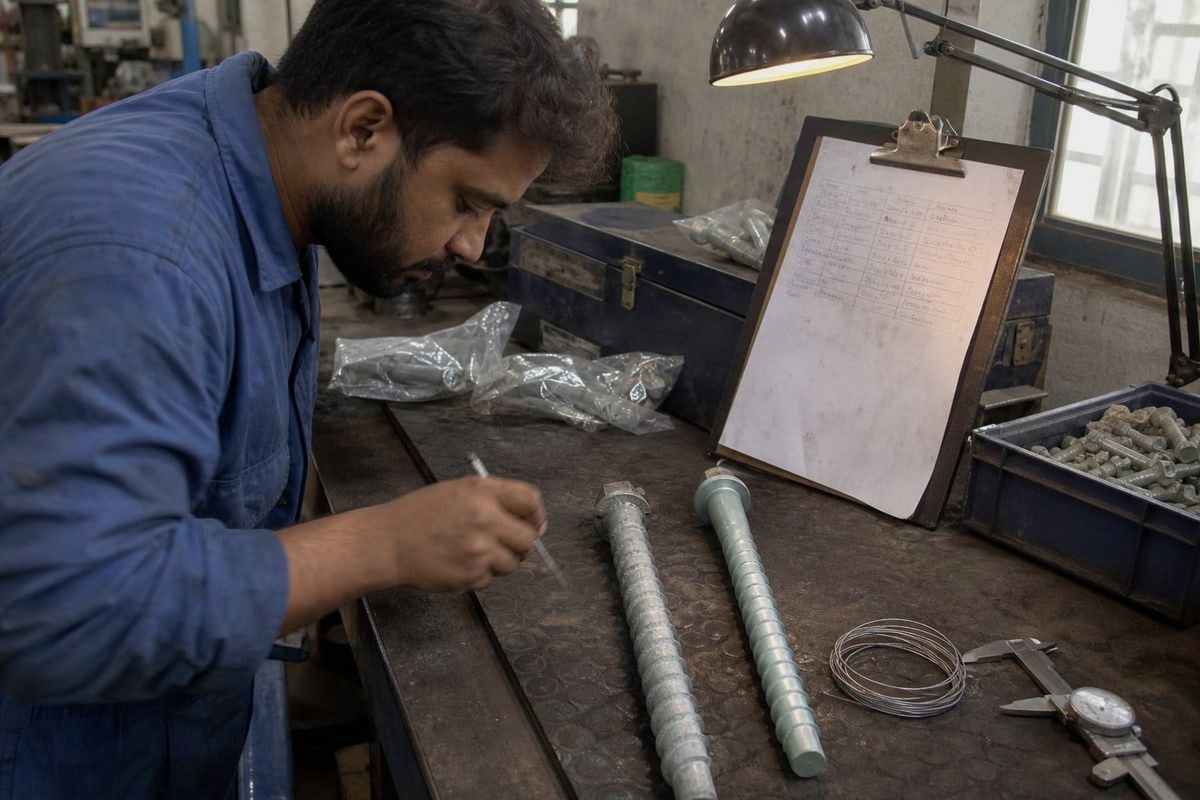
Here is the quick comparison we walk buyers through before any deep discussion:
| Factor | Hot-Dip Galvanizing | Dacromet (Zinc Flake Coating 1) |
|---|---|---|
| Typical coating thickness | 55–100+ microns | 6–12 microns |
| Protection type | Barrier + strong sacrificial protection | Barrier + moderate sacrificial protection |
| Bond to steel | Metallurgical (alloyed layers) | Mechanical adhesion of zinc-aluminum flakes |
| Thread fit impact | Noticeable; needs oversized nut tapping | Minimal; preserves thread precision |
| Hydrogen embrittlement 2 risk | Present if pickling is poorly controlled | Very low (no acid pickling, no electrolysis) |
| Best fit | Soil contact, marine, long-term structural use | Small fasteners, uniform factory finish, tight tolerances |
Why the mechanisms differ
Hot-dip galvanizing dips the bolt into molten zinc at roughly 450°C. The zinc alloys with the steel surface. This creates a bonded layer, not a paint film. If the coating gets scratched during drilling, the surrounding zinc corrodes first and protects the exposed steel. That is sacrificial protection at work.
Dacromet is a zinc flake coating. Overlapping zinc and aluminum flakes are baked onto the surface in a chromate or chromate-free binder. It performs impressively in salt spray chambers 3, sometimes outperforming standard zinc plating by a wide margin. Some formulations even show mild self-healing behavior at small scratches.
The honest caveat
But here is the objection I raise with my own customers: salt spray hours do not equal field years. For self-drilling anchor bolts that stay buried or grouted for decades, the thick zinc reserve of hot-dip galvanizing is the better-documented choice. Industry guidance based on American Galvanizers Association 4 data puts galvanized fasteners at 45 to 80+ years before first maintenance, depending on exposure class. Dacromet lacks equivalent anchor-specific lifespan data. So we position it as a strong option for accessories, nuts, and plates where thread precision matters, rather than the headline solution for the bolt body in aggressive ground.
What corrosion protection process should I choose for self-drilling anchor bolts used in coastal or high-humidity mining projects?
Shipping anchor systems to mines in Chile and coastal projects in Indonesia has taught our team one lesson: humidity plus salt punishes every shortcut in surface treatment.
For coastal or high-humidity mining projects, specify hot-dip galvanizing at 85 microns or more as the baseline. In extreme salinity, upgrade to a duplex coating that combines galvanizing with an epoxy coating topcoat. Reserve Dacromet for couplings, nuts, and plates needing precise fit.
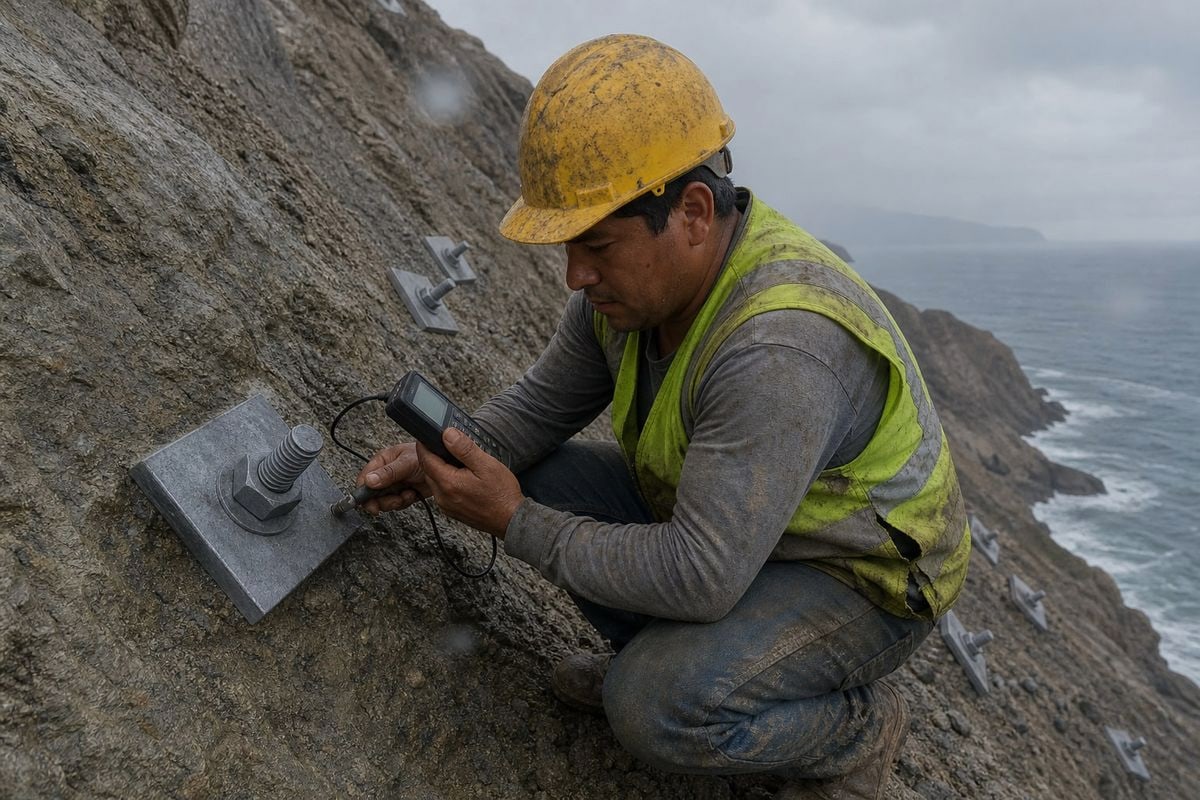
Environment severity is the single biggest driver of coating consumption. Zinc corrodes slowly in dry rural air. It corrodes fast in chloride-rich coastal air and acidic mine water. So the right question is never "which coating is best?" It is "which coating fits this exposure?"
Match the coating to the exposure class
| Exposure Environment | Recommended Process | Expected Service Character |
|---|---|---|
| Rural / low humidity | Standard hot-dip galvanizing | Longest zinc life; 80+ years to first maintenance possible |
| Urban / industrial pollution | Hot-dip galvanizing, thicker class | Pollutants accelerate zinc loss; thickness buys time |
| Temperate marine / coastal | Heavy hot-dip galvanizing or duplex coating | Chlorides attack zinc; extra reserve needed |
| Tropical marine / mine water | Duplex coating (galvanizing + epoxy coating) or stainless steel anchor bolts | Harshest conditions; synergy of layers pays off |
| Temporary support (under 2 years) | Uncoated or light coating | Coating cost may not be justified |
Why duplex systems earn their cost
A duplex coating pairs the sacrificial zinc layer with an organic barrier such as epoxy or powder coating. The organic layer shields the zinc. The zinc protects any steel exposed where the organic layer fails. The combined life often exceeds the sum of the two layers alone. For permanent slope stabilization near the sea, we quote duplex systems by default.
Some buyers ask about stainless steel anchor bolts instead. They are excellent in chloride environments, but the cost jump is steep, and drilling performance in hard ground must be verified. For most coastal mining work, heavy galvanizing or a duplex system hits the better lifecycle cost point. Remember to run that lifecycle math: fewer replacements and lower failure risk usually outweigh a higher unit price within a few years.
How do coating thickness and application methods impact the long-term durability of self-drilling anchor bolts?
During a QC audit last year, we rejected a whole batch of couplings. The zinc measured thick enough, but it flaked at the thread roots. Thickness alone told half the story.
Coating thickness sets the zinc reserve available for sacrificial protection, so thicker coatings generally last longer. But application quality matters equally: poor surface preparation, uneven deposition, or excessive thickness causes peeling and cracking, creating corrosion initiation points that cut lifespan far below the rated value.
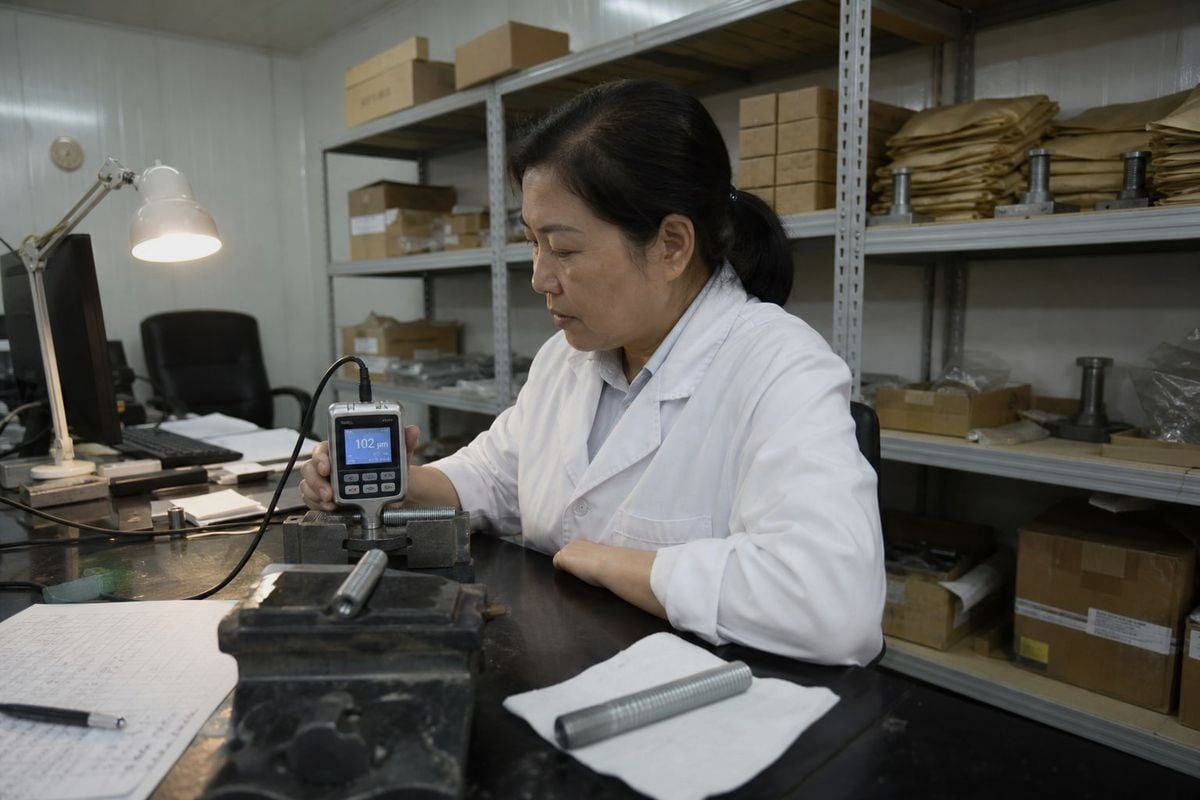
Think of zinc as a consumable budget. The environment spends it at a fixed rate. More microns mean more years. American Galvanizers Association data illustrates this clearly: at about 2.5 mils of hot-dip zinc, fasteners reach roughly 80+ years to first maintenance in rural air, 55+ in temperate marine air, and 45+ in industrial atmospheres. Halve the thickness and you roughly halve those numbers.
Application method changes everything
| Application Method | Typical Thickness | Key Strength | Key Weakness |
|---|---|---|---|
| Hot-dip galvanizing | 55–100+ microns | Metallurgical bond, thick reserve | Thread fit, embrittlement risk if pickling is sloppy |
| Mechanical galvanizing | 25–110 microns | No hydrogen embrittlement, good for high-strength parts | Softer bond than hot-dip |
| Electrogalvanizing | 5–25 microns | Smooth, cheap, precise | Thin; short life outdoors |
| Zinc flake coating (Dacromet type) | 6–12 microns | Uniform, no embrittlement, good salt spray results | Thin reserve for buried service |
Three quality factors beyond thickness
First, surface preparation. Grease, scale, or rust left before coating ruins adhesion. A perfectly thick coating on a dirty surface peels early. Our line runs degreasing, pickling, and fluxing checks before every galvanizing batch for this reason.
Second, hydrogen embrittlement. High-strength bolts can absorb hydrogen during acid pickling or electroplating. Trapped hydrogen makes hardened steel brittle and can cause sudden fracture under load. This is why mechanical galvanizing or zinc flake coating is often specified for grade 10.9 and above fasteners, and why our process controls pickling time and bath chemistry tightly on hollow bar anchors.
Third, uniformity at critical points. Self-drilling anchors take abrasion at the tip and threads during installation. If the coating thins at exactly those points, corrosion starts there first. We measure thread crests and shaft mid-sections separately during inspection, because averages hide weak spots.
Can I verify the quality of galvanizing or Dacromet treatment before importing self-drilling anchor bolts from a supplier?
Buyers from the USA and Europe often ask me this on the first call. My answer is always yes, and I encourage them to check us just as hard as anyone else.
Yes. Request coating thickness reports measured by magnetic gauge per ISO 1461 or ASTM A153, third-party salt spray test results, adhesion test records, and batch traceability documents. Order pre-shipment inspection with random sampling, and verify certificates directly with the issuing laboratory, not just the supplier.
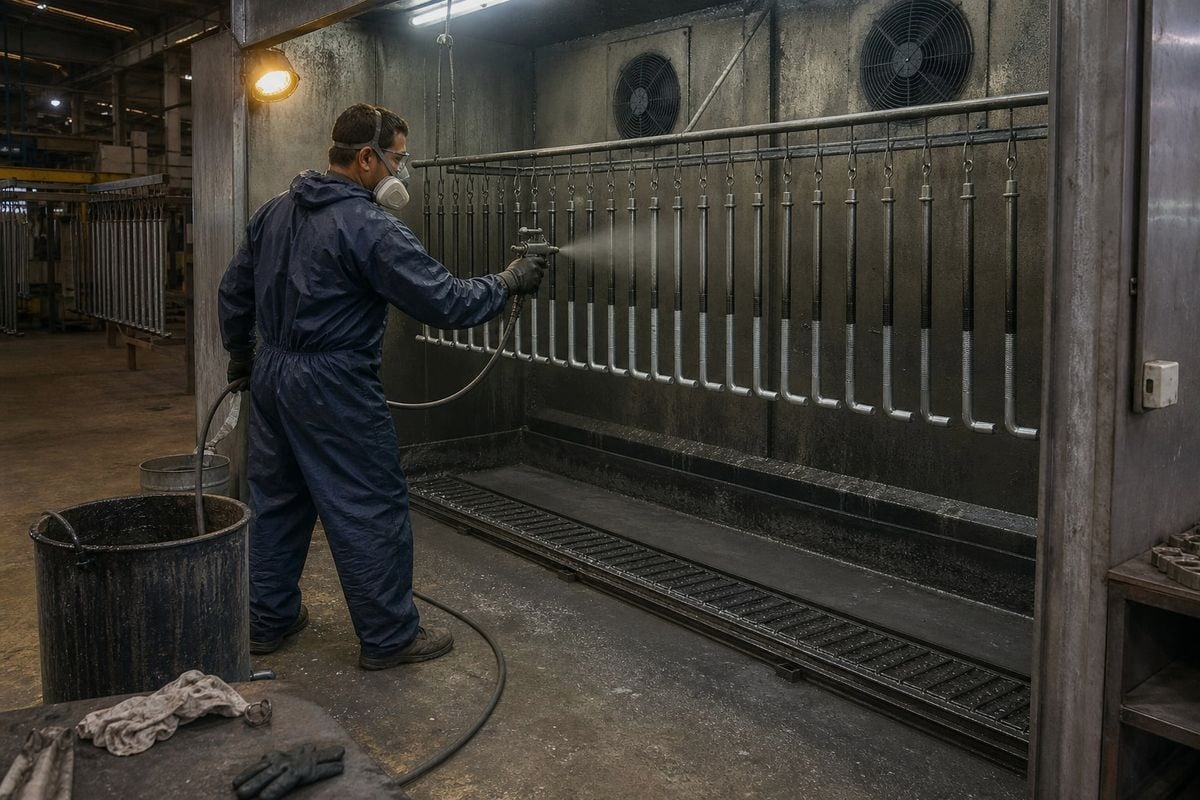
Verification is a process, not a single document. Here is the sequence we recommend to procurement managers, based on what our own export customers actually do:
- Specify the standard in the contract. Name ISO 1461 or ASTM A153 for hot-dip galvanizing, or ISO 10683 for zinc flake coating, with a minimum coating thickness and measurement points.
- Demand batch-level test reports. Coating thickness readings, adhesion tests, and salt spray hours should tie to your specific production batch, not a generic sample from years ago.
- Book third-party inspection. SGS, TÜV, or BV inspectors can measure coatings on randomly pulled bolts before containers seal.
- Verify certificates at the source. Contact the testing lab directly. Fake or recycled certificates are a real problem in fastener coatings trade.
- Check documentation compliance for your destination market. This step is now critical for Europe.
The CE documentation trap in 2026
From my own recent export experience into the EU, CE marking 5 is no longer a sticker game. In 2026, EU customs launched digitalized strict inspection. Missing files, wrong information, or fake certificates now very likely mean detained cargo, returned shipments, and fines. Ports like Rotterdam and Hamburg have recently held large batches of Chinese exports because CE compliance files were incomplete. Customs no longer just looks at the mark on the product. They demand the full Technical Construction File. If the EU Declaration of Conformity is missing or does not match the goods, the shipment gets detained. Electronic DoCs with unique traceability codes are replacing paper declarations, so old printed documents will get you stopped. Construction materials sit high on the inspection list, with fire safety, load-bearing, and chemical safety under the Green Deal spotlight.
So before shipping, we prepare the clearance "three-piece set" for our buyers: valid test reports, a signed DoC matching the exact shipped models, and clear nameplate and label photos, all sent to the destination clearing agent for pre-review. One more warning: for low-risk products without Notified Body involvement, be suspicious of certificates labeled "Certification." They can be misleading and even trigger penalties. And if your destination is Great Britain, remember CE is being phased out there. You need UKCA instead. Do not let one missing paper block goods that took months to produce.
Conclusion
Uncoated anchors fail early. Wrong coatings waste money. Match galvanizing, Dacromet, or duplex coating to your exposure class, verify thickness and documents, and your self-drilling anchor bolts will serve for decades.
Footnotes
1. Provides an overview of zinc flake coatings, their composition, and application. ↩︎
2. Offers detailed information on hydrogen embrittlement in high-strength fasteners and its causes. ↩︎
3. Describes the standardized methodology and purpose of salt spray testing for corrosion resistance. ↩︎
4. Official website of the authoritative industry association for hot-dip galvanizing. ↩︎
5. Clarifies the requirements and significance of CE marking for construction products in the EU. ↩︎