Transaction security when sourcing self-drilling anchor bolts 1 from China worries almost every buyer who contacts our Shandong factory. One wire transfer to the wrong account can erase months of project budget.
To ensure transaction security when sourcing self-drilling anchor bolts from China, verify the supplier's business license and registered bank account, use protected payment methods like Trade Assurance or letters of credit, tie the final payment to third-party pre-shipment inspection, and lock all specifications into a written contract.
That is the short answer. Below, I walk through each layer of protection, step by step, using what we see every week in real B2B anchor bolt transactions.
How can I verify a Chinese self-drilling anchor bolt supplier is legitimate before paying?
A buyer from Colorado once told me she almost paid a "factory" that was really a two-person trading desk with rented photos Incoterms 2. Our team helped her run the checks that exposed it.
Verify legitimacy by requesting the Chinese business license, checking the company name and Unified Social Credit Code on the official GSXT registry, confirming the bank beneficiary name matches the registered name exactly, and holding a live video factory walkthrough before sending any money.
Supplier vetting for a technical product like a hollow bar anchor is not the same as vetting a seller of phone cases. Anchor bolts go into tunnels, slopes, and foundations. A fake or unqualified supplier creates safety risk, not just financial risk. So the verification must cover both the legal entity and the actual production capability.
Start with the paper trail
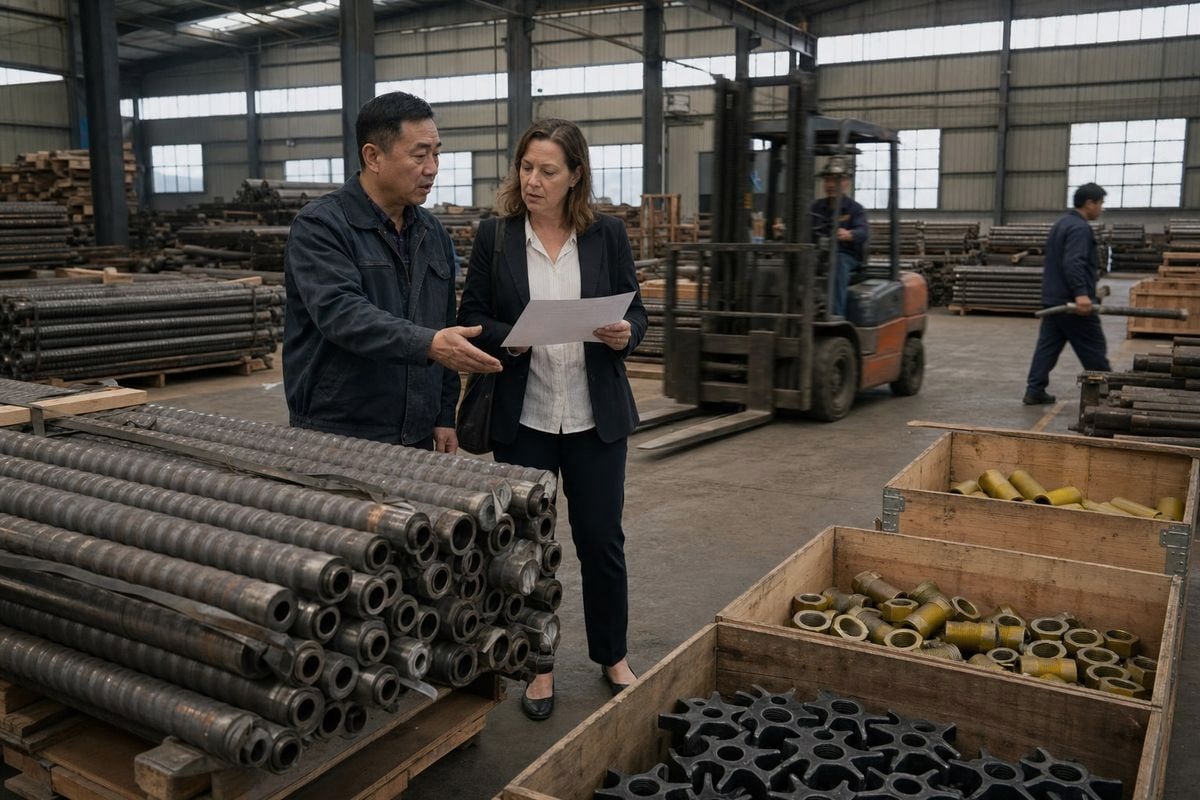
Ask for the Chinese business license first. Every legitimate factory has one. Then check three things against China's official enterprise registry (GSXT): the registered company name, the Unified Social Credit Code 3, and the operating status. The registered business scope should include manufacturing, not only trading. We hand our license to serious buyers on the first request, because we know this is step one of any professional due diligence process.
Then verify the physical factory
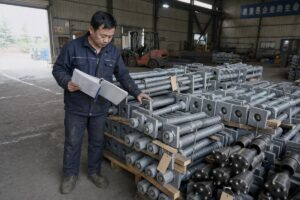
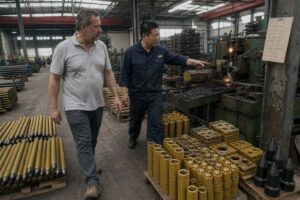
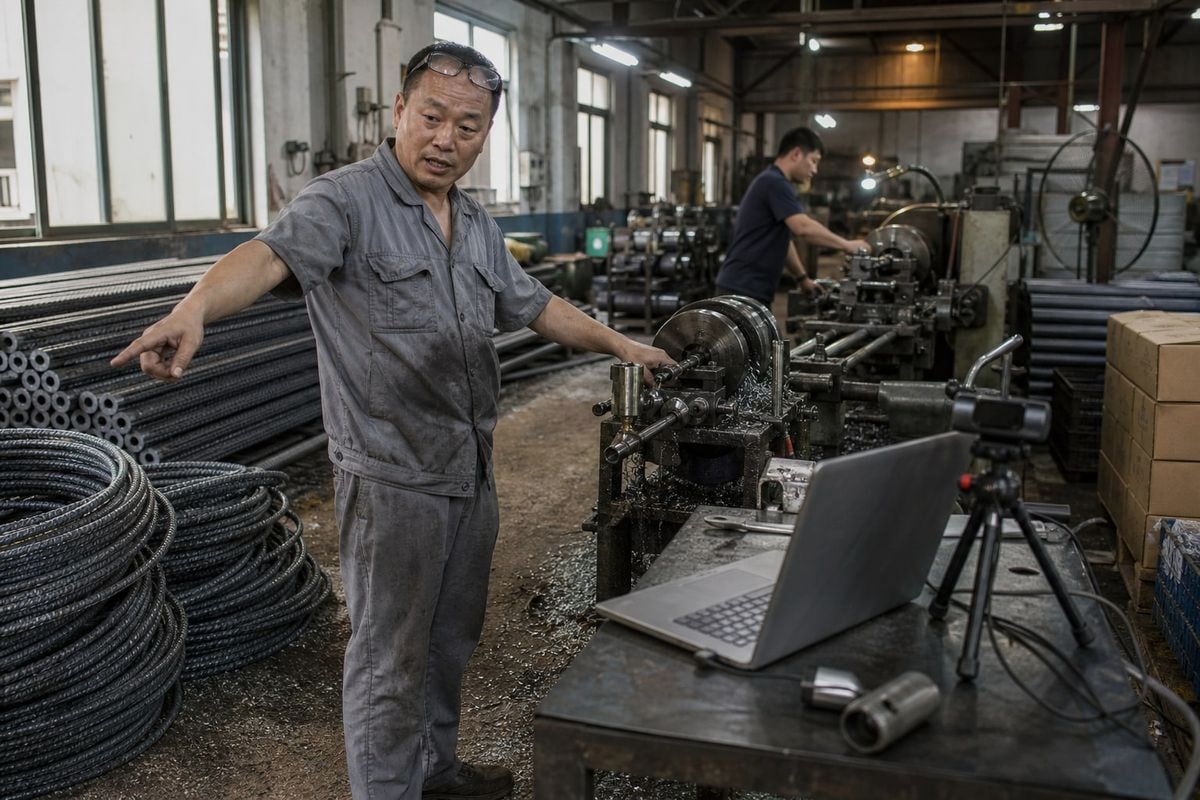
Documents can be borrowed. Production lines cannot. Request a live video call where someone walks through the threading lines, the coupler machining area, and the warehouse. Ask to see raw steel stock and finished hollow bar anchor inventory. A real mill with capacity will show you everything. Ask about ISO 9001 certification 4 and quality control protocols while you are on the call. You can also commission a third-party factory audit, which typically costs a few hundred dollars and is cheap insurance before a large order.
| Verification Step | What to Check | Red Flag |
|---|---|---|
| Business license | Name, credit code, scope, status on GSXT | Name differs from invoice header |
| Bank account | Beneficiary matches registered company name | Personal account or offshore mismatch |
| Video walkthrough | Live production lines, stock, testing lab | Only stock footage or excuses |
| Third-party audit | Capacity, equipment, ISO 9001 system | Refusal to allow inspectors |
| References | Prior export buyers in your region | No verifiable export history |
What payment methods and terms protect me from fraud when ordering from China?
In over 20 years of exporting self-drilling anchor systems, the fraud cases I hear about almost never start with a bad product. They start with a bad payment decision.
Use Alibaba Trade Assurance or escrow services for first orders, letters of credit for large contracts, and a 30% deposit with 70% balance released only after a passed pre-shipment inspection. Never pay a personal account, and never pay 100% upfront to an unverified supplier.
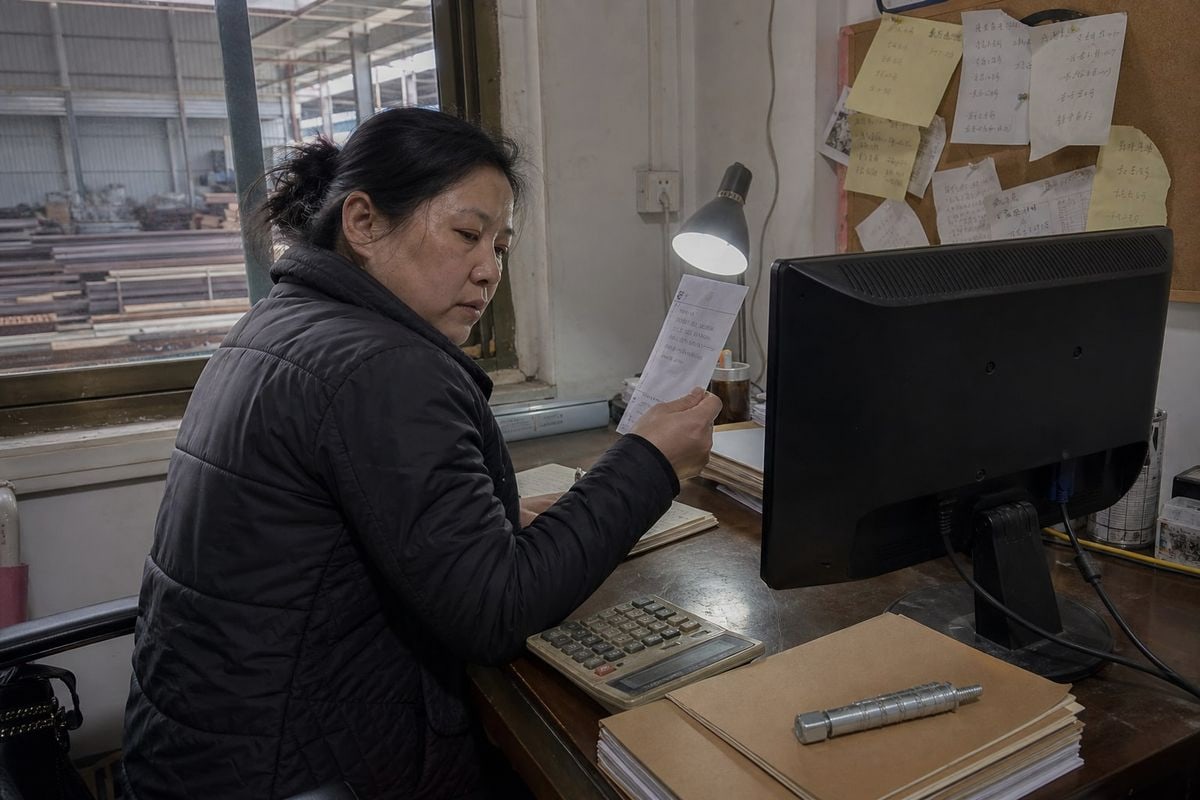
Different international payment methods carry very different levels of protection. The table below shows how I explain the trade-offs to new buyers.
| Payment Method | Protection Level | Best For | Drawback |
|---|---|---|---|
| Trade Assurance / escrow services | High | First orders, small-to-mid volume | Platform fees, on-platform only |
| Letter of credit (L/C) | High | Large contracts, high-value orders | Slower, more paperwork, bank cost |
| T/T 30/70 tied to inspection | Medium | Verified, repeat suppliers | No recourse once funds are sent |
| T/T 100% upfront | Very low | Never for new suppliers | Total exposure |
| Payment to personal account | None | Never | Untraceable, major fraud signal |
The 30/70 structure done right
The standard first-order structure is a 30% deposit before production and 70% before shipment. That structure is fine. The mistake is paying the 70% automatically when the supplier says "goods are ready." Tie the balance to a passed inspection report and verified shipping documents instead. We accept these terms with new customers because we know our bolts will pass.
Some buyers object that letters of credit 5 are slow and costly. That is true for a small sample order. But for a container-level purchase of anchor bolts, the banking coordination is worth the protection. For small trial orders, escrow or Trade Assurance covers the gap. One practical rule from sourcing guides: run about three protected orders before moving to open T/T terms.
Guard against bank-detail fraud
Business email compromise 6 is now widely described as the biggest fraud vector in international trade payments. Scammers hijack email threads and send "updated" bank details right before you pay. If bank details ever change, verify by phone using a number you sourced independently, never by replying in the same email chain. We tell every customer: our account details do not change mid-order, and any email claiming otherwise should trigger a call to us.
How do I confirm product quality meets specifications before shipment leaves the factory?
Every batch that leaves our line in Shandong passes tensile and thread-gauge checks, because we learned early that one out-of-tolerance coupler can stall an entire tunneling crew abroad.
Confirm quality by locking specifications into the purchase order, approving and retaining physical samples as contractual benchmarks, requiring in-production checks, and commissioning an independent third-party pre-shipment inspection that verifies dimensions, steel grade, coating, and load performance before releasing the final payment.

With self-drilling anchor bolts, you are not just paying for steel rods. You are paying for compliance: bolt type, rod diameter, thread profile, length, steel grade, coating, and the matching accessories such as couplers, nuts, plates, and drill bits. A spec error here becomes a structural and liability problem on site. So quality confirmation must run as a sequence of gates, not a single check.
Run quality as a four-gate process
- Sample approval. Order samples first. Test thread fit with your drilling equipment. Keep the approved sample sealed and referenced in the contract. It becomes the physical benchmark for any later dispute about finish, tolerance, or fit.
- Trial order. Start small before scaling. A trial order limits your exposure if the factory was misrepresented, and it tests packaging, documentation, and lead-time discipline at the same time.
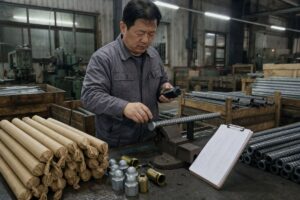
- In-production checks. Ask for mill certificates for the raw steel, plus photos or video of threading and heat treatment stages. A factory with real quality control protocols will share this without friction.
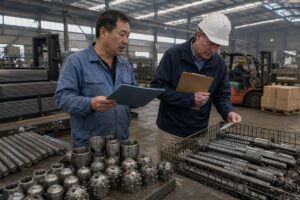
- Pre-shipment inspection. Hire an independent inspector to check dimensions against drawings, verify coating thickness, review load-test reports, and confirm quantities and markings. Only after the report passes do you release the 70% balance.
We host third-party inspectors regularly, and I encourage buyers to use them even after several smooth orders. It keeps both sides disciplined. Also consider basic shipping insurance on the cargo itself; anchor bolt bundles are heavy, and transit damage claims are far easier with coverage in place.
What contract terms and documentation should I require to avoid customs and delivery disputes?
Shipping is where good deals go bad. A procurement manager we supply in the USA once lost three weeks of project time to a customs hold caused by an under-declared shipment from another vendor.
Require a contract stating exact product specs, Incoterms, HS codes, delivery dates, inspection rights, and payment release conditions. Demand a full document set — commercial invoice, packing list, mill certificates, bill of lading, and certificate of origin — and choose compliant DDP or DAP terms over low-priced under-declared shipping.
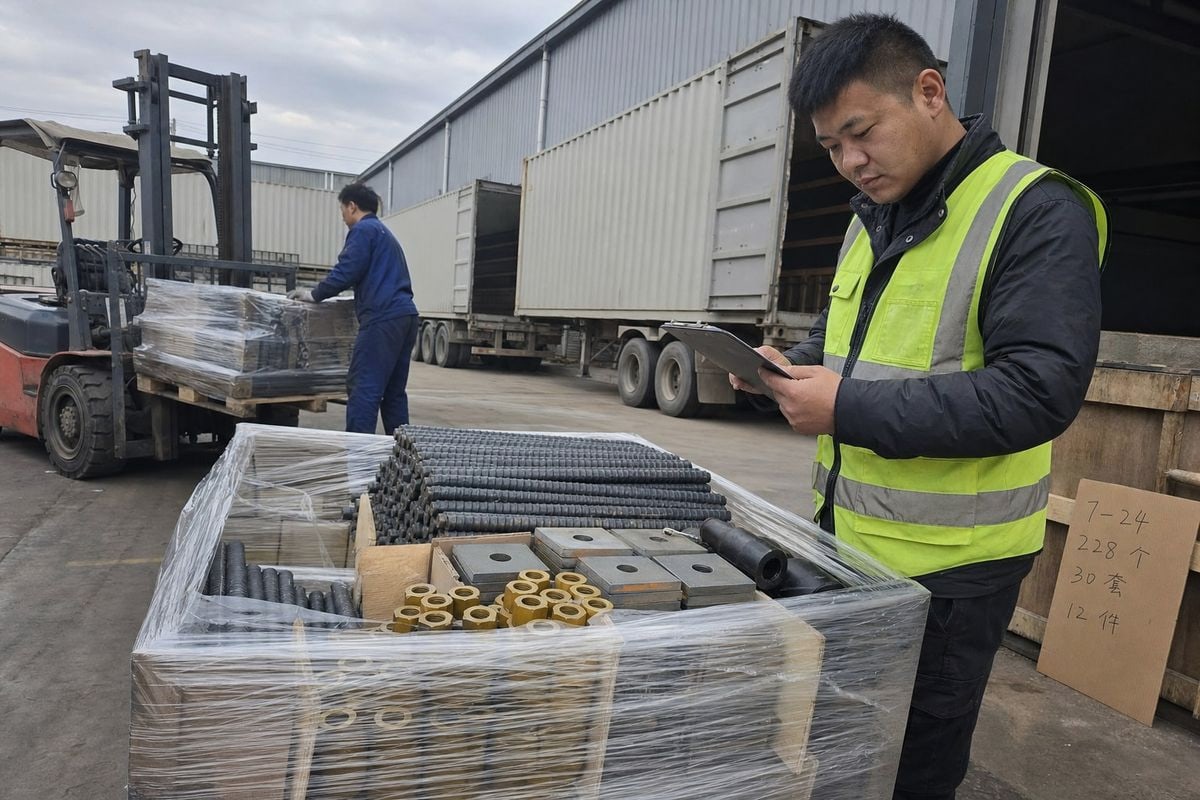
Customs compliance is part of transaction security, not an afterthought. Steel fasteners can attract anti-dumping duties in some markets, so the HS code, declared value, and country-of-origin paperwork must be accurate. Your contract should name the exact standards, tolerances, material grades, quantities, inspection rules, delivery terms, and the conditions that release the final payment.
Choose delivery terms that match your risk
Many of our European and North American customers buying samples or urgent replenishment choose door-to-door air freight on DDP or DAP terms. The service covers pickup, export declaration, international air freight, destination clearance, payment of duties and VAT, and final delivery to the door. The consignee does nothing: no local tax ID needed, no self-managed clearance. Transit is typically 7–12 working days door to door, far faster than sea-freight DDP, which suits samples, spare parts, urgent restocking, and high-value goods. The all-in quote bundles freight, clearance fees, and estimated taxes, so budgeting is clean. It fits flexible loads from about 10 kg to 1,500 kg, is simpler than traditional airport-pickup air freight, and usually beats DHL or FedEx commercial DDP on price. Delivery works to commercial addresses, private addresses, Amazon FBA, and overseas warehouses.
One warning from our shipping experience: cheap "double clearance, tax included" offers mostly rely on under-declaration, which risks cargo seizure and fines. High-value or branded goods should always move on compliant, fully-taxed DDP. The USA is a special case: Chinese companies cannot act as the Importer of Record, so market air-freight DDP uses third-party US clearance companies, which carries tax liability risk. For bulk B2B volumes to the US, we recommend DAP instead.
| Document | Purpose | Dispute It Prevents |
|---|---|---|
| Commercial invoice | Accurate declared value and HS code | Customs holds, penalty for under-declaration |
| Packing list | Quantities, weights, bundle markings | Shortage and miscount claims |
| Mill certificates | Steel grade and mechanical properties | Material-grade disputes on site |
| Bill of lading / air waybill | Title and carriage terms | Delivery and release conflicts |
| Certificate of origin | Duty rates, anti-dumping exposure | Wrong tariff application |
| Inspection report | Proof goods matched contract specs | Final-payment and quality disputes |
Supply chain risks do not end at the port. Define in the contract who bears delay penalties, how claims are filed, and which jurisdiction governs disputes. A clean paper trail matters more than marketing claims, especially when anchor bolts are sourced project by project.
Conclusion
Transaction security for self-drilling anchor bolts is layered: verify the entity, protect the payment, inspect before shipping, and document delivery terms. Skip one layer, and the others weaken. Build all four, and sourcing from China becomes predictable.
Footnotes
1. Explains the components, benefits, and applications of self-drilling anchor systems. ↩︎
2. Introduces the official rules published by the International Chamber of Commerce for global trade. ↩︎
3. Details the 18-digit unique identifier for legal entities in mainland China. ↩︎
4. Provides an overview of the internationally recognized standard for quality management systems. ↩︎
5. Explains letters of credit as a contractual commitment for international trade payments. ↩︎
6. Defines this financially damaging online crime and how it operates. ↩︎