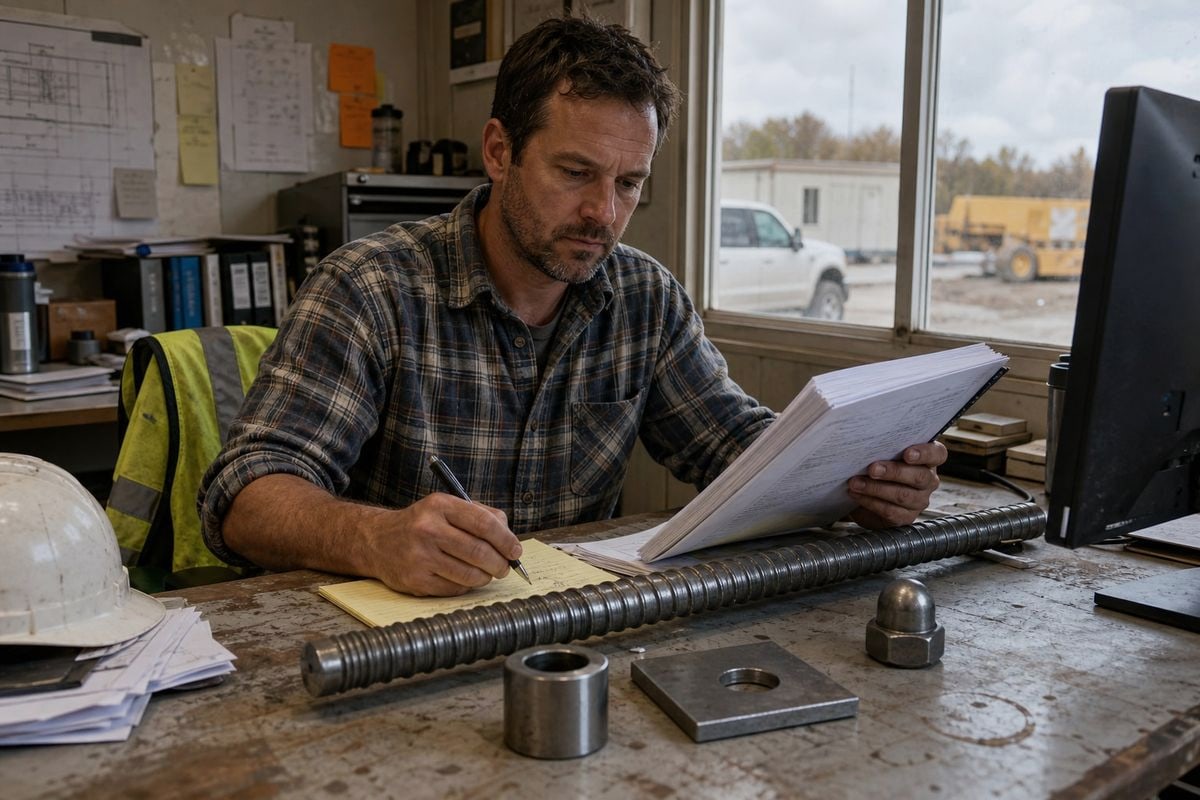
Self-drilling anchor bolt selection for U.S. job sites often goes wrong before the quote arrives specific ASTM standards 1. Buyers email our Shandong factory asking for "anchor bolts" with no geology data. That vague request causes wrong sizing, failed pull tests, and costly project delays hot-dip galvanizing 2. The fix is simple: ask suppliers better questions, and give them better inputs.
To ask suppliers for self-drilling anchor bolt selection for U.S. job sites, provide your geotechnical report, load requirements, corrosion exposure, and installation constraints. Then request ASTM-referenced test data, mill certificates, customization options, pull-test guidance, and confirmed DDP delivery terms before placing any order.
This guide walks through the four conversations that matter most DDP logistics 3. Each section gives you the exact questions to send. Let's start with the technical specifications.
What Technical Specifications Should I Request from My Self-Drilling Anchor Bolt Supplier?
A few years back, a U.S. contractor sent our team just one line: "Need 32mm bolts, 3 meters." We asked about their ground conditions. The answer changed everything, including the drill bit.
Request the hollow anchor bar diameter and thread type, ultimate and yield tensile strength, design load capacity, recommended bolt length, drill bit selection for your geology, grout specifications, coupler details, and installation torque range. Match every value against your project's load and soil profile.
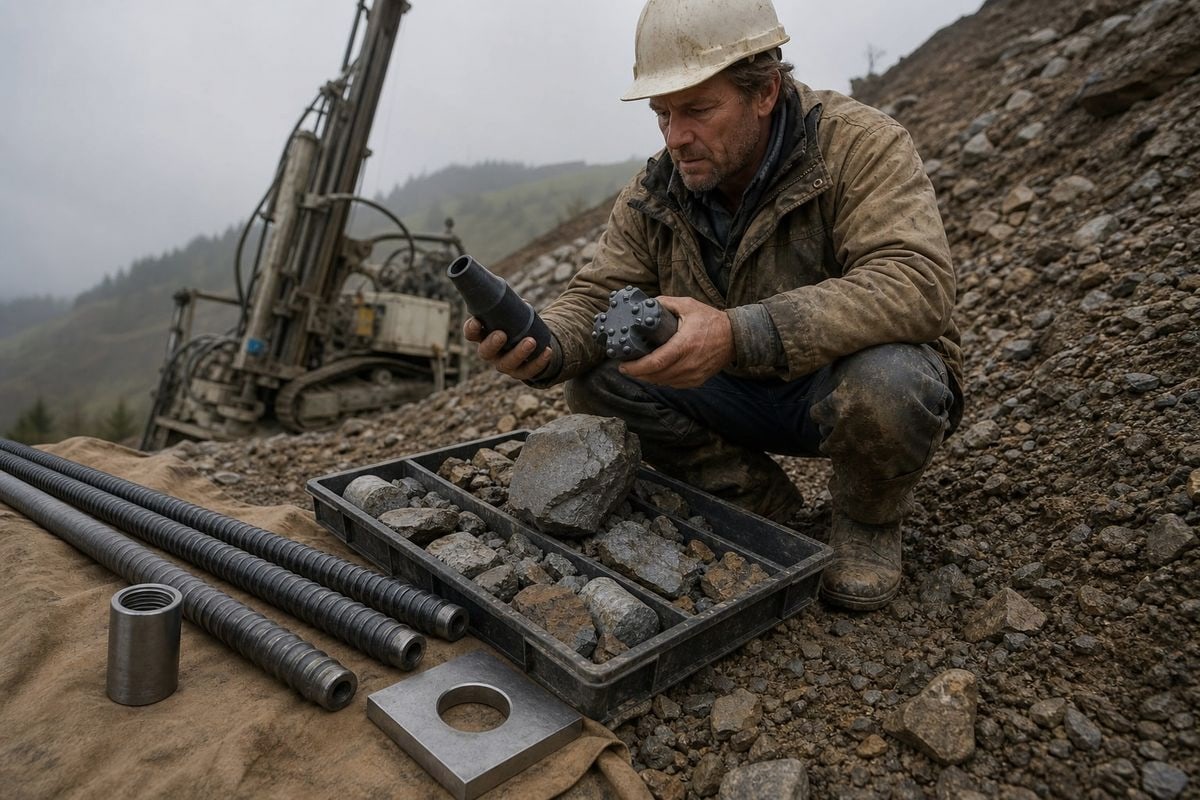
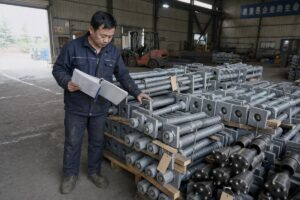
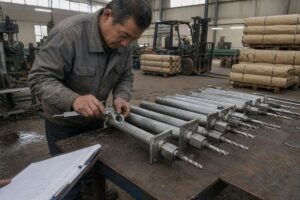
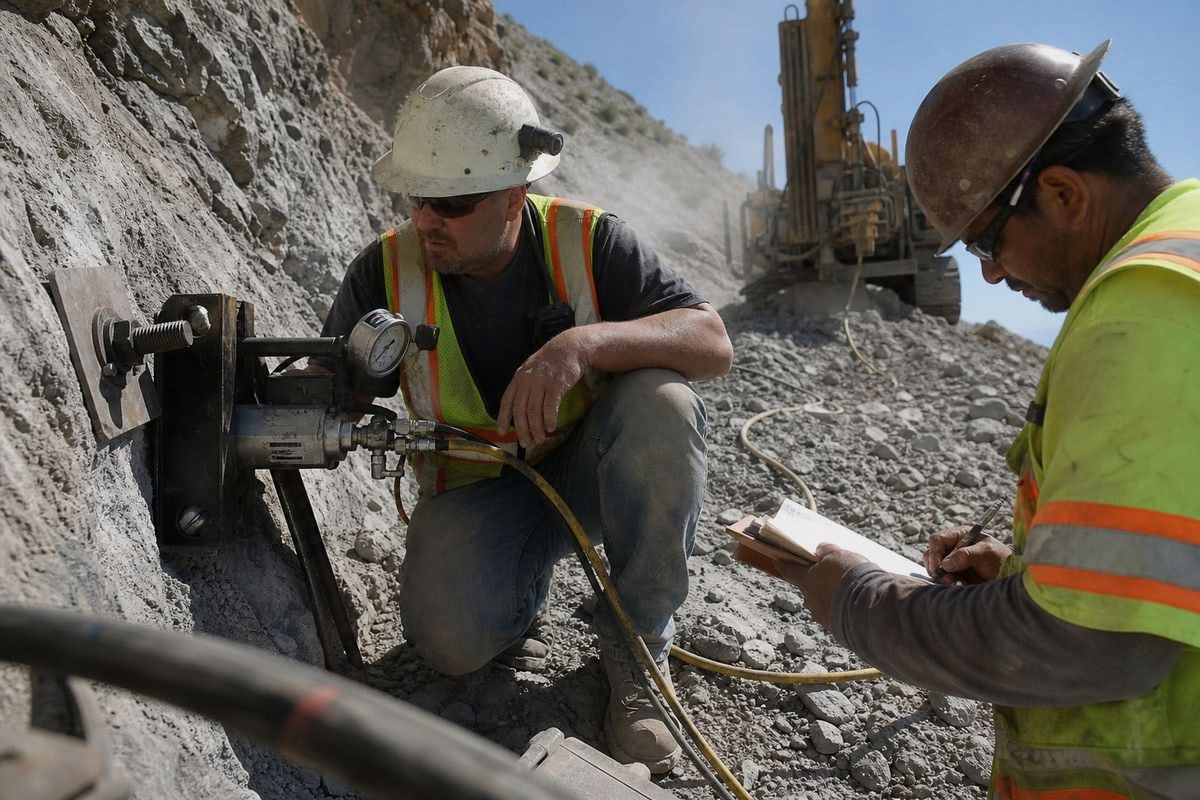
A self-drilling anchor bolt is a system, not a single part. It combines a hollow anchor bar, a sacrificial drill bit, couplers, nuts, and bearing plates. The bar drills, grouts, and anchors in one operation. That makes it ideal for fractured rock, loose soil, and other unstable ground where a predrilled hole would collapse. But it also means every component must match your site.
Start with the Ground, Not the Catalog
Your supplier cannot pick the right diameter without your geotechnical report 4. Soft soils and fractured zones usually need larger diameters and longer embedment. Hard rock changes the drill bit selection entirely. High groundwater may require a waterproof grout mix. Send soil classifications, rock hardness, groundwater levels, and any known geological hazards up front. In our experience, buyers who share this data get a usable recommendation in one email exchange instead of five.
Core Specifications to Put in Writing
| Specification | What to Ask For | Why It Matters |
|---|---|---|
| Bar diameter | Common U.S. range: 1 to 1¼ in; 1½ in for high loads | Drives load capacity and drillability |
| Tensile strength | Design loads often 200–400 kN; ultimate 500–600 kN | Must exceed design load with safety factor |
| Bolt length & couplers | Total installed length and coupler spacing | Long installs need reliable coupled joints |
| Drill bit type | Clay bit, cross bit, or button bit | Must match soil, gravel, or rock |
| Grout plan | Water-cement ratio, grouting process, pressure | Bond strength and corrosion protection |
| Installation torque | Typical guidance around 3–10 kN·m | Prevents over-stressing during install |
State the Application Clearly
Tell the supplier whether the bolts are for slope stabilization, tunnel support, soil nailing, micropiles, or mining roof support. Each application shifts the load path. Dynamic loads and combined tension-shear cases need different safety factors than static tension. Also confirm what installation equipment you have on site. Shank adapter compatibility between your drilling rig and the hollow bar is a small detail that stops entire crews when it is wrong.
How Can I Verify a Supplier's Quality Certifications Meet U.S. Job Site Standards?
One lesson from twenty years of exporting: the phrase "meets ASTM" on a datasheet means nothing by itself. A procurement manager from Texas once taught me to demand the actual test reports, and she was right.
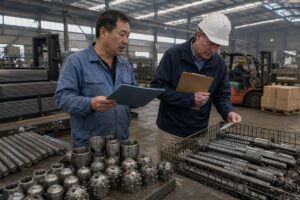
Verify certifications by requesting Mill Test Reports for every heat number, third-party mechanical test data referenced to specific ASTM standards, ISO 9001 factory certification, and pull-out test records. Cross-check these documents against your project specifications, FHWA requirements, and any MSHA rules for mining work.
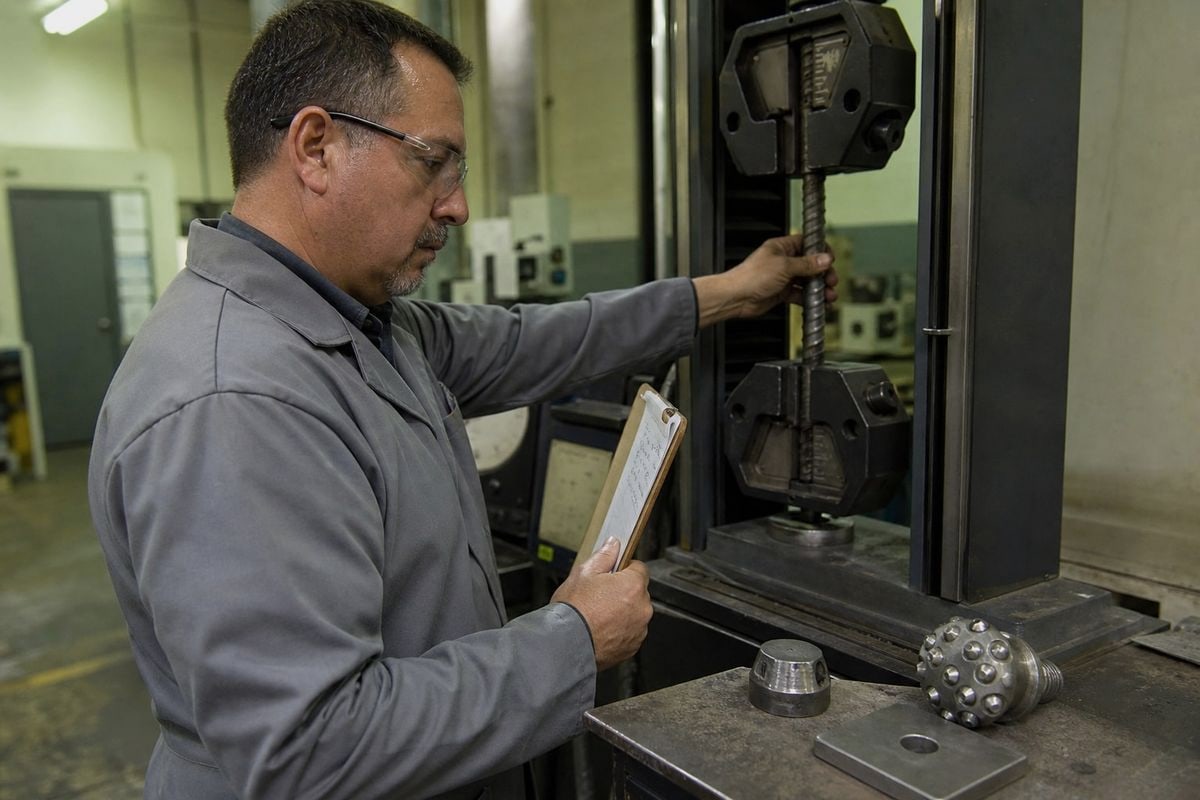
Paperwork protects your project. On U.S. job sites, engineers of record will reject material that cannot be traced to documented mechanical properties. So your verification questions must go deeper than a marketing brochure.
Documents You Should Receive Before Shipment
- Mill Test Reports (MTRs) tied to heat numbers, showing chemical composition and mechanical properties for the actual production batch, not a sample from last year.
- Tensile test data covering yield strength, ultimate tensile strength, and elongation for the hollow anchor bar and couplers.
- Factory quality system proof, typically ISO 9001 5, plus the supplier's internal QC flow: raw material inspection, thread gauging, and final dimensional checks.
- Application-specific compliance notes, such as FHWA requirements 6 for soil nailing and micropile work, AASHTO references for transportation projects, and MSHA considerations for underground mining support.
- Field verification guidance, including recommended pull-out test loads and acceptance criteria your inspector can use after installation.
Be careful with standards claims. Some supplier articles cite specific ASTM numbers loosely. Treat those as supplier-reported references and verify them against your project's actual specification documents. When our QC team packs an export order, every bundle carries a traceable batch tag, because we know a missing MTR can hold a container at the job site gate.
Red Flags During Verification
Watch for suppliers who cannot name the standard their test method follows. Watch for tensile certificates without heat numbers. And be wary if the supplier never asks what your engineer of record requires. A competent partner asks about your submittal package before quoting.
What Questions Should I Ask About Customization Options for My Specific Project Needs?
The trade-off we weigh most often on our production line is corrosion protection versus cost. A coastal seawall job and a dry Nevada cut slope should never receive the same bar coating, even at the same load capacity.
Ask whether the supplier offers custom bar lengths, thread systems, corrosion protection options like hot-dip galvanizing or epoxy coating, stainless grades for aggressive environments, matched drill bit selection, OEM branding, and custom packaging. Confirm minimum order quantities and lead times for each custom option.
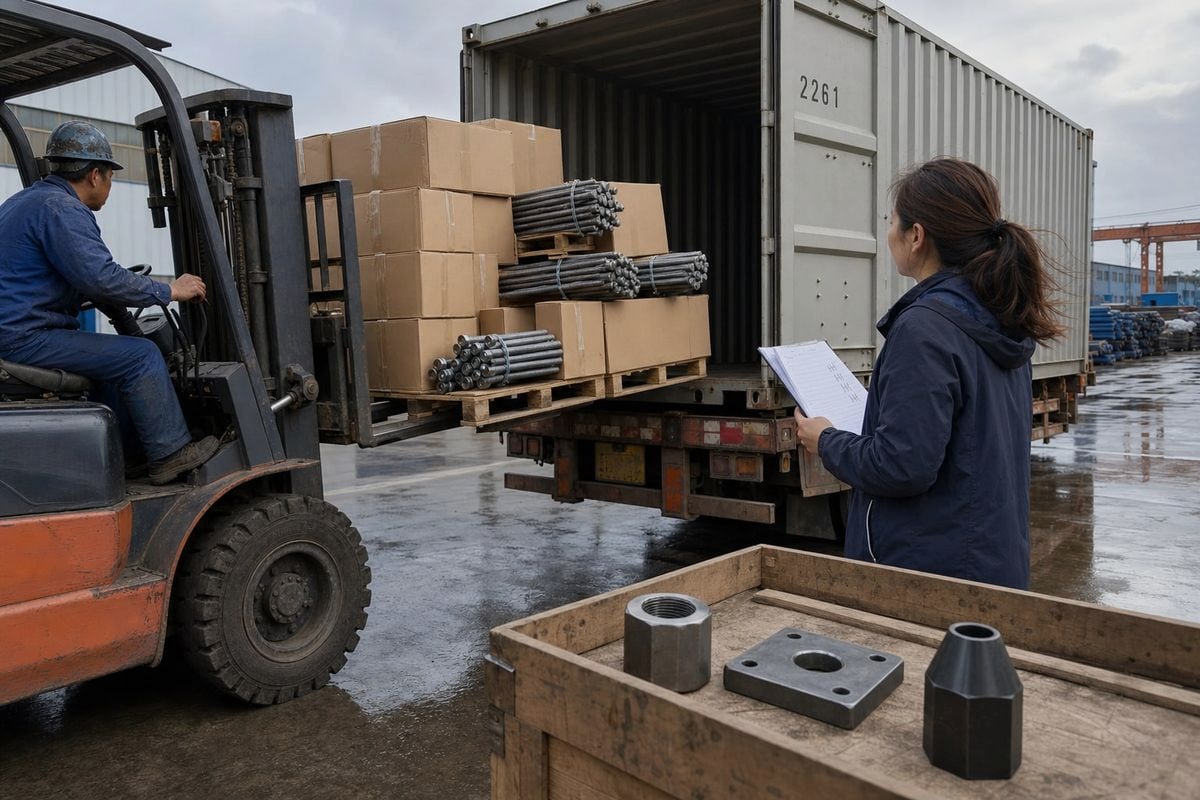
Customization is where a real factory separates itself from a catalog reseller. Our workshop supports OEM and ODM orders, and the most valuable customizations are rarely cosmetic. They solve a site problem.
Corrosion Protection Is a Lifecycle Decision
Corrosion resistance should match your exposure, not your upfront budget alone. Some buyers object that stainless or duplex options cost too much. That objection makes sense on a dry inland site, where standard galvanized carbon steel performs well for the design life. But on coastal, chemical, or acidic ground, a cheap bar becomes the most expensive line item when it fails early. Guidance from industry sources runs roughly like this: 304 stainless for dry inland environments, 316L for coastal or chemical exposure, and 2205 duplex for the harshest conditions. Frame the choice as lifecycle cost, and the right answer usually becomes obvious.
| Site Environment | Typical Protection Option | Cost Impact |
|---|---|---|
| Dry inland, low moisture | Plain or hot-dip galvanized carbon steel | Baseline |
| Wet ground, freeze-thaw cycles | Galvanized plus quality grouting process | Moderate |
| Coastal or chemical exposure | Epoxy coating or 316L stainless 7 | Higher |
| Extreme corrosive conditions | Duplex stainless (e.g., 2205) | Highest, longest life |
Customization Questions Worth Sending
Ask these directly: Can you cut non-standard lengths to reduce field coupling? Can you supply left-hand or right-hand thread to match our installation equipment? Which drill bits do you stock for mixed gravel and clay layers? Can plates and nuts be sized to our engineer's bearing requirements? Do you support private-label packaging for distribution? Also ask about newer requests we see from U.S. buyers, such as BIM-compatible product data for design coordination and documentation for green building programs. A supplier who answers these quickly, with drawings, is a supplier who has done it before.
How Do I Evaluate a Supplier's DDP Logistics and Delivery Reliability Before Placing My Order?
A buyer in the U.S. once refused a sample shipment because an unexpected duty bill arrived with it. That single incident reshaped how we set up every express and sea shipment leaving our warehouse.
Evaluate DDP reliability by confirming the supplier prepays all duties and taxes in writing, checking stock levels and stated production lead times, requesting references for past U.S. deliveries, and verifying who handles customs clearance. Remember that couriers default to DAP, so DDP must be arranged before shipping.
Here is something many importers misunderstand, and it comes straight from our own shipping experience. With DHL, FedEx, UPS, and TNT, the default arrangement is that the receiver handles customs clearance and pays import taxes. That is DAP, formerly called DDU. But this default is not a fixed rule. The shipper can proactively select official DDP, where the sender prepays duties and taxes. It just has to be set up before the parcel ships. If nothing special is agreed, the courier will bill the receiver. So if you want zero tax surprises on your side, confirm the DDP prepaid-tax option with your supplier before dispatch.
The belief that commercial couriers can only bill the consignee is a misconception. Official courier DDP gives you a single tracking number, fast transit, and clean handling, as long as the goods value is declared truthfully.
When DAP Actually Suits You Better
DDP is not automatically right for everyone. B2B buyers with VAT-registered entities often prefer DAP so they pay import VAT themselves and reclaim it as input tax. For samples, B2C shipments, or deliveries to private addresses, DDP is the safer choice, because an unexpected tax invoice at the door is the top reason receivers reject parcels.
| Scenario | Recommended Term | Reason |
|---|---|---|
| VAT-registered B2B buyer | DAP | Buyer pays and reclaims import VAT |
| Samples to private address | DDP | Avoids surprise fees and refused delivery |
| Full container to U.S. project | DDP (contracted) | One landed cost, no customs burden on buyer |
| Urgent small parts by courier | DDP prepaid | Single tracking, fast, no consignee tax bill |
Delivery Reliability Checks
Beyond Incoterms, test the supplier's supply chain resilience. Ask about real stock. Our facility keeps around 2,000 tons of finished goods on hand against a 30,000-ton annual output, which lets us cover urgent tunnel support and slope stabilization orders without restarting production. Ask for the production lead time in writing, the sea freight transit estimate to your port, and who the customs broker of record will be. Request tracking milestones and a named contact for delays. Suppliers who have shipped to the U.S. repeatedly will answer in specifics. Suppliers who have not will answer in generalities, and that difference is your evaluation.
Conclusion
Vague inquiries produce risky anchors and stalled schedules. Send full site data, demand traceable test documents, specify customization, and lock DDP terms early. Better questions build safer, cheaper U.S. projects.
Footnotes
1. Replaced 404 with the official ASTM International website, an authoritative source for standards. ↩︎
2. Describes the process and advantages of hot-dip galvanizing for corrosion protection. ↩︎
3. Clarifies the responsibilities and implications of Delivered Duty Paid (DDP) Incoterms in shipping. ↩︎
4. Explains the importance and content of a geotechnical report in construction projects. ↩︎
5. Details the principles and benefits of the ISO 9001 quality management system standard. ↩︎
6. Replaced 403 with the Federal Highway Administration's official page for laws, codes, and regulations, which directly addresses 'requirements'. ↩︎
7. Provides information on the properties and common applications of 316L stainless steel. ↩︎