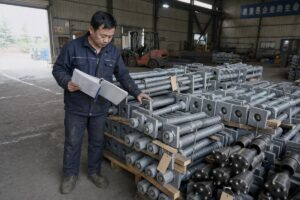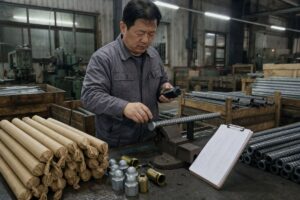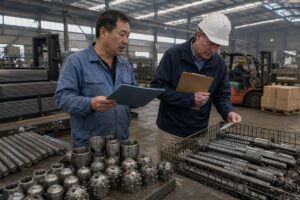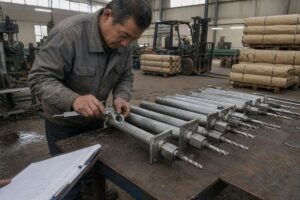
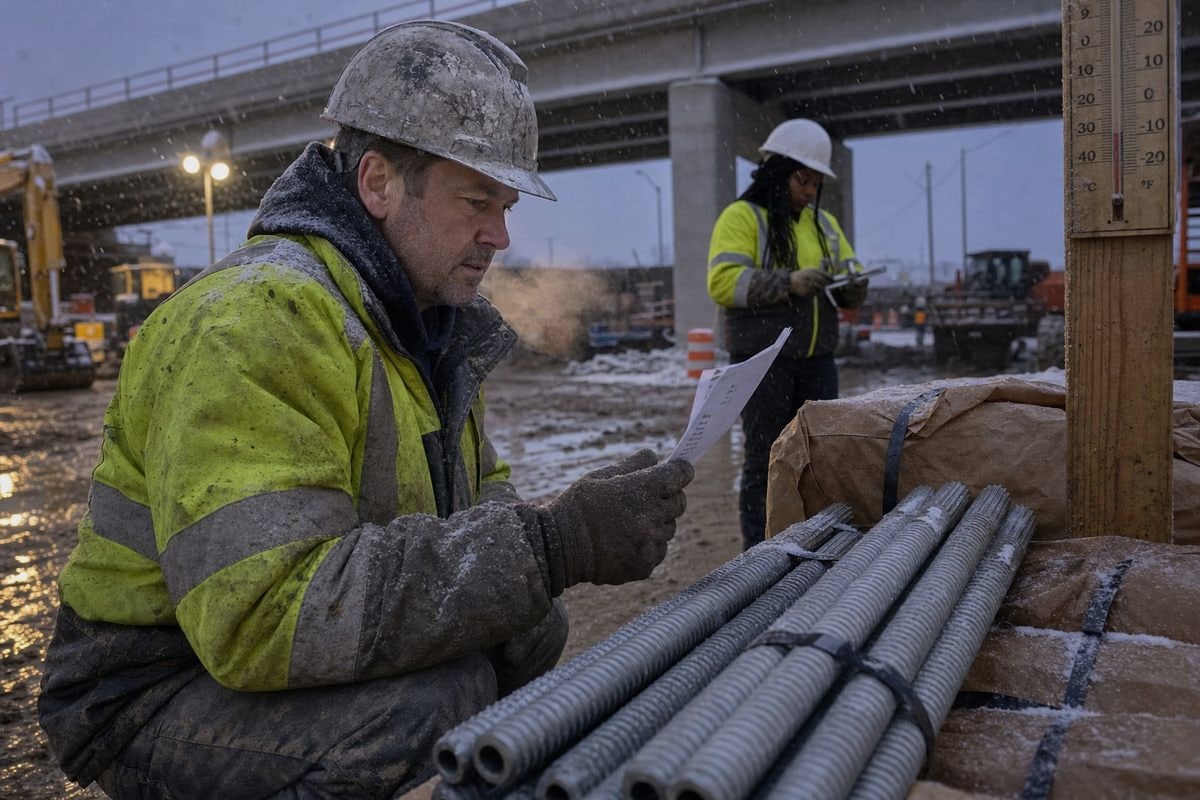
Choosing steel for self-drilling anchor bolts in cold-climate US infrastructure worries many buyers I meet. One wrong grade, and a bolt snaps at −30°F. Our factory has seen why.
Select steel for self-drilling anchor bolts in cold-climate US infrastructure by verifying low-temperature toughness through Charpy V-notch testing at the site's minimum metal temperature, matching corrosion resistance to chloride exposure (304, 316, or duplex stainless), and requiring full mill-certificate traceability under ASTM standards.
That is the short answer. But the details decide whether your anchors last 50 years or fail in the first winter. Let me walk you through each decision, step by step.
What Steel Grades Perform Best in Freeze-Thaw and Sub-Zero Conditions?
A contractor in Norway once asked us why his hollow bars cracked at −25°C while identical-looking bars from another lot held fine. The answer was impact toughness, not tensile strength.
Stainless steel grades 304 and 316 perform best in sub-zero service because they resist the ductile-to-brittle transition. Duplex 2205 handles extreme cold plus severe corrosion. Carbon and alloy steels also work, but only when Charpy V-notch tests confirm adequate impact toughness at the minimum service temperature.
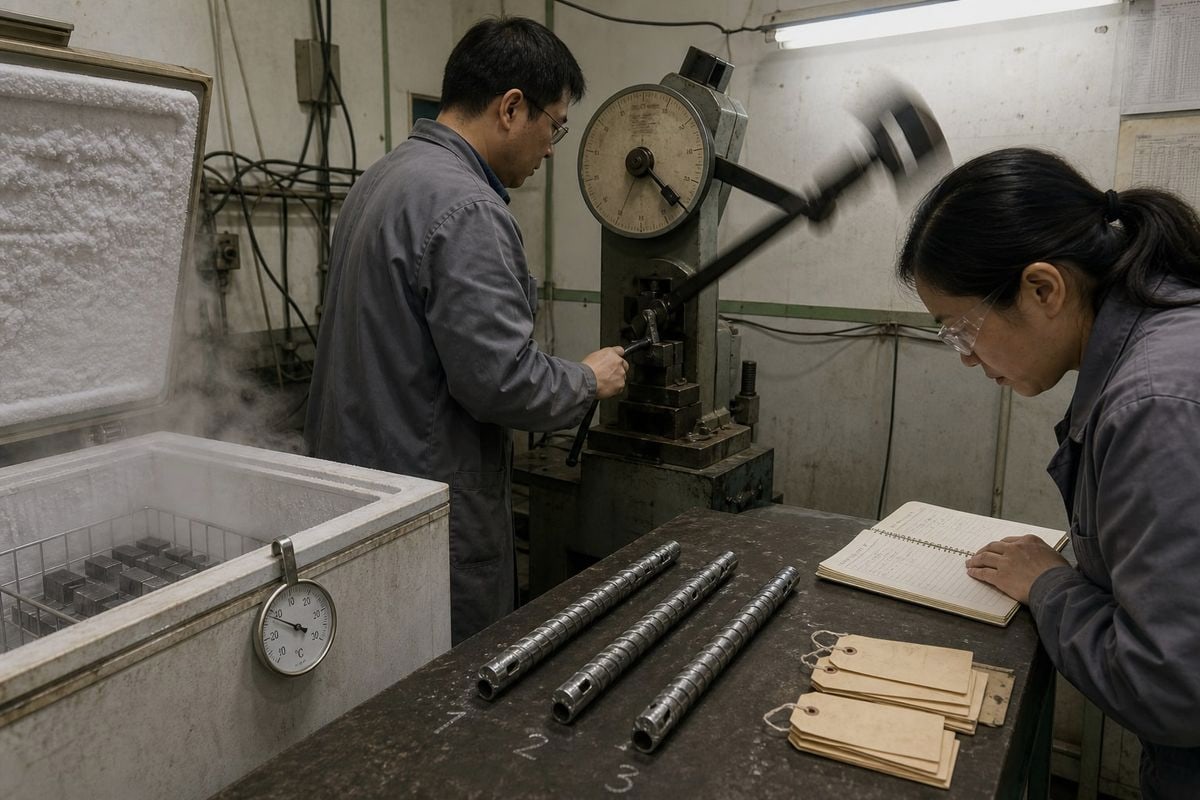
Cold-weather failure is different from normal overload failure. Most people picture a bolt slowly bending and stretching before it breaks. That is ductile failure. In sub-zero conditions, many carbon steels pass through a ductile-to-brittle transition 1. Below that temperature, the steel breaks suddenly, like glass, with almost no warning. Tensile strength on the mill certificate tells you nothing about this risk. Only impact toughness data does. Charpy V-notch testing 2
The Grades Compared
Here is how the main options stack up for northern US projects. We supply most of these grades from our Shandong production lines, so the comparison below reflects what we actually test and ship.
| Steel Option | Cold Performance | Corrosion Resistance | Best Use Case | Relative Cost |
|---|---|---|---|---|
| 304 Stainless | Excellent low-temperature ductility | Good, weak against chlorides | Dry inland sites | Medium |
| 316/316L Stainless | Excellent | Very good, handles road salt | Coastal, de-icing salt zones | Medium-high |
| Duplex 2205 | Excellent | Outstanding | Extreme cold plus heavy chlorides | High |
| Impact-tested carbon/alloy steel | Good if CVN-verified | Needs protective coatings | Structural loads, budget-driven projects | Low-medium |
Why Freeze-Thaw Cycles Matter Too
Freeze-thaw cycles add a second layer of stress. Water enters micro-gaps around the anchor, freezes, expands, and loads the steel cyclically. This attacks fatigue strength over time. Grades with stable microstructures at low temperature resist this cycling far better. In our experience exporting to Norway and Switzerland, austenitic stainless grades tolerate thousands of freeze-thaw cycles without measurable toughness loss, while unverified carbon steel can develop micro-cracks within a few seasons.
The practical rule: if the site sees road salt or coastal air, start at 316L. If it is dry and inland, 304 may satisfy both cost and cold-service needs. If both cold and corrosion are severe, duplex 2205 is the premium answer.
How Do I Prevent Hydrogen Embrittlement in Cold-Climate Anchor Bolts?
During a quality audit at our plant last year, a US procurement manager spent an hour on one topic only: hydrogen embrittlement 3 in galvanized high-strength bars. She had good reason.
Prevent hydrogen embrittlement by limiting steel hardness below roughly 39 HRC, specifying post-galvanizing baking within four hours of coating, avoiding acid pickling on high-strength alloys, and requiring embrittlement testing per ASTM standards. Cold temperatures slow hydrogen diffusion out of steel, so the risk lingers longer.
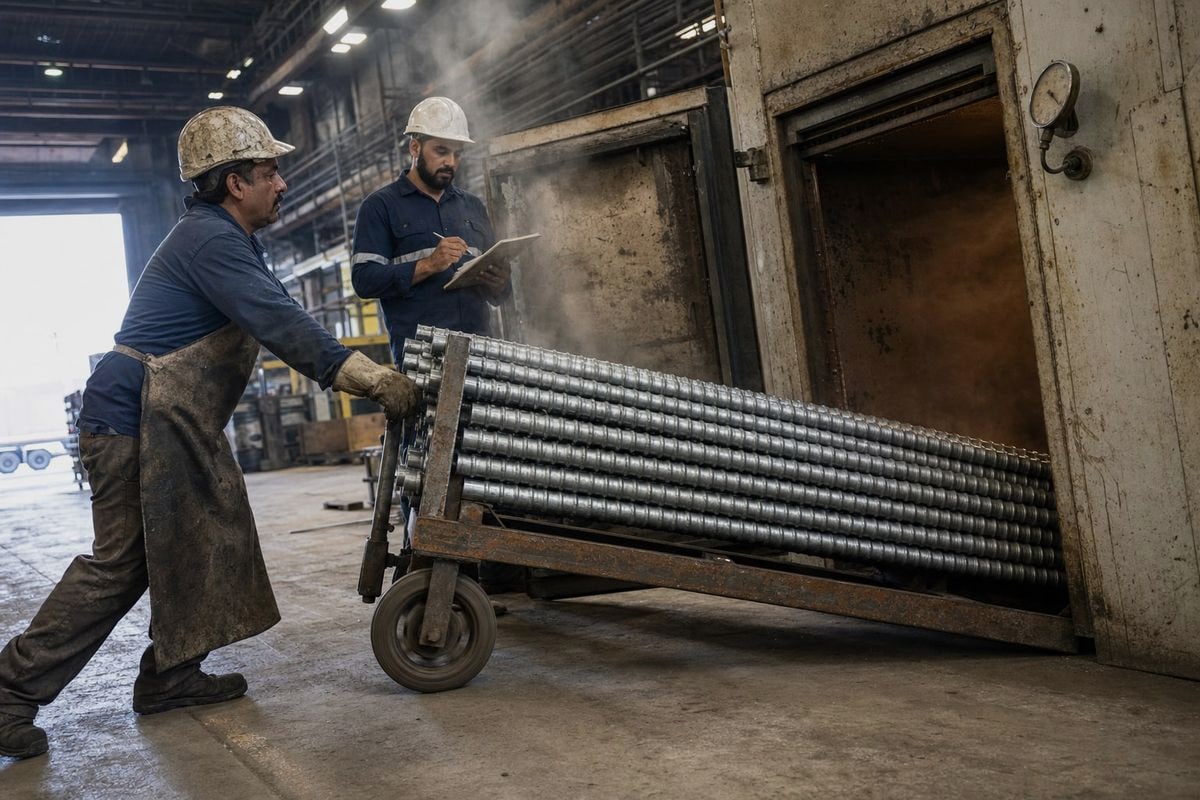
Hydrogen embrittlement is a quiet failure mode. Atomic hydrogen enters the steel during pickling, electroplating, or in-service corrosion. It collects at stress points inside the metal. Then, weeks or months after installation, the bolt cracks under a load it should easily carry. In cold climates the problem gets worse in two ways. First, low temperatures slow the natural escape of hydrogen from the steel, so trapped hydrogen stays trapped. Second, cold steel is already closer to brittle behavior, so less hydrogen is needed to trigger a fracture.
A Practical Prevention Process
Our engineers follow a sequence like this for high-strength alloys headed to freezing climates, and I suggest you write the same steps into your purchase order:
- Control hardness at the source. Very hard, high-strength alloys are the most susceptible. Keep hardness within the specified band for the grade.
- Choose the coating process carefully. Hot-dip galvanizing 4 is generally safer than electroplating for high-strength anchor bars, because electroplating drives more hydrogen into the steel.
- Skip or replace acid pickling. Mechanical blast cleaning before galvanizing removes the biggest hydrogen source on susceptible grades.
- Bake promptly. If any hydrogen-generating process is used, bake the parts soon after coating so hydrogen can diffuse out before it locks in.
- Verify with testing. Sustained-load embrittlement tests on sample lots catch problems before shipment, not after installation.
Stainless as a Structural Shortcut
There is also a simpler route. Austenitic stainless grades are far less susceptible to hydrogen embrittlement than hardened carbon steels. For high-consequence anchors in remote infrastructure, paying more for 316L can eliminate the embrittlement question almost entirely, while also solving corrosion resistance in one decision.
Which Certifications and Standards Should I Verify for US Infrastructure Projects?
The paperwork question comes up in nearly every RFQ we receive from American buyers, and it is often where overseas deals succeed or fall apart.
Verify ASTM standards relevant to anchor steel, such as A615 for bar steel and F1554 for anchor bolts, plus Charpy V-notch impact certification at the project's minimum metal temperature, mill test reports traceable to each heat, and coating certifications for galvanizing or epoxy systems.
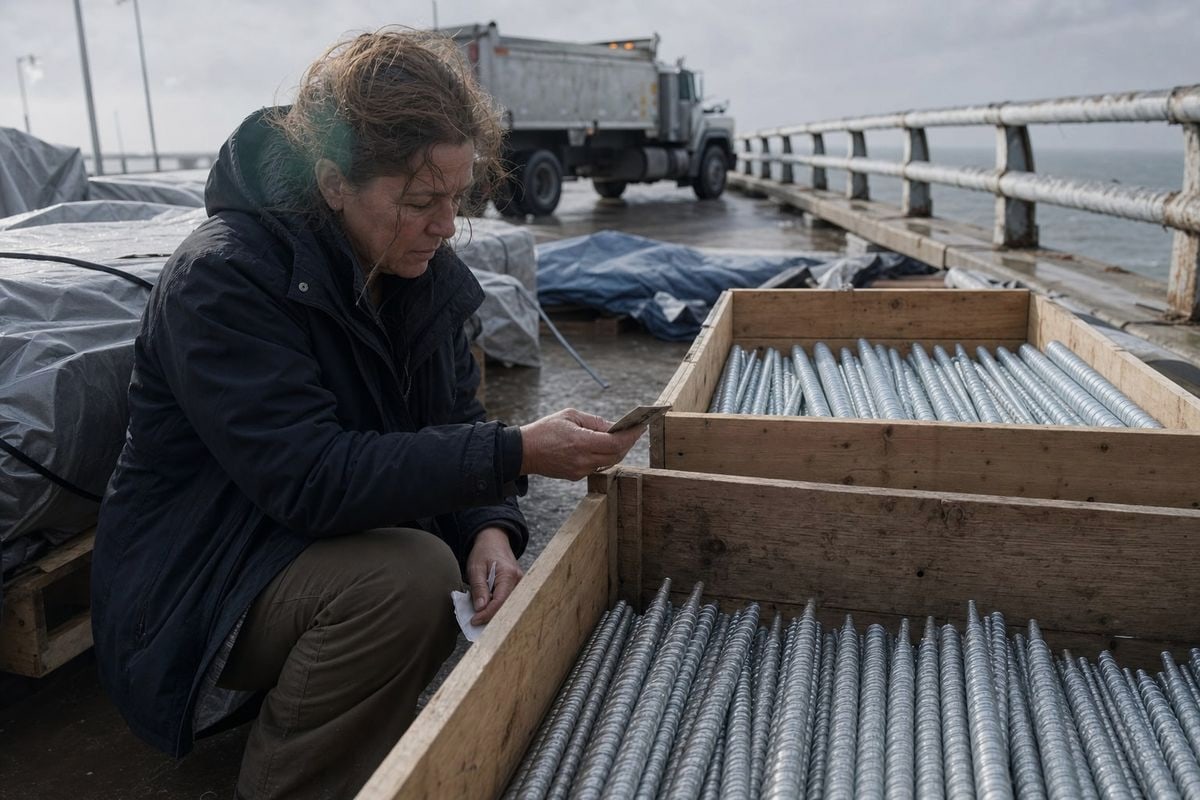
US infrastructure work is specification-driven. A bolt that performs well but lacks the right documents will be rejected at submittal review. So treat the paperwork as part of the product. When we prepare export packages for the US market, we build the document set before production starts, not after.
The Core Document Checklist
| Document | What It Proves | What to Check |
|---|---|---|
| Mill Test Report 5 (MTR) | Chemistry and mechanical properties | Heat number matches delivered material |
| CVN Impact Test Report | Impact toughness at low temperature | Test temperature equals or is below site minimum |
| Coating Certificate | Galvanizing thickness or epoxy quality | Meets specified coating class |
| Thread/Dimension Report | Fit with couplers, nuts, plates | Gauge checks on the actual production lot |
| Load Test Data | Ultimate and yield capacity of the bar system | Tested as a system, not bar alone |
Specify the Test Temperature, Not Just the Grade
Here is the single most important habit for cold-climate procurement. Do not write only "Grade X per ASTM standards 6" in your spec. Add a minimum metal temperature clause. For example: "CVN impact testing at −40°F, specimen size and results included in the submittal." The metal temperature during a January installation in Minnesota can sit far below the average air temperature listed in climate tables. Storage yards, wind chill on exposed steel, and overnight lows all push the real steel temperature down. Anchors below about −20°F service temperature should always carry verified low-temperature ductility data.
Think in Systems, Not Bars
One more point that design institutes raise with us often: geotechnical anchors fail at connections as much as at the bar. Couplers, hex nuts, and bearing plates must meet the same temperature and corrosion envelope as the hollow bar itself. A tough R51 bar joined by a brittle coupler is still a brittle system. Ask for certification of every component in the assembly.
How Can I Ensure Consistent Steel Quality When Sourcing from Overseas Suppliers?
Twenty years of shipping self-drilling anchor systems from Shandong to five continents has taught me exactly where consistency breaks down, and it is rarely where buyers expect.
Ensure consistent quality by requiring heat-by-heat traceability, third-party inspection before shipment, retained samples from each lot, a locked technical data sheet in the contract, and a supplier with in-house testing. Audit the factory's quality process once, then verify every shipment against the agreed baseline.
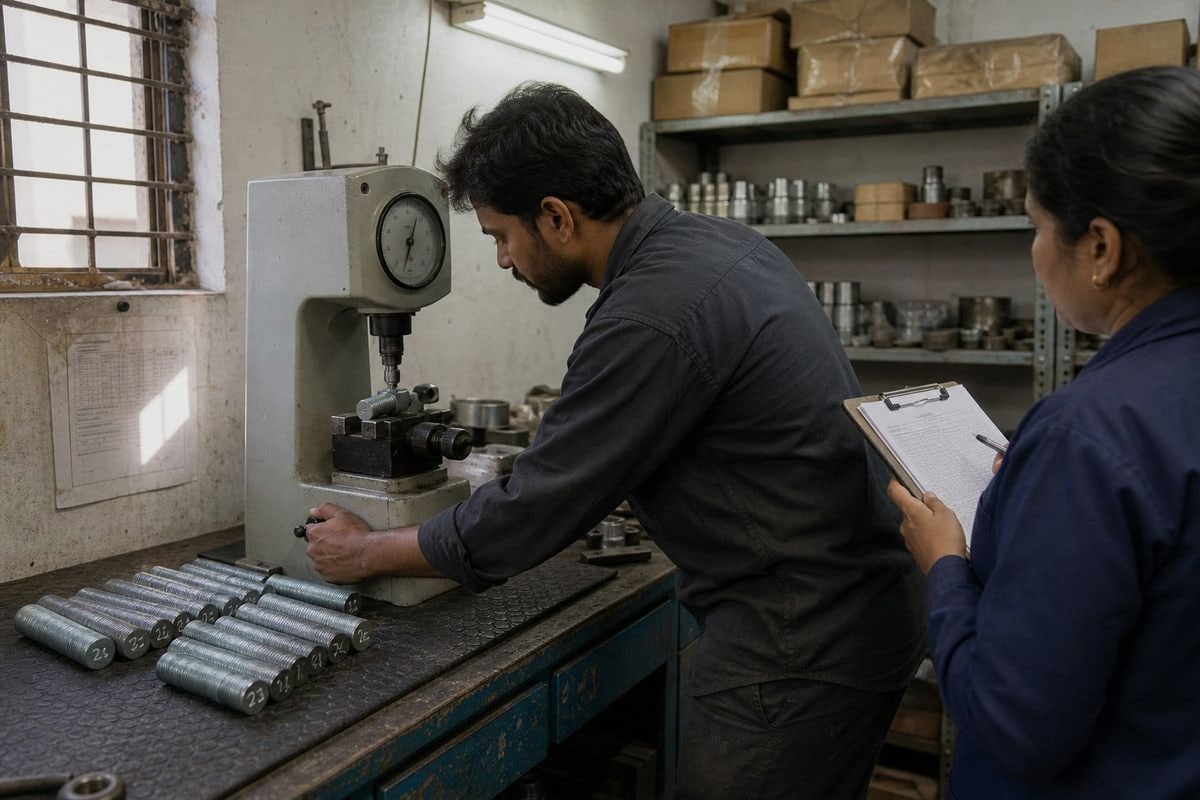
The biggest risk in overseas sourcing is not a bad first shipment. Suppliers almost always get the sample order right. The risk is drift: the third or fourth container, produced under time pressure, with substituted raw material from a different steel mill. For cold-climate anchor bolts, drift is dangerous because the substituted heat may pass tensile tests yet fail impact toughness at −40°F. Nobody notices until winter.
Build a Verification Loop, Not a One-Time Check
Our own quality system, and the systems of the best buyers we work with, follow a repeating loop:
- Lock the specification in the contract. Grade, chemistry limits, CVN temperature and minimum values, coating class, thread tolerances, and marking requirements.
- Trace every heat. Each delivered bundle must link to a specific mill certificate. Generic grade labels are not traceability.
- Test at the source. A supplier with in-house tensile, impact, and dimensional testing catches problems weeks before a port inspection could.
- Inspect before shipment. Third-party inspection 7 on cold-climate orders should include witness of impact tests, not just visual checks.
- Retain samples. Both sides keep marked samples from each lot. If a field problem appears, you can test the retained sample instead of arguing.
Questions That Separate Suppliers
| Question to Ask | Weak Answer | Strong Answer |
|---|---|---|
| Can you show CVN results at my site temperature? | "Our steel is very strong" | Test reports at the specified temperature |
| How do you trace bars to heats? | Grade stamp only | Heat numbers tied to bundles and MTRs |
| What is your stock and capacity? | Vague or order-by-order | Stated annual tonnage plus standing stock |
| Who makes your couplers and plates? | Unknown subcontractors | Documented, certified component sources |
| What happens if a lot fails inspection? | Discount offer | Replacement plus root-cause report |
Capacity matters more than buyers realize. A factory running healthy volume, with real stock on the ground, does not need to cut corners to meet your delivery date. That stability is what protects both your schedule and your fatigue strength margins over a 30,000-ton production year. Delayed shipments and inconsistent lots usually trace back to suppliers producing hand-to-mouth.
Conclusion
Cold-climate anchors fail by brittle fracture, corrosion, and paperwork gaps, not just overload. Specify verified impact toughness, chloride-matched steel grades, ASTM documentation, and traceable lots, and your anchors will outlast the winters.
Footnotes
1. Describes the temperature-dependent change in material behavior from ductile to brittle. ↩︎
2. Explains the standardized test for material impact toughness and energy absorption. ↩︎
3. Explains the phenomenon where hydrogen causes steel to become brittle and fracture. ↩︎
4. Replaced HTTP 404 with an authoritative page from the American Galvanizers Association. ↩︎
5. Replaced HTTP 403 with an authoritative Wikipedia page. ↩︎
6. Official source for voluntary consensus standards for materials, products, and services. ↩︎
7. Explains independent evaluation of product quality, safety, and processes by an unbiased entity. ↩︎