FAR requirements for self-drilling anchor bolts confuse many buyers ACI 318 design 1. I have watched US contractors lose bids because our early conversations started too late, after specs were already misread.
The FAR does not set one product standard for self-drilling anchor bolts. FAR Part 36 governs how the government buys construction, while the project specifications impose the real technical rules: ASTM standards, ACI 318 design, FHWA guidance, Buy America Act sourcing, and documented proof load testing.
That answer surprises people. Compliance is a layered stack, not a single clause Mill Test Reports 2. Let me walk you through each layer, in the order a procurement manager actually meets them.
How can I verify FAR compliance before placing an order with a supplier?
A buyer from Colorado once sent me a solicitation PDF and asked, "Which page is the FAR anchor bolt rule?" Our export team gets that question every quarter, and the honest answer changed how she reviewed bids.
Verify compliance by reading the full solicitation package, not just the FAR. Confirm the cited ASTM standards, AASHTO specifications, and Division 31 specs. Then check Buy America Act clauses, ask the supplier for material test reports, and confirm the anchor system matches the drawings.

The FAR mainly controls procurement method, competition, and contract administration. It requires agencies to describe their needs clearly and avoid unduly restrictive specifications. It does not tell you what steel grade your hollow bar anchors must use. Those details live in the drawings and the technical sections the contract incorporates by reference.
So verification is really a three-layer check. I recommend doing it in this order before any purchase order is signed.
The three-layer compliance stack
| Layer | What it controls | Where to find it |
|---|---|---|
| FAR layer | Procurement method, competition, quality assurance clauses | FAR Part 36 3, contract clauses in the solicitation |
| Specification layer | Diameter, load capacity, coating, embedment, installation | Project drawings, Division 31/05 specs |
| Standards layer | Material chemistry, testing protocols, design method | ASTM, ACI 318 Chapter 17, FHWA circulars, AASHTO |
One more point matters here. If the solicitation names a specific brand of anchor system, that can trigger justification requirements under FAR Subpart 6.3 for limiting competition. Contractors sometimes push back on overly tight specs for exactly this reason. Owners answer that performance-critical anchors justify tight specs because failure risk is high and installation quality is hard to inspect later. Both views are valid. Your job as a buyer is simpler: match the supplier's product data sheet, line by line, against the cited standards before you commit. When we quote US government-related work, we ask for the spec section first and the target price second. That order protects everyone.
What documentation do I need from my supplier to meet federal procurement standards?
Paperwork sinks more shipments than steel quality does. Two years ago, our QC department rebuilt its entire documentation workflow after a US distributor told us her customs broker rejected a certificate for a missing heat number.
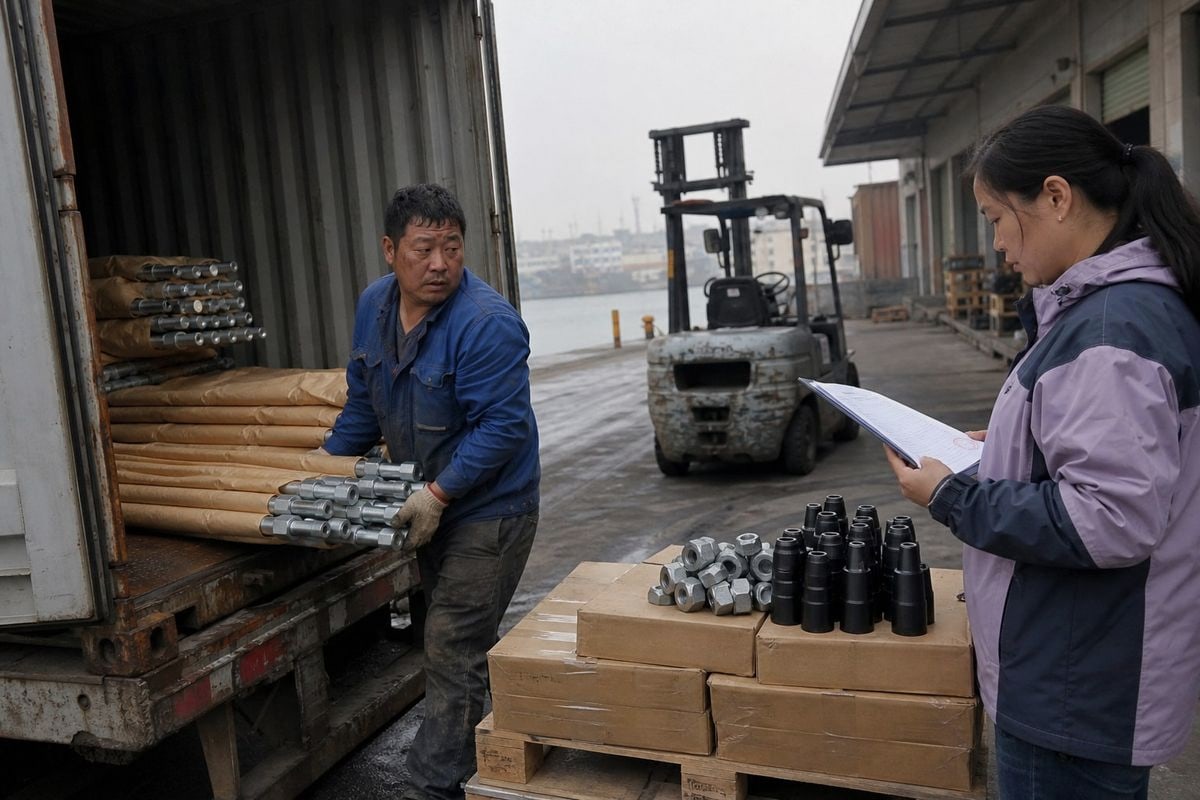
You need Mill Test Reports for every heat of steel, manufacturer certifications of conformity, coating and galvanizing certificates, dimensional inspection records, proof load or ultimate load test data, and country-of-origin statements supporting Buy America Act or BABA domestic content requirements where applicable.

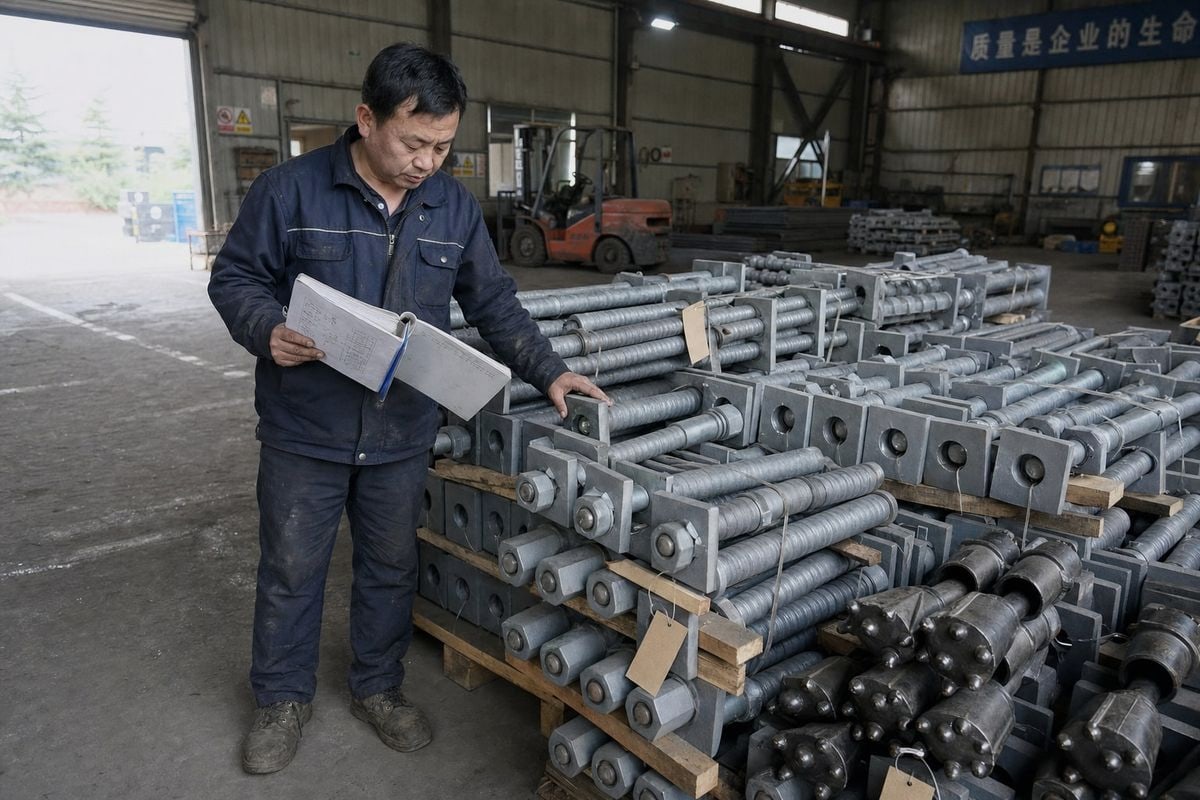
Federal buyers treat traceability as seriously as strength. Material test reports connect a specific batch of hollow bar anchors back to a specific heat of steel, with verified yield strength, tensile strength, and elongation. Without that chain, the anchor is unverifiable on paper, no matter how well it performs in rock.
Core documents and who requires them
| Document | Purpose | Typically required by |
|---|---|---|
| Mill Test Report (MTR) | Verifies chemistry and mechanical properties per heat | Nearly all federal and state DOT projects |
| Certificate of Conformity | Confirms compliance with cited ASTM standards 4 | Project engineer, submittal review |
| Galvanizing/coating certificate | Proves corrosion protection meets spec | DOT and marine or exposed applications |
| Proof load test records | Validates load capacity of production lots | FHWA-guided geotechnical work |
| Country-of-origin declaration | Supports domestic preference clauses | Buy America Act 5, BABA, DFARS projects |
Here is the hard truth for import buyers. The Buy America Act, Buy America provisions, and the Build America, Buy America Act often require iron and steel to be melted and manufactured in the USA for direct federal-aid infrastructure projects. DoD projects add DFARS specialty metals rules on top. That does not close the door on imported anchors everywhere. Many projects fall outside those clauses, waivers exist, and private-sector or non-covered work has no such restriction. But it means your supplier must state origin honestly and completely. When we prepare export documents for American clients, we include origin statements up front, so the buyer can determine coverage before the container ships, not after it clears customs.
Also ask for installation instructions. Government specifications frequently require installation per manufacturer guidance, including hole diameter, grout procedure, and drilling method. If your supplier cannot provide that document, the inspector may reject the installation regardless of the steel quality.
Which material and testing standards do FAR-compliant self-drilling anchor bolts need to satisfy?
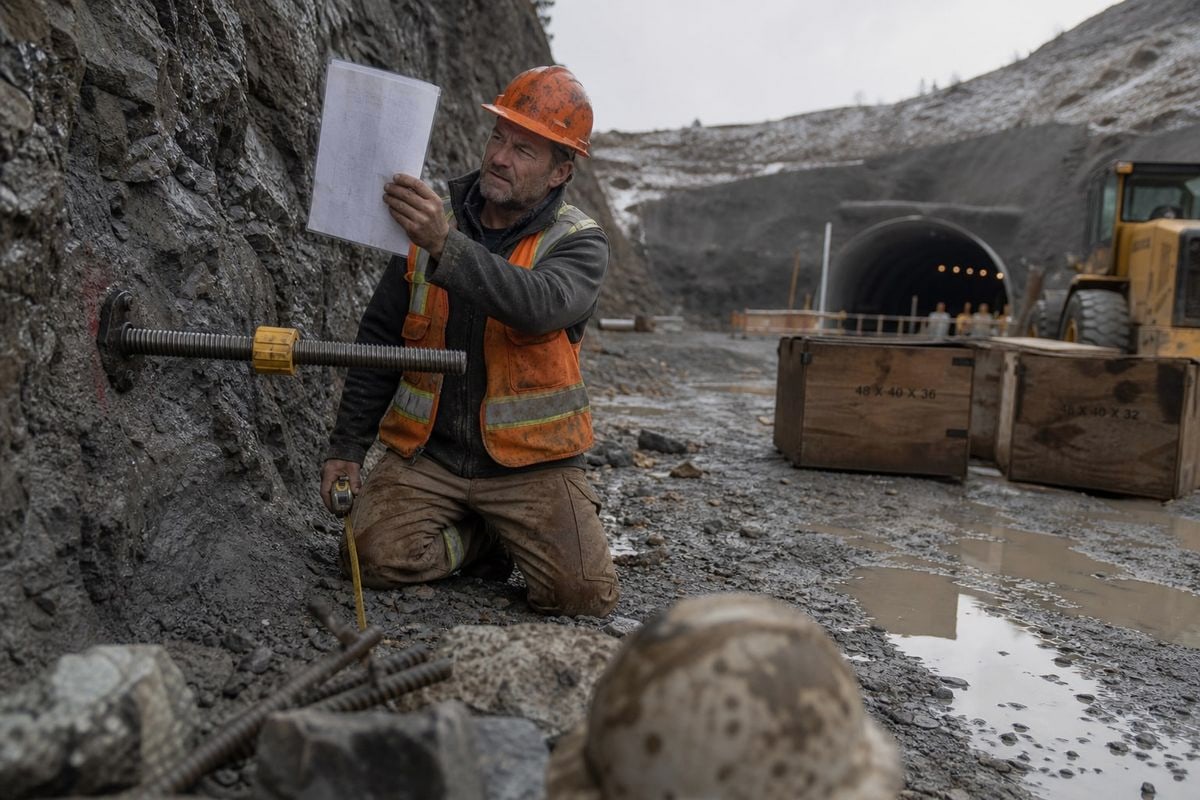
There is a distinction I explain on nearly every technical call, and it changes which standards apply. Self-drilling anchors used as geotechnical systems for slopes, tunnels, and soil stabilization are a different product family from anchor rods embedded in concrete, even though buyers search for both with the same phrase.
Geotechnical self-drilling anchors typically follow FHWA Geotechnical Engineering Circular 7, AASHTO specifications, and ASTM standards such as A615 or A722 for bar steel. Concrete anchor rods follow ASTM F1554 in grades 36, 55, or 105, designed under ACI 318 Chapter 17.
That split matters because the testing regimes differ. Getting it wrong at submittal stage costs weeks.
Geotechnical anchors versus concrete anchor rods
| Attribute | Self-drilling geotechnical anchors | Concrete anchor rods |
|---|---|---|
| Typical use | Slope stabilization, soil nails, micropiles, tunneling | Column bases, equipment mounts, structural attachment |
| Governing design guidance | FHWA GEC 7, AASHTO | ACI 318 Chapter 17 |
| Common material standards | ASTM A615, A722 bar properties | ASTM F1554 Grade 36/55/105 |
| Field testing | Proof load testing on installed anchors | Torque checks, mill certification review |
| Corrosion protection | Grout cover, galvanizing, epoxy options | Hot-dip galvanizing per exposure |
FHWA requirements give hard numbers for the geotechnical side. FHWA guidance 6 calls for testing each ground anchor, with a maximum test load of at least 1.33 times the design load, and not exceeding 80% of the specified minimum capacity. One public specification we studied when developing our R38 product line required a 38 mm bar diameter, a 76 mm sacrificial drill bit, and 400 kN yield with 500 kN ultimate load. Those are performance-based numbers, and public owners are shifting toward exactly this style of spec. They care about yield load, ultimate load, grout, coating, and installation procedure more than nominal size alone. That shift protects structural integrity in unstable ground, where post-installation inspection is nearly impossible.
State agencies layer on their own rules. California DSA guidance requires anchor rods to comply with ASTM F1554 and design per ACI 318 Chapter 17. Texas DOT sets galvanizing rules for exposed threads or full bolt length depending on the application. Iowa DOT requires mill certification, sampling, and proof loading before installation acceptance. Corrosion protection deserves special attention: agencies increasingly use Life Cycle Cost Analysis to justify better coatings, weighing initial cost against decades of maintenance savings on infrastructure projects.
How do I choose a supplier who understands FAR requirements for government infrastructure projects?
The lesson that shaped how I run our export team came from a Chilean tunneling contractor, not an American one. He rejected a competitor's shipment because the coupling nuts came from an undocumented sub-supplier. Traceability failures travel across borders, and federal buyers are the least forgiving audience of all.
Choose a supplier who asks for your project specifications before quoting, provides complete material test reports and origin documentation, runs documented proof load testing, holds recognized quality certifications, and states clearly whether their products can support your project's domestic content requirements.
A supplier's first question tells you almost everything. If they ask only about quantity and diameter, walk away. If they ask which spec section governs, which agency owns the project, and whether Buy America Act clauses apply, you are talking to someone who has been through submittal review before.
A practical supplier vetting process
- Send the spec section first. Ask the supplier to confirm, in writing, compliance with each cited standard or to flag exceptions. Vague "we meet all standards" answers are a warning sign.
- Request sample documentation before ordering. Ask for a past MTR package, coating certificates, and load test records. Review them the way a government inspector would.
- Ask about traceability depth. Every heat of steel should be trackable from raw bar to finished hollow bar anchor. Our factory tags each production lot for this reason, because one missing heat number can stall an entire submittal.
- Test their engineering support. A capable partner can advise on bit selection for your ground conditions, grout procedure, and embedment. That support matters most on remote sites where re-drilling is expensive.
- Confirm capacity and stock. Delayed shipments wreck federal project schedules, and liquidated damages flow downhill to the buyer. We keep roughly 2,000 tons in stock against a 30,000-ton annual output specifically because infrastructure timelines do not wait.
- Discuss logistics honestly. DDP terms, customs classification, and tariff exposure should be settled before the deposit, not at the port.
Watch the emerging requirements too. Environmental Product Declarations are appearing in government procurement as sustainability screening grows. Some owners now feed installation parameters and test results into digital twin models for long-term asset management. And as smart anchors with embedded sensors mature, FAR and DFARS cybersecurity clauses may reach even this humble product category. A supplier who tracks these trends today will not be scrambling when your solicitation requires them tomorrow.
Conclusion
Chasing one FAR clause wastes time and risks rejected submittals. Read the full stack instead: FAR procurement rules, project specifications, and ASTM, ACI, and FHWA standards.
Across twenty years of supplying self-drilling anchor systems to contractors on five continents, I have learned that compliance is won on paper before it is proven in rock. Demand material test reports, verify origin against domestic preference clauses, confirm proof load testing, and partner with suppliers who read specs before they quote. Do that, and the FAR question answers itself. If you want a second set of eyes on your next solicitation's anchor requirements, my team and I review spec sections for buyers every week, and we are glad to help.
Footnotes
1. Official portal for the American Concrete Institute's building code requirements for structural concrete. ↩︎
2. Explains what a Certified Mill Test Report is and its importance for material traceability and quality. ↩︎
3. Provides the official federal regulations for construction and architect-engineer contracts. ↩︎
4. Official source for voluntary consensus technical standards for a wide range of materials and services. ↩︎
5. Explains the federal law requiring government agencies to prefer U.S.-made products in their purchases. ↩︎
6. Replaced HTTP 404 with a general FHWA page on Legislation, Regulations, and Guidance. ↩︎