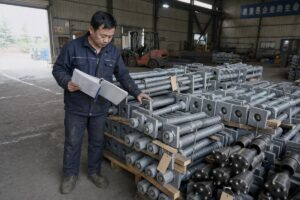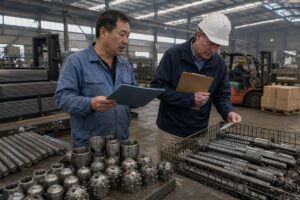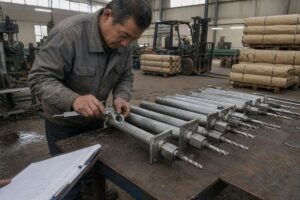
Tunneling in collapsing rock is a nightmare that drains your budget and stalls progress. Traditional bolts often fail here. You need a solution that stays secure when the ground doesn't.
Choosing the right self drilling rock anchor bolt depends on matching the drill bit type to your specific ground conditions, selecting the correct load-bearing capacity for your design, and ensuring the steel grade meets site-specific corrosion and durability requirements for long-term tunnel stability.
I have spent years on underground sites where every minute of downtime costs thousands. If you pick the wrong anchor, you risk more than just money; you risk the safety of your crew. Stick with me while I break down exactly how to make the right choice so your project stays on track and under budget.
Which Drill Bit Should You Select for Different Rock Conditions?
Are you struggling with bits that blunt too fast or get stuck in soft clay? Using the wrong bit leads to overheating and wasted rods. It is a simple mistake that ruins your daily production targets.
You should choose All-Steel Cross bits for hard, fractured rock and Carbide-Tipped bits for extremely abrasive ground. For soft soil or loose sand, use a Button bit or a simple Clay bit to ensure the grout flows correctly and the hole stays open.
Matching Bit Geometry to Ground Hardness
When I look at a new tunnel face, the first thing I check is the rock hardness. This determines everything. If we are dealing with limestone or sandstone, I usually go for a carbide button bit. These bits are tough. They can handle the friction without losing their shape. However, if the rock is very fractured, a cross bit is better. The cross shape helps the bolt stay on a straight path even when it hits gaps in the stone.
In softer conditions, like stiff clay or silt, you do not need expensive carbide. A simple steel bit works fine. The main goal in soft ground is to keep the flushing holes clear. If those holes clog, you cannot pump your grout, and the whole anchor becomes useless. I always tell my team to check the flushing hole size before we start drilling.
| Ground Type | Recommended Bit Type | Key Benefit |
|---|---|---|
| Hard Fractured Rock | All-Steel Cross Bit | Maintains direction in gaps |
| Abrasive Quartz/Granite | Carbide Button Bit | High wear resistance |
| Soft Soil / Clay | Clay Bit (Large Holes) | Prevents clogging during grouting |
| Loose Gravel | Arch Bit | Better stability in loose debris |
How Do You Determine the Required Load Capacity for Your Tunnel?
If your anchors are too weak, the tunnel crown might shift. If they are over-engineered, you are throwing away your profit on heavy steel you don't actually need. Finding that balance is the hardest part of geotechnical design.
To determine load capacity, calculate the weight of the rock wedge the bolt must support and add a safety factor. Usually, you look at the Ultimate Tensile Strength (UTS) and Yield Strength of the SDA bolt to ensure it exceeds your calculated design load.
Understanding Tensile Strength and Safety Factors
I always start by looking at the technical data sheet for our SDA rods. You will see two main numbers: Yield Load and Ultimate Load. The Yield Load is where the steel starts to stretch permanently. The Ultimate Load is where it actually snaps. In tunneling, we never want to get close to that breaking point. I usually look for a safety factor of at least 1.5 to 2.0 depending on the project specs.
We also have to think about the bond between the grout and the rock. A strong bolt is useless if it pulls right out of the ground. This is why I prefer the R-thread or T-thread profiles on our SDA bolts. These threads act like ribs on rebar. They grip the grout along the entire length of the hole. This spreads the load out and prevents a single point of failure. If the ground is very poor, I choose a larger diameter bolt to increase the surface area for the grout to bond.
| Bolt Type | Outer Diameter (mm) | Yield Load (kN) | Ultimate Load (kN) |
|---|---|---|---|
| R32N | 32 | 230 | 280 |
| R32S | 32 | 280 | 360 |
| R51N | 51 | 630 | 800 |
| T76N | 76 | 1200 | 1600 |
Why Does Corrosion Resistance Matter in Long-Term Tunneling?
Water is the enemy of steel. Most tunnels are damp or have flowing groundwater that can eat through a standard steel bolt in just a few years. If your anchors rust away, the tunnel becomes a ticking time bomb for the client.
Corrosion resistance is vital because rust reduces the cross-sectional area of the bolt, which lowers its load capacity. You should use Hot-Dip Galvanized coatings, Epoxy coatings, or Duplex systems (both) for any tunnel meant to last more than a few years.
Selecting the Right Protection for the Environment
When I work on permanent tunnels, like subway lines or highway passages, I never use "black" steel alone. The environment is just too aggressive. If the soil has high salt content or a low pH, the corrosion happens even faster. Hot-dip galvanizing is my go-to for most standard projects. It is tough and can handle the rough treatment of drilling without the coating chipping off too easily.
For really extreme cases, I look at epoxy coating. It provides a chemical barrier. However, you have to be careful during installation. If the epoxy gets scratched during the drilling process, that scratch becomes a spot where rust can start. Some of my most demanding clients ask for a "double corrosion protection" or DCP. This usually involves a plastic sheath or specialized grouting techniques. We want to make sure that the anchor we install today is still holding strong fifty years from now.
| Protection Level | Coating Type | Best Use Case |
|---|---|---|
| Temporary | No Coating (Black Steel) | Support for less than 2 years |
| Medium Term | Hot-Dip Galvanized | Standard civil engineering projects |
| Long Term | Epoxy Coated | Highly acidic or salty soil |
| Permanent | Duplex / DCP | High-end infrastructure (100-year life) |
Conclusion
Choosing the right self drilling anchor for your tunnel is about matching the tool to the ground. You need to pick a bit that can cut, a rod that can hold the weight, and a coating that can fight off rust. When you get these three things right, your installation goes faster and your site stays safe. At SDA Rock Bolt, we manufacture high-quality systems designed for the toughest conditions Michael and his team face every day. If you need a technical partner who understands these challenges, visit our website at https://sdarockbolt.com/ to see our full range of solutions.
Would you like me to help you create a specific technical comparison table for the R-thread and T-thread bolts you are considering for your next project?