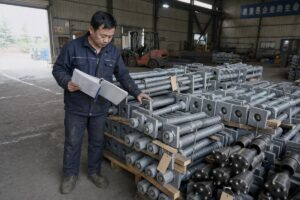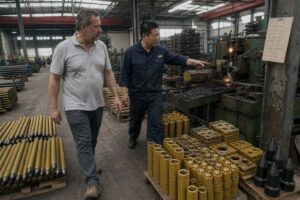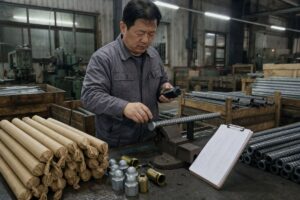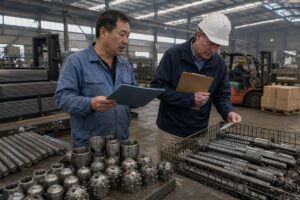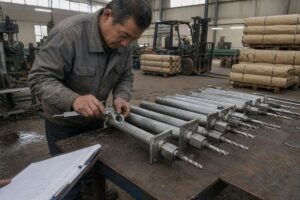

Every year, our sales team hears the same story from new clients: a previous supplier shipped self-drilling anchor bolts that failed on site, causing project delays, safety scares, and wasted budgets Company Profile section 1. The frustration is real, and the stakes in geotechnical projects are too high for guesswork.
Beginners can quickly spot unreliable Chinese self-drilling anchor bolt suppliers by verifying certifications through third-party databases, requesting factory audit evidence, comparing quotes against market benchmarks, testing technical knowledge with project-specific questions, and insisting on sample orders before committing to bulk purchases.
This guide walks you through a practical, step-by-step approach to vetting suppliers factory audit services 2. We will cover certification checks, factory-versus-trader identification, pricing red flags, and ways to test technical expertise. Each section includes actionable tips you can use today, whether you are sourcing from Alibaba, attending a trade show, or responding to a cold email.
How do I verify if a supplier's quality certifications for anchor bolts are actually authentic?
Over the past two decades running our production lines in Shandong, we have seen counterfeit ISO and CE certificates 3 circulate freely. Some look nearly identical to the real thing, and beginners rarely know where to check.
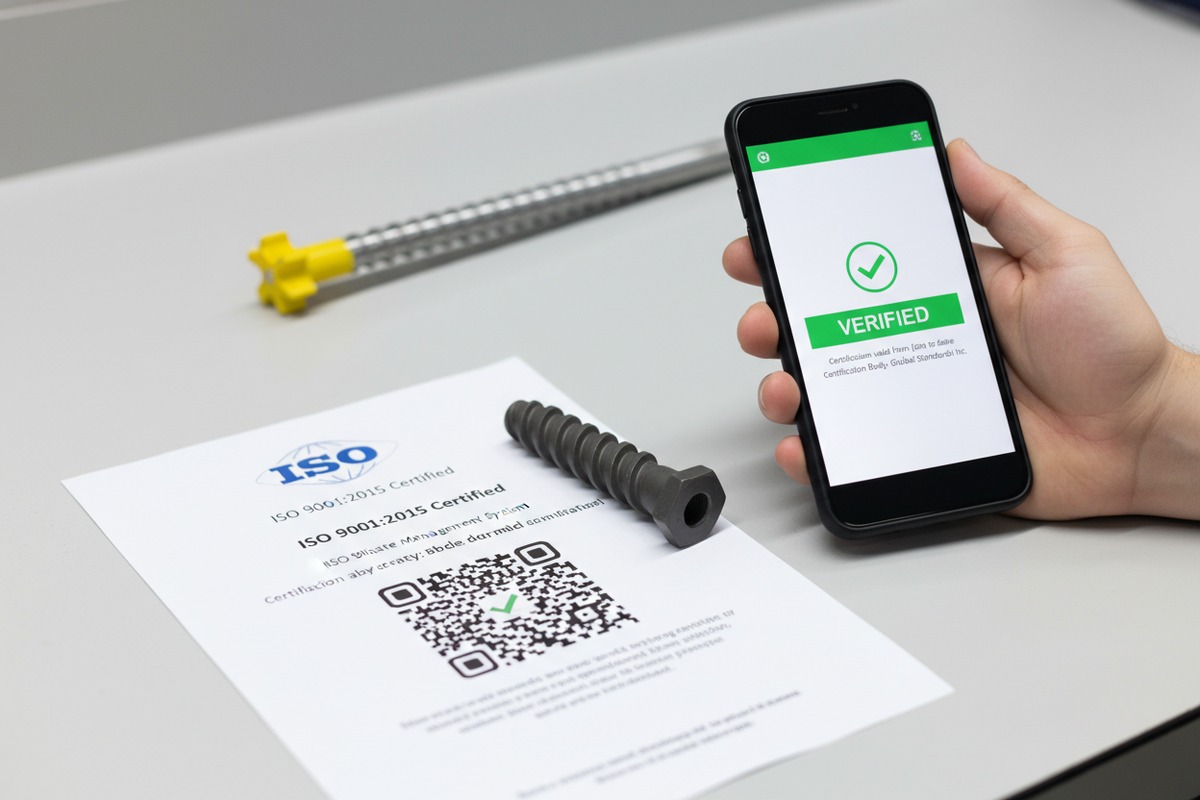
Verify anchor bolt certifications by cross-referencing certificate numbers on the issuing body's official website, requesting original documents with traceable QR codes, and hiring third-party inspection firms like SGS or Bureau Veritas to confirm validity before placing orders.
Why Fake Certificates Are So Common
The barrier to creating a fake PDF is almost zero. A dishonest supplier can copy a legitimate certificate 4, swap the company name, and email it as proof. They count on the buyer not checking. In the anchor bolt industry, the most commonly faked documents include ISO 9001 quality management certificates 5, CE declarations of conformity, and SGS test reports.
Step-by-Step Verification Process
Here is a simple process you can follow without leaving your desk:
- Ask for the original certificate, not a screenshot. Request the PDF or scanned copy with the certificate number, issuing body name, and expiration date clearly visible.
- Visit the issuing body's website. For ISO certificates, go to the certification body's online directory. For example, if the cert was issued by TÜV, search their public database. For SGS, contact their local office with the report number.
- Check the scope. A supplier may hold a valid ISO 9001 certificate, but its scope might cover "trading of hardware products," not "manufacturing of self-drilling anchor bolts." The scope matters.
- Look for QR codes. Many modern certificates have scannable QR codes that link to the certifier's verification page. If the QR code leads nowhere, treat it as a red flag.
- Request a Material Test Report (MTR). Authentic manufacturers maintain batch-level MTRs showing tensile strength, yield strength, elongation, and chemical composition. Ask for one tied to a specific production batch.
Key Certifications for Self-Drilling Anchor Bolts
| Certification | What It Proves | How to Verify |
|---|---|---|
| ISO 9001 | Quality management system is in place | Search the issuing body's online directory using the certificate number |
| CE Marking | Product meets EU safety and performance standards | Request the Declaration of Conformity and check the notified body number on the EU NANDO database |
| SGS Test Report | Independent lab has tested product properties | Contact SGS directly with the report number for confirmation |
| MTR (Material Test Report) | Steel grade, tensile strength, and chemical composition of a specific batch | Cross-reference values against standards like EN 14199 or project specifications |
What If They Refuse to Provide Documents?
Walk away. A legitimate manufacturer has nothing to hide. When our clients ask for certificates, we send them within 24 hours because they are already on file. Hesitation, excuses, or sending blurry images should raise immediate concern.
Also, pay attention to the testing values themselves. For example, if a supplier claims their R32 self-drilling hollow bar has a yield strength of 500 MPa but cannot provide a test report to back it up, the claim is worthless. Numbers without documentation are just marketing.
What red flags should I look for to tell if a supplier is a real factory or just a middleman?
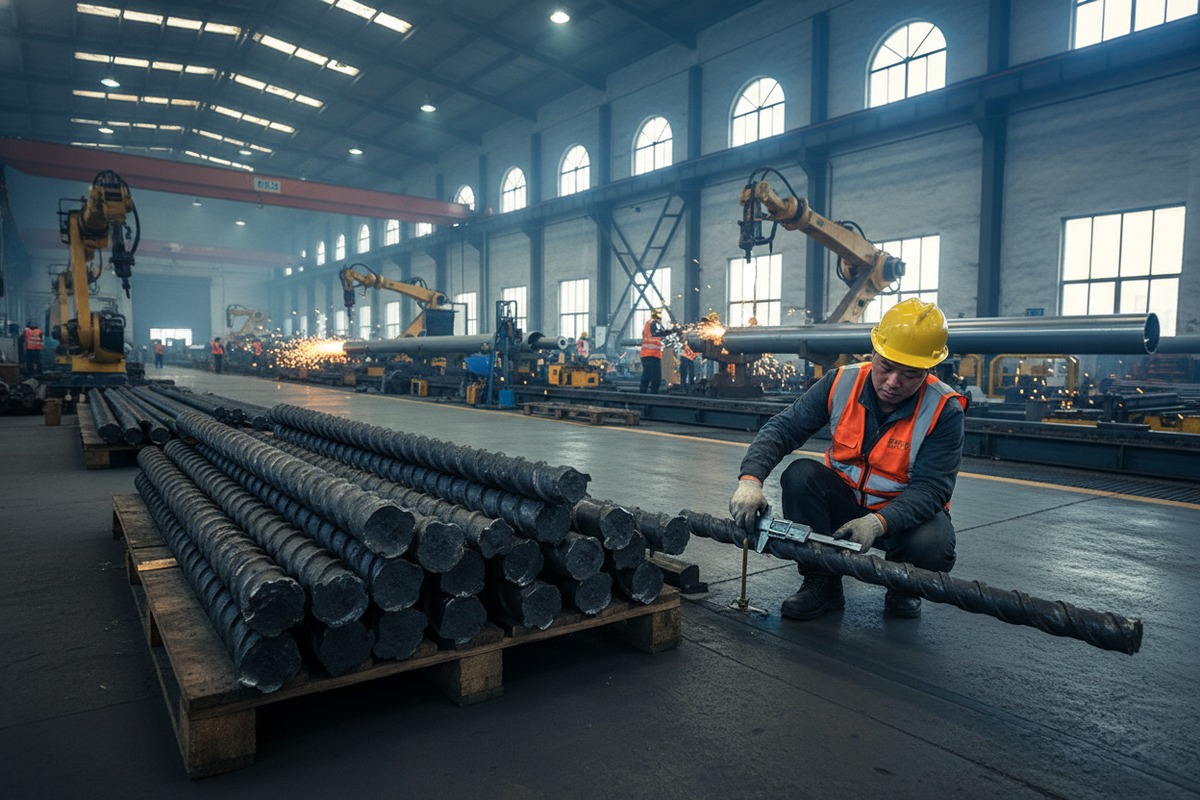
When we welcome visitors to our factory floor and show them 100 employees operating dedicated anchor bolt production lines, the difference between a real manufacturer and a trading company becomes obvious. But most buyers cannot visit in person, so you need other tools.
Red flags indicating a middleman include an excessively broad product range, reluctance to share factory photos or videos, no technical staff available for calls, inconsistent lead times, and a registered business scope listing "trading" rather than "manufacturing" on their Chinese business license.
Why This Distinction Matters
A trading company adds a markup without adding value. Worse, they have no control over quality. If something goes wrong—say the thread pitch on your R32 bolts is off by half a millimeter—a trader cannot fix it. They have to go back to their own anonymous source, and that takes time. On a tunnel project with a tight schedule, that delay can cost thousands of dollars per day.
Quick Checks You Can Do Online
Check their Alibaba profile. Alibaba labels suppliers as "Manufacturer" or "Trading Company." While this label can be manipulated, it is a starting point. Also look at the "Company Profile" section for factory size, production lines, and employee count.
Search on 1688.com. This is Alibaba's domestic Chinese platform. Real factories often sell on 1688 at lower prices. Use Google Translate to search the supplier's Chinese company name. If they only appear on international platforms and not on 1688, they may be a trader.
Check the business license. Every Chinese company has a business license 7 (营业执照). The "business scope" field lists what the company is legally registered to do. Look for words like 生产 (production/manufacturing) versus 销售 (sales) or 贸易 (trade). You can verify this on China's National Enterprise Credit Information Publicity System (NECIPS).
Factory vs. Trader Comparison
| Indicator | Real Factory | Trading Company |
|---|---|---|
| Product range | Focused (e.g., self-drilling anchor bolts and accessories only) | Very broad (bolts, nuts, pipes, fittings, unrelated items) |
| Technical questions | Answered by in-house engineers with specific knowledge | Vague answers or long delays while they consult their source |
| Factory tour | Welcomes video calls or in-person visits | Makes excuses or shows generic stock photos |
| Lead time explanation | Gives detailed production schedule (e.g., "15 days for rolling + 3 days for heat treatment + 2 days for QC") | Gives round numbers like "30 days" with no breakdown |
| Business license scope | Includes "manufacturing" or "production" of anchor bolts or steel products | Lists "import/export trade" or "sales of building materials" |
| Customization | Offers OEM/ODM with clear engineering input | Accepts any request without asking technical clarifications |
The Video Call Test
Request a live video call of the factory floor. A real manufacturer will show you raw steel coils, threading machines, heat treatment furnaces, and finished product warehouses. At our facility, we regularly do this for overseas clients who cannot travel to China. Pay attention to whether the person giving the tour can explain each production step. A trader hired to walk through someone else's factory will stumble on basic questions like "What is the heat treatment temperature for this steel grade?"
Third-Party Factory Audits
If the order value justifies it, hire a third-party audit firm 8. Companies like SGS, Bureau Veritas 9, and TÜV offer factory audit services in China. They will verify the facility, equipment, capacity, and quality control procedures. A standard audit costs between $300 and $800, which is a small price compared to receiving a container of defective anchor bolts.
Why should I be suspicious of rock bolt quotes that are significantly lower than the market average?
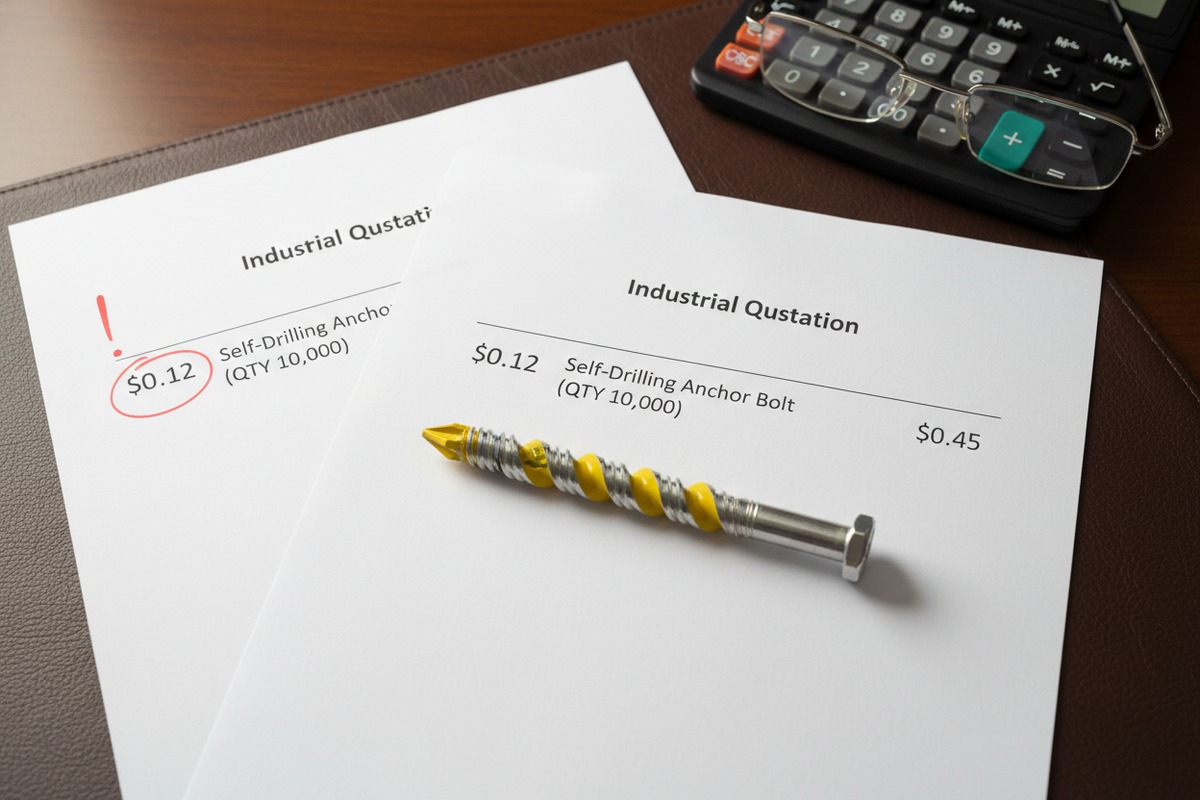
Our production costs include high-strength steel 10, precision threading, heat treatment, quality testing, and packaging. When we see a competitor quoting 30% below what we know the raw material alone costs, we know something is wrong—and so should you.
Quotes significantly below market average usually signal the use of inferior steel grades, skipped heat treatment, poor thread quality, or thinner wall thickness on hollow bars—all of which lead to anchor bolt failures like grout leakage, insufficient pull-out strength, and catastrophic slope or tunnel instability.
Understanding the True Cost of a Self-Drilling Anchor Bolt
A self-drilling anchor bolt is not a simple commodity. It is an engineered product. The cost structure includes:
- Raw steel (typically 40–55% of total cost): High-strength steel like 40Cr or equivalent is not cheap. It must meet specific tensile and yield requirements.
- Manufacturing processes (20–30%): Hot rolling, threading, heat treatment, and straightening all require specialized equipment and energy.
- Quality control (5–10%): Tensile testing, dimensional inspection, and batch traceability.
- Accessories and packaging (5–10%): Couplers, plates, nuts, drill bits, and export-grade packaging.
- Overhead and margin (10–15%): Factory rent, labor, management, and a reasonable profit.
When a supplier cuts 30% off the price, that savings must come from somewhere. Here is where corners typically get cut:
Where Unreliable Suppliers Cut Costs
| Cost-Cutting Area | What They Do | Consequence on Site |
|---|---|---|
| Steel grade | Use lower-grade steel (e.g., Q235 instead of 40Cr) | Bolt snaps under load; insufficient pull-out resistance |
| Wall thickness | Reduce hollow bar wall thickness by 0.5–1mm | Grout leakage through walls; reduced structural capacity |
| Heat treatment | Skip or shorten heat treatment cycle | Brittle bolts that crack during installation or under stress |
| Thread quality | Use worn dies producing shallow or irregular threads | Poor coupler connection; grout cannot flow properly through hollow core |
| Quality testing | No tensile tests; no dimensional checks | Inconsistent batch quality; some bolts fail, others don't |
| Drill bit | Use soft or recycled steel for drill bits | Bit breaks underground; bolt cannot advance; time wasted |
A Real-World Cautionary Example
Consider a construction pit anchoring project. The design calls for R32 self-drilling anchor bolts at specific spacing and depth. If the bolts are made from substandard steel, the grout-to-bolt bond weakens. If the wall thickness is too thin, grouting pressure causes leakage. The result? Insufficient anchor density effectively, even if you installed the right number of bolts. Water seeps in. The pit wall shifts. Now you are looking at emergency remediation that costs ten times what you "saved" on cheap bolts.
We have seen clients come to us after exactly this kind of failure. They bought the cheapest option, installed thousands of bolts, and then had to rip them out and start over with properly manufactured anchors.
How to Benchmark Pricing
Get at least three to five quotes from different suppliers. If four suppliers quote between $8 and $10 per meter for R32 bolts and one quotes $5, that $5 quote deserves intense scrutiny. Ask the low-price supplier to explain their cost breakdown. Ask what steel grade they use. Ask for MTRs. If they cannot answer clearly, move on.
How can I test a supplier's technical expertise before I place my first bulk order?
Before we ship a single container, our engineers sit down with each new client to discuss soil conditions, design loads, and installation methods. That conversation tells the client a lot about us—and it should tell you a lot about any supplier you are evaluating.
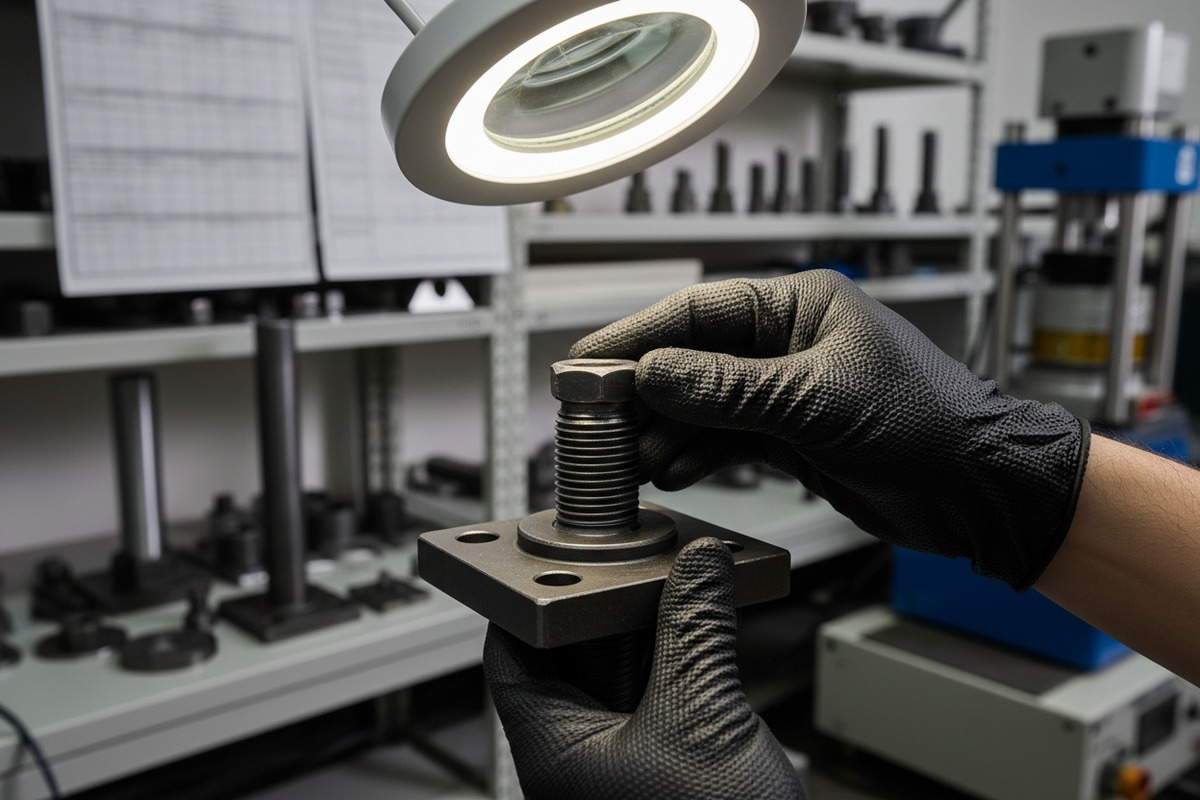
Test a supplier's technical expertise by asking project-specific questions about steel grades, thread types, grout mix design, and installation parameters. A knowledgeable manufacturer will provide detailed, confident answers and recommend the right bolt specifications for your ground conditions rather than just agreeing with whatever you request.
Ask Questions That Require Real Engineering Knowledge
Do not just ask "What products do you have?" Instead, present a scenario. For example:
"We are working on a slope stabilization project in weathered granite with a required anchor length of 6 meters. The design specifies a minimum ultimate bond strength of 150 kN/m. What bolt type, diameter, and drill bit would you recommend?"
A genuine manufacturer with technical staff will discuss:
- The difference between R32 and R38 for your load requirements
- Appropriate drill bit types for weathered granite (cross bit vs. blade bit)
- Grout mix ratio recommendations for that ground condition
- Coupler torque requirements for the specified bolt type
A trading company will likely say "Yes, we can supply that" without offering any technical input.
Key Technical Questions to Ask
Here are specific questions and what good answers look like:
"What is the yield strength and ultimate tensile strength of your R32 hollow bar?"
A good answer: "Our R32 bar is made from 40Cr steel with a minimum yield strength of 500 MPa and ultimate tensile strength of 700 MPa. We can provide the MTR for the specific batch."
A bad answer: "It is very strong. High quality."
"Can you explain the difference between your T thread and R thread profiles?"
A good answer: The supplier explains that R-thread (rope thread) is a continuous spiral designed for grouting efficiency and coupler connection, while T-thread (trapezoidal thread) has different load transfer characteristics. They may discuss which standards each complies with.
A bad answer: "They are the same. Both are good."
"What water-cement ratio do you recommend for grouting in sandy soil?"
A good answer: The supplier discusses a typical range (e.g., 0.40–0.45 w/c ratio for sandy conditions), mentions the importance of grout fluidity for hollow bar injection, and may reference grouting pressure guidelines.
A bad answer: "Just use normal cement."
The Sample Order Test
Never skip this step. Order a small quantity—even just 10 to 20 bars—and send them to an independent lab. Test for:
- Tensile strength and yield strength (compare against the supplier's claims and your project specification)
- Dimensional accuracy (outer diameter, inner diameter, wall thickness, thread pitch)
- Chemical composition (confirm the steel grade matches what was promised)
- Surface condition and thread integrity (visual and gauge inspection)
At our facility, we encourage every new client to test samples. It builds trust and gives both sides a clear quality baseline. If a supplier discourages sample testing or refuses to send small quantities, consider that a serious warning sign.
Evaluate Their After-Sales Commitment
A technically competent supplier does not disappear after shipment. Ask about:
- Technical support during installation (phone, video, or on-site assistance)
- Warranty terms and defect resolution process
- Willingness to provide installation guides or training materials
Our team provides detailed installation manuals and remains available for troubleshooting throughout the project lifecycle. This level of support is standard for a real manufacturer with skin in the game. A middleman has no capacity to offer this.
Your Pre-Order Evaluation Scorecard
Use this simple scorecard when comparing suppliers:
| Evaluation Criteria | Strong Supplier (Score 3) | Average Supplier (Score 2) | Weak Supplier (Score 1) |
|---|---|---|---|
| Technical Q&A | Detailed, confident answers with data references | Acceptable but generic answers | Vague, delayed, or incorrect answers |
| Sample availability | Ships samples within 7 days; encourages independent testing | Provides samples but reluctantly | Refuses samples or requires large minimum order |
| Documentation | Provides MTR, cert copies, and installation guides proactively | Provides documents only when asked repeatedly | Cannot provide key documents |
| Customization input | Asks about your project conditions and recommends specifications | Accepts your specs without questions | Agrees to everything without any clarification |
| After-sales support | Offers technical hotline, video support, and installation guidance | Promises support but details are unclear | No mention of post-sale service |
Score each supplier. Anyone scoring below 10 out of 15 warrants serious caution. Anyone below 7 should be eliminated from your shortlist.
Conclusion
Spotting unreliable Chinese self-drilling anchor bolt suppliers comes down to doing your homework: verify certifications, confirm factory status, question abnormally low prices, and test technical knowledge with real project scenarios before committing.
Footnotes
1. Official Alibaba page explaining how to evaluate a supplier's company profile. ↩︎
2. Official site for TÜV factory audits and technical certifications. ↩︎
3. Official ISO page for quality management system standards and certification. ↩︎
4. ISO guidance on how to verify certificates and issuing bodies. ↩︎
5. Links to the official ISO page explaining the 9001 standard requirements. ↩︎
6. Wikipedia entry explaining the role of EU directives in product compliance. ↩︎
7. Wikipedia background on the purpose and function of business licenses. ↩︎
8. Directs to a globally recognized inspection and certification authority. ↩︎
9. Official website of Bureau Veritas for global inspection services. ↩︎
10. Authoritative source for global steel market and material information. ↩︎