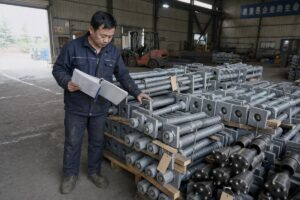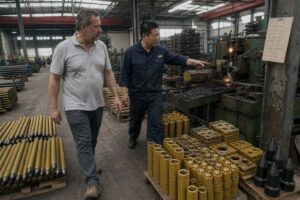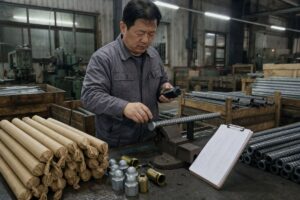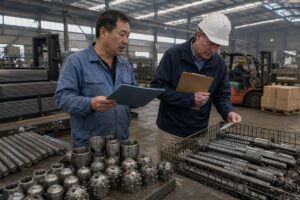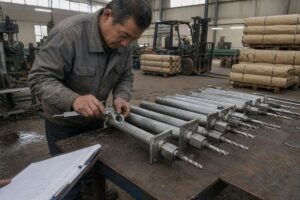
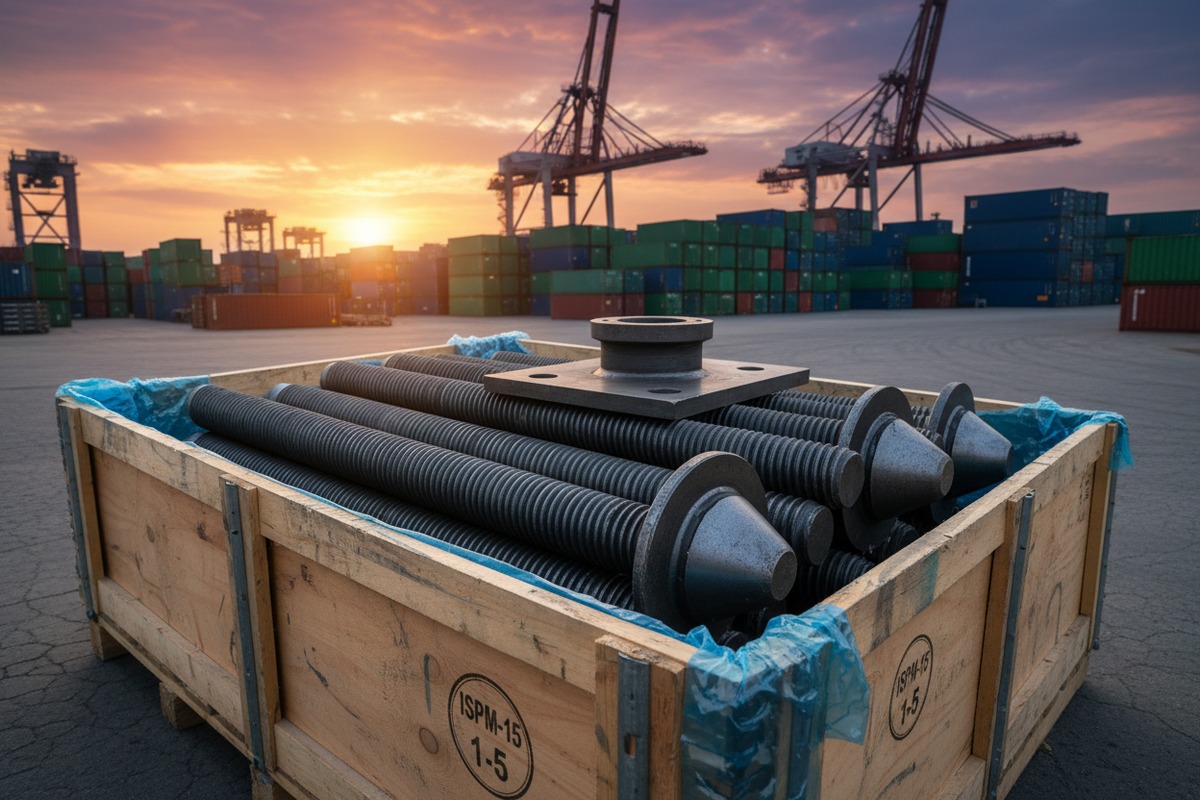
Every year, our shipping team handles thousands of tons of self-drilling anchor bolts bound for ports across five continents. And every year, we still get calls from buyers who received rusted, bent, or damaged bolts from other suppliers — bolts that looked fine when they left the factory but arrived unusable after weeks on the ocean. The problem is rarely the product itself. It is almost always the packaging.
To protect self-drilling anchor bolt packaging during sea freight from China, you need a multi-layered strategy combining anti-rust coatings, VCI moisture barriers, ISPM-15 compliant wooden crates, heavy-duty strapping, desiccant packs, proper container loading, and high-security bolt seals to prevent corrosion, physical damage, and tampering.
This guide walks you through every layer of protection — from the coating on the bolt to the seal on the container door. Whether you are importing a single 20-foot container 1 or managing quarterly shipments, these steps will save you money and headaches. Let us break it down section by section.
How can I ensure my self-drilling anchor bolt packaging is strong enough for long-distance sea freight?
Our production facility ships self-drilling hollow bar 2 anchors to over 30 countries, and we learned early on that a great product means nothing if it arrives crushed or loose inside a damaged crate. Long-distance sea freight from ports like Qingdao or Ningbo to Houston or Rotterdam can take 30 to 45 days. That is 30 to 45 days of vibration, stacking pressure, and rough handling by cranes and forklifts.
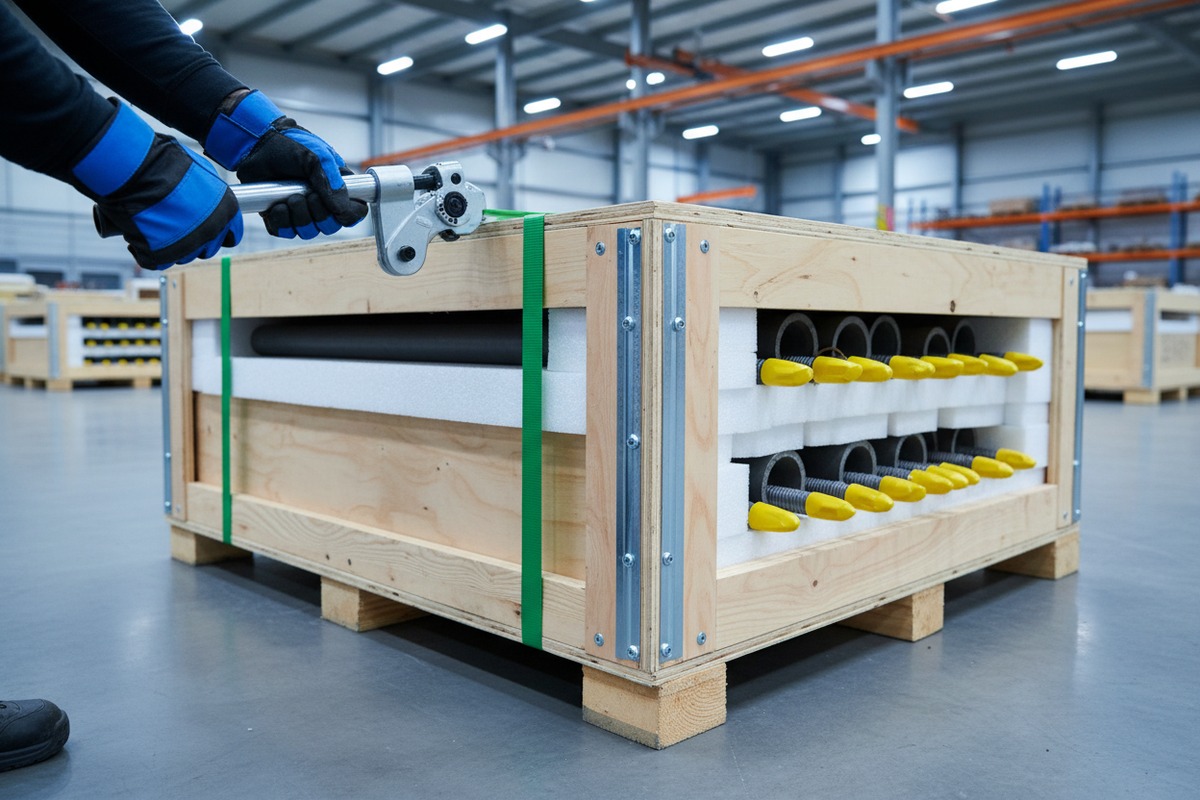
Strong packaging for self-drilling anchor bolts requires ISPM-15 certified wooden crates or reinforced plywood boxes, internal cushioning with foam or bubble wrap, heavy-duty steel or polyester strapping, corner protectors, and plastic thread protectors on the drill tips to prevent puncturing the outer layers.
Why Standard Cardboard Boxes Fail
Self-drilling anchor bolts are heavy. A single R32 hollow bar at 3 meters long can weigh over 7 kg. A bundle of 20 bars pushes past 140 kg. Standard corrugated cartons simply cannot handle this weight, especially when stacked three or four layers high inside a container. The bottom boxes collapse. The bolts shift. Sharp drill bits puncture through cardboard walls. We have seen photos from customers who received shipments from competitors where the drill tips had poked through the boxes and scratched adjacent crates.
Choosing the Right Outer Packaging
The best outer packaging for anchor bolts is a wooden crate 3 or a reinforced plywood box. Here is a comparison:
| Packaging Type | Load Capacity | Moisture Resistance | ISPM-15 Required | Cost per Unit |
|---|---|---|---|---|
| Corrugated Carton | Low (< 50 kg) | Poor | No | $2–5 |
| Reinforced Plywood Box | High (200–500 kg) | Moderate | Yes (if wood) | $15–30 |
| Wooden Crate (Pine) | Very High (500+ kg) | Low (untreated) | Yes | $25–50 |
| Steel Pallet + Shrink Wrap | Very High (1000+ kg) | Good | No | $40–80 |
For most orders, we use reinforced plywood boxes with steel banding. They offer the best balance of strength, weight, and cost. For oversized orders or 6-meter bars, wooden crates with internal dividers keep the bolts separated and stable.
Internal Protection Details
Inside every crate, the bolts need cushioning. We place foam strips between each bundle to prevent metal-on-metal contact. Heavy-duty plastic thread protectors go on every drill bit. These caps are critical — without them, the sharp carbide tips will slice through inner liners and compromise the moisture barrier. Corner protectors made from recycled cardboard 4 or plastic clips go on every edge of the crate to absorb impact during crane lifts and forklift handling.
Strapping and Banding
We use polyester (PET) strapping rated for at least 500 kg of tension. Steel strapping is an alternative, but it can rust and snap under vibration. PET strapping flexes slightly, absorbing shocks without breaking. Each crate gets a minimum of four horizontal bands and two vertical bands. This keeps the load locked in place even if the container is tilted during vessel loading.
What steps should I take to prevent rust and corrosion on my anchor bolts during the ocean voyage?
When we first started exporting self-drilling anchor bars to South America over a decade ago, rust was our biggest nightmare. The ocean crossing from China to Chile takes around 35 days, passing through tropical humidity zones. Even bolts that left our warehouse looking perfect would arrive with orange spots on the threads. That experience forced us to develop a comprehensive anti-corrosion protocol.
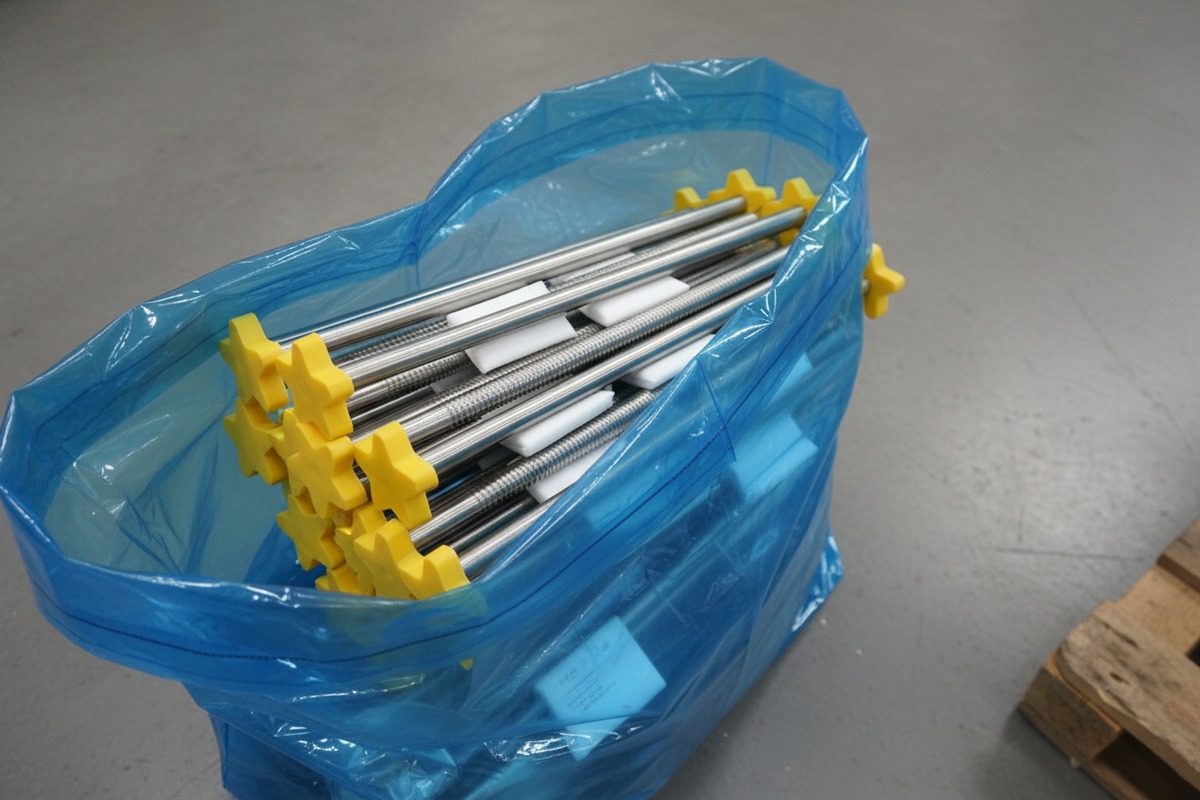
To prevent rust during ocean transit, apply anti-rust oil or epoxy coating before packaging, wrap bolts in VCI (Vapor Corrosion Inhibitor) film, seal inner layers with vacuum or heat-seal methods, insert high-capacity silica gel desiccant packs inside every crate, and apply waterproof shrink-wrap over the entire palletized load as an outer moisture barrier.
Understanding "Container Rain"
Container rain is the number one cause of rust during sea freight. When a sealed metal container travels from a hot climate zone into cooler waters, the air inside the container cools down. Moisture condenses on the ceiling and walls, then drips onto the cargo below. This is not a rare event. It happens on nearly every ocean voyage that crosses climate zones. A single container can produce several liters of condensation water over a 30-day trip.
The Layered Moisture Defense System
Think of moisture protection as layers of an onion. Each layer blocks humidity at a different stage.
| Protection Layer | Function | Application Point | Estimated Cost |
|---|---|---|---|
| Anti-rust oil coating | Creates a thin barrier on the bolt surface | Applied in factory before packaging | $0.50–1.00 per meter |
| VCI film/bags | Releases molecules that form an invisible shield on metal surfaces | Wrapped around each bolt bundle | $0.10–0.30 per kg of bolts |
| Vacuum-sealed inner liner | Eliminates trapped oxygen and moisture | Sealed inside the crate around the bolts | $1–3 per crate |
| Silica gel desiccant 6 packs | Absorbs residual moisture inside the sealed space | Placed inside crates (2–4 packs per crate) | $0.50–1.50 per pack |
| Shrink-wrap outer layer | Blocks external spray and humidity from reaching the crate | Applied over the entire pallet | $3–8 per pallet |
Anti-Rust Coatings: Oil vs. Epoxy vs. Hot-Dip Galvanizing
The choice of surface treatment depends on the bolt's end use and budget. For temporary corrosion protection during transit, anti-rust oil is the most cost-effective. It is easy to apply and easy to remove after delivery. Epoxy coating offers much longer protection — up to 5 to 10 times the lifespan in humid environments — but it adds cost and may not be needed if the bolts will be grouted immediately after installation. Hot-dip galvanizing (HDG) provides the highest level of protection and is ideal for permanent applications in marine or high-water-table environments. However, HDG is a design specification, not just a packaging decision.
VCI Technology Explained
VCI stands for Vapor Corrosion Inhibitor. VCI films and bags release invisible molecules that settle on every exposed metal surface inside the sealed package. These molecules form a protective layer just a few molecules thick. They block oxygen and moisture from reaching the steel. When the package is opened, the VCI molecules 7 evaporate harmlessly. This technology is especially effective for threaded components like self-drilling anchor bolts because the threads create thousands of tiny crevices where moisture can hide.
Desiccants: How Much Do You Need?
A common mistake is using too few desiccant packs. For a standard wooden crate holding 500 kg of anchor bolts, we recommend at least 200 grams of silica gel desiccant. For voyages longer than 30 days or routes through tropical zones, we increase this to 300–400 grams per crate. The desiccants must be placed inside the sealed VCI liner, not outside it — otherwise, they absorb ambient air moisture instead of protecting the bolts.
How do I make sure my supplier loads the container properly to prevent shifting and damage?
Our logistics team loads an average of 15 containers per week. We have seen firsthand what happens when a container is loaded carelessly — crates slide into each other, strapping snaps, and bolts arrive bent or with damaged threads. Proper container loading is not just about fitting the most cargo inside. It is about making sure nothing moves during 30 days of ocean swells, port crane lifts, and truck transfers.
Ensure proper container loading by performing a 7-point container inspection before loading, palletizing all crates for stackability, using dunnage and airbags to fill void spaces, applying corner braces, documenting the load with photos, and sealing the container with an ISO 17712 high-security bolt seal verified by two witnesses.
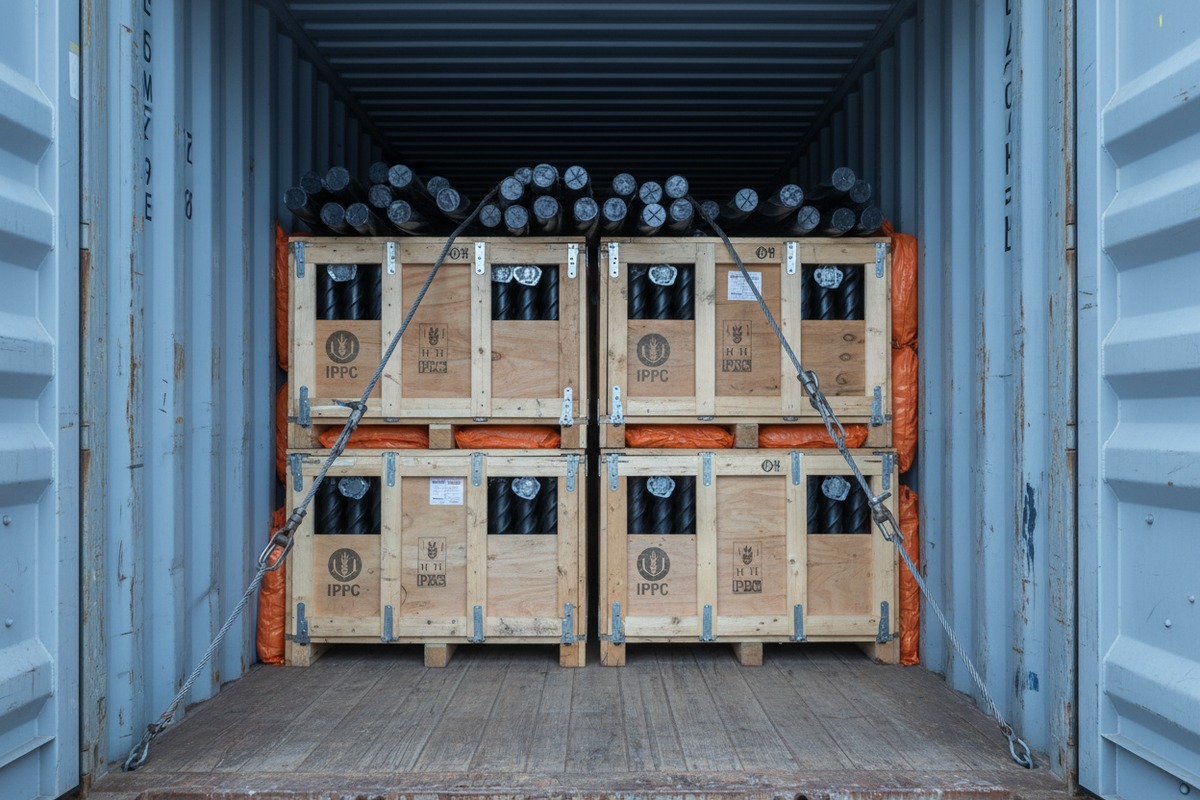
The 7-Point Container Inspection
Before any crate enters the container, the container itself must be inspected. A damaged or contaminated container will ruin even the best packaging. Here is what our team checks every single time:
- Roof and walls — Look for holes, cracks, or light coming through. Even a small hole lets rain and salt spray inside.
- Floor condition — Check for warping, stains, or chemical residue from previous cargo.
- Door seals — The rubber gaskets must be intact and flexible. Brittle or torn seals leak.
- Odor — A strong chemical smell means the previous cargo left residue. This can contaminate your bolts.
- Cleanliness — Sweep out debris, nails, and loose material.
- Structural integrity — Push on the walls. They should not flex excessively.
- Ventilation holes — Confirm they are open and unblocked for airflow, which reduces condensation.
Loading Pattern and Weight Distribution
Weight distribution inside the container matters more than most importers realize. Heavy crates of anchor bolts should be spread evenly across the container floor. Never stack all the heavy crates on one side. An uneven load can cause the container to tilt during crane lifts, which puts extreme stress on strapping and crate joints.
We follow a simple rule: heavy on the bottom, light on top. Crates are placed on heat-treated wooden pallets first. Then we use dunnage bars — wooden beams wedged between crates and container walls — to eliminate gaps. For larger void spaces, we use inflatable dunnage airbags rated to at least 6 psi. These bags press against the crates and container walls, locking everything in place.
High-Security Bolt Seals
Once loading is complete, the container door is sealed with a high-security bolt seal compliant with ISO 17712:2013. This standard requires the seal to withstand a minimum pull force of 220 kN (roughly 10,000 kg). The seal has a unique serial number that is recorded on the Bill of Lading 8 and photographed. At our facility, two people witness the sealing process — one applies the seal and the other verifies the serial number and takes photos. This is called the VVTT process: View, Verify, Tug, Twist. The tug confirms the seal is locked. The twist confirms it cannot rotate.
Major carriers like Swire Shipping 9 now mandate high-security bolt seals on all shipments originating from China. Without one, your container may be refused at the port or flagged for inspection, causing costly delays.
Photo Documentation
We photograph every stage of loading: empty container inspection, first crate placement, mid-load progress, final load before door closure, and the applied seal with serial number visible. These photos are shared with the buyer within 24 hours. This documentation is invaluable for insurance claims if any damage occurs during transit.
What packaging specifications should I demand from my Chinese manufacturer to protect my investment?
Over 20 years of exporting self-drilling anchor bolt systems, we have refined our packaging specifications based on real feedback from buyers in Norway, the US, Chile, Saudi Arabia, and Australia. Each market taught us something different. Norwegian buyers demanded extra moisture protection for Arctic port conditions. Australian customs rejected a shipment once because the wooden pallets lacked an ISPM-15 stamp. Every lesson became a line item in our packaging spec sheet.
Demand these packaging specifications from your Chinese manufacturer: anti-rust oil or coating on all bolts, VCI inner liners, ISPM-15 certified wood, silica gel desiccants, PET strapping with corner protectors, plastic thread protectors on drill tips, waterproof shrink-wrap, bilingual handling labels, impact indicator sensors, and photo documentation of sealed containers.
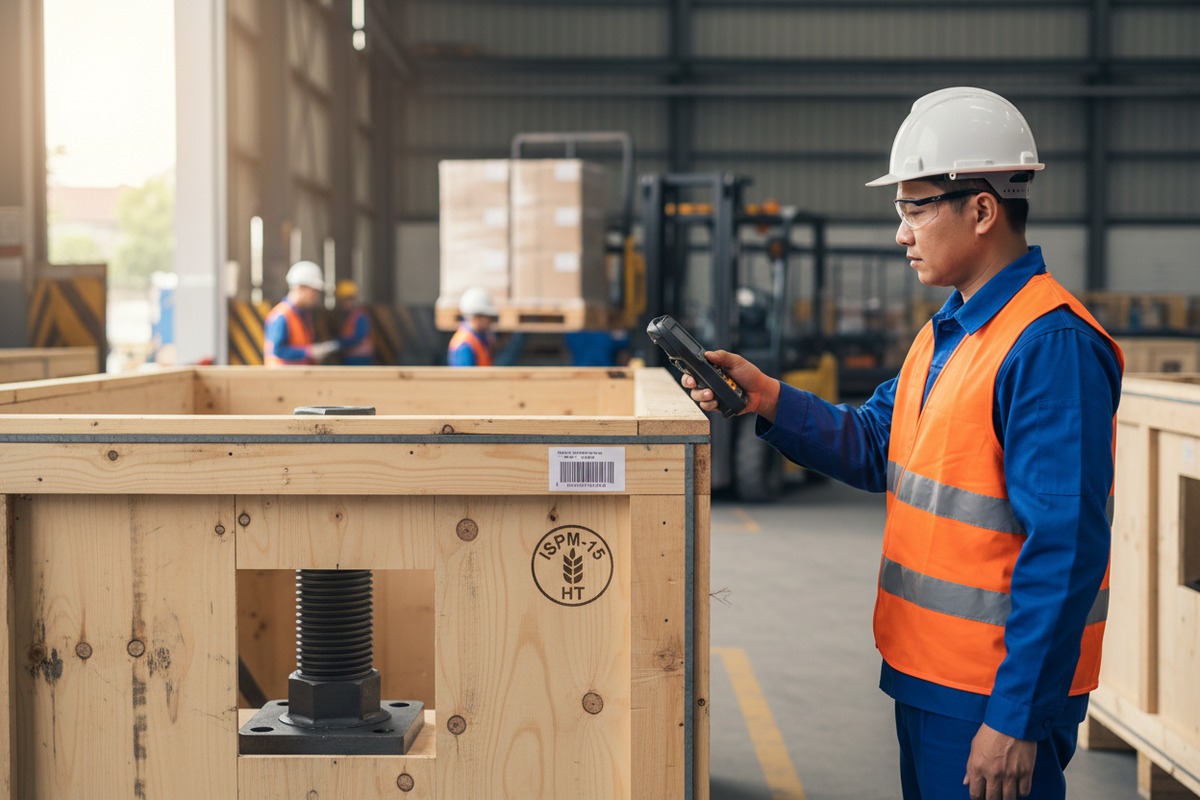
Your Packaging Specification Checklist
When you place an order, put the packaging requirements in writing. Do not assume your supplier will do these things automatically. Here is a detailed checklist you can send to your manufacturer:
| Specification Item | Minimum Requirement | Why It Matters |
|---|---|---|
| Surface treatment | Anti-rust oil on all exposed surfaces | Prevents oxidation during transit |
| Inner wrap | VCI film or bags, heat-sealed | Molecular corrosion barrier for threads and hollow cores |
| Desiccant | ≥ 200g silica gel per crate (500 kg load) | Absorbs moisture inside sealed liner |
| Thread protectors | Heavy-duty plastic caps on every drill tip | Prevents tip puncture through packaging layers |
| Outer crate | ISPM-15 certified plywood or wood | Customs compliance and structural strength |
| Strapping | PET bands, min. 4 horizontal + 2 vertical | Prevents bundle movement inside crate |
| Corner protectors | Plastic or cardboard on all crate edges | Absorbs forklift and crane impact |
| Outer wrap | Industrial shrink-wrap, min. 2 layers | Secondary moisture and spray barrier |
| Labels | Bilingual (English + Chinese), weatherproof | Guides handlers: "Keep Dry," "No Hooks," "This Side Up" |
| Impact sensors | ShockWatch or similar G-force indicators | Evidence for insurance claims if mishandled |
| Bolt seal | ISO 17712 high-security, serial number recorded | Tamper evidence and carrier compliance |
| Photos | All loading stages + seal close-up | Proof of condition at departure |
Thread Protectors: A Small Detail That Saves Big Money
This is one of the most overlooked items. The self-drilling tip of a hollow bar anchor bolt is its most critical feature. It is also its sharpest. Without a fitted plastic cap, the carbide-tipped end will cut through VCI film, puncture inner liners, and even gouge adjacent bolts in the same bundle. A single exposed tip can compromise the moisture seal of an entire crate. The cost of a thread protector is less than $0.10 per bolt. The cost of replacing a rusted crate of bolts is thousands of dollars.
Impact Indicators and Smart Monitoring
ShockWatch stickers and tilt indicators are inexpensive tools that provide critical evidence. A ShockWatch label changes color permanently when it detects a G-force exceeding its threshold — typically 25G, 50G, or 75G. We recommend 25G for anchor bolt shipments. If a crate arrives with a triggered indicator, you know it was dropped or struck during handling. This evidence strengthens your insurance claim significantly.
Some of our customers also request "Below Deck" stowage from their freight forwarders. Containers stored on the top tiers of a vessel experience the widest temperature swings, the most direct salt spray, and the greatest motion during storms. Below deck stowage reduces all three risks. It costs a small premium but is worth it for high-value or corrosion-sensitive shipments.
FCL vs. LCL: Which Is Better for Anchor Bolts?
Full Container Load (FCL) is almost always the better choice for self-drilling anchor bolts. With FCL, you control the entire container. Your crates are loaded once and unloaded once. There is no risk of cross-contamination from other cargo — such as chemicals or wet goods — that could damage your bolts. LCL (Less than Container Load) is cheaper for small orders, but your crates may be loaded and unloaded multiple times at consolidation warehouses. Each handling event increases the risk of damage. For corrosion-sensitive metals, FCL is the safer investment.
Communicate Early and In Writing
The most important thing you can do is communicate your packaging requirements before production starts — not after. Include your spec sheet in the purchase contract. Ask for sample photos of packaging before the first shipment. If possible, request a pre-shipment inspection by a third-party agency like SGS 10 or Bureau Veritas. This small upfront cost prevents much larger losses down the line.
Conclusion
Protecting self-drilling anchor bolts during sea freight from China requires a layered approach — coatings, VCI barriers, desiccants, strong crates, proper loading, and verified seals. Put your specifications in writing, document everything, and choose a manufacturer who treats packaging as seriously as production. Your investment deserves to arrive intact. Contact us at sales@sdarockbolt.com for a free packaging consultation.
Footnotes
1. Wikipedia provides standard dimensions and history for TEU containers. ↩︎
2. Wikipedia definition of hollow structural sections used in manufacturing. ↩︎
3. Wikipedia overview of crate types for industrial packaging. ↩︎
4. EPA provides authoritative guidelines on recycling cardboard materials. ↩︎
5. WTO information on international trade agreements and standards. ↩︎
6. Wikipedia details the moisture-absorbing properties of silica gel. ↩︎
7. Technical explanation of how VCI molecules prevent metal corrosion. ↩︎
8. Wikipedia explains the legal and logistical function of a bill of lading. ↩︎
9. Swire Shipping's requirements for container security and sealing. ↩︎
10. SGS global services for pre-shipment inspection and quality control. ↩︎