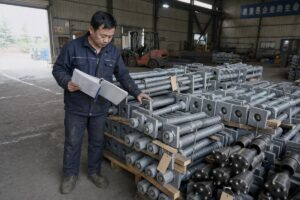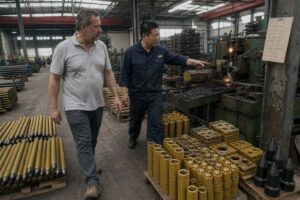

Shipping delays can wreck a construction timeline Section 301 tariffs 1. When thousands of self-drilling anchor bolts 2 sit in a port instead of arriving on your jobsite, costs spiral fast. Our production line in Shandong ships over 30,000 tons of anchor systems annually, and we see this problem hit US buyers every peak season.
To arrange sea freight for China self-drilling anchor bolts with timely US delivery, you need to confirm production lead times with your supplier, select the right Incoterm like FOB or DDP, book vessels early through a qualified freight forwarder, prepare accurate customs documentation, and build buffer days into your project schedule.
This guide walks you through the entire process step by step. From estimating transit times to tracking your container at sea, each section below tackles one critical piece of the logistics puzzle so your anchor bolts arrive when your project needs them.
How can I accurately estimate the total transit time for my anchor bolt shipment from China to the US?
Many US buyers underestimate how long the full shipping cycle actually takes. They focus only on ocean transit days 3 and forget about production, port handling, and inland trucking. Our export team has seen this miscalculation delay projects by two to four weeks.
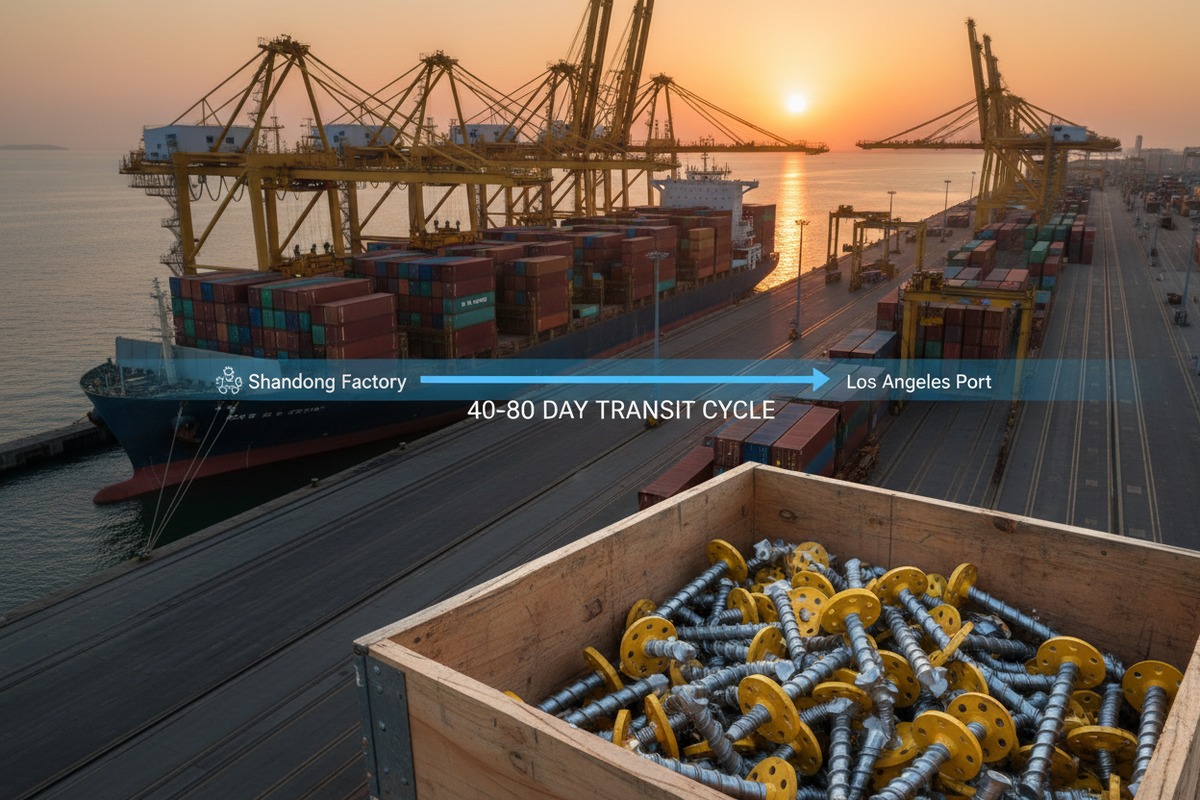
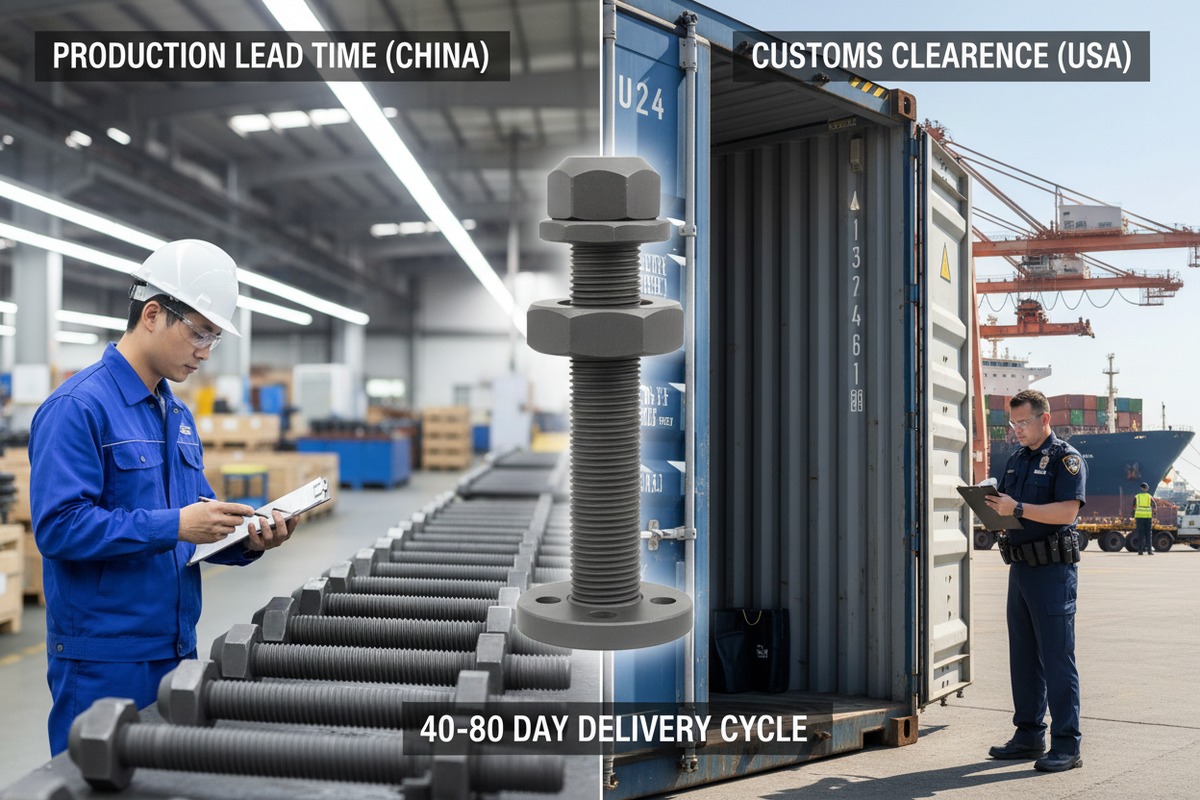
To accurately estimate total transit time, add together your supplier's production lead time (15–30 days), port loading and customs at origin (3–5 days), ocean transit (15–25 days to the West Coast or 30–45 days to the East Coast), US customs clearance (3–7 days), and inland delivery (2–5 days). The full cycle typically ranges from 40 to 80 days.
Break Down Each Phase
The biggest mistake is treating "shipping time" as a single number. It is not. You need to map every phase from the moment you place a purchase order to the moment bolts arrive at your warehouse or jobsite.
Here is a typical timeline breakdown for a 10-ton order of self-drilling hollow bar anchors shipping FOB Shanghai to Los Angeles:
| Phase | Activity | Estimated Duration |
|---|---|---|
| Production | Manufacturing and quality inspection | 15–30 days |
| Origin logistics | Packing, trucking to port, export customs | 3–5 days |
| Ocean transit (West Coast) | Shanghai to Los Angeles/Long Beach | 15–25 days |
| Ocean transit (East Coast) | Shanghai to New York/Savannah | 30–45 days |
| US customs clearance | Document review, inspection, duty payment | 3–7 days |
| Inland delivery | Port to final destination by truck | 2–5 days |
| Total (West Coast) | 38–72 days | |
| Total (East Coast) | 53–92 days |
Factor in Realistic Buffers
Port congestion is unpredictable. In 2025, disruptions from Red Sea rerouting added surcharges and sometimes 5–10 extra days on certain routes. We always recommend our US buyers add at least a 7-day buffer on top of any estimate.
Use Your Supplier's Production Calendar
Chinese factories typically close for 10–15 days during Chinese New Year (late January to mid-February). National holidays in early October also slow output. If you place an order in December for a March delivery, you must account for the factory shutdown. Our production team sends shipping readiness dates upfront so buyers can coordinate vessel bookings accordingly.
West Coast vs. East Coast
Choosing your destination port matters. Los Angeles and Long Beach handle the majority of Chinese imports and offer faster transit. But if your project is in the Southeast or Northeast, shipping to Savannah or New York may save on inland trucking costs despite the longer ocean voyage. Run the numbers both ways.
Should I use DDP shipping to simplify my US customs clearance for self-drilling rock bolts?
Customs clearance is one of the most stressful parts of importing anchor bolts into the US. Tariff codes, Section 301 duties, and paperwork errors can hold your cargo at port for days. We have helped many first-time US importers navigate this by offering DDP terms from our facility in Shandong.
DDP (Delivered Duty Paid) shipping is ideal if you want your Chinese supplier to handle all export and import logistics, including US customs duties and delivery to your door. It simplifies your process significantly, but you should verify your supplier can truly manage US customs compliance and that the all-in DDP price is transparent and competitive.
What DDP Actually Means for You
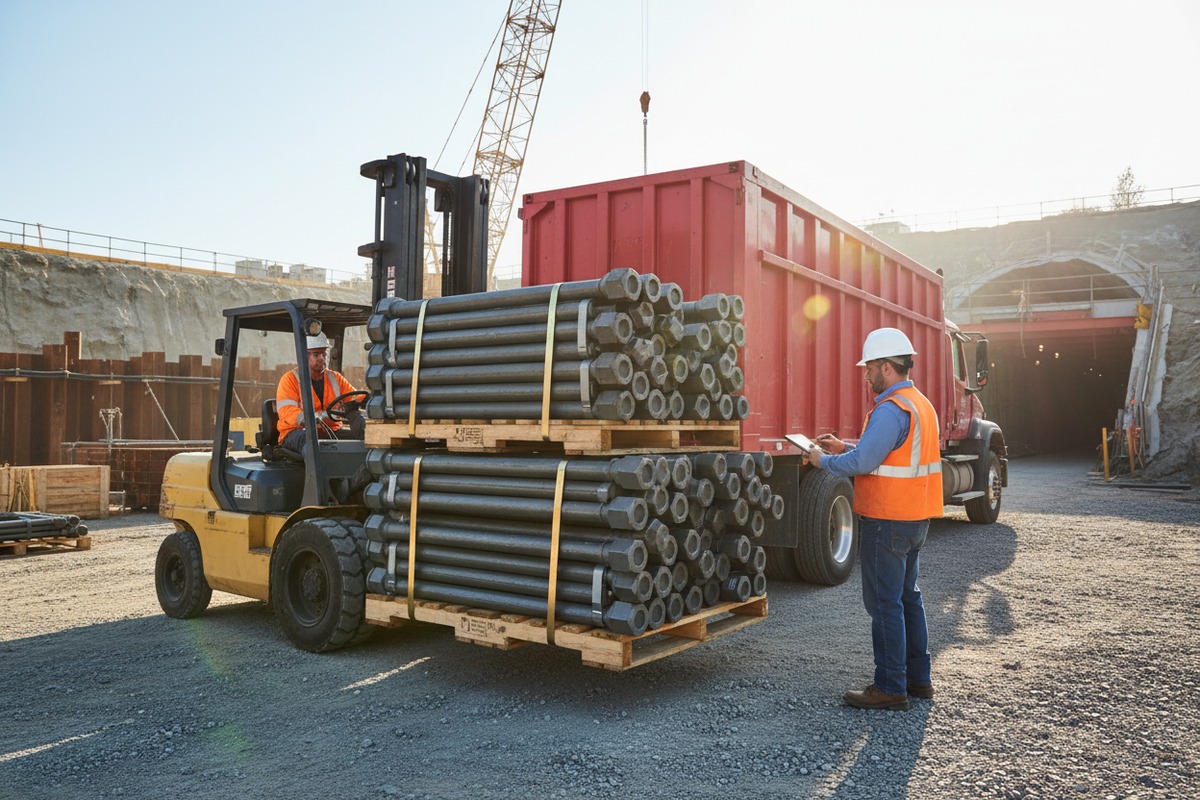
Under DDP Incoterms 4, the seller bears all costs and risks until the goods reach your specified US destination. This includes origin freight, ocean shipping, US customs broker 5age, import duties 6, and final-mile trucking. You literally receive the bolts at your door without touching any logistics paperwork.
For a US procurement manager handling multiple projects, DDP can save dozens of hours per shipment. But there is a trade-off: you lose visibility into individual cost components unless you ask for a detailed breakdown.
Comparing Incoterms for Anchor Bolt Imports
| Incoterm | Seller's Responsibility Ends At | Buyer Handles | Best For |
|---|---|---|---|
| EXW (Ex Works) | Supplier's factory gate | All freight, export/import customs, duties, trucking | Experienced importers with their own forwarder |
| FOB (Free On Board) | Loaded on vessel at China port | Ocean freight, US customs, duties, inland delivery | Buyers who want freight control and cost transparency |
| CIF (Cost, Insurance, Freight) | Arrival at US destination port | US customs, duties, inland delivery | Buyers who want ocean freight included but manage US side |
| DDP (Delivered Duty Paid) | Your US warehouse or jobsite | Nothing—seller handles everything | First-time importers or buyers who want zero hassle |
The Tariff Reality
Self-drilling anchor bolts made of steel fall under HTS code 7 7318.15. US Section 301 tariffs on Chinese steel fasteners currently add 25% or more on top of the base duty rate. Under DDP, your supplier calculates and pays these duties upfront, rolling them into the total price. This protects you from surprise charges at the port.
However, be cautious. Some suppliers quote low DDP prices and then claim unexpected duty increases later. We provide our buyers with a fully transparent DDP quotation that itemizes product cost, ocean freight, duties, and delivery fees separately. This way, there are no hidden surprises.
When FOB Makes More Sense
If you import anchor bolts regularly and have a trusted US customs broker, FOB Shanghai or FOB Ningbo may save you 10–20% compared to DDP. You gain full control over carrier selection, routing, and insurance. Many of our repeat US distributors prefer FOB because they negotiate better container rates through their own freight forwarder relationships.
The bottom line: use DDP if you are new to importing from China or if you want simplicity. Switch to FOB once you have established your supply chain and want to optimize costs.
How do I coordinate with my Chinese supplier to avoid shipping delays during peak seasons?
Peak season delays are the number one complaint we hear from US construction buyers. When October through December hits, vessel space 8 tightens, freight rates spike, and a two-day production delay can push your booking to the next available vessel—sometimes a week or more later. Our scheduling team plans production around these windows months in advance.
To avoid peak-season shipping delays, place your purchase order at least 60–90 days before your required delivery date, confirm a production schedule with milestone checkpoints, request cargo-ready photos before the vessel booking cut-off, and have your freight forwarder secure container space 3–4 weeks early. Clear communication with your supplier is the single most effective tool.
Know the Peak Season Calendar
Chinese export shipping has predictable busy periods. If you plan around them, you avoid most problems.
| Peak Period | Why It's Busy | Risk Level | Action |
|---|---|---|---|
| January–February | Chinese New Year factory shutdown | High | Place orders by November; confirm shipping before shutdown |
| June–August | Summer construction demand in Northern Hemisphere | Medium | Book vessels 3 weeks in advance |
| October–December | Pre-holiday inventory stocking worldwide | Very High | Order 90 days ahead; expect rate surcharges of 20–40% |
| March–May | Post-New Year production ramp-up | Low | Best window for cost-effective shipping |
Set Up Milestone Communication
Do not wait until your order is "ready" to start thinking about shipping. Build a communication protocol with your supplier that includes these checkpoints:
- Order confirmation — Supplier sends Proforma Invoice with agreed specs, quantity, and delivery timeline.
- Raw material procurement — Supplier confirms steel bar and drill bit materials are in stock or ordered.
- Mid-production update — Photos or inspection reports at 50% completion.
- Final inspection and packing — Cargo-ready confirmation with packing list and weight details.
- Booking confirmation — Vessel and container booking details shared with you or your forwarder.
We send these updates automatically to our US buyers through email and WhatsApp. This keeps everyone aligned and eliminates the "Where is my order?" anxiety.
Pre-Book Vessel Space
During peak seasons, container availability at Shanghai and Ningbo ports becomes tight. Freight forwarders recommend booking space 3–4 weeks before your cargo-ready date. If you wait until the last minute, you may face a one- to two-week delay just waiting for the next available slot.
Work with a forwarder who specializes in China-US routes. Platforms like Freightos and Flexport allow you to compare rates and book online, but a dedicated forwarder with carrier relationships can sometimes secure priority space when the market is squeezed.
Have a Backup Plan
Even with perfect coordination, disruptions happen. Weather, port strikes, and geopolitical events can throw off schedules. Consider splitting large orders into two shipments if your project timeline is tight. This way, if one container is delayed, you still have partial inventory to keep work moving.
What is the best way for me to track my sea freight container and ensure on-time project delivery?
Once your container of self-drilling anchor bolts leaves the Chinese port, you can feel powerless. The vessel is somewhere on the Pacific Ocean, and you have a project deadline in Texas or California. Our logistics coordinators provide tracking updates to every US client, but there are also powerful tools you can use yourself.
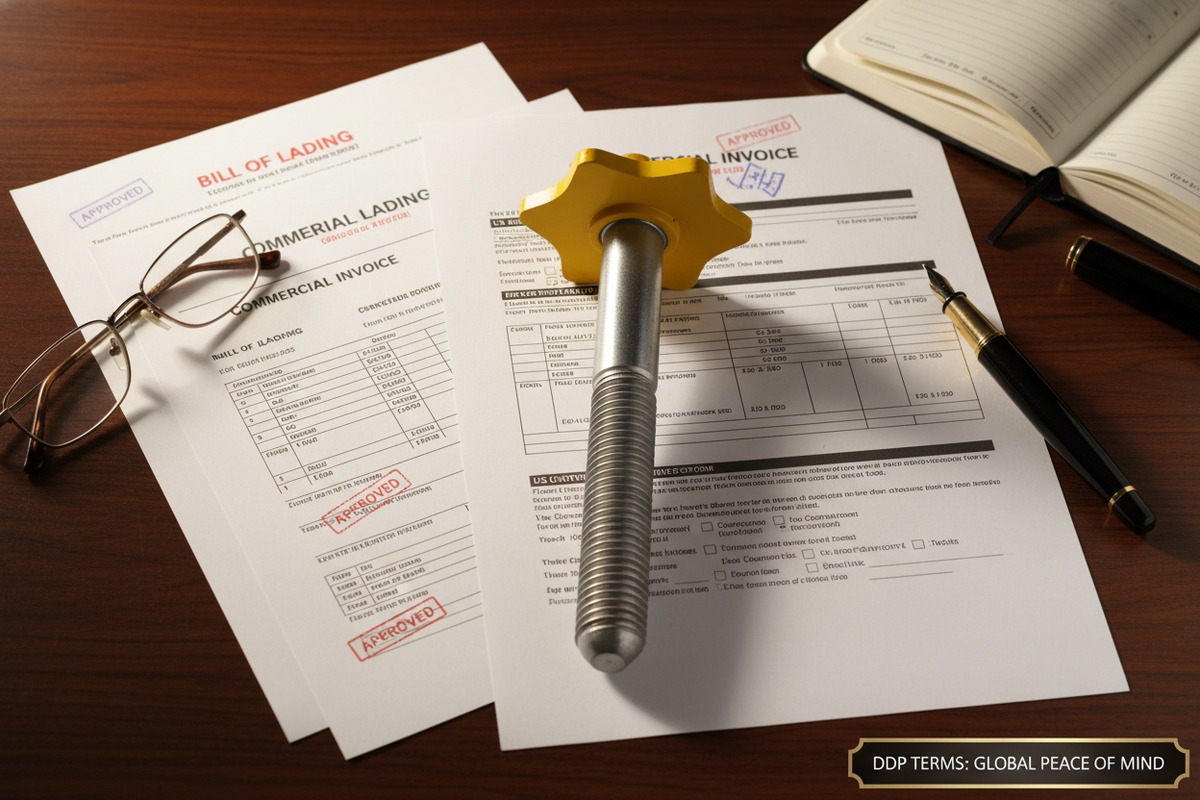
The best way to track your sea freight container is to obtain the Bill of Lading (B/L) number and container number from your supplier or forwarder, then use free online tracking platforms like MarineTraffic, container line websites (e.g., COSCO, MSC, Maersk), or your freight forwarder's dashboard. Pair tracking with proactive US-side logistics planning to guarantee on-time project delivery.
Tools for Real-Time Container Tracking
You do not need expensive software. Several free and paid options give you reliable visibility.
- Shipping line websites — COSCO, Maersk, MSC, Evergreen, and others let you enter your container number or B/L number to see vessel location, estimated arrival, and any schedule changes.
- MarineTraffic.com — Shows the real-time position of vessels on a global map. You can search by vessel name.
- Freightos / Flexport dashboards — If you book through these platforms, they provide integrated tracking, milestone alerts, and document management.
- Your freight forwarder's updates — A good forwarder will send weekly status emails with vessel position, ETA updates, and customs clearance progress.
Plan US-Side Logistics Before the Container Arrives
Tracking alone does not ensure on-time delivery. You also need to have everything ready at the US end so there is zero wasted time once the container hits port.
Here is a pre-arrival checklist:
- Customs broker engaged — Your broker should have all documents (Commercial Invoice, Packing List, B/L, ISF filing) at least 5 days before vessel arrival.
- ISF 10+2 filing — US Customs requires Importer Security Filing at least 24 hours before the vessel departs China. Late filing triggers fines of $5,000 or more.
- Duty payment ready — Know your HTS 7318.15 duty rate plus Section 301 tariff. Have funds available so customs releases the container immediately.
- Trucking company booked — Schedule a drayage truck to pick up your container from the port terminal within 1–2 days of customs release. Port storage fees (demurrage) start accumulating fast—often $150–$300 per day after the free period.
- Warehouse or jobsite ready — Confirm the receiving location has equipment to unload heavy pallets of anchor bolts (forklift, loading dock).
What To Do If Your Shipment Is Delayed
Delays happen. A vessel might skip a port call, or customs might flag your container for inspection. Here is how to respond:
- Contact your forwarder immediately for updated ETA and reason for delay.
- Notify your project manager with a revised delivery window so the construction schedule can be adjusted.
- Check if partial inventory is available domestically. We maintain a stock of 2,000 tons of common anchor bolt specifications in our warehouse, and some of our US distributors keep safety stock. A small emergency air shipment of critical items is also possible, though it costs 5–10x more than sea freight.
- Document everything for insurance claims 9 if the delay causes financial loss. Comprehensive cargo insurance—typically 0.3–0.5% of shipment value—is well worth the cost.
Build a Repeatable System
If you import self-drilling anchor bolts regularly, create a standard operating procedure. Document your preferred forwarder, customs broker, trucking company, tracking tools, and communication schedule. Each subsequent shipment becomes faster and more predictable. Our longest-running US partners have reduced their order-to-delivery cycle from 70 days to under 50 days simply by refining their process over three or four shipments.
Conclusion
Arranging sea freight for self-drilling anchor bolts from China to the US is a multi-step process, but with accurate transit estimates, the right Incoterm, early coordination with your supplier, and proactive container tracking, timely delivery is completely achievable.
Footnotes
1. The USTR provides official information on Section 301 investigations and associated trade enforcement actions. ↩︎
2. Wikipedia provides a comprehensive overview of anchor bolt types and their engineering applications. ↩︎
3. The IMO is the global authority for the safety, security, and environmental performance of international shipping. ↩︎
4. The ITC provides essential guidance on using Incoterms for international trade and logistics management. ↩︎
5. CBP provides the regulatory framework and licensing information for customs brokers operating in the United States. ↩︎
6. The WTO provides global data and rules regarding import duties and tariff commitments between member nations. ↩︎
7. The USITC maintains the official Harmonized Tariff Schedule used for classifying imported goods in the US. ↩︎
8. The FMC regulates ocean transportation to ensure competitive and efficient vessel space for international trade. ↩︎
9. Wikipedia explains the legal and financial process of filing insurance claims for cargo damage or loss. ↩︎
10. Wikipedia defines the Bill of Lading as a critical legal document in the shipping and logistics industry. ↩︎