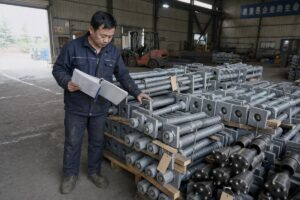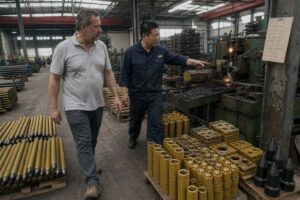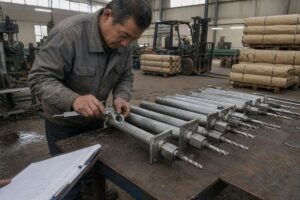

Every year, our production lines ship over 30,000 tons of self-drilling anchor bolts 1 to tunnel projects across five continents. Yet the most common question we hear from EPC contractors is deceptively simple: "How many bolts do I actually need?" Get the number wrong, and you face costly delays or mountains of unused steel sitting in a warehouse. Get it right, and you unlock a smooth, on-budget excavation cycle.
EPC contractors determine self-drilling anchor bolt quantities for large tunnel projects by combining geological site investigations, rock mass classification systems like RMR and the Q-system, standardized support pattern designs, and contingency calculations—then cross-referencing these with project schedules, supplier lead times, and contractual risk profiles.
This article walks you through the exact workflow that experienced EPC teams follow—from the first borehole log to the final purchase order. Whether you are managing a 5 km highway tunnel or a hydropower diversion gallery, the principles below will help you build an accurate, defensible Bill of Quantities.
How do I calculate the specific density and spacing of self-drilling anchor bolts for my tunnel's geological profile?
When our engineers review a new tunnel project inquiry 2, the first document they ask for is the Geotechnical Baseline Report. Without it, every quantity estimate is just guesswork—and guesswork in tunneling can be dangerous.
You calculate bolt density and spacing by classifying rock masses along the alignment using RMR or Q-system ratings, assigning standardized support classes to each segment, and then multiplying the per-meter bolt count by the total length of each rock class zone.
Start With Rock Mass Classification
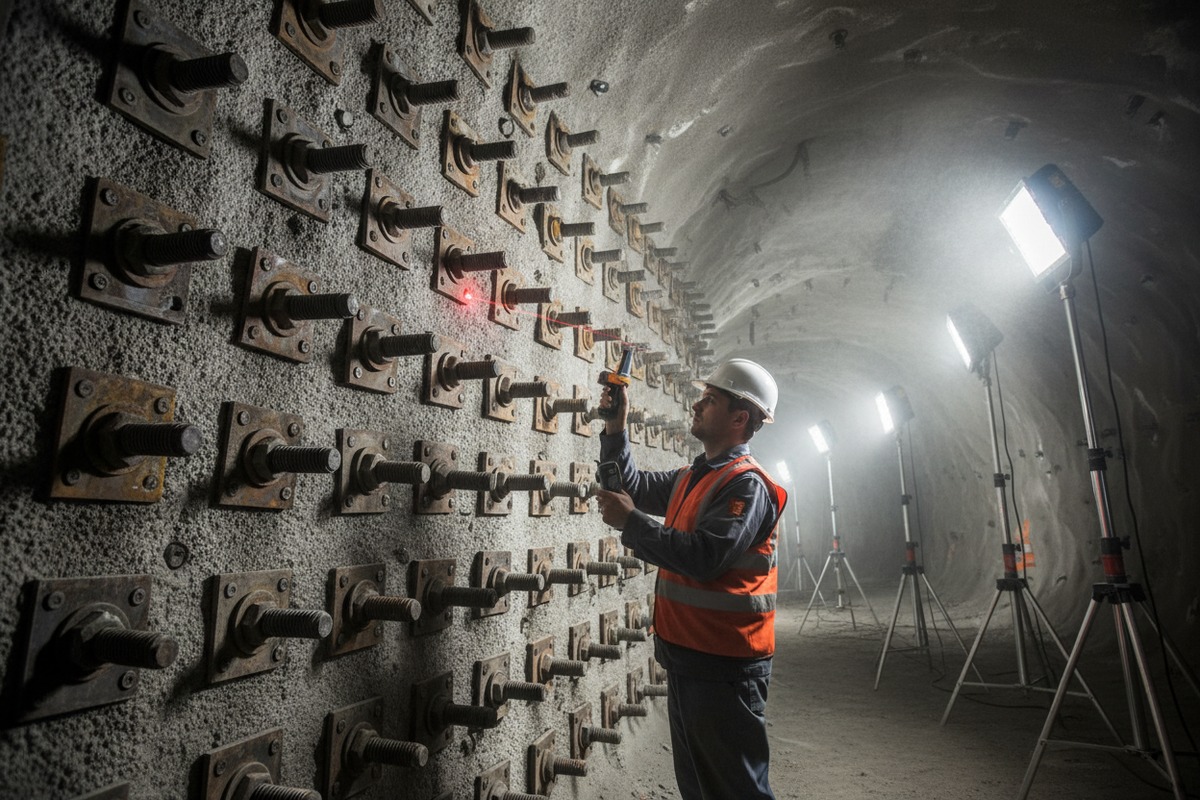
The foundation of any bolt quantity takeoff is the geological profile. Geotechnical engineers 3 drill boreholes, run seismic surveys, and log core samples. They then classify each zone using one of two dominant systems:
- RMR (Rock Mass Rating): Scores rock from 0 to 100 based on intact strength, RQD, joint spacing, joint condition, and groundwater.
- Q-system: Uses six parameters including RQD, joint set number, joint roughness, joint alteration, water reduction factor, and stress reduction factor.
Each score maps to a support class. A tunnel with Class III rock needs far fewer bolts per linear meter than one with Class V rock. This is where the numbers start.
Define Your Support Pattern
Once you know the rock class for each chainage interval 4, you apply a support pattern. Patterns are usually defined by the design consultant following standards like the New Austrian Tunneling Method 5 (NATM). A typical pattern specifies:
| Parameter | Class III Rock | Class IV Rock | Class V Rock |
|---|---|---|---|
| Longitudinal Spacing | 1.2 m | 1.0 m | 0.4–0.6 m |
| Transverse Spacing | 1.2 m | 1.0 m | 0.4–0.6 m |
| Bolt Length | 3–4 m | 4–6 m | 6–15 m |
| Bolts Per Ring | 12–16 | 18–22 | 24–28+ |
| Bolt Diameter | R25 / R32 | R32 / R38 | R38 / R51 / R76 |
For example, on the Badong Tunnel project for the Zhenwan High-Speed Railway in China, Class V zones required 28 holes per ring at 400 mm spacing with R51 bars drilled to 15 m depth. A three-arm drill jumbo achieved speeds of 1–2 m/min, which directly influenced the daily consumption rate and therefore the delivery schedule.
Calculate Per-Meter Quantities
Here is the simple math. If your tunnel cross-section in a Class IV zone needs 20 bolts per ring, and rings are spaced at 1.0 m longitudinally, then each linear meter of tunnel consumes 20 bolts. If that Class IV zone stretches for 800 m, you need 16,000 bolts for that segment alone. Repeat for every rock class, sum the totals, and you have your theoretical base quantity.
Account for Pre-Reinforcement and Face Bolts
Do not forget that self-drilling anchor bolts are also used as pre-reinforcement at the tunnel face—especially in collapsible or water-rich ground. These face bolts are drilled ahead of excavation at a slight upward angle (typically 1–3°). They add a separate line item to your BoQ that many less-experienced contractors miss. In our experience shipping to projects in Southeast Asia and South America, face bolt consumption can add 10–20% on top of the radial bolt count.
Use FEM Software to Validate
Many advanced EPCs now run Finite Element Method models 6 to simulate stress redistribution around the excavation. These models can confirm whether the pattern from the design code is sufficient—or whether bolt density needs to increase in zones with high overburden or fault intersections. This step turns a rule-of-thumb estimate into an engineered quantity.
How much buffer stock should I include in my procurement order to prevent delays from unexpected ground conditions?
One lesson we have learned after two decades of supplying tunnel projects is that the geology always has surprises. The borehole logs tell one story; the tunnel face tells another.
You should include a contingency buffer of 10% to 25% above your theoretical Bill of Quantities, with the exact percentage determined by geological uncertainty, site remoteness, supply chain lead times, and the contractual risk allocation between lump-sum and unit-price models.
Why a Buffer Is Non-Negotiable
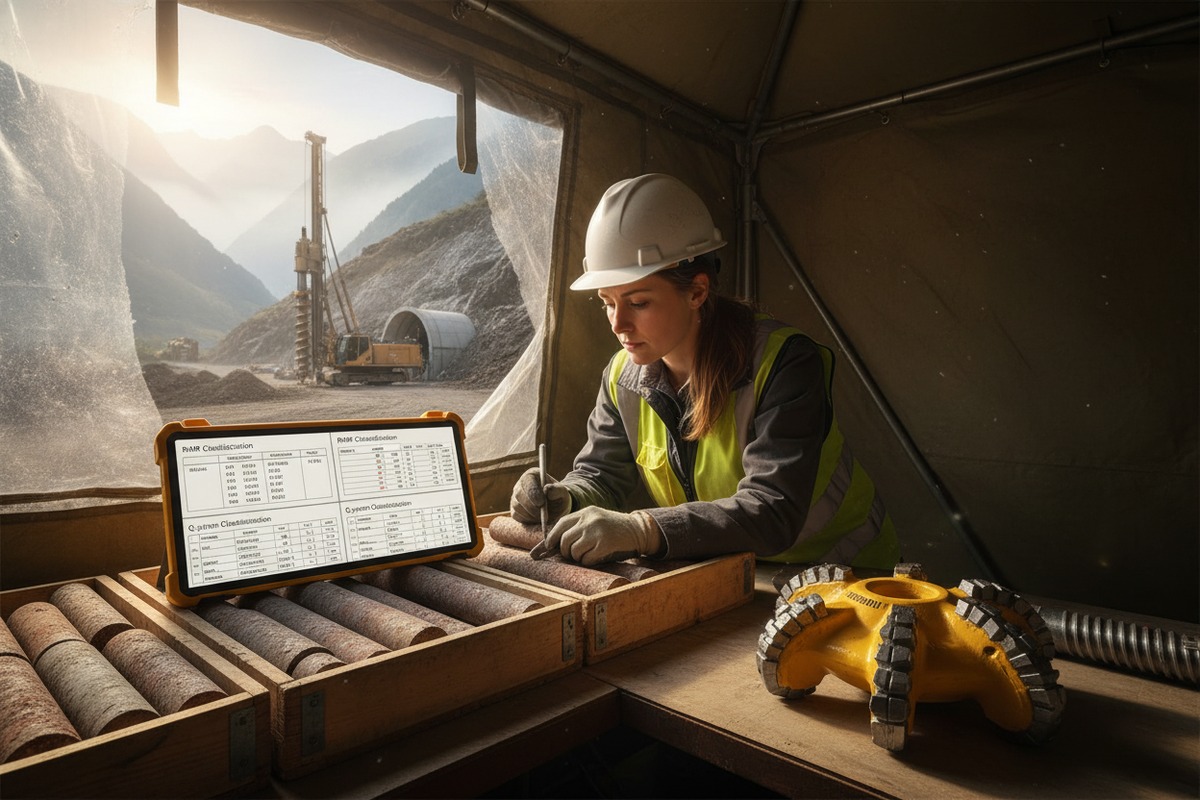
Tunneling is inherently uncertain. Over-break means more rock is removed than planned, which exposes a larger surface area requiring more bolts. Unexpected fault zones can downgrade a Class III section to Class V overnight. Water ingress may demand additional grouted anchors. Without buffer stock, your crew sits idle while you wait for an emergency shipment—sometimes from the other side of the world.
How to Size Your Buffer
The right buffer depends on several factors:
| Factor | Low Buffer (10%) | Medium Buffer (15%) | High Buffer (20–25%) |
|---|---|---|---|
| Geotechnical Data Quality | Extensive boreholes, probe drilling | Moderate borehole coverage | Limited investigation, karst risk |
| Site Accessibility | Urban, near port | Regional, highway access | Remote, high altitude |
| Supply Chain Lead Time | Local supplier, 1–2 weeks | Regional supplier, 4–6 weeks | Overseas supplier, 8–12 weeks |
| Contract Type | Unit-price (re-measure) | Hybrid | Lump-sum (fixed price) |
| Ground Conditions | Stable sedimentary, low water | Mixed geology | Fault zones, water-rich, collapsible |
In our warehouse, we maintain a standing stock of 2,000 tons specifically to serve urgent top-up orders. For remote projects—say a hydropower tunnel in the Andes of Peru or a mining drift in Indonesia—we often recommend our clients hold 20–25% buffer on site.
The Logistics Buffer Concept
Beyond geological contingency, experienced EPCs calculate a "logistics buffer." This is not about expecting more bolts to be used. It is about ensuring that bolts are physically present at the face when the crew needs them. If your supply chain has an 8-week lead time and your tunnel advances 10 m per day, you need at least 8 weeks of bolt inventory on site or in a nearby staging area. Add customs clearance time, inland transport, and potential port delays, and the logistics buffer grows quickly.
Real-World Example
At the MOHMAND Hydroelectric Power Station in Pakistan, the project encountered sand, gravel, and alluvial soil conditions that deviated significantly from initial predictions. By using self-drilling anchor bolts instead of traditional pipe roofs and maintaining a healthy buffer stock, the contractor reduced drilling time to 16–30 minutes per hole and achieved 20–30% overall cost and time savings. Had they not pre-positioned sufficient material, those savings would have evaporated in waiting time.
Contractual Risk and Buffer Strategy
Your contract type changes everything. Under a unit-price contract, over-ordering is less risky because you only pay for what you install—and unused stock can sometimes be returned or redirected. Under a lump-sum contract, every extra bolt comes out of your margin. Our recommendation: negotiate a "differing site condition" (DSC) clause that allows quantity adjustments when geology deviates from the GBR. This protects both your budget and your schedule.
How do I accurately estimate the total cost of anchor systems based on different rock classes in my project?
Pricing conversations are where our sales team spends the most time with EPC procurement managers. The cost per meter of tunnel support varies dramatically depending on what is underground.
You estimate total anchor system cost by building a cost model that assigns unit rates—covering bolt material, drill bits, grout, accessories, labor, and equipment—to each rock class, then multiplying those rates by the quantities derived from your geological profile and support pattern design.
Break Down the Unit Cost
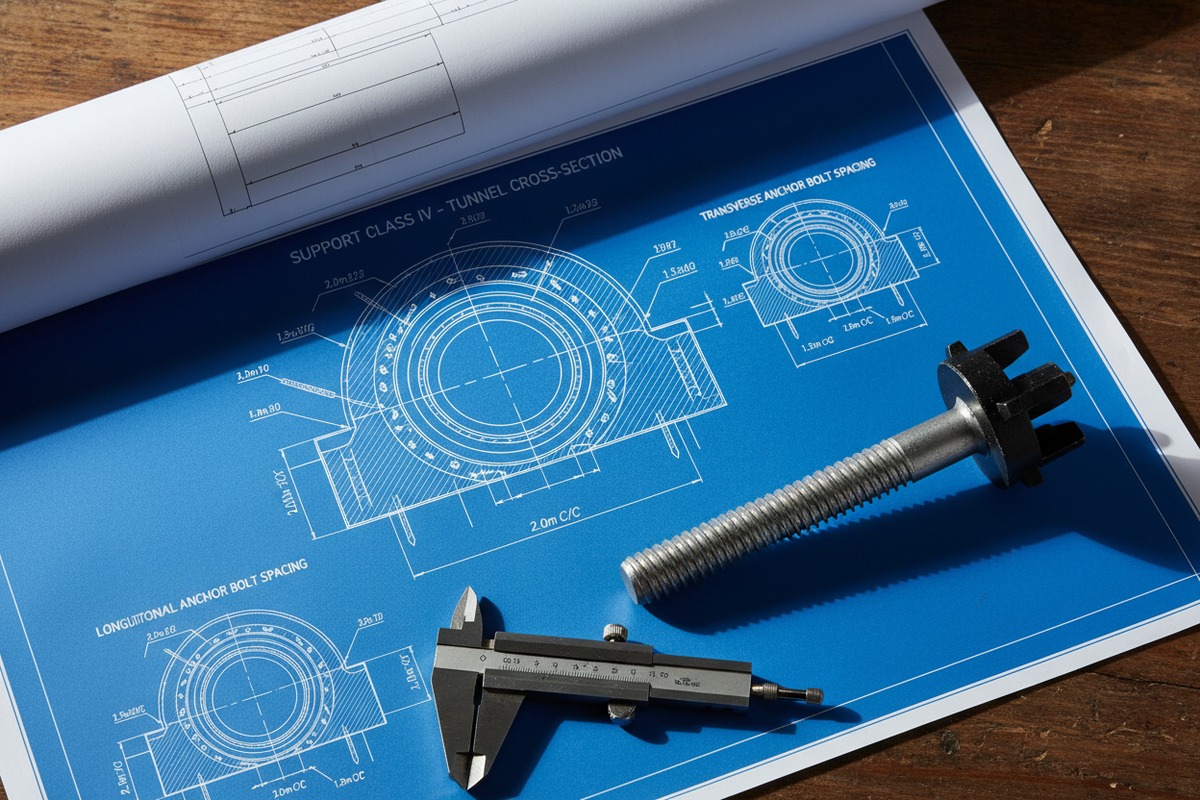
A self-drilling anchor bolt is not just a steel bar. The complete system includes the hollow bar, a drill bit, couplers, a bearing plate, a hex nut, centralizers, and grout. Each component has a cost. Here is a simplified breakdown per bolt for a typical R38 system at 4 m length:
| Component | Approximate Share of Unit Cost |
|---|---|
| Hollow Threaded Bar (R38, 4 m) | 45–55% |
| Drill Bit (alloy cross or full-steel) | 15–20% |
| Bearing Plate + Hex Nut | 5–8% |
| Coupler (if extended length needed) | 3–5% |
| Centralizers | 2–3% |
| Grout Material (cement-based) | 10–15% |
The bar itself is the biggest cost driver, and its price scales with diameter and steel grade. An R25 bar costs significantly less per meter than an R51 or R76 bar. Since weaker rock classes demand larger diameters and longer lengths, Class V support costs 3–5 times more per linear meter of tunnel than Class III support.
Build a Rock-Class Cost Matrix
Smart EPCs build a matrix that maps each rock class to a fully loaded unit rate. "Fully loaded" means material, labor, equipment depreciation, and consumables. Here is a conceptual example for a 10 m wide highway tunnel:
| Rock Class | Bolts/m | Avg Bolt Length | Bolt Diameter | Material Cost/m of Tunnel (USD) | Install Cost/m of Tunnel (USD) | Total/m (USD) |
|---|---|---|---|---|---|---|
| Class III | 14 | 3 m | R25 | 350–500 | 150–250 | 500–750 |
| Class IV | 20 | 5 m | R32 | 800–1,200 | 300–500 | 1,100–1,700 |
| Class V | 26 | 12 m | R51 | 2,500–4,000 | 700–1,200 | 3,200–5,200 |
These numbers are illustrative—actual prices depend on steel market conditions, logistics costs, and local labor rates. But the structure is what matters. When you multiply each row by the total meters of that rock class in your alignment, you get a robust cost estimate.
Drill Bit Consumption: The Hidden Cost
In abrasive rock, drill bits wear out fast. A single alloy cross bit may last 3–6 m in Class III rock but only 1–2 m in highly abrasive quartzite. This means you may need 2–6 bits per bolt hole in tough conditions. Many first-time buyers underestimate bit consumption 7 by 30–50%. When we prepare quotes, we always ask about rock abrasiveness (measured by the Cerchar Abrasivity Index) so we can recommend the right bit type—alloy cross bits for softer ground, full-steel wedge bits for harder formations—and provide an accurate bit quantity estimate.
Grout Volume Calculation
Self-drilling anchor bolts are simultaneously grouted through the hollow bar, which is one of their key advantages. But grout cost adds up. The volume per hole depends on borehole diameter (determined by the bit size) minus the bar diameter, multiplied by hole length. In fractured rock, grout loss into fissures can double or triple the theoretical volume. Always include a grout loss factor of 1.5–3.0 for fractured zones in your cost model.
Compare Against Traditional Methods
One valuable exercise is to run a parallel cost estimate for traditional pipe roof or cased borehole methods. In many cases, self-drilling systems deliver 20–30% savings because they eliminate the need for separate casing, reduce crew size, and cut cycle time. This comparison helps justify the self-drilling specification to project owners and investors.
How can I verify that my supplier's production capacity will meet the high-volume demands of my tunnel construction schedule?
We have seen projects grind to a halt because a supplier could not keep pace with demand. It is one of the most preventable failures in tunnel construction—and one of the most expensive.
You verify supplier production capacity by auditing annual output tonnage, inspecting finished goods inventory levels, reviewing production lead times against your consumption schedule, and confirming quality certifications through factory visits or third-party inspections.
Map Your Consumption Schedule First
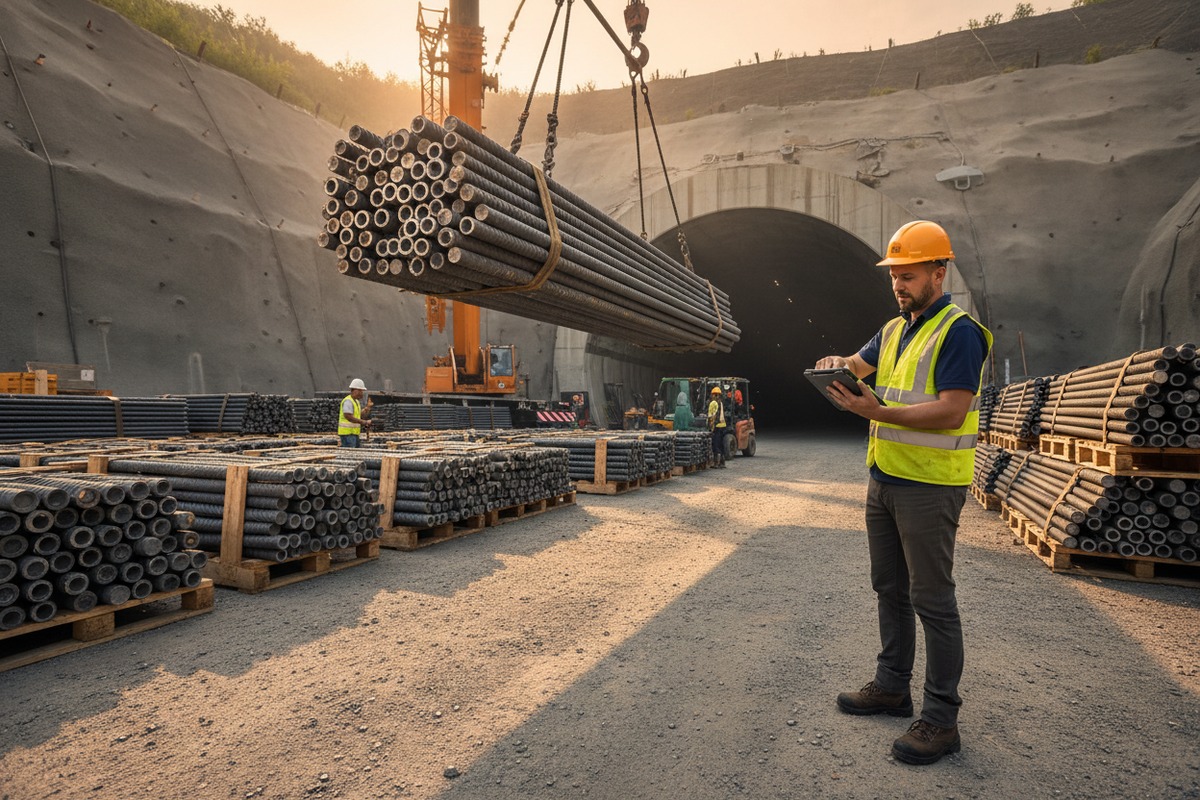
Before evaluating any supplier, you need to know your own demand curve. Tunnel projects do not consume bolts at a flat rate. Early mobilization uses fewer bolts while the portal is established. Peak consumption hits during full-face excavation of the main bore. If you have two headings advancing simultaneously, peak demand doubles. Plot your monthly bolt consumption in tons and in piece counts.
Key Supplier Metrics to Audit
When our clients visit our facility in Shandong—or send third-party inspectors—here are the metrics we encourage them to verify:
- Annual production capacity: Our facility produces 30,000 tons per year. For context, a large highway tunnel project might consume 500–2,000 tons over its life. That means we can serve multiple major projects simultaneously without strain.
- Standing inventory: We keep 2,000 tons of finished goods in stock at all times. This inventory acts as a shock absorber. If your project suddenly accelerates or hits a bad geology zone, we can ship from stock within days rather than waiting for a new production run.
- Lead time for custom orders: Standard sizes (R25, R32, R38) ship from stock. Non-standard lengths, special thread profiles, or OEM branding require 3–6 weeks of production lead time. Know this before you finalize your schedule.
- Quality management system: ISO 9001 certification 8 is a minimum. Ask for mill certificates, tensile test reports, and third-party lab results. On-site pull-out test data from similar projects is even better.
Run a Demand-Supply Timing Analysis
Create a simple spreadsheet that aligns your monthly consumption forecast with the supplier's confirmed lead time and shipping duration. Here is a simplified example:
| Month | Projected Consumption (tons) | Order Lead Time | Ship Date Required | Buffer Stock on Site (tons) |
|---|---|---|---|---|
| Month 1 | 30 | 8 weeks prior | Week -8 | 50 (initial) |
| Month 2 | 45 | 8 weeks prior | Week -4 | 35 |
| Month 3 | 60 | 8 weeks prior | Week 0 | 25 |
| Month 4 | 60 | 8 weeks prior | Week 4 | 25 |
| Month 5 | 75 (peak) | 8 weeks prior | Week 8 | 30 |
| Month 6 | 50 | 8 weeks prior | Week 12 | 20 |
If the buffer stock column ever drops below your minimum threshold (say 15 tons), you have a problem. Either advance your orders or increase shipment frequency.
Request a Dedicated Production Allocation
For mega-projects consuming over 1,000 tons, it is reasonable to request a dedicated production allocation from your supplier. This means the factory reserves a portion of its monthly output exclusively for your project. We regularly set up these arrangements for large EPC clients in Saudi Arabia, Chile, and Norway. It provides certainty on both sides.
Leverage Technology for Visibility
Modern procurement is moving toward 3D laser scanning 9 and BIM-integrated quantity tracking at the tunnel face. Some of our European clients use digital twin platforms 10 that compare "as-designed" bolt counts with "as-installed" counts in real time. This data feeds directly into replenishment orders. While not every project has this capability yet, the trend is clear—and it dramatically reduces the risk of stockouts or over-ordering.
Conduct a Trial Order
Before committing to a full project supply contract, place a trial order of 20–50 tons. Test the product quality through on-site pull-out tests. Evaluate delivery reliability. Check packaging integrity after ocean freight. This small investment gives you hard data to make a confident long-term decision.
Conclusion
Determining self-drilling anchor bolt quantities is a disciplined process—geology drives design, design drives quantities, and quantities drive procurement strategy. Plan thoroughly, buffer wisely, and verify your supply chain early.
Footnotes
1. Overview of rock bolting systems used in underground construction. ↩︎
2. General background on tunnel engineering and project planning. ↩︎
3. Provides background information on the geotechnical engineering discipline and its methods. ↩︎
4. Definition of the measurement system used for distance along a tunnel. ↩︎
5. Explains the principles of the New Austrian Tunneling Method framework. ↩︎
6. Details how finite element method models are used in engineering. ↩︎
7. Engineering data on tool wear and bit life in drilling operations. ↩︎
8. Official ISO page detailing the 9001 quality management system standard. ↩︎
9. Provides technical background on 3D laser scanning technology. ↩︎
10. Explains the concept and application of digital twin platforms. ↩︎