
Every year, our quality team reviews thousands of pages of test data before a single anchor bolt leaves the warehouse. Yet we still get calls from project managers overseas who received bolts with no traceability, no chemical analysis 1, and no proof the steel meets spec. That gap between what buyers assume and what they actually receive is where costly failures begin.
You should request Mill Test Reports (MTRs) with chemical composition and mechanical property data, Certified Mill Test Reports (CMTRs) from the steel producer, third-party lab reports from SGS or BV, relevant international certifications like ISO 9001 or CE marking, and batch-level traceability documents that link each shipment to its production heat number.
Below, we break down each document category so you know exactly what to ask for, how to read it, and why skipping any step puts your project at risk.
How do I verify the chemical composition and mechanical properties in my material test reports?
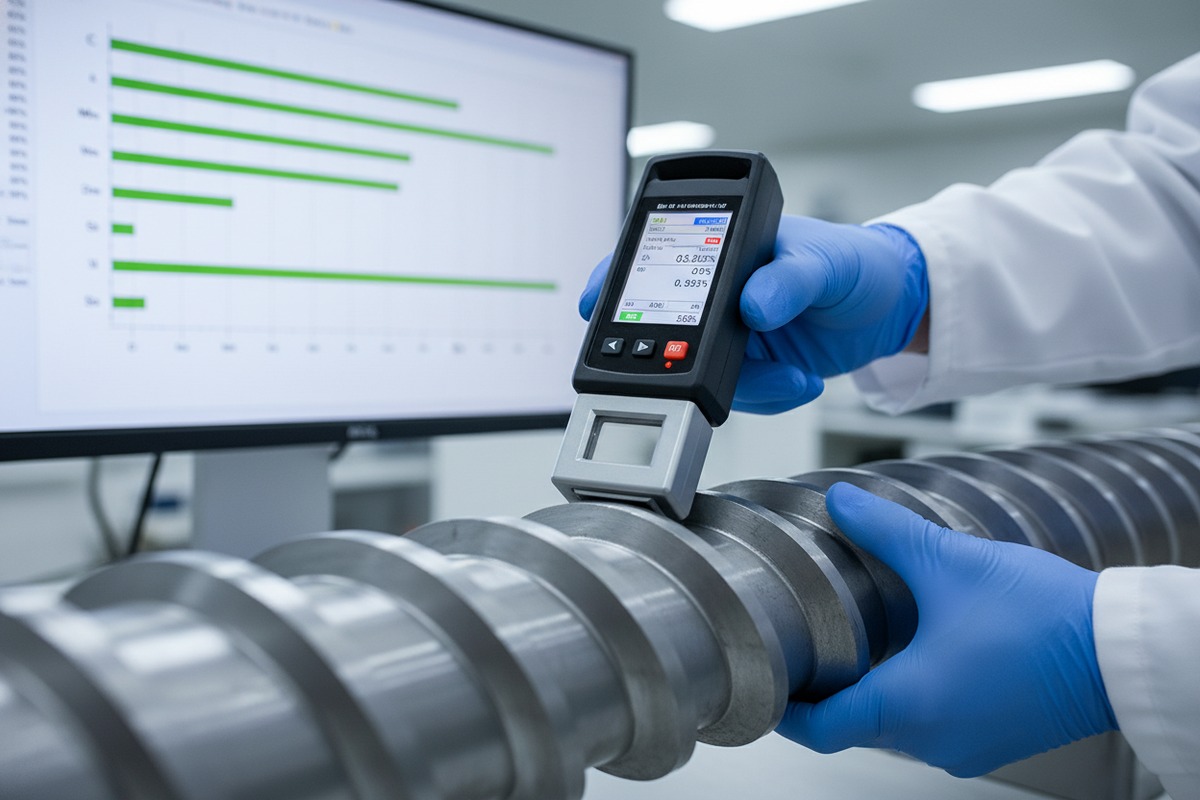
When we run steel through our spectrometer 2 on the production floor, the numbers tell the full story of what that bar can and cannot do. Many buyers glance at an MTR but miss the details that matter most.
To verify chemical composition, check that the MTR lists actual percentages of carbon, manganese, phosphorus, sulfur, and silicon against the allowable range for the specified steel grade. For mechanical properties, confirm that yield strength, ultimate tensile strength, elongation, and hardness values meet or exceed the minimum requirements of the applicable standard such as ASTM A615 or EN 14490.
Reading the Chemical Analysis Section
The chemical analysis section of an MTR shows each element as a percentage by weight. Carbon content 3 controls hardness and weldability. Manganese improves strength. Phosphorus and sulfur are impurities — you want them low. If the MTR lists carbon at 0.38% and your standard caps it at 0.40%, that is a pass. But if carbon hits 0.45%, the bolt may crack during installation.
Our engineers always cross-reference the MTR chemical data against the raw material CMTR from the steel mill. The CMTR is issued by the mill itself and covers the original heat of steel. The MTR from the bolt manufacturer should match or closely align with those mill numbers. A mismatch is a red flag.
Mechanical Property Data Points
Mechanical properties tell you how the bolt performs under load. Here are the key values:
| Property | What It Measures | Why It Matters for Self-Drilling Anchors |
|---|---|---|
| Yield Strength (MPa) | Stress at which permanent deformation begins | Ensures the bolt won't deform during tensioning or grouting |
| Ultimate Tensile Strength (MPa) | Maximum stress before fracture | Determines the anchor's load-bearing capacity |
| Elongation (%) | How much the bar stretches before breaking | Indicates ductility — critical for dynamic loads in mining |
| Hardness (HRC or HB) | Resistance to surface indentation | Relates to wear resistance at the drill bit and thread |
| Reduction of Area (%) | Cross-section narrowing at fracture | Another ductility indicator, especially for high-strength grades |
Charpy Impact Testing
For projects in cold climates — think Norway, northern Chile, or Canada — you need Charpy V-Notch 4 (CVN) impact test data. This test measures how much energy the steel absorbs before fracturing at low temperatures. Without it, a bolt rated for warm conditions may shatter in sub-zero environments. We routinely include CVN data for European and North American orders because many project specs require it at -20°C or even -40°C.
Heat Treatment Records
If the bolt has been quenched and tempered, the MTR should document the heat treatment cycle 5: austenitizing temperature, quench medium, and tempering temperature. Improper heat treatment can leave residual stresses that cause delayed cracking. When we process high-strength R32 or R38 hollow bars, every furnace batch is logged and tied to a specific heat number.
Which international quality certifications should I look for when vetting a Chinese anchor bolt manufacturer?
Over the past two decades of shipping self-drilling systems to more than 30 countries, our team has learned that certifications are the first filter buyers use to separate serious suppliers from trading companies with no production control.
Look for ISO 9001 quality management certification, CE marking for European markets, ETA (European Technical Assessment) where required, and product-specific compliance with standards like EN 14490, ASTM F1554, or MT/T 992. Also verify the manufacturer holds valid export licenses and has production audited by recognized bodies such as TÜV, SGS, or BV.
Core Certifications Explained
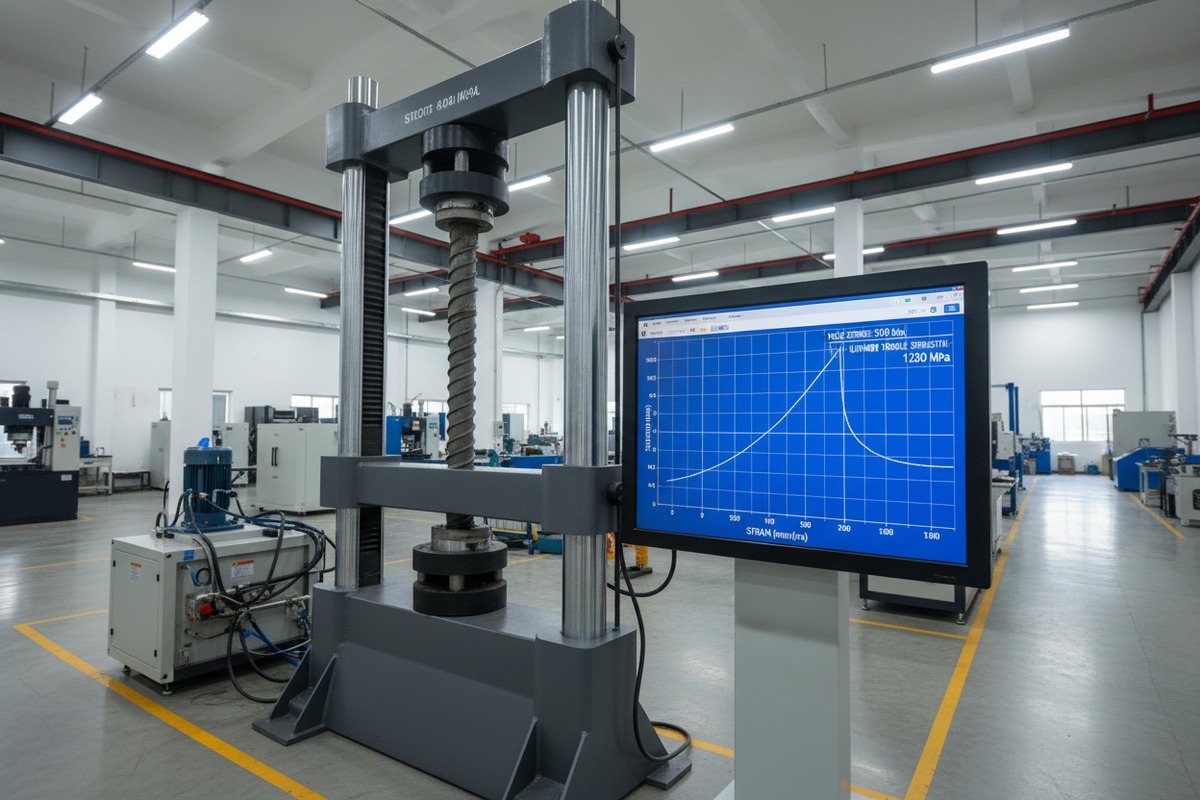
Not all certifications carry the same weight. ISO 9001 proves the factory has a quality management system 6, but it does not test the product itself. CE marking confirms the product meets EU safety directives. An ETA goes further — it validates the anchor system's structural performance in specific ground conditions based on extensive testing.
| Certification | Issuing Body | What It Covers | When You Need It |
|---|---|---|---|
| ISO 9001:2015 | Accredited CB (e.g., TÜV, SGS) | Quality management system | Every order — baseline requirement |
| CE Marking 7 | Notified Body in EU | Product safety and performance | Exports to EU member states |
| ETA (European Technical Assessment) | EOTA member body (e.g., DIBt) | System-level structural capacity in soil/rock | European infrastructure and tunneling projects |
| ICC-ES Report (e.g., ESR-3213) | ICC Evaluation Service | Code compliance in the US | US building and infrastructure projects |
| MT/T 992-2012 Compliance | Chinese industry authority | Mining anchor bolt specifications | Chinese domestic mining projects |
| MSHA Approval | US Mine Safety and Health Administration | Safety compliance for US mining | Underground mining in the United States |
Why ISO 9001 Alone Is Not Enough
ISO 9001 certifies a process, not a product. A factory can be ISO 9001 certified and still produce bolts that fail tensile tests. That is why product-level certifications like CE and ETA matter. They require actual testing of the finished anchor system — pull-out tests, tensile tests, and corrosion resistance evaluations — often supervised by an independent lab.
Checking Certification Authenticity
We have seen counterfeit ISO certificates 8 circulating in the market. Always verify the certificate number on the issuing body's website. For CE marking, ask for the Declaration of Conformity and the name of the Notified Body. For ETA, the document number can be checked in the EOTA database. If a supplier cannot provide verifiable certificate numbers, walk away.
Regional Certification Mapping
Different destination markets require different paperwork. A shipment to Norway needs CE and possibly ETA. A shipment to the US may need ICC-ES evaluation or ASTM compliance documentation. A shipment to Saudi Arabia might require SASO conformity. Before placing an order, confirm exactly which certifications your local building authority or mine inspector will demand at the project site.
Can I request third-party testing reports from labs like SGS or BV to ensure my bolts meet project specs?
Some of our longest-standing clients in Chile and Australia made third-party testing a non-negotiable condition from day one. It added a few days to lead time, but it eliminated every quality dispute before it started.
Yes, you can and should request third-party testing reports from internationally accredited laboratories such as SGS, Bureau Veritas (BV), TÜV, or Intertek. These independent labs perform chemical analysis, tensile testing, dimensional inspection, and coating thickness verification, providing unbiased confirmation that your self-drilling anchor bolts meet the exact project specifications.
How Third-Party Testing Works
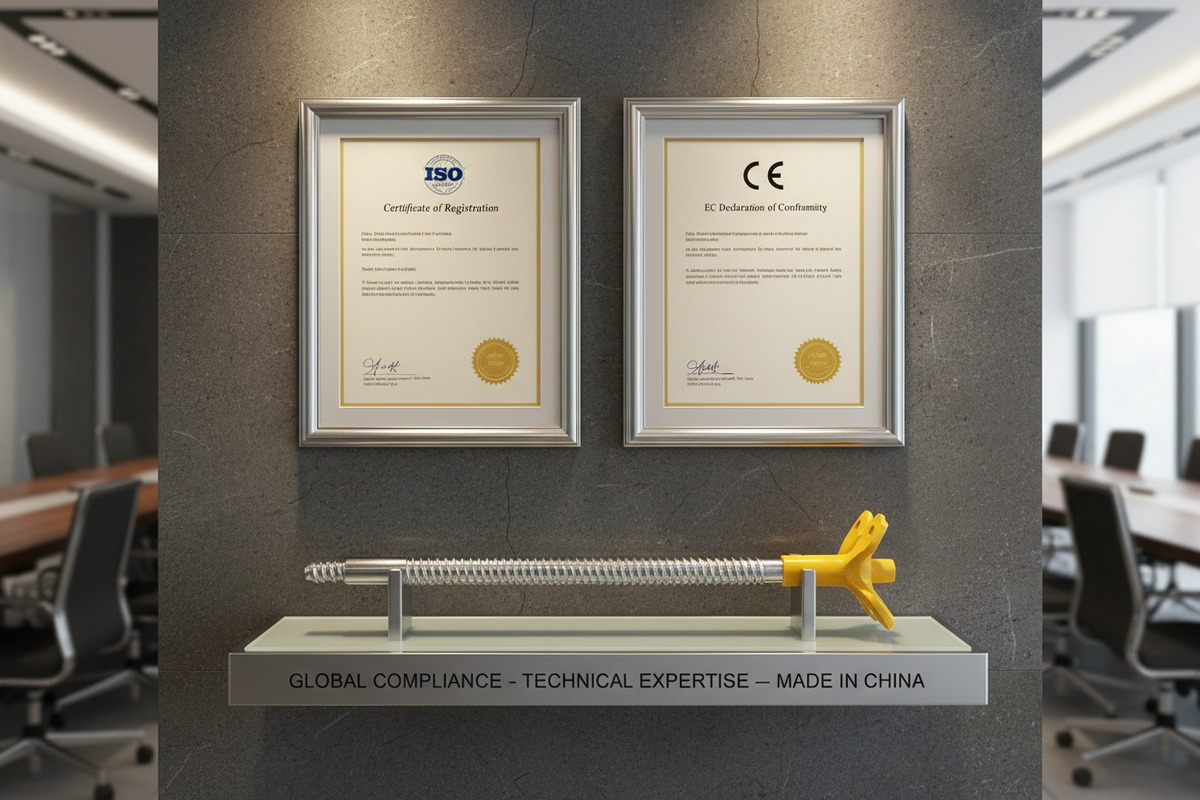
The process is straightforward. You specify the tests you need in your purchase order. The manufacturer either sends samples to the lab or arranges for the lab to visit the factory and pull random samples from the production batch. The lab runs the tests, compares results against the standards you specified, and issues a report directly to you. Because the lab has no financial relationship with the manufacturer beyond the testing fee, the results are objective.
Common Third-Party Tests for Self-Drilling Anchor Bolts
Here is what we typically see buyers request:
- Chemical composition analysis — Optical emission spectrometry to verify carbon, manganese, phosphorus, sulfur, chromium, and other elements.
- Tensile and yield strength testing — Per ASTM A370 for bar stock or ASTM F606 for finished threaded products.
- Charpy V-Notch impact testing — For cold-climate applications, tested at the temperature specified in the project design.
- Hardness testing — Rockwell or Brinell methods to confirm heat treatment effectiveness.
- Dimensional inspection — Thread pitch, outer diameter, inner bore diameter, wall thickness, and overall length.
- Coating thickness measurement — Using magnetic or eddy current gauges for hot-dip galvanized or epoxy-coated bolts per ASTM A153 or ISO 1461.
- Ultrasonic testing (UT) — Non-destructive inspection of the hollow bar body to detect internal flaws, voids, or wall thickness variation.
- Hydrogen embrittlement testing — Particularly important for high-strength galvanized bolts; confirms that post-plating baking was performed correctly.
When to Insist on Third-Party Testing
Not every order requires third-party testing. For routine reorders from a trusted supplier with a proven track record, the manufacturer's in-house MTR may be sufficient. But for first orders, high-value projects, critical structural applications, or any situation where bolt failure could endanger lives, third-party testing is essential. Underground mining and tunnel support are obvious cases. Slope stabilization above a highway is another.
Cost and Timeline Considerations
Third-party testing typically costs between $500 and $3,000 per batch depending on the scope of tests. Turnaround time ranges from 5 to 15 business days. Many buyers build this into the overall project timeline from the start. At our facility, we coordinate directly with SGS and BV offices in Shandong Province to keep the process efficient. The small added cost is negligible compared to the cost of pulling defective bolts out of a tunnel wall.
Pre-Shipment Inspection
Beyond lab testing, you can also request a Pre-Shipment Inspection (PSI) where the third-party inspector visits the factory warehouse, checks packaging, verifies markings, confirms quantities, and cross-references batch numbers against MTR documents. This closes the last gap between production and delivery.
Why is it critical for my procurement process to match MTR data with the actual batch numbers on my shipment?
We once had a client in Peru discover that the MTR attached to their shipment referenced a completely different heat number than what was stamped on the bars. The steel was fine, but the paperwork error triggered a two-week project delay while we issued corrected documents and the site engineer re-verified everything.
Matching MTR data with actual batch numbers is critical because it establishes full traceability from raw steel to installed anchor. Without this link, you cannot prove the bolts in the ground were tested, you lose warranty protection, and you risk installing uncertified material that may not meet design loads — a liability nightmare in any regulated project.

What Traceability Actually Means
Traceability means you can take any single bolt from a shipment and trace it back through the supply chain 9: which production batch it came from, which heat of steel was used, what chemical and mechanical test results that heat produced, and when it was manufactured. This chain of evidence is what EN 10204 Type 3.1 certificates are designed to provide.
The Traceability Chain
| Stage | Document | Key Identifier |
|---|---|---|
| Steel mill | Certified Mill Test Report (CMTR) | Heat number |
| Bolt manufacturer | Mill Test Report (MTR) | Batch/lot number linked to heat number |
| Quality control | Third-party test report | Sample ID linked to batch/lot number |
| Shipping | Packing list and bill of lading | Batch/lot number on packaging and tags |
| Project site | Installation log | Bolt batch/lot number recorded per location |
How Mismatches Happen
Mismatches usually occur for three reasons. First, the manufacturer mixes steel from different heats during production and loses track of which bars came from which heat. Second, the documentation team attaches the wrong MTR file to the shipment — a simple clerical error with serious consequences. Third, a trading company (not the actual manufacturer) repackages bolts from multiple sources and provides generic documentation that does not match any specific batch.
On our production line, every hollow bar bundle is tagged with its heat number and production batch number immediately after threading. These tags stay with the bundle through coating, inspection, packaging, and shipping. Our digital tracking system links each tag to its corresponding MTR, CMTR, and any third-party test reports.
Real-World Consequences of Poor Traceability
When a mining company in Australia had a bolt failure underground, the investigation required pulling the MTR for that specific bolt. Because the supplier had maintained proper batch traceability, they identified the heat number, reviewed the chemical analysis, and determined the failure was caused by a localized hydrogen embrittlement 10 issue in one heat of steel. That information allowed them to inspect and replace only the bolts from that specific batch — not the entire installation. Without traceability, they would have had to replace every bolt in the mine, costing millions.
Practical Steps for Buyers
Here is what you should do on every order:
- Specify traceability requirements in your purchase order. State that each shipment must include MTRs and CMTRs traceable to specific heat and batch numbers.
- Require physical markings. Each bundle or pallet should be tagged or stamped with the batch number.
- Cross-check on arrival. When the shipment lands, compare the batch numbers on the physical tags with the batch numbers on the MTR documents. They must match.
- Archive everything. Keep MTRs, CMTRs, third-party reports, and packing lists together in your project file. You may need them years later for warranty claims, audits, or failure investigations.
- Use a receiving checklist. Create a simple one-page form that your warehouse team fills out: batch number on tag, batch number on MTR, quantity, visual condition, and signature.
Coating and Treatment Traceability
Traceability extends beyond the steel itself. If your bolts are hot-dip galvanized, the galvanizing certificate should reference the same batch number. If hydrogen embrittlement relief baking was performed, the baking record should reference the same batch. Every process step in the chain should point back to one consistent identifier.
Conclusion
Requesting the right MTRs and certifications is not paperwork for the sake of paperwork — it protects your project, your budget, and your reputation. Verify chemical and mechanical data, demand recognized certifications, use third-party labs when the stakes are high, and always match batch numbers to documents. If you need guidance on documentation for your next self-drilling anchor bolt order, reach out to us at sales@sdarockbolt.com.
Footnotes
1. Authoritative government source for chemical analysis standards and methodologies. ↩︎
2. Wikipedia background on the technical instrument used for material verification. ↩︎
3. Scientific reference explaining how carbon content affects steel properties. ↩︎
4. Official ISO standard for Charpy impact testing on metallic materials. ↩︎
5. General background on heat treatment processes for high-strength steel. ↩︎
6. Official ISO page for the ISO 9001 quality management standard. ↩︎
7. Authoritative EU government source explaining CE marking requirements. ↩︎
8. Authoritative ISO page regarding the verification and use of ISO certificates. ↩︎
9. Authoritative WTO reference on global supply chains and trade traceability. ↩︎
10. Wikipedia background on the chemical process leading to steel failure. ↩︎