
Every year, our shipping department handles hundreds of self-drilling anchor bolt 1 orders headed to ports across five continents. One question comes up more than any other from new buyers: should I go with FOB or CIF Institute Cargo Clauses 2? It sounds like a simple logistics choice, but the wrong pick can quietly eat into your margins, delay your project, and create customs headaches you never saw coming.
For most importers of self-drilling anchor bolts, FOB is the better choice. It gives you full control over freight costs, carrier selection, and customs documentation. CIF may look cheaper upfront, but hidden markups on freight and insurance often erase the savings, while reducing your visibility into the supply chain.
Below, we break down the real differences between FOB and CIF for rock bolt imports. We look at cost, risk, customs, and project timelines so you can make the right call for your next order.
Should I choose FOB or CIF to get the best value for my self-drilling anchor bolt order?
When we quote anchor bolt orders from our Shandong facility, buyers often fixate on the per-unit price. But the unit price is only part of the story. The Incoterm you choose shapes your total landed cost, and many buyers learn this the hard way.
FOB typically delivers better overall value for self-drilling anchor bolt orders. While CIF quotes appear 30–50% cheaper, those savings often vanish once you account for inflated freight, minimal insurance coverage, and surprise terminal fees. FOB lets you see every cost line item separately.
What "Value" Really Means for Anchor Bolt Imports
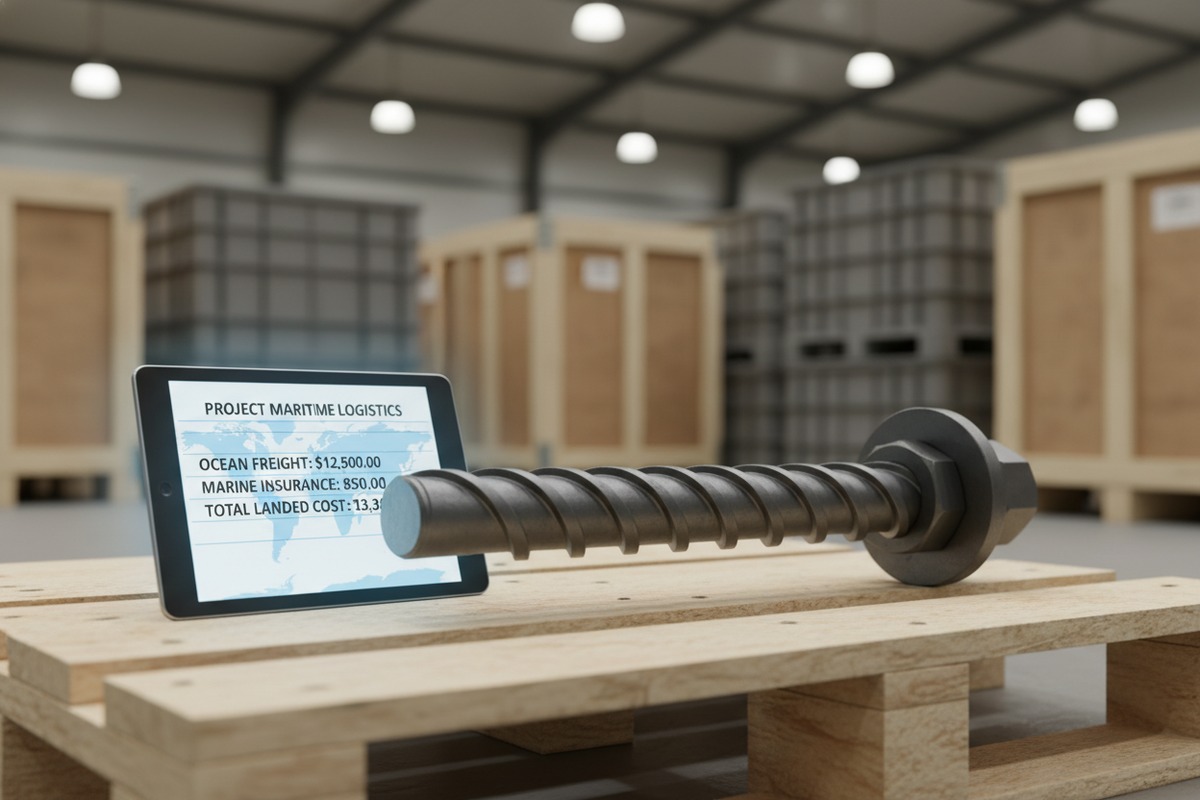
Value is not the lowest number on a proforma invoice. It is the total cost of getting your R32 or T76 hollow bar anchors from our warehouse in China to your jobsite or distribution center—without budget surprises.
Here is how the two terms stack up on a typical 20-foot container of self-drilling anchor bolts shipped from Qingdao to Houston:
| Cost Component | FOB (Buyer Manages) | CIF (Seller Manages) |
|---|---|---|
| Unit price (e.g., R32 anchor bolt) | $8.50/m | $7.20/m |
| Ocean freight | $1,800 (buyer-negotiated) | Included (often $2,400+) |
| Marine insurance 3 | $150 (buyer-selected) | Included (minimal coverage) |
| Terminal handling at destination | $350 (transparent) | $350–$600 (often a surprise) |
| ISF / customs filing | Buyer controls timing | Seller may delay paperwork |
| Estimated total landed cost | Lower and predictable | Higher after hidden fees |
Why CIF's Lower Price Can Be Misleading
Chinese suppliers—ourselves included—can negotiate bulk shipping rates that individual buyers cannot always match. That is why CIF quotes look attractive. But here is what many buyers miss: the supplier builds a margin into the freight and insurance portion. You will not see a separate freight invoice. You will not know if the insurance covers the full replacement value of your 40Cr alloy steel 4 anchors. And if a dispute arises mid-transit, you have less leverage because you are not the party with a direct contract with the carrier.
When CIF Might Still Make Sense
CIF is not always the wrong answer. If you are placing a small trial order—say, a few pallets of R25 anchors for a pilot project—and you do not yet have a freight forwarder 5 relationship, CIF can simplify your first purchase. But treat it as training wheels. Once you understand the logistics flow, switching to FOB will save you money on every subsequent order.
The Bottom Line on Value
From our experience shipping to over 20 countries, buyers who switch from CIF to FOB after their first order consistently report 8–15% savings on total landed cost. The effort of managing your own freight is small. The savings are not.
How does choosing FOB give me more control over my shipping schedule and freight costs?
Our production team can finish a 20-ton self-drilling anchor bolt order in about three weeks. But production speed means nothing if your container sits at the port for days because someone else is managing your logistics.
FOB gives you direct control over carrier selection, sailing schedules, and route planning. You pick the freight forwarder, choose the shipping line, and set the departure date. This means you can align ocean transit with your project milestones instead of waiting on a supplier's preferred schedule.

Carrier Selection: Why It Matters for Heavy Steel Cargo
Self-drilling anchor bolts are dense, heavy products. A full container of R32 or R38 hollow bars can weigh 18–22 tons. Not every shipping line handles heavy cargo the same way. Under FOB, you choose a carrier with experience in steel products. You can specify container type, stacking requirements, and insurance coverage tailored to your cargo.
Under CIF, the supplier picks the carrier. They may prioritize cost over reliability. We have seen cases where a supplier chose the cheapest available vessel, resulting in a two-week delay due to transshipment in a congested port. The buyer had no say in the matter.
Schedule Alignment With Project Timelines
Geotechnical projects run on tight schedules. If you are stabilizing a highway slope in Peru or reinforcing a tunnel in Norway, your anchor bolts need to arrive before your drilling crew mobilizes. FOB lets you coordinate directly with your freight forwarder to choose a vessel that matches your project calendar.
| Scenario | FOB Advantage | CIF Limitation |
|---|---|---|
| Urgent project deadline | Buyer selects fastest direct route | Supplier may book cheapest, slowest route |
| Port congestion at origin | Buyer can switch to alternate port (e.g., Shanghai instead of Qingdao) | Supplier decides; buyer has no input |
| Multiple shipments per year | Buyer builds volume discounts with preferred carrier | Each shipment is at supplier's discretion |
| Seasonal freight rate spikes | Buyer can lock in rates early with forwarder | Supplier passes rate increases through higher CIF price |
Freight Cost Negotiation Power
When you manage your own freight under FOB, you build a relationship with your forwarder. Over time, that relationship translates into better rates, priority booking during peak season, and faster document turnaround. Our long-term US buyers who use FOB consistently report freight costs 10–20% below what we would charge under CIF for the same route.
Real-World Example
One of our repeat customers in Chile—a mining contractor—initially ordered CIF to Valparaíso. The first shipment arrived eight days late because the supplier-arranged vessel made an unscheduled stop in Busan. The delay pushed back their shotcrete schedule by two weeks. After switching to FOB, they partnered with a Santiago-based freight forwarder who books direct sailings from Ningbo. Their last six shipments all arrived within the planned window.
Documentation You Control Under FOB
Under FOB, you are listed as the consignee on the Bill of Lading. You receive the original B/L directly. You file the ISF (Importer Security Filing 6) on your own timeline—72 hours before vessel departure, as required. You are not dependent on a seller in a different time zone to provide documents at the last minute.
This control is not just convenient. It protects you from costly penalties. One documented case involved a first-time importer who used CIF and received ISF paperwork just two days before sailing. The late filing triggered a $5,000 penalty from US Customs. Under FOB, that buyer would have managed the filing independently and avoided the fine entirely.
What are the hidden risks to my budget if I use CIF for importing rock bolts from China?
We have been exporting self-drilling anchor systems for over 20 years, and we have watched buyers get blindsided by CIF costs that were never on the original quote. The problem is not dishonesty—it is a lack of transparency built into the term itself.
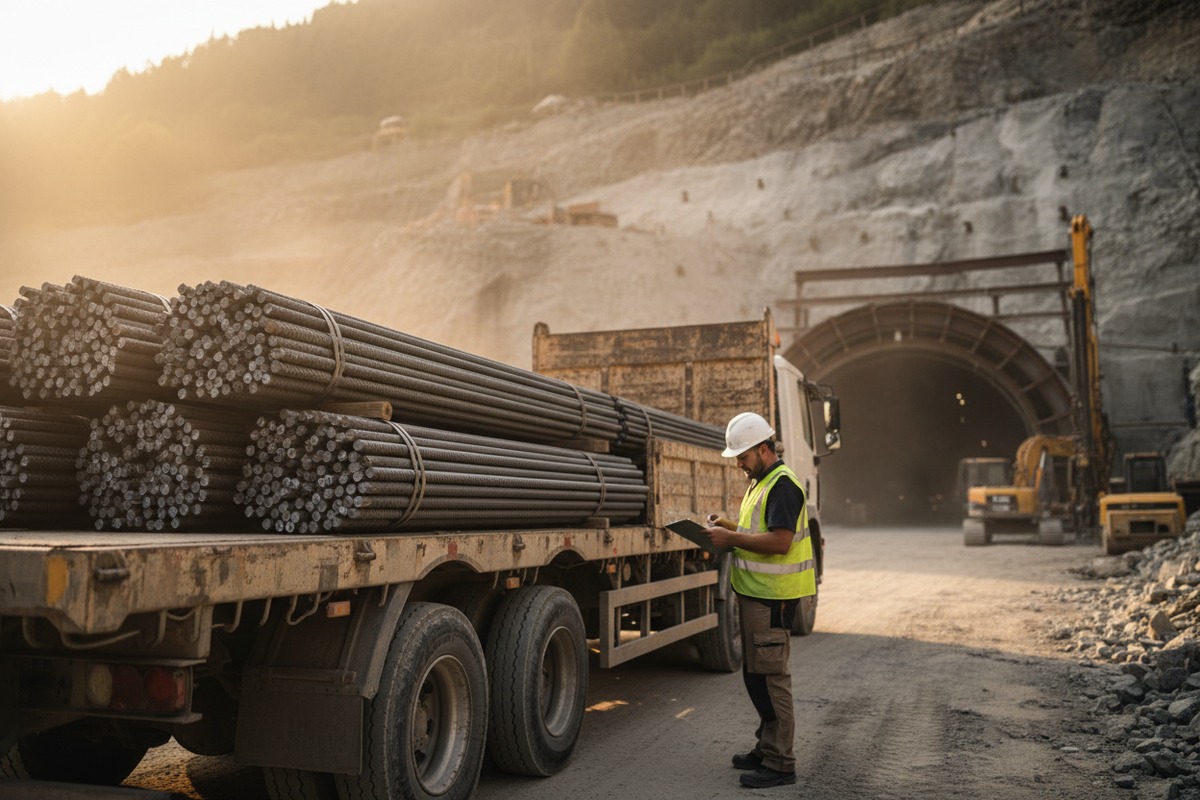
CIF hides several budget risks including inflated freight margins, inadequate insurance coverage, surprise terminal handling charges, and tariff miscalculations. Because the seller bundles shipping into one price, buyers cannot verify individual cost components, leading to an average 10–18% overspend compared to equivalent FOB arrangements.
Risk #1: Inflated Freight and Insurance Margins
When a supplier quotes CIF, they add freight and insurance to the product price. But they do not show you the breakdown. A shipping route that costs $1,800 on the open market might be billed at $2,500 inside a CIF quote. The supplier pockets the difference. You will never see a separate freight invoice, so you have no way to challenge the charge.
Risk #2: Minimal Insurance Coverage
CIF requires the seller to provide marine insurance—but only at the minimum level mandated by Institute Cargo Clauses 7 (C). This covers major casualties like sinking or fire, but not rough handling, moisture damage, or theft. For a container of high-value stainless steel 316 anchor bolts headed to a Saudi Arabian jobsite, that minimum coverage could leave you exposed to thousands of dollars in uninsured loss.
| Insurance Aspect | CIF (Seller-Arranged) | FOB (Buyer-Arranged) |
|---|---|---|
| Coverage level | ICC (C) — minimum | ICC (A) — all-risk (buyer's choice) |
| Covers rough handling damage | No | Yes (if buyer selects ICC-A) |
| Covers moisture/corrosion in transit | No | Yes (if buyer selects ICC-A) |
| Coverage value | 110% of invoice value (standard) | Buyer sets replacement value |
| Claim process | Buyer must work through seller's insurer | Buyer deals directly with own insurer |
Risk #3: Surprise Terminal and Handling Charges
When your CIF container arrives at the destination port, you are responsible for all costs from that point forward. But many first-time CIF buyers do not realize that terminal handling charges (THC), container demurrage, and port storage fees can add $400–$800 per container. These fees exist under FOB too, but FOB buyers plan for them because their forwarder provides a full cost estimate upfront.
Risk #4: Tariff Calculation Complications
Under CIF, the customs-declared value includes freight and insurance. That means your import duties are calculated on a higher base number. Under FOB, the declared value is only the product cost. The freight documentation is submitted separately, which can reduce your dutiable value. For self-drilling anchor bolts classified under HS code 7318 (screws, bolts, and similar fasteners), even a small percentage difference in declared value can translate into significant duty savings on a large order.
Risk #5: ISF and Documentation Delays
As mentioned earlier, the Importer Security Filing must be submitted 24–72 hours before a vessel departs. Under CIF, the seller controls the shipping booking and document flow. If they send your ISF data late—even by a day—you face a $5,000 fine per shipment. This is not hypothetical. It happens regularly to importers who rely on CIF without establishing strict document timelines with their supplier.
How to Protect Yourself If You Must Use CIF
If CIF is your only option—perhaps due to a contractual requirement from your end client—take these steps:
- Request a written breakdown of freight, insurance, and product cost within the CIF price.
- Ask for the insurance policy certificate and verify coverage level.
- Establish a document delivery timeline in your purchase contract (e.g., ISF data must be provided 5 business days before sailing).
- Compare the CIF total against a FOB quote plus your own freight estimate before signing.
Which shipping term will help me avoid customs delays and keep my geotechnical project on track?
Our logistics team coordinates with customs brokers in over a dozen countries. The single biggest cause of project delays we see is not production speed or vessel transit time—it is paperwork getting stuck at the destination port.
FOB is the shipping term most likely to prevent customs delays. It puts you in direct control of your customs broker, your Bill of Lading, and your filing schedule. Under CIF, you depend on the seller's timeline for critical documents, which frequently causes ISF penalties, clearance holdups, and costly demurrage charges at the destination port.
Why Customs Delays Happen More Often Under CIF
Under CIF, the clearing agent at the destination port—not you—may appear as the consignee on the Bill of Lading. This creates confusion during customs examination. When US Customs sees a third-party consignee on a shipment of steel fasteners (HS 7318 8), they may flag it for additional review. That review can take 3–7 business days. If your drilling crew is waiting for R32 anchors to start a slope stabilization project, those lost days are expensive.
Under FOB, your name is on the B/L. Your customs broker has all documents in hand well before the vessel arrives. The clearance process is straightforward.
Document Flow: FOB vs CIF
| Document | FOB Timeline | CIF Timeline |
|---|---|---|
| Bill of Lading | Buyer receives original B/L from their forwarder within 2 days of sailing | Seller provides B/L copy; original may arrive late |
| Packing list & commercial invoice | Buyer requests and receives before sailing | Included in CIF package; timing depends on seller |
| ISF filing (US imports) | Buyer files 72+ hours before departure | Seller must provide data; often sent 24–48 hours before departure |
| Material test certificates | Buyer can request before shipment | May be bundled with shipping docs; delayed |
| Certificate of Origin | Buyer coordinates directly | Seller arranges; buyer cannot verify timing |
Steel Grade Classifications and Customs Scrutiny
Self-drilling anchor bolts come in multiple steel grades—40Cr alloy steel, S460, 316 stainless steel 9, and standard carbon steel. Each grade has different tariff implications. If your customs paperwork lists the wrong grade or lacks a mill test certificate, customs will hold your container until the discrepancy is resolved.
Under FOB, you work directly with your customs broker to ensure the HS code, steel grade description, and supporting certificates are all aligned before the vessel arrives. Under CIF, you are relying on the seller to prepare documents that satisfy a foreign country's customs requirements—a process they may not fully understand.
Keeping Your Project on Track
Geotechnical projects have zero tolerance for material delays. Whether you are reinforcing a tunnel face in Colombia or installing soil nails along a Philippine highway cut, every day without anchors on site costs labor standby fees, equipment rental, and potential liquidated damages from the project owner.
FOB lets you build a logistics buffer. You know when the vessel sails, when it arrives, and when your broker will file for clearance. You can schedule your crew mobilization around a reliable arrival date. CIF removes that certainty because you are not managing the chain.
What About DDP?
Some buyers ask us about DDP (Delivered Duty Paid), where the seller handles everything including customs clearance at the destination. While we do offer DDP for select markets, it is the most expensive Incoterm 10 and still carries risk if the seller's local agent is unfamiliar with destination-country regulations. For most experienced importers, FOB plus a trusted local customs broker is the most reliable combination.
Our Recommendation
If you are importing self-drilling anchor bolts into the US, Europe, or Australia—markets with strict customs enforcement—use FOB. Pair it with a freight forwarder who has experience handling steel construction materials. The upfront effort is minimal, and the payoff in schedule reliability and cost predictability is substantial. After processing thousands of export shipments, we can say confidently: the buyers who control their own logistics sleep better at night.
Conclusion
FOB gives you cost transparency, schedule control, and smoother customs clearance—three things every anchor bolt importer needs. Contact us at sales@sdarockbolt.com for your next quote.
Footnotes
1. ISO standard for rock bolts used in civil engineering. ↩︎
2. Standardized trade terms defined by the WTO. ↩︎
3. Background on insurance for goods in transit. ↩︎
4. ISO standard for heat-treatable alloy steels. ↩︎
5. Overview of logistics intermediaries in international trade. ↩︎
6. US Customs requirement for ocean freight security. ↩︎
7. ICC governs Incoterms which define the minimum insurance requirements for CIF. ↩︎
8. Official nomenclature for the Harmonized System codes. ↩︎
9. ISO specification for stainless steel chemical composition. ↩︎
10. Definition of international commercial terms for shipping. ↩︎