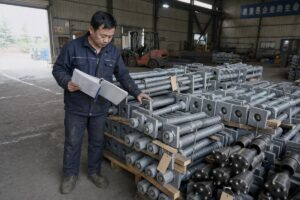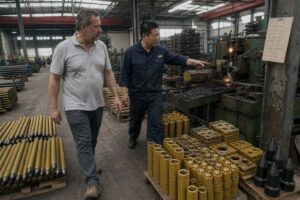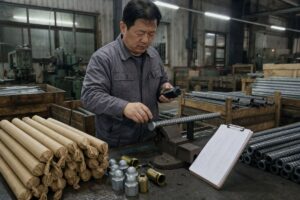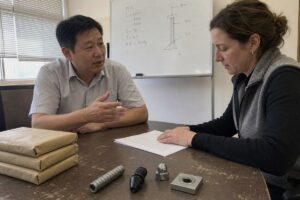
Every year, our production line ships thousands of tons of self-drilling anchor bolts to US-bound projects. Yet one question keeps coming back from procurement managers and contractors alike: how do you actually verify these bolts meet ASTM requirements 1? The gap between Chinese manufacturing standards and US compliance expectations creates real anxiety—and for good reason. A failed pull-out test on-site can halt a project, blow budgets, and put lives at risk.
To verify ASTM compliance for Chinese self-drilling anchor bolts, you should request Mill Test Reports matching ASTM A1034/A108 grades, engage accredited third-party labs like SGS for independent mechanical testing, confirm R-thread compatibility per ISO 10208, and conduct on-site pull-out tests per ASTM D7558 before full deployment.
This guide walks you through every critical step—from the certifications you need to request, to how you validate test reports, to what happens when those bolts hit the ground on a US job site. Let's break it down section by section.
What specific ASTM certifications should I request from my Chinese supplier to ensure my anchor bolts are US-compliant?
Our engineers have spent years aligning our quality control processes with both Chinese GB standards and US ASTM requirements. The disconnect between these two systems trips up even experienced buyers. Without knowing exactly which certifications to ask for, you risk receiving bolts that look right on paper but fail under US scrutiny.
You should request Mill Test Certificates referencing ASTM A1034 or A108 for steel grade and mechanical properties, ASTM F1554 compliance for structural anchor bolts, ISO 10208 certification for R-type threads, and any MSHA approval documentation if the bolts are destined for mining applications.
Understanding the Core ASTM Standards
Self-drilling anchor bolts are not simple fasteners. They are hollow bar 2s that combine drilling, grouting, and anchoring into a single operation. This means they must meet standards that cover both the steel material and the installed performance.
Here are the primary ASTM standards you need to know:
- ASTM A1034/A108 — These govern the steel grade, chemical composition 3, and mechanical properties like tensile strength and yield strength. They are your baseline for material quality.
- ASTM F1554 — This standard applies to anchor bolts used in structural and federal projects. If your project involves government-funded infrastructure, this one is non-negotiable.
- ASTM D7558 — This covers load capacity testing and torque verification for installed anchors. It matters most during on-site validation.
- MSHA 30 CFR Part 57 — Required for mining applications in the US. Without MSHA approval, your bolts cannot legally be used underground in American mines.
Chinese Standards vs. ASTM: Where the Gap Lives
Chinese manufacturers typically produce under GB, JC, or MT standards. For example, MT/T 992-2012 is the mining standard that specifies hole diameter, thread type, and steel grade for rock bolts in China. JGJ 94-94 covers anchor design and testing for construction. These standards emphasize constructability and on-site inspection rather than laboratory certification.
The problem? A bolt certified under MT/T 992-2012 may have similar mechanical properties to an ASTM A1034 Grade 75 bolt, but the testing methods, tolerances, and documentation formats differ. US inspectors and engineers will not accept GB certifications as substitutes for ASTM documentation.
| Standard | Region | Covers | Key Focus |
|---|---|---|---|
| ASTM A1034/A108 | USA | Steel grade, mechanical properties | Lab-verified material performance |
| ASTM F1554 | USA | Structural anchor bolts | Federal/structural compliance |
| ASTM D7558 | USA | Pull-out and torque testing | Installed load capacity |
| MSHA 30 CFR Part 57 | USA | Mining safety | Underground use approval |
| MT/T 992-2012 | China | Mining rock bolts | Hole diameter, thread, steel grade |
| JGJ 94-94 | China | Anchor design | Construction and on-site inspection |
Thread Type Matters More Than You Think
R-type threads follow ISO 10208 4 and are universally compatible with major drilling rigs like Epiroc and Sandvik. T-type threads are often proprietary to the manufacturer and follow corporate standards, not international ones. For US projects, always specify R-type threads unless your project engineer has explicitly approved a T-type system. This avoids compatibility issues and gives you a traceable international standard to reference.
What to Put in Your Purchase Order
When you place your order, be specific. State the ASTM standard, the grade, the thread type, and the required documentation. A vague request like "US-compliant bolts" will get you vague results. Instead, write something like: "Self-drilling hollow bar anchor, ASTM A1034 Grade 75, R32 thread per ISO 10208, hot-dip galvanized per ASTM A153, with full Mill Test Certificate per ASTM A1034."
How can I verify that the Mill Test Reports provided by my Chinese factory actually meet ASTM mechanical standards?
In our experience exporting to the US, we have seen Mill Test Report 5s range from highly detailed and fully traceable documents to vague one-page summaries that raise more questions than they answer. The quality of documentation you receive depends heavily on how clearly you define your requirements upfront—and how rigorously you check what comes back.
To verify Mill Test Reports, cross-reference the listed chemical composition and mechanical properties against ASTM A1034/A108 requirements, confirm the testing lab is accredited (e.g., CNAS or ILAC), check that batch numbers match physical bolt markings, and compare reported tensile/yield values against the specified grade minimums.
What a Proper Mill Test Report Should Contain
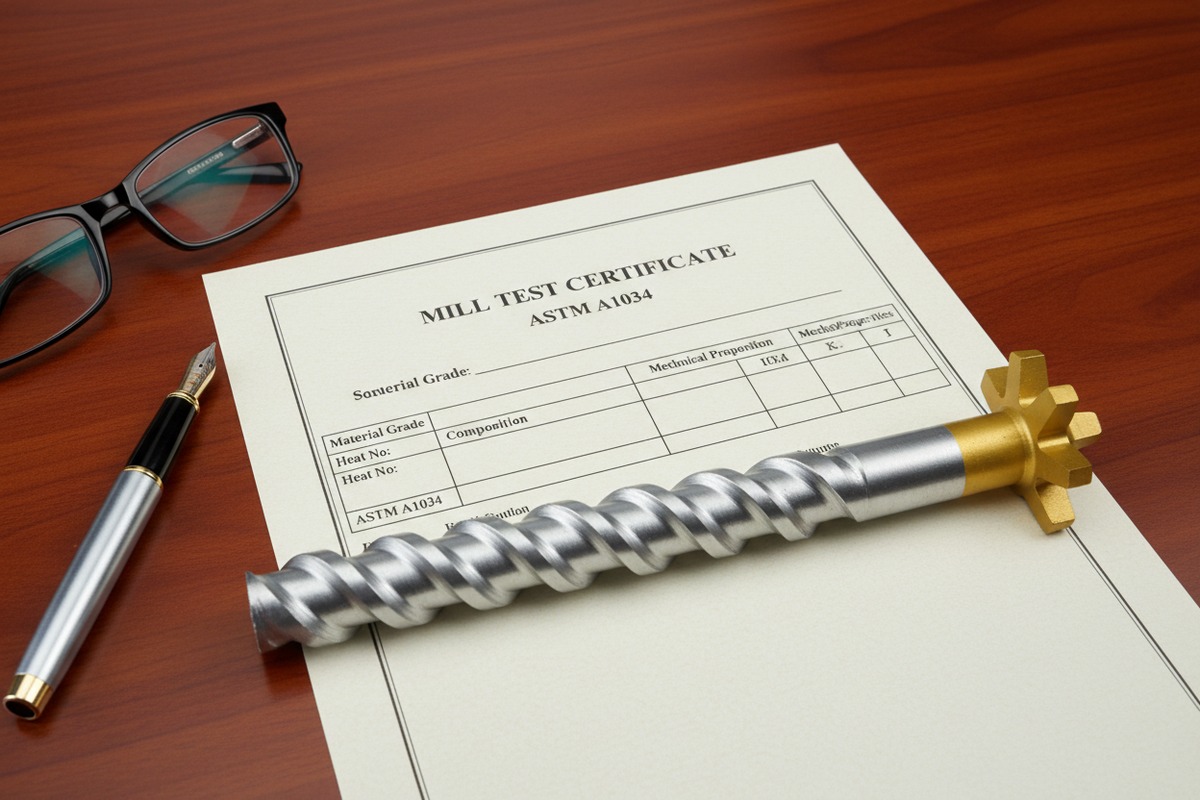
A Mill Test Report (MTR), also called a Mill Test Certificate (MTC), is the document that links a batch of steel to its tested properties. For ASTM compliance, it should include:
- Heat number and batch/lot number
- Chemical composition (carbon, manganese, phosphorus, sulfur, etc.)
- Mechanical properties (tensile strength 6, yield strength, elongation, reduction of area)
- Test method reference (e.g., "tested per ASTM A370")
- Name and accreditation of the testing laboratory
- Date of testing and signature of the responsible quality officer
If any of these items are missing, the MTR is incomplete and should not be accepted without clarification.
How to Cross-Reference Values
Each ASTM grade has minimum mechanical requirements. Here is a quick reference for common grades used in self-drilling anchor bolts:
| Property | ASTM A1034 Grade 60 | ASTM A1034 Grade 75 | ASTM A1034 Grade 80 |
|---|---|---|---|
| Minimum Tensile Strength (ksi) | 90 | 100 | 110 |
| Minimum Yield Strength (ksi) | 60 | 75 | 80 |
| Minimum Elongation (%) | 14 | 12 | 12 |
Take the values from the MTR and compare them line by line against this table. If the reported tensile strength for a Grade 75 bolt is 98 ksi, it fails. It must be at least 100 ksi. This is a simple but powerful check that many buyers skip.
Red Flags in Mill Test Reports
Watch for these warning signs:
- Generic or templated reports — If the MTR looks identical across multiple batches with only the date changed, the data may be fabricated.
- No lab accreditation — The testing lab should hold CNAS (China National Accreditation Service) accreditation or be part of the ILAC (International Laboratory Accreditation Cooperation) network.
- Mismatched batch numbers — The batch number on the MTR must match the markings stamped or painted on the physical bolts. If they do not match, you have no traceability.
- Values exactly at the minimum — While not proof of fraud, consistently seeing values that land exactly on the minimum threshold across every batch suggests the numbers may have been adjusted rather than genuinely tested.
Request Testing Per ASTM A370
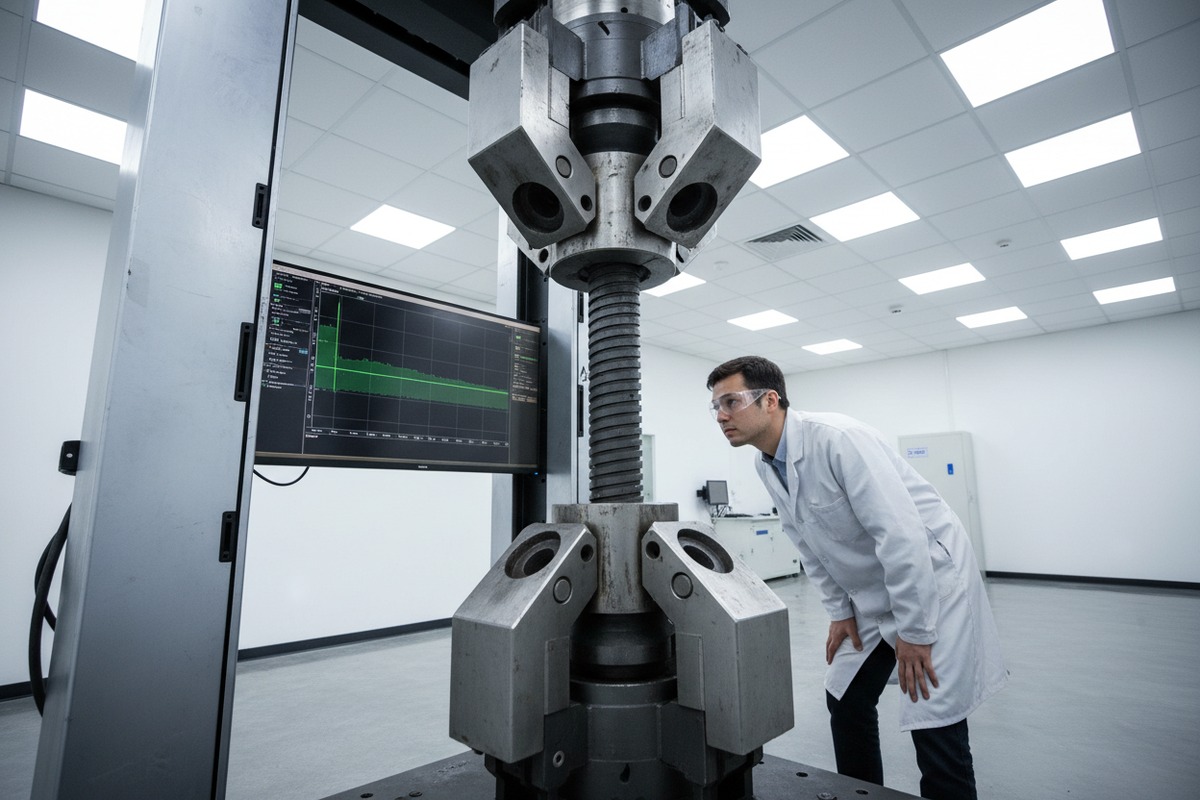
ASTM A370 is the standard test method for mechanical testing 7 of steel products. When you request your MTR, specify that testing must be conducted per ASTM A370. This ensures the test procedures—specimen preparation, strain rates, and equipment calibration—align with US expectations. Chinese labs often default to GB/T 228 for tensile testing, which is similar but not identical. The differences in specimen geometry and strain rate can produce slightly different results, and US inspectors may flag GB-tested reports as non-conforming.
Our quality team always recommends that buyers request a split sample: one tested at the factory, one retained for independent verification. This gives you a fallback if questions arise later.
Should I arrange for independent third-party testing in China to validate the quality of my self-drilling anchor bolts?
When we prepare shipments for US-bound projects, we always encourage our clients to arrange their own third-party inspections. It is not a sign of distrust—it is standard practice in international trade and protects both sides. The cost of pre-shipment testing in China is a fraction of the cost of dealing with a failed batch on a US job site.
Yes, you should arrange independent third-party testing in China through accredited labs like SGS, Bureau Veritas, or TÜV. Pre-shipment testing validates mechanical properties, dimensional accuracy, and coating quality before the bolts leave the factory, preventing costly rejections and project delays in the US.
Why Third-Party Testing Is Non-Negotiable for US Projects
The US construction and mining industries 8 operate in a liability-heavy legal environment. If an anchor fails and causes injury or structural damage, the contractor, engineer, and material supplier can all face legal action. Third-party test reports from accredited labs provide an independent, defensible record of material quality. Self-certified documents from the manufacturer alone do not carry the same weight in a legal or engineering review.
Which Labs to Use
Several internationally recognized testing and inspection firms operate in China:
| Lab/Inspector | Services Offered | Accreditation | Typical Turnaround |
|---|---|---|---|
| SGS | Mechanical testing, dimensional inspection, coating thickness | ISO 17025, CNAS | 5–7 business days |
| Bureau Veritas | Full material testing, factory audit, pre-shipment inspection | ISO 17025, ILAC | 5–10 business days |
| TÜV | Mechanical testing, weld inspection, quality system audit | ISO 17025, DAkkS | 7–10 business days |
| Intertek | Chemical analysis, tensile testing, corrosion testing | ISO 17025, CNAS | 5–7 business days |
These labs can test directly at the factory or at their own facilities. We typically coordinate sample collection so that it happens in the presence of the inspector, ensuring the tested samples genuinely come from the production batch.
What to Test
At a minimum, your third-party testing scope should include:
- Tensile and yield strength — Per ASTM A370, on specimens cut from the actual production batch.
- Chemical composition — Spectrometric analysis to confirm the steel grade matches ASTM A1034/A108 requirements.
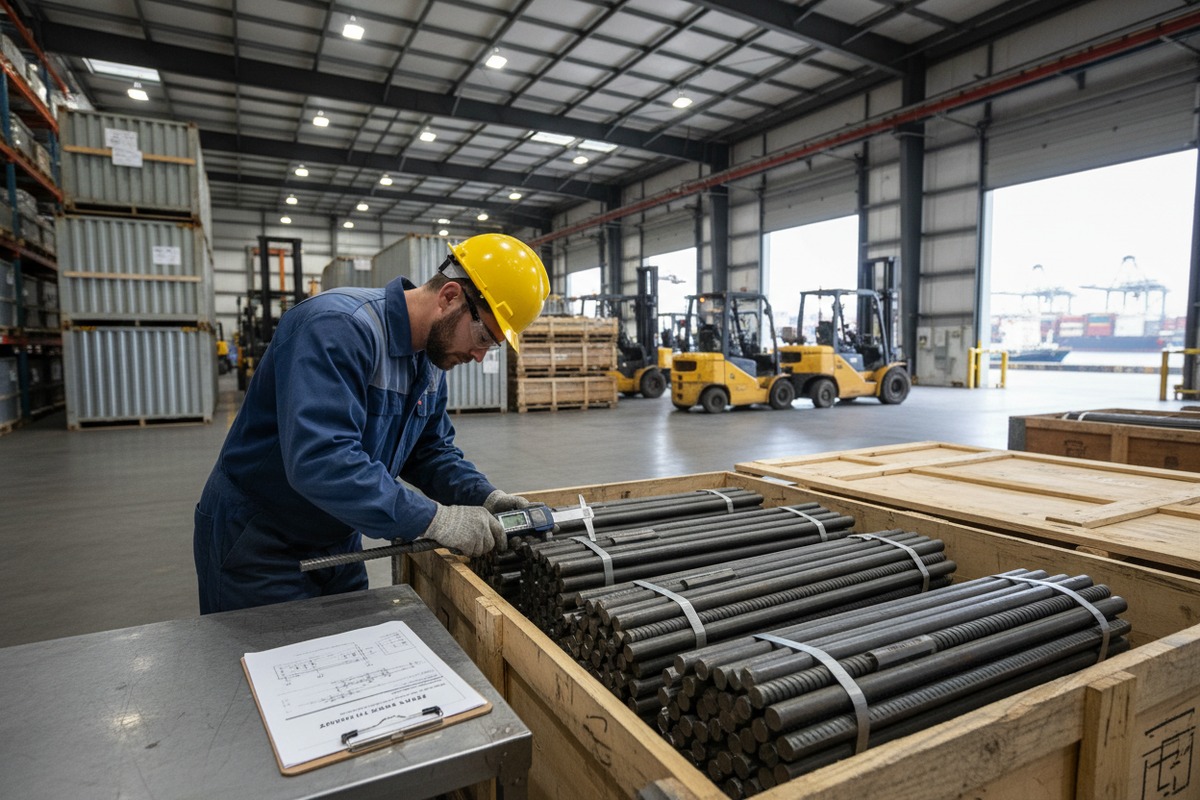
- Dimensional inspection — Outer diameter, inner diameter (hollow bar), thread pitch, and overall length. Tolerances should match your purchase order specifications.
- Coating verification — If hot-dip galvanized, measure coating thickness per ASTM A153. If duplex coated or stainless, verify per the relevant standard.
- Visual inspection — Check for surface cracks, deformation, thread damage, and marking legibility.
Cost vs. Risk
A typical pre-shipment inspection and testing package for a container load of self-drilling anchor bolts costs between $800 and $2,500, depending on scope. Compare that to the cost of rejecting a shipment at a US port, expediting replacement bolts, and absorbing project delays. The math is simple. One failed batch can easily cost $50,000 or more in direct and indirect losses.
Factory Audits Add Another Layer
Beyond product testing, consider a factory audit. An ISO 9001 audit verifies that the manufacturer has a quality management system 9 in place. But go deeper—ask the auditor to check raw material incoming inspection records, heat treatment logs, and calibration records for testing equipment. Our facility maintains full traceability from raw steel billet to finished product, and we welcome audits because they build buyer confidence and long-term partnerships.
What steps can I take to ensure my imported anchor bolts will pass on-site pull-out tests in the US?
Our team has supported dozens of US projects through the final and most critical phase: the on-site pull-out test. This is where all the paperwork and lab testing meet reality. A bolt either holds its design load in the ground, or it does not. Everything you do in the procurement and verification process leads to this moment.
To ensure your imported anchor bolts pass US pull-out tests, specify ASTM D7558 as your testing protocol, verify grout compatibility before installation, conduct proof-load tests on a representative sample of installed bolts, and use ultrasonic testing to confirm grouting integrity within the hollow bar system.
What Is a Pull-Out Test and Why It Matters
A pull-out test applies a controlled tensile load to an installed anchor bolt until it reaches its design load (proof test) or until failure (ultimate test). In the US, ASTM D7558 is the primary standard for this. The test measures whether the anchor, the grout, and the surrounding ground together can sustain the required load. It is the ultimate pass/fail moment for your imported bolts.
Factors That Affect Pull-Out Performance
The bolt itself is only one variable. Pull-out performance depends on:
- Steel quality — A bolt that meets ASTM A1034 Grade 75 has the tensile strength to handle design loads. If the steel is substandard, it will stretch or break before reaching the target.
- Grout quality and mixing — Self-drilling anchors rely on grout pumped through the hollow bar to bond with the surrounding rock or soil. Incorrect water-cement ratios, poor mixing, or incomplete grouting will reduce pull-out capacity dramatically.
- Ground conditions — Fractured rock, loose soil, and water-saturated zones all affect bond strength. The anchor design must match the ground type.
- Installation technique — Drill speed, flushing pressure, and grouting timing all matter. Improper installation can leave voids in the grout column, weakening the anchor.
Pre-Installation Checks
Before a single bolt goes into the ground, do these:
- Verify physical markings — Check that the batch numbers on the bolts match the MTRs and third-party test reports.
- Inspect for damage — Look for bent bars, crushed threads, and cracked drill bits. Shipping damage happens.
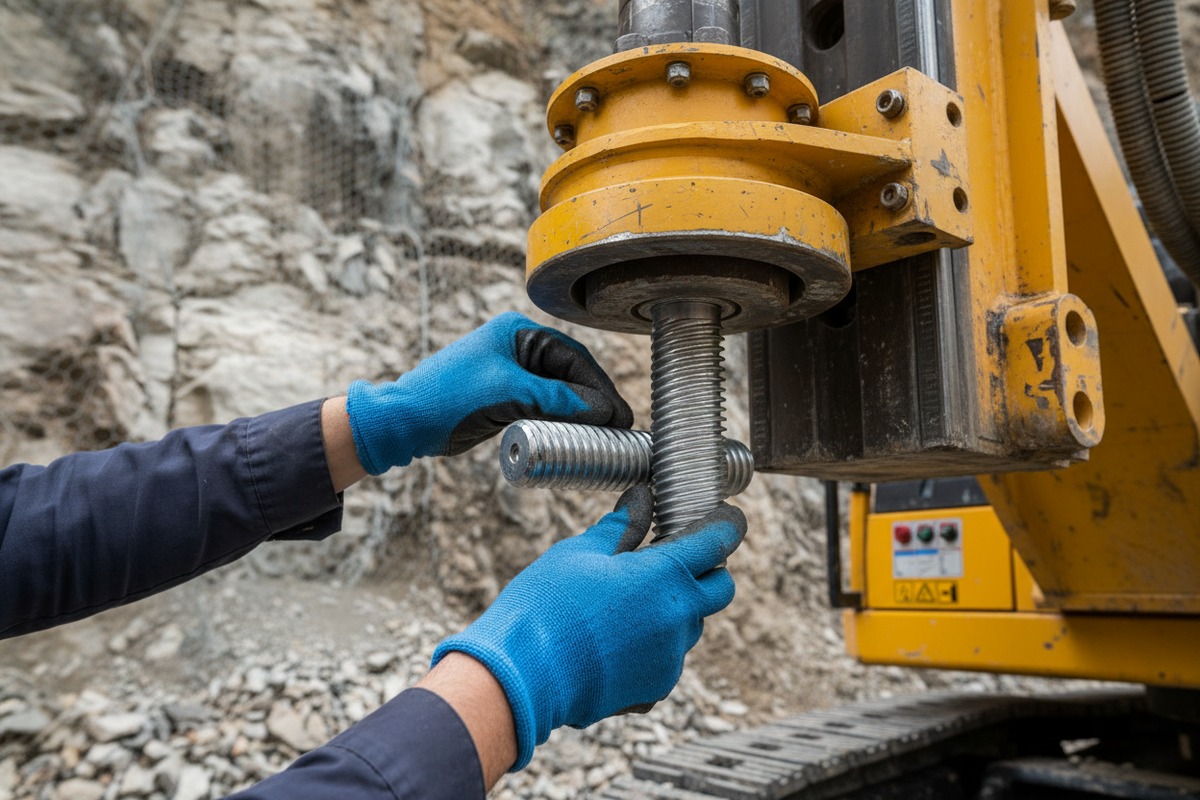
- Confirm thread compatibility — Fit the coupler, bearing plate, and nut onto the bar. R32, R38, and R51 threads should engage smoothly without cross-threading.
- Test grout compatibility — Run a small batch of grout through the hollow bar to confirm flow and set time. Different grout brands behave differently.
During Installation
Use ultrasonic testing after grouting to check for voids inside the hollow bar and in the annular space between the bar and the borehole wall. Voids are the number one cause of pull-out failures. Visual inspection of grout return at the borehole collar is a quick but imperfect indicator—ultrasonic methods give you certainty.
The Proof-Load Test Protocol
Typically, a project specification will require proof-load testing on 5–10% of installed anchors. The test follows ASTM D7558:
- Attach a hydraulic jack and load cell to the anchor head.
- Apply load in increments (usually 25% of the design load per step).
- Hold each increment for a specified time (often 1–5 minutes) and record displacement.
- Load to 133% or 150% of the design load (as specified) and hold.
- If the anchor holds without excessive creep, it passes.
Long-Term Monitoring
For critical infrastructure, consider installing strain gauges or vibrating wire load cells on a subset of anchors. These allow you to monitor load changes over time, catching issues like grout degradation or ground movement before they become failures. Our engineering team can help specify the right monitoring setup based on project requirements.
The key takeaway is this: passing a pull-out test is not just about the bolt. It is about the entire system—steel, grout, ground, and installation. Control every variable you can, and verify the rest through testing.
Conclusion
Verifying ASTM compliance for Chinese self-drilling anchor bolts requires clear specifications, independent testing, and disciplined on-site validation. Do the work upfront, and your US project gets reliable performance at competitive cost.
Footnotes
1. Official ASTM overview explaining their standards and compliance requirements. ↩︎
2. Definition of hollow structural sections used in construction. ↩︎
3. Scientific background on chemical composition in metallurgy. ↩︎
4. Official ISO standard for thread compatibility. ↩︎
5. General definition of the Mill Test Report document. ↩︎
6. Technical resource for understanding tensile strength in engineering. ↩︎
7. Official ASTM page for the A370 test method. ↩︎
8. NIOSH resource for mining industry standards and safety. ↩︎
9. Official ISO page detailing the 9001 quality management system. ↩︎
10. Official ISO page for quality management standards. ↩︎