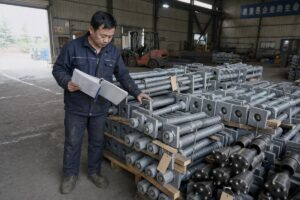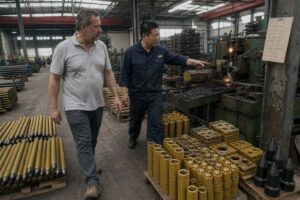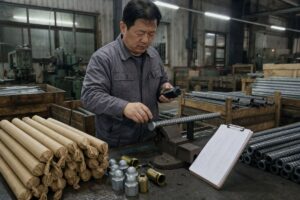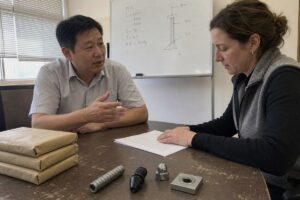

Every year, our sales team receives dozens of inquiries from buyers who got burned by a previous supplier's fake or misleading ISO certificate. The consequences are real — failed pull-out tests on site, rejected shipments at port, and costly project delays that no procurement manager 1 wants to explain to their boss.
To verify a Chinese supplier's ISO certification for self-drilling anchor bolts, request the full certificate PDF, cross-check it on the IAF CertSearch or CNCA database, confirm the certification scope covers anchor bolt manufacturing, and validate the issuing body's accreditation through CNAS or an internationally recognized accreditation authority.
This guide walks you through each step in detail. We will cover online verification tools, explain why ISO matters specifically for hollow bar anchors 2, show you how to confirm a certificate belongs to the actual factory, and highlight the red flags that experienced buyers watch for. Let's get into it.
How can I verify the authenticity of a Chinese supplier's ISO 9001 certificate online?
When we ship self-drilling anchor bolts to contractors in Norway or Chile, the first document they ask for is our ISO 9001 certificate 3. But asking for a certificate is not enough. You need to know how to check if that piece of paper is real.
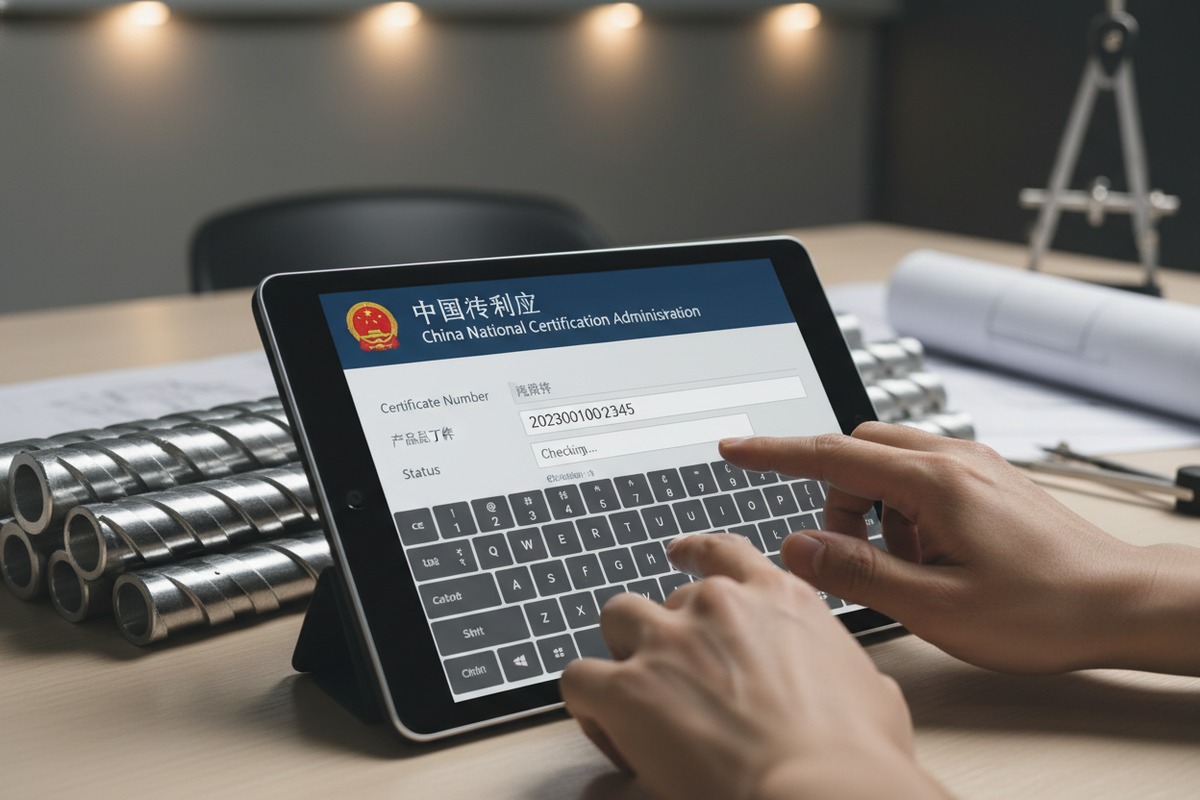
You can verify a Chinese supplier's ISO 9001 certificate by searching the certificate number on the IAF CertSearch database (iafcertsearch.org) or the China National Certification Administration (CNCA) database. Both platforms confirm certificate validity, issuing body, scope, and expiration date in real time.
Step 1: Request the Full Certificate
Do not accept a cropped screenshot or a blurry photo. Ask your supplier for the complete certificate in PDF format. A legitimate ISO 9001 certificate should contain these key details:
| Certificate Element | What to Look For |
|---|---|
| Certificate Number | Unique alphanumeric code (e.g., 00124Q34567R0M) |
| Company Name | Must match the factory's legal registered name |
| Scope of Certification | Should mention "anchor bolts," "rock bolts," or "hollow bar" production |
| Issuing Body (Registrar) | Name and logo of the certification body |
| Accreditation Mark | CNAS, UKAS 4, ANAB, or other recognized accreditation logo |
| Issue Date & Expiry Date | Certificate must be current, not expired |
| Standard Referenced | Should state ISO 9001:2015 |
If any of these elements are missing, that is your first warning sign.
Step 2: Use the IAF CertSearch Database
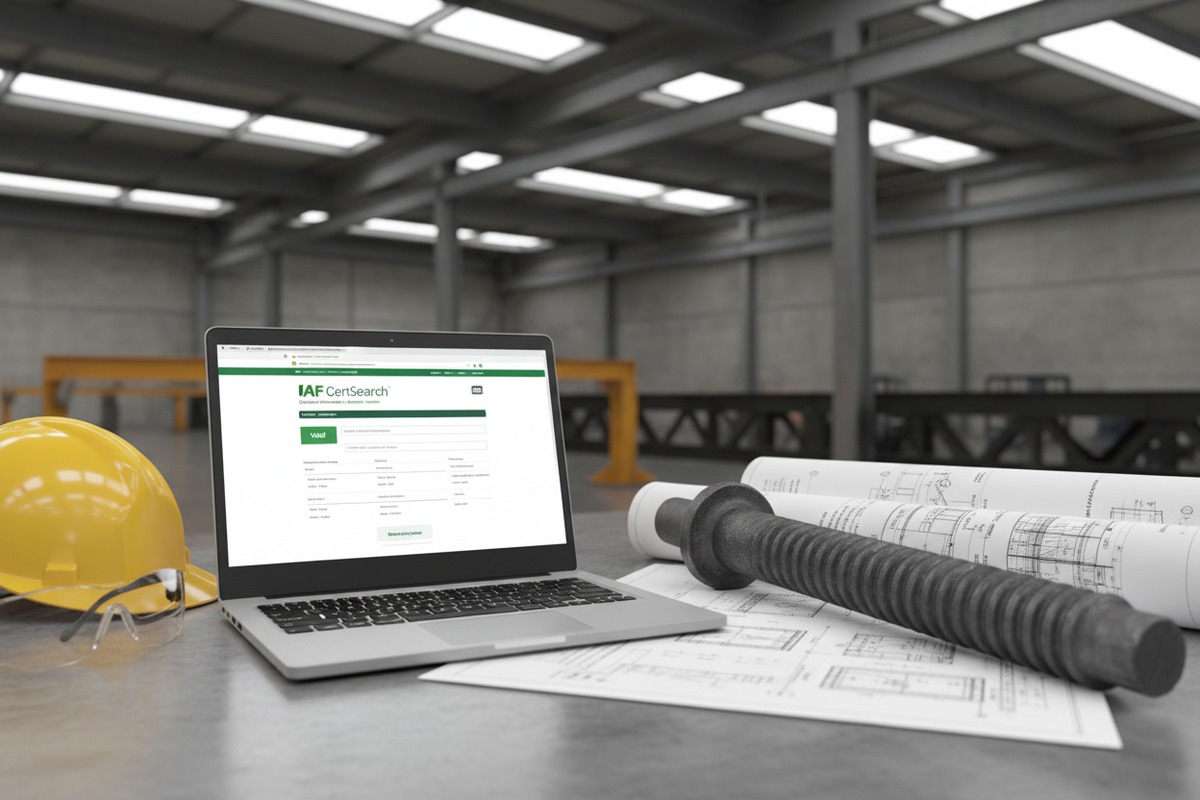
The International Accreditation Forum (IAF) maintains a global database called IAF CertSearch at iafcertsearch.org. This is the most reliable free tool for international buyers. You simply enter the company name or certificate number and the system returns the certificate status — active, suspended, or withdrawn. The database pulls from accredited certification bodies worldwide, including many that operate in China.
Step 3: Check the CNCA Database
For certificates issued by Chinese certification bodies, the CNCA (China National Certification and Accreditation Administration) maintains its own database. The interface is mostly in Chinese, which makes it difficult for foreign buyers. However, you can use a browser translation tool and search by certificate number. If the certificate does not appear in either IAF CertSearch or CNCA, treat it as suspicious.
Step 4: Verify the Certification Body's Accreditation
Not all certification bodies are equal. Some are "certificate mills" — they issue ISO certificates with minimal auditing. Check whether the issuing body is accredited by a recognized national accreditation body 5. In China, that means CNAS (China National Accreditation Service). Internationally, look for accreditation from UKAS (UK), ANAB 6 (US), or JAS-ANZ (Australia/New Zealand). If the certification body is not accredited by any of these, the certificate holds very little value.
Step 5: Consider Paid Verification Services
Services like China Checkup offer paid certificate verification for roughly $100–$500 per check. They handle the language barrier and database navigation for you. For high-value orders — especially for mining or tunneling projects where anchor bolt failure can be catastrophic — this small cost is well worth the peace of mind.
Why is ISO certification critical for my self-drilling anchor bolt quality standards?
Our production floor runs three shifts to meet demand from over 15 countries, and the ISO 9001 quality management system 8 is the backbone that keeps every batch consistent — whether it is R32 hollow bars for a Chilean copper mine or T76 anchors for a Norwegian tunnel.
ISO 9001 certification ensures a self-drilling anchor bolt manufacturer maintains systematic quality controls across raw material inspection, thread rolling, heat treatment, and final testing. It does not certify the product directly, but it guarantees the processes behind the product are consistent, documented, and continuously improved.

What ISO 9001 Actually Certifies
A common misconception is that ISO 9001 certifies the product. It does not. It certifies the quality management system — the processes, procedures, and documentation a factory uses. For self-drilling anchor bolts, this means the factory has documented procedures for:
- Incoming raw material inspection (steel grade verification for 40Cr, S460, R780, etc.)
- Thread manufacturing tolerances (R-type threads per ISO 10208 9)
- Heat treatment 10 parameters and monitoring
- Dimensional inspection at multiple production stages
- Non-conformance handling and corrective action
- Traceability from raw steel coil to finished bolt
Why This Matters for Geotechnical Applications
Self-drilling anchor bolts are not decorative fasteners. They are structural elements installed in rock, soil, and mixed ground to stabilize slopes, support tunnel faces, and reinforce foundations. A single bolt failure in a mining drift or highway cut can trigger a collapse. The stakes are high.
ISO 9001 provides a framework that reduces variation. When a factory follows ISO processes, the tensile strength of bolt #10,000 should be within the same tolerance range as bolt #1. Without this system, you are relying on individual worker judgment — and that is a gamble with structural safety.
ISO vs. Product Standards: Know the Difference
Buyers often confuse ISO 9001 with product-specific standards. Here is a clear comparison:
| Standard | Type | What It Covers |
|---|---|---|
| ISO 9001:2015 | Quality Management System | Factory processes, documentation, continuous improvement |
| ISO 10208 | Product Standard | R-type thread dimensions for steel tubes used as rock bolts |
| EN 14490 | Product Performance Standard | Design and testing of soil nailing systems (tensile strength, corrosion) |
| GB/T 25713 | Chinese National Standard | Specifications for self-drilling hollow anchor bars |
| MT/T 992-2012 | Chinese Industry Standard | Rock bolts for coal mine support |
A reliable supplier should hold ISO 9001 for their management system AND demonstrate compliance with the relevant product standards through material test reports, third-party lab results, and on-site pull-out test data. One does not replace the other.
The Real-World Impact
In our experience exporting to the US and Europe, buyers who skip ISO verification often end up with bolts that look fine visually but fail under load. We have seen competitors' products with inconsistent thread pitch, undertreated steel that corrodes within months, and hollow bars with uneven wall thickness. An ISO-certified system catches these issues before the product leaves the factory — not after it is grouted 12 meters into a rock face.
How do I confirm that the ISO certificate actually belongs to the factory I am buying from?
This is the question that trips up even experienced procurement managers. Over the years, our team has seen trading companies present a factory's ISO certificate as their own, and factories use a parent company's certificate that covers a completely different product line. The name on the certificate matters more than people realize.
To confirm the certificate belongs to your actual supplier, match the certified company name and address against the factory's official business license, verify the certification scope includes self-drilling anchor bolt manufacturing, and cross-reference the factory location with the address listed on the certificate through a third-party audit or video factory tour.
The Trading Company Problem
China's export ecosystem includes thousands of trading companies that act as intermediaries. A trading company might source self-drilling anchor bolts from Factory A, but present an ISO certificate from Factory B — or even from a completely unrelated facility. The trading company itself rarely holds an ISO certificate that covers manufacturing, because it does not manufacture anything.
When you receive an ISO certificate, the first thing to check is whether the company name and registered address match the entity you are actually paying. Ask for the factory's Chinese business license (营业执照) and compare the legal entity name character by character with the name on the ISO certificate.
Scope Mismatch: A Hidden Risk
Even when the name matches, the certification scope might not cover self-drilling anchor bolts. A steel processing company might be ISO-certified for general steel fabrication but not for hollow bar anchor systems. The scope statement on the certificate should explicitly mention terms like "self-drilling anchor bolts," "hollow bar anchors," "rock bolts," or "ground support products."
Here is a quick reference for what to look for:
| Scenario | Risk Level | Action |
|---|---|---|
| Company name and address match; scope covers anchor bolt manufacturing | Low | Proceed with order after database verification |
| Company name matches but address differs (e.g., head office vs. factory) | Medium | Request explanation; verify if multi-site certificate covers the production facility |
| Certificate is in a parent/sister company's name | High | Demand the specific factory's own certificate or audit report |
| Trading company presents a factory's certificate | Very High | Request direct contact with the factory; conduct independent audit |
| Scope mentions "steel products" but not anchor bolts specifically | Medium-High | Ask for scope clarification from the certification body; request product-specific test reports |
Multi-Site Certificates
Some larger manufacturers hold multi-site ISO certificates that cover several factory locations under one parent company. This is legitimate, but you need to confirm that the specific facility producing your self-drilling anchor bolts is listed as a covered site. For example, our operations span production facilities, and each site's processes are audited under our ISO system. A buyer should be able to see the site addresses listed on the certificate or in an annex.
Practical Verification Steps
Beyond database checks, here are concrete actions you can take:
-
Request a video factory tour. Ask the supplier to walk you through the production line on a live video call. Look for ISO policy boards, quality control stations, and calibrated testing equipment. These are signs of a real, functioning quality system.
-
Hire a third-party auditor. Companies like SGS, Bureau Veritas, and TÜV offer factory audit services in China. They will physically visit the factory, verify the ISO certificate on the wall matches the legal entity, and assess whether the quality system is actually implemented — not just documented.
-
Request internal quality records. An ISO-certified factory should be able to provide inspection reports, non-conformance logs, and calibration records. If the supplier hesitates or provides generic templates, the system may exist only on paper.
-
Cross-check with the certification body directly. Email the issuing body with the certificate number and ask them to confirm the certified entity, scope, and validity dates. Legitimate bodies respond to such inquiries.
What red flags should I look for when reviewing ISO documents from a rock bolt manufacturer?
When our quality team reviews supplier documents for incoming raw materials — steel coils, coupling sleeves, drill bits — we apply the same critical eye that we recommend buyers use on us. Healthy skepticism protects everyone in the supply chain.
Key red flags include expired certificates, missing or vague certification scope, unaccredited or unknown certification bodies, mismatched company names between the certificate and business license, poor document quality such as pixelated logos, and a supplier's refusal to allow third-party audits or provide supporting quality documentation.

Red Flag #1: Expired or Undated Certificates
ISO 9001 certificates are valid for three years and require annual surveillance audits. If the certificate's expiry date has passed — even by a month — it means the factory either failed a surveillance audit or chose not to renew. Either way, the certificate is no longer valid. Some suppliers deliberately crop out dates. If dates are missing, ask for an uncropped version immediately.
Red Flag #2: Unaccredited Certification Body
This is the most dangerous red flag because it is the hardest for buyers to spot. A certificate might look completely professional but come from a body that has no accreditation from CNAS, UKAS, ANAB, or any IAF-recognized national accreditation body. These "certificate mills" charge low fees, conduct minimal or no audits, and issue certificates that carry zero credibility. Always verify the certification body's accreditation status independently.
Red Flag #3: Vague or Overly Broad Scope
A scope that reads "manufacturing of metal products" instead of "manufacturing of self-drilling hollow bar anchor systems and accessories" should raise questions. The scope should be specific enough to clearly cover the products you are buying. Overly broad language can mean the audit did not focus on anchor bolt production processes at all.
Red Flag #4: Document Quality Issues
Legitimate ISO certificates are issued as high-resolution documents with clear logos, signatures, and accreditation marks. Watch for:
- Pixelated or distorted logos
- Inconsistent fonts within the same document
- Spelling errors in the certification body's name
- Missing signatures or digital seals
- Certificate number formats that do not match the issuing body's known format
Red Flag #5: Supplier Resistance to Verification
A confident, legitimate supplier will welcome your verification efforts. If a supplier gets defensive when you ask to verify their certificate, refuses to share their business license for cross-referencing, or discourages third-party factory audits, walk away. In our business, we proactively share our certificates and invite buyer-appointed auditors because transparency builds trust.
Red Flag Checklist Summary
| Red Flag | What It Suggests | Your Response |
|---|---|---|
| Certificate expired | QMS no longer maintained or audit failed | Request current certificate or explanation |
| Unknown certification body | Possible certificate mill | Verify body's accreditation via CNAS/UKAS/IAF |
| Scope does not mention anchor bolts | Audit did not cover relevant production | Ask for scope clarification or separate product cert |
| Pixelated logos or poor print quality | Possible forgery or alteration | Request original PDF directly from certification body |
| Company name mismatch | Certificate may belong to a different entity | Compare with business license; demand explanation |
| No accreditation mark on certificate | Body may not be accredited | Check IAF MLA directory for the certification body |
| Supplier refuses third-party audit | Possible concealment of quality issues | Consider alternative suppliers |
| Certificate lists a different address than the factory | Production may happen at an uncertified location | Verify multi-site annex or visit the factory |
Beyond the Certificate: What Else to Demand
ISO certification is a starting point, not the finish line. For self-drilling anchor bolts used in geotechnical and mining applications, you should also request:
- Material test certificates (MTCs) for the steel grade (e.g., 40Cr, S460) from an independent lab
- Tensile and yield strength test results per EN 14490 or equivalent standards
- Thread dimension reports per ISO 10208 for R-type threads
- Corrosion resistance data if the application requires it
- Pull-out test reports from actual project installations
A manufacturer who can provide all of these alongside a valid ISO 9001 certificate is a manufacturer you can trust. Certificates tell you about the system. Test data tells you about the product. You need both.
The Rise of Digital Verification
As of 2025–2026, the industry is shifting toward digital and blockchain-based certificate management on some B2B platforms. These systems create immutable records that cannot be altered after issuance. While adoption is still early, expect major platforms to integrate real-time ISO verification into supplier profiles within the next few years. In the meantime, the manual verification steps outlined above remain your best defense.
Conclusion
Verifying ISO certification is not optional when sourcing self-drilling anchor bolts from China — it is a critical step that protects your projects, your reputation, and your bottom line. Use the databases, check the scope, match the names, spot the red flags, and always pair certificates with real product test data.
Footnotes
1. Provides background on the professional role responsible for verifying supplier documentation. ↩︎
2. Defines the technical product category for readers unfamiliar with geotechnical terminology. ↩︎
3. Authoritative source defining the ISO 9001 standard and its certification requirements. ↩︎
4. Official site of the UK's national accreditation body mentioned as a verification authority. ↩︎
5. Explains the concept of accreditation bodies that oversee ISO certification registrars. ↩︎
6. Official site of the US national accreditation body mentioned as a verification authority. ↩︎
7. Links directly to the official global database mentioned for verifying certificates. ↩︎
8. Directs to ISO's official page explaining the 9001 standard. ↩︎
9. Official ISO page for the specific thread standard used in rock drilling equipment. ↩︎
10. Technical explanation of the heat treatment process critical for anchor bolt strength. ↩︎