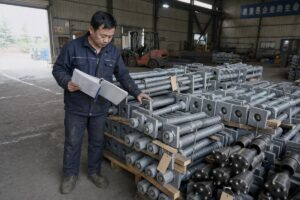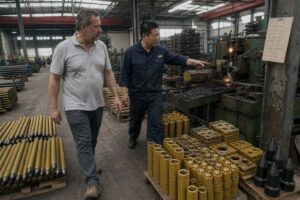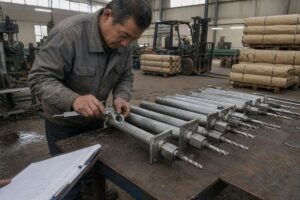
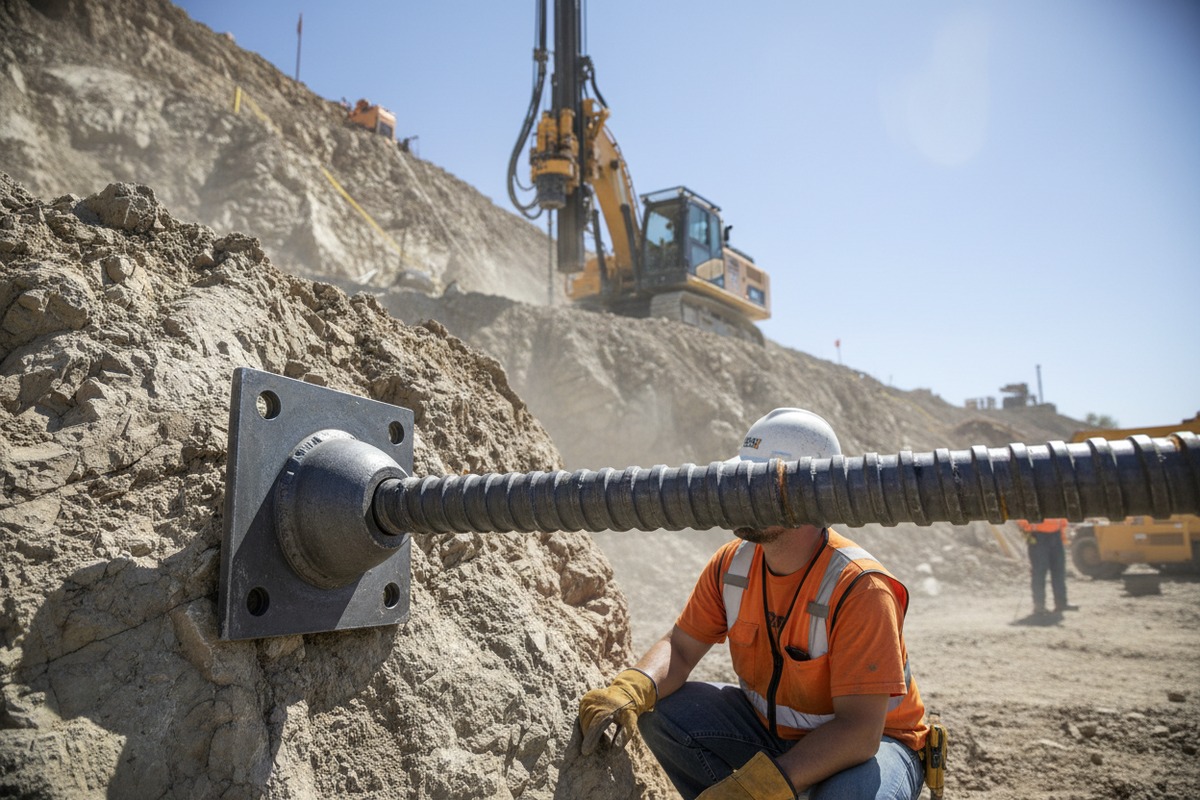
Navigating FHWA compliance 1 for self-drilling anchor bolts can feel overwhelming, especially when your project timeline is tight and the regulatory landscape keeps evolving. On our production line in Shandong, we process over 30,000 tons of self-drilling hollow bar anchors annually, and the single most common question from our U.S. buyers is: "Will these pass federal inspection?"
FHWA requires self-drilling anchor bolts on federal highway projects to comply with Geotechnical Engineering Circular No. 7 (GEC 7), applicable ASTM and AASHTO material standards, Buy America provisions, specified corrosion protection classes, and mandatory field verification and proof load testing protocols for soil nails and micropiles.
This guide breaks down each major requirement into clear, actionable steps. Whether you are a procurement manager sourcing anchors or a contractor preparing submittals, the sections below will walk you through material standards, documentation, quality control, and customization options for FHWA-funded projects.
How do I ensure my self-drilling anchor bolts meet the specific ASTM and AASHTO standards required by the FHWA?
Getting the material spec wrong on a federal highway job can mean rejected shipments, costly re-orders, and project delays that ripple through your schedule. Our engineering team reviews ASTM and AASHTO requirements daily because our U.S. customers need anchors that pass inspection on the first try.
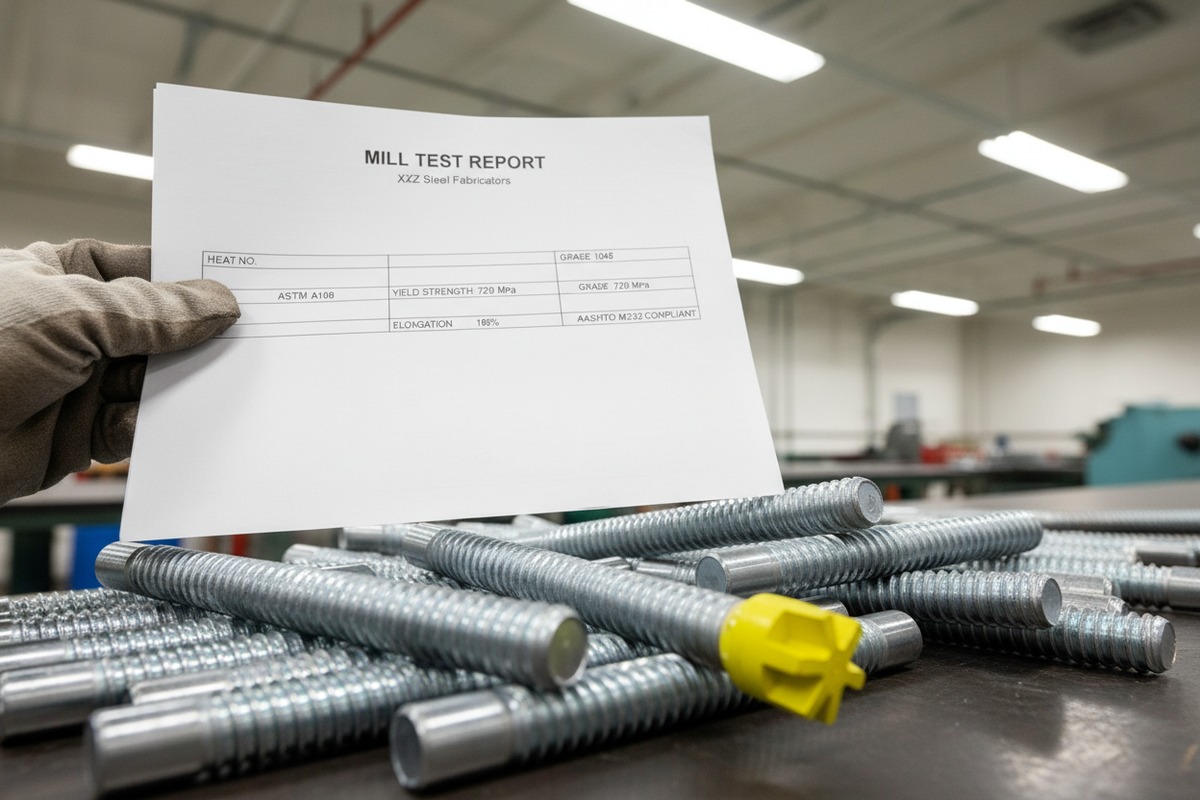
To meet FHWA requirements, self-drilling anchor bolts must comply with ASTM A615 or A722 for steel grade, AASHTO M31 or equivalent for bar properties, and GEC 7 for geotechnical design parameters. Mill Test Reports must verify yield strength, tensile strength, and elongation for every heat of steel.
Understanding the Key Material Standards
FHWA does not publish a single "anchor bolt spec." Instead, it points to a family of ASTM and AASHTO standards 2 depending on the application. For self-drilling hollow bar anchors used as soil nails or micropiles, the primary references are:
- ASTM A615 / AASHTO M31 — Deformed and plain carbon-steel bars. This covers standard rebar-grade hollow bars.
- ASTM A722 / AASHTO M275 — High-strength steel bars for prestressed concrete. Used when higher tensile capacity 3 is needed.
- FHWA GEC 7 (2015) — The master geotechnical manual that specifies acceptable steel grades, design bond lengths, and corrosion classes for soil nail walls.
The steel grade you choose depends on your project's design load. Soil nailing typically calls for 480/600 MPa bars, while cold-region or high-load applications may require 800/900 MPa cold-rolled threadbar.
Steel Grade Quick-Reference Table
| Property | ASTM A615 Gr. 75 | ASTM A722 Type II 4 | FHWA GEC 7 Range |
|---|---|---|---|
| Minimum Yield Strength | 520 MPa (75 ksi) | 830 MPa (120 ksi) | 480–900 MPa |
| Minimum Tensile Strength | 690 MPa (100 ksi) | 1035 MPa (150 ksi) | 600–1080 MPa |
| Minimum Elongation | 7% in 200 mm | 4% in 20D | Per design |
| Typical Bar Diameter | 25–50 mm | 26–36 mm | 20–50 mm |
| Common Application | Soil nails | Micropiles, high-load anchors | Both |
Thread Profile and Dimensional Tolerance
Self-drilling hollow bars are fully threaded. The continuous thread serves three purposes: it creates a mechanical bond with the grout, it allows couplers and nuts to connect at any point, and it transfers load to the bearing plate. FHWA expects the thread profile to maintain consistent depth and pitch so that the coupler engagement achieves full rated capacity. Dimensional tolerances on outer diameter, inner diameter, and wall thickness should align with the values stated on your Mill Test Report. Any deviation beyond the ASTM-permitted range is grounds for rejection.
How Bar Length Affects Compliance
GEC 7 references domestic hollow injection bars typically produced in 10–20 ft (3–6 m) lengths. Imported bars often come in 3 m lengths, which then require couplers to reach the design nail length. Each coupler joint must develop the full tensile capacity of the bar. On our factory floor, we test coupler assemblies to at least 95% of bar ultimate tensile strength before shipment. This detail matters because FHWA inspectors will check coupler capacity during submittal review.
Buy America and BABA Provisions
Since 2022, the Build America, Buy America Act (BABA) has tightened domestic sourcing rules. All steel components—hollow bar, couplers, bearing plates, and nuts—must be manufactured in the United States for federally funded projects. However, raw steel may be melted and poured overseas if all subsequent manufacturing steps (rolling, threading, heat treatment) occur domestically. Some of our U.S. distribution partners handle the final manufacturing steps stateside to meet this requirement. Confirm your project's specific BABA waiver status before ordering.
What documentation must I provide to prove my imported anchor bolts comply with federal project requirements?
Paperwork can make or break an import shipment. We have seen containers sit at port for weeks because a single certificate was missing or formatted incorrectly. Our export documentation team learned early that FHWA-funded projects demand a paper trail that goes far beyond a basic commercial invoice.
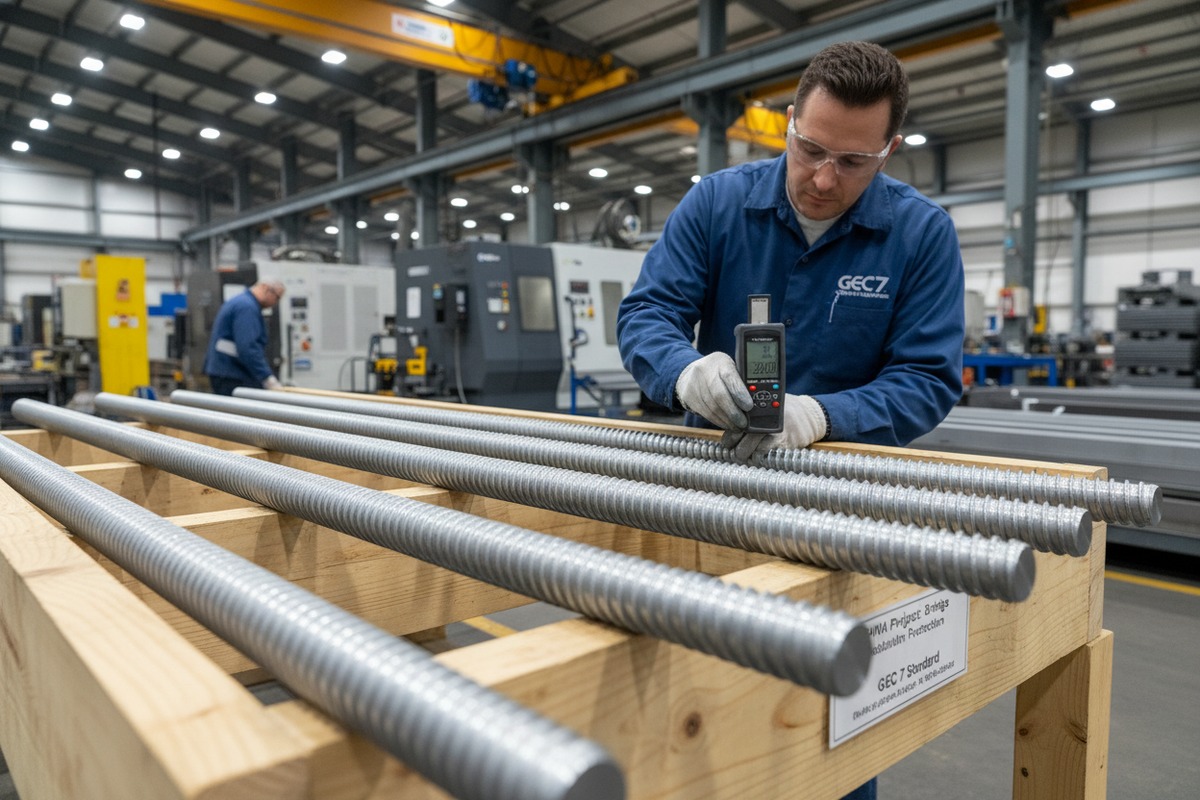
For FHWA projects, you must provide Mill Test Reports (MTRs) for each steel heat, certificates of conformance to ASTM/AASHTO standards, Buy America documentation proving domestic manufacturing, corrosion protection certifications, and a detailed product submittal including shop drawings, grout mix designs, and installation procedures.
The Core Documentation Package
Federal highway contracts follow a structured submittal process. The general contractor submits anchor bolt documentation to the project engineer, who reviews it against the contract specifications. Here is what that package typically includes:
Document Checklist Table
| Document | Purpose | Who Issues It |
|---|---|---|
| Mill Test Report (MTR) | Verifies chemical composition, yield, tensile, elongation per heat | Steel mill |
| Certificate of Conformance | States product meets named ASTM/AASHTO spec | Manufacturer |
| Buy America Certification | Proves all manufacturing in the U.S. | Manufacturer or domestic processor |
| Corrosion Protection Report | Documents coating type, thickness, adhesion test results | Coating applicator |
| Shop Drawings | Shows bar length, coupler locations, plate size, drill bit type | Contractor or manufacturer |
| Grout Mix Design | Specifies cement type, w/c ratio, target compressive strength | Contractor's QC lab |
| Installation Procedure | Details drilling parameters, grouting sequence, alignment checks | Contractor |
| Load Test Plan | Outlines verification, proof, and creep test procedures | Geotechnical engineer |
Mill Test Reports in Detail
An MTR must trace back to the specific heat number 5 of the steel. It reports chemical composition (C, Mn, P, S, Si at minimum), mechanical properties from tensile coupon tests, and the applicable ASTM designation. FHWA inspectors cross-reference the heat number on the MTR with the heat number stamped or stenciled on the actual bars delivered to the jobsite. If those numbers do not match, the bars are rejected. When we ship anchor systems, every bundle is tagged with the heat number, and we include both the original mill certificate and our own QC test results.
Corrosion Protection Documentation
GEC 7 classifies corrosion protection into two levels:
- Class A — Encapsulated tendons with double corrosion protection. Required for permanent anchors in aggressive soils (low pH, high chloride, high sulfate).
- Class B — Epoxy coating or grout cover only. Acceptable for non-aggressive environments or temporary installations.
Your documentation must state which class applies, supported by soil corrosivity test results (pH, resistivity, chloride, sulfate content) from the project's geotechnical investigation report.
Environmental Product Declarations
A growing number of FHWA-funded projects now ask for Environmental Product Declarations (EPDs) as part of "Buy Clean" compliance. An EPD reports the embodied carbon and environmental impact of the steel product across its lifecycle. While not yet universal, this requirement is expanding under federal infrastructure spending rules. We recommend asking your project engineer early whether an EPD is needed so your supplier can prepare one in time.
Common Pitfalls That Delay Approval
Missing heat numbers, unsigned certificates, and outdated ASTM editions are the top three reasons submittals get returned. Another frequent issue: the MTR shows a steel grade that does not match the contract specification. For example, the contract calls for ASTM A722 Type II, but the MTR references a foreign equivalent without a formal cross-certification. Always confirm the exact ASTM or AASHTO designation before production begins.
How can I verify that my supplier's quality control and testing protocols align with FHWA geotechnical safety standards?
Trusting a supplier on the other side of the world with critical infrastructure components is not easy. We have spent over 20 years building QC systems specifically because our buyers need to defend their material choices to FHWA inspectors and state DOT engineers. Here is how to evaluate whether your supplier's protocols actually hold up.
Verify your supplier's FHWA alignment by confirming they perform tensile testing per ASTM E8, maintain ISO 9001 or equivalent quality management, provide third-party inspection reports, document grout compatibility testing, and can demonstrate experience supplying anchors for proof and performance load-tested installations.
Factory-Level Quality Control
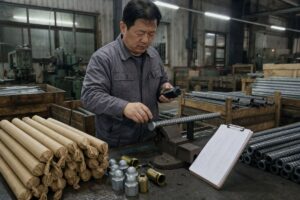
A reliable supplier tests at multiple production stages. Raw steel is checked against the MTR upon arrival. During threading and heat treatment, dimensional inspections verify outer diameter, inner bore, thread pitch, and wall thickness. After finishing, tensile test coupons 6 are pulled from sample bars in each production lot. The tensile test follows ASTM E8 7, which is the standard method for tension testing of metallic materials.
At our Shandong facility, every production batch undergoes:
- Incoming raw material verification (heat number, chemistry, dimensions).
- In-process thread profile measurement using go/no-go gauges.
- Final tensile and bend testing on sample bars.
- Coupler assembly pull-out testing to confirm joint capacity.
- Visual and dimensional inspection of drill bits, plates, and nuts.
Third-Party Inspection
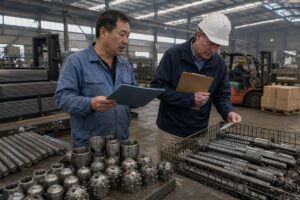
For FHWA projects, many contractors require a third-party inspection agency to witness testing at the factory. Agencies like Bureau Veritas, SGS, or TÜV send inspectors to observe tensile tests, review MTRs, and verify that production matches the approved submittal. We accommodate third-party inspections regularly and provide full access to our testing lab, production records, and traceability database.
Field Testing Requirements per FHWA
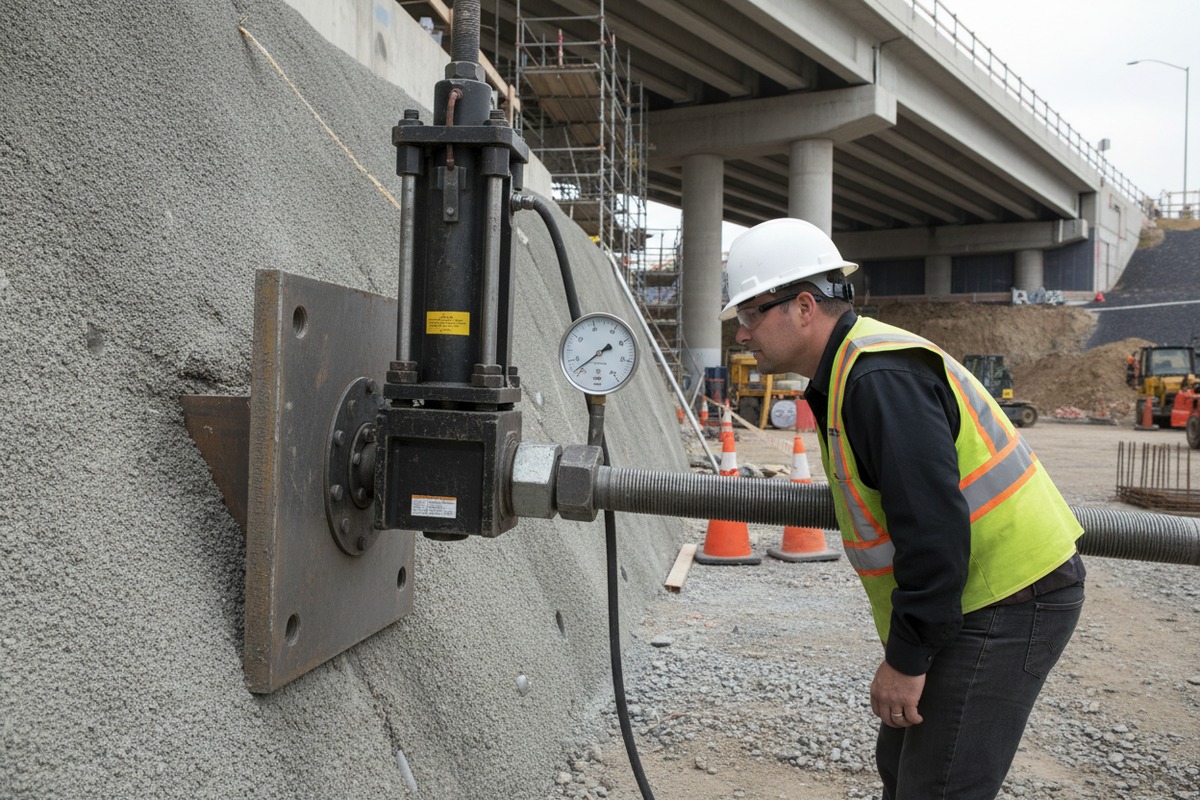
Quality control does not stop at the factory gate. GEC 7 and FHWA-DP-68-IR require two types of field load tests:
- Verification Tests — Performed on sacrificial anchors (not part of the permanent structure). These are loaded to failure or to 200% of the design load to confirm the ultimate bond strength between the grouted anchor and the surrounding soil.
- Proof Tests — Performed on a percentage of production anchors (typically 5% or as specified). These confirm each anchor can sustain the design load without excessive creep.
FHWA Field Testing Summary
| Test Type | Purpose | Load Level | Frequency |
|---|---|---|---|
| Verification Test | Confirm ultimate bond capacity | 200% of design load (or to failure) | 2–3 per soil zone minimum |
| Proof Test | Validate production anchor quality | 150% of design load (typical) | 5% of production anchors (or per spec) |
| Creep Test | Check time-dependent deformation | Held at max proof load for 10+ min | Included in proof test sequence |
Automated Data Acquisition
Modern FHWA oversight increasingly requires digital records of installation parameters. Automated data acquisition systems log drilling torque, penetration rate, grout pressure, and grout volume in real time. These records create a permanent digital footprint for asset management and future inspection. If your supplier provides hollow bars that work with standard rotary-percussive drill rigs, confirm that the system is compatible with the data logging equipment your project specifies.
Installer Certification
FHWA does not issue a formal "hollow bar installer license," but many project specifications require evidence of specialized training. Contractors should document crew experience with self-drilling systems, particularly to mitigate risks like grout shadowing (incomplete filling of the borehole annulus) or bar misalignment that reduces tensile capacity. We offer technical training support to our distribution partners and can provide installation guides aligned with GEC 7 procedures.
Can I customize self-drilling bolt specifications to match my specific FHWA project design requirements?
Every highway project is different. Soil conditions vary from one mile to the next, design loads change with wall height, and state DOTs sometimes layer their own specs on top of federal requirements. Our OEM/ODM capability exists precisely for this reason — standard catalog items do not always fit a complex federal job.
Yes, self-drilling anchor bolt specifications can be customized for FHWA projects. Manufacturers can adjust bar diameter, wall thickness, steel grade, thread profile, drill bit geometry, coupling length, and corrosion protection class to match project-specific design loads, soil conditions, and GEC 7 requirements.
What Can Be Customized?
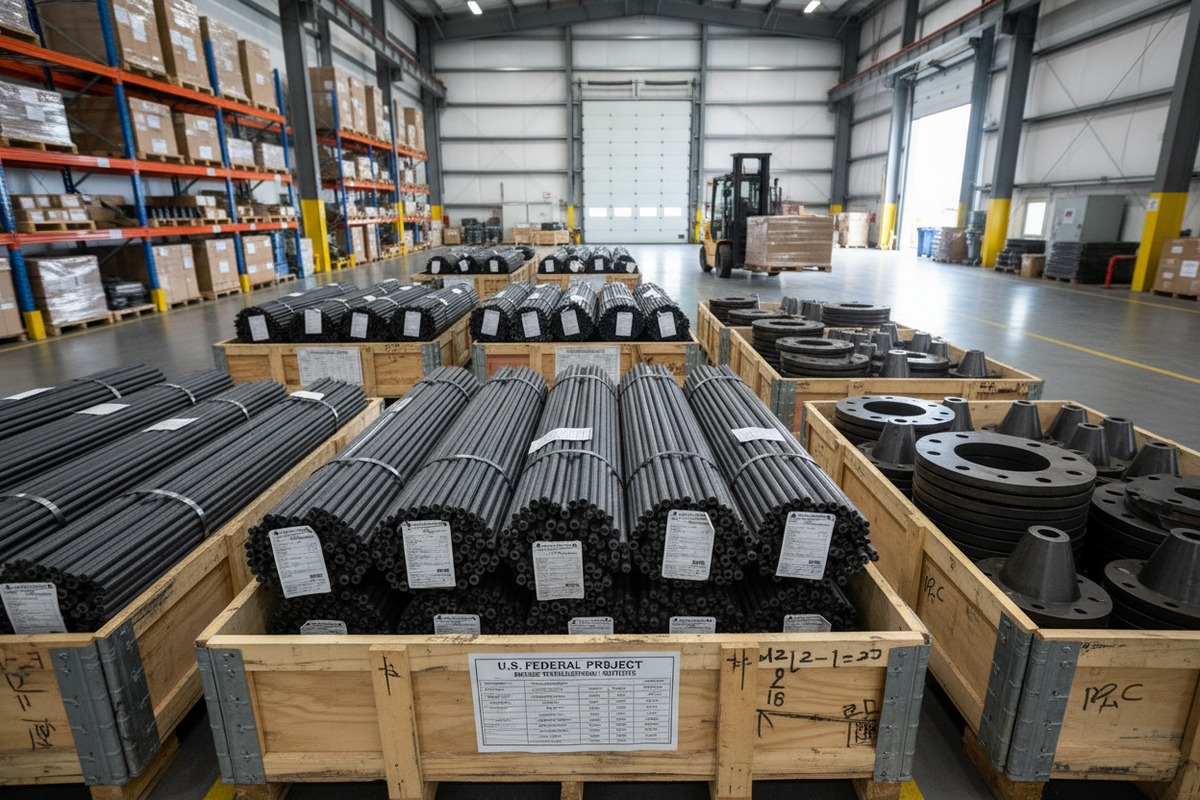
Self-drilling hollow bar systems are modular by design. The bar, drill bit, coupler, nut, and bearing plate are all separate components that can be mixed and matched. Here are the main parameters open to customization:
Customization Options Table
| Parameter | Standard Range | Customization Possibility |
|---|---|---|
| Outer Diameter | 25 mm, 32 mm, 38 mm, 51 mm | Custom diameters upon request; tooling lead time applies |
| Wall Thickness | 5–10 mm (varies by OD) | Can increase for higher tensile load; affects bore size |
| Steel Grade | 480/600 MPa, 550/700 MPa | 800/900 MPa available for cold-region or high-load designs |
| Thread Profile | Continuous rope/rebar thread | Modified pitch or depth for specific grout bond requirements |
| Drill Bit Type | Cross, X, clay, crown | Geometry selected based on soil type (rock, sand, clay, cobble) |
| Bar Length | 3 m, 4 m, 6 m standard | Cut-to-length or coupled to any design nail length |
| Corrosion Protection | Bare steel (Class B) | Hot-dip galvanizing, epoxy coating, or encapsulation (Class A) |
| Bearing Plate | 150×150 mm, 200×200 mm | Custom sizes and thicknesses for higher bearing loads |
Drill Bit Selection for Soil Conditions
The drill bit is arguably the most project-specific component. A cross bit works well in soft to medium soils. A crown bit is better for hard rock. A clay bit has an oversized cutting diameter that prevents clogging in cohesive soils. Choosing the wrong bit leads to slow penetration, hole deviation, and grout shadowing. When our customers share their geotechnical investigation report, our engineers recommend the optimal bit geometry and bar diameter combination.
Grout Mix Design Coordination
GEC 7 specifies that grout must be pumped through the hollow core to fully fill the borehole annulus and create a continuous bond zone. The grout mix design—cement type, water-cement ratio, admixtures—depends on the soil's permeability and the required bond stress. Typical cement grout for soil nails uses a w/c ratio of 0.40 to 0.50 with Type I/II Portland cement, targeting a minimum 28-day compressive strength of 28 MPa (4,000 psi). For fast-setting applications or cold weather, additives or resin-based grouts can be specified. The hollow bar's inner diameter must be large enough to allow smooth grout flow at the required pump pressure without clogging.
Seismic and Special Loading Considerations
FHWA-funded projects in high-seismic zones 8 (AASHTO Seismic Zone 9 3 or 4) may require ductility testing or specific anchor-to-plate connection details. This can mean specifying a steel grade with higher elongation, using a spherical nut washer for angular tolerance, or designing the free length of the anchor to accommodate seismic displacement. These are not off-the-shelf modifications. They require coordination between the project's geotechnical engineer, the structural designer 10, and the anchor manufacturer. We work directly with engineering teams to produce shop drawings and test data that satisfy these enhanced requirements.
Lead Time and Minimum Order Considerations
Custom specifications require tooling setup and dedicated production runs. For non-standard diameters or special coatings, lead times can extend by 4–8 weeks beyond standard inventory items. We recommend finalizing custom specs at least 12 weeks before the required delivery date to allow for production, third-party testing, ocean freight, and domestic processing if Buy America compliance involves stateside finishing steps. Our standard stock of 2,000 tons covers the most common configurations, which can ship within days for urgent needs.
Conclusion
FHWA compliance for self-drilling anchor bolts comes down to material standards, documentation, quality verification, and project-specific customization — all anchored in GEC 7. Plan early, document thoroughly, and work with a supplier who understands these requirements from production through installation.
Footnotes
1. Official Federal Highway Administration site for regulatory compliance information. ↩︎
2. Directs to the official AASHTO organization website for material specifications. ↩︎
3. FHWA article discussing the design and capacity of ground anchors and anchored systems. ↩︎
4. Standard specification for high-strength steel bars for prestressed concrete. ↩︎
5. Explanation of the identification number used for steel traceability. ↩︎
6. Standard test methods for tension testing of metallic materials. ↩︎
7. Points to the official ASTM International website for material testing standards. ↩︎
8. Links to the USGS earthquake hazards program for seismic zone context. ↩︎
9. Official site for AASHTO, which defines seismic zones for highway infrastructure. ↩︎
10. Background on the field of engineering responsible for the structural integrity of highway projects. ↩︎