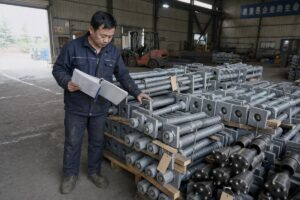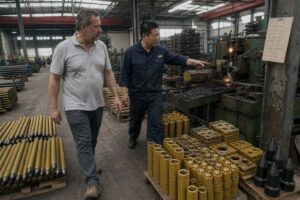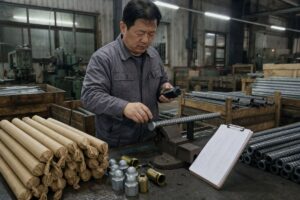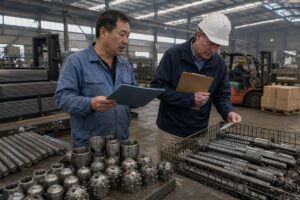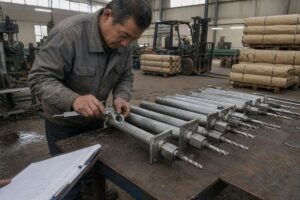

Every week, our sales team fields calls from US buyers blindsided by unexpected duty charges on their self-drilling anchor bolt shipments.
To handle US anti-dumping duties on steel self-drilling anchor bolts from China, importers must verify their product's tariff classification, calculate total landed costs including potential AD/CVD rates of 72–154%, explore sourcing or product modifications, and consider partnering with manufacturers experienced in DDP logistics and customs compliance.
This guide breaks down the key steps. We will cover cost calculation, tariff mitigation, scope verification, and DDP partnership options so you can make informed decisions and keep your projects on budget.
How can I accurately calculate the impact of anti-dumping duties on my total landed cost?
Our export team has processed thousands of US-bound shipments, and the number one mistake we see is buyers underestimating their total landed cost by ignoring layered duty structures.
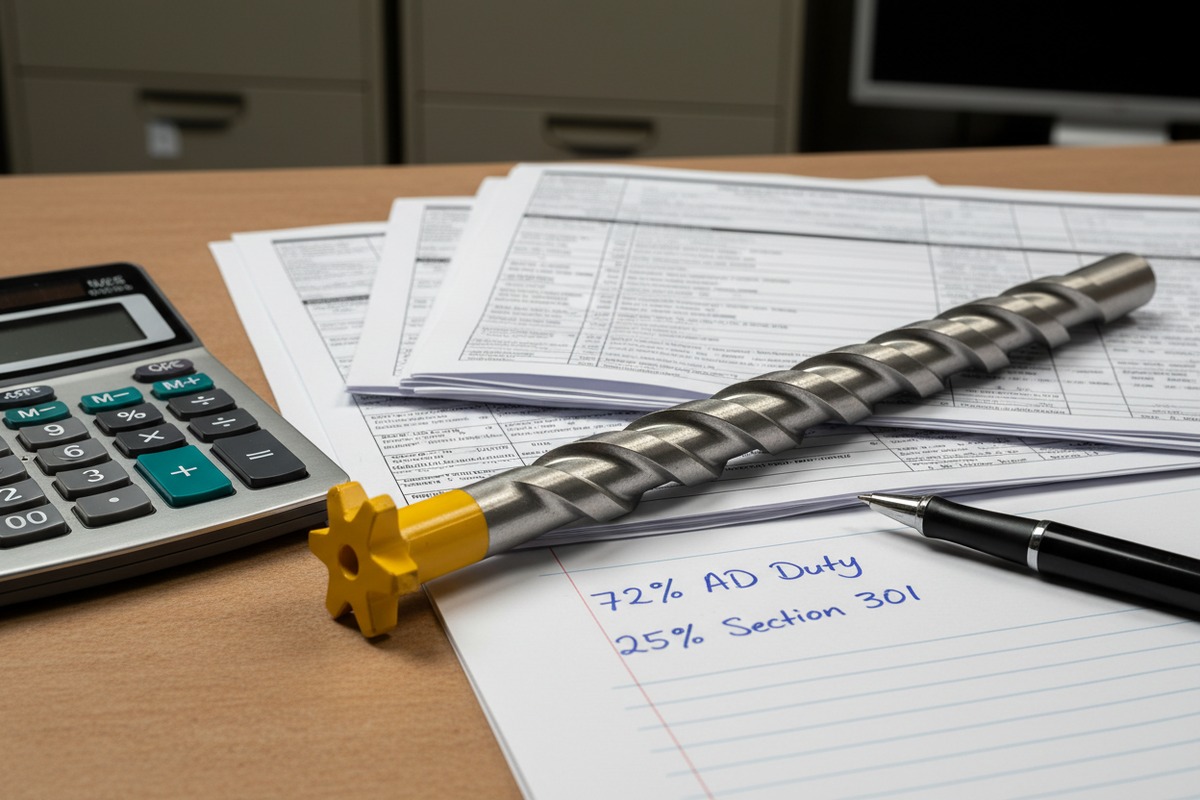
To accurately calculate anti-dumping duty impact, add the base HTSUS tariff rate (typically around 5.3%), any applicable AD duty (72–154%), CVD rates, and Section 301 tariffs to your FOB price, then factor in freight, insurance, and customs brokerage fees for your true landed cost.
Understanding the Layered Duty Structure
Many importers think there is just one tariff. That is not the case. When you bring steel self-drilling anchor bolts from China into the US, multiple layers of duty can stack on top of each other. Here is how it works in plain terms.
First, there is the base customs duty. For most steel bolts and fasteners under HTSUS subheadings 1 like 7318.15, this sits around 5.3%. This applies to all imports regardless of origin.
Second, the anti-dumping (AD) duty kicks in. The US Department of Commerce 2 sets these rates based on how much a Chinese producer's export price falls below "normal value." If the producer cooperated with the investigation, the rate might be around 72%. If not, the rate can jump to 154% under adverse facts available (AFA).
Third, countervailing duties (CVD) may apply. These target government subsidies. In some recent Chinese steel cases, CVD rates exceeded 330%.
Fourth, Section 301 tariffs 3 add another 25% on most Chinese steel products.
Step-by-Step Landed Cost Formula
Here is a simplified calculation method our logistics team uses when quoting DDP prices for US customers:
| Cost Component | Example Rate | On $10,000 FOB |
|---|---|---|
| FOB Price | — | $10,000 |
| Ocean Freight + Insurance | ~8–12% | $1,000 |
| CIF Value (Customs Value 4) | — | $11,000 |
| Base Customs Duty (5.3%) | 5.3% of CIF | $583 |
| AD Duty (72.19% separate rate) | 72.19% of CIF | $7,941 |
| CVD (if applicable, est. 15%) | 15% of CIF | $1,650 |
| Section 301 Tariff (25%) | 25% of CIF | $2,750 |
| Customs Brokerage + Fees | Flat | $500 |
| Total Landed Cost | — | $24,424 |
That means a $10,000 FOB shipment could cost you nearly $24,500 at the door. The AD duty alone more than doubled the original cost.
Key Variables That Change Your Numbers
Not every shipment faces the same rates. Here are the variables that matter most:
- Producer-specific rate vs. all-others rate. If your Chinese supplier cooperated with the Department of Commerce and received a separate rate, your AD duty could be significantly lower than the 154% AFA rate.
- Product classification. If your anchor bolt is classified differently — say as a specialized construction anchor rather than a "steel threaded rod" — you might fall outside the AD scope entirely.
- Bonded warehouse options. Some importers use foreign trade zone 5s to defer duty payments and improve cash flow.
Always work with a licensed customs broker to run the exact numbers before placing a large order. One wrong HTS code can mean a six-figure difference.
What are my options for mitigating high tariff costs when importing self-drilling anchor bolts from China?
When we sit down with our US distributors to plan annual procurement, the conversation always starts with the same question: how do we keep costs manageable under these duty conditions?
Importers can mitigate high tariff costs through several strategies: requesting scope rulings to reclassify products, sourcing from non-subject countries, negotiating producer-specific lower rates, using foreign trade zones, applying for duty drawback on re-exported goods, or partnering with manufacturers who offer DDP pricing that absorbs customs complexity.

Strategy 1: Scope Rulings and Product Reclassification
This is often the highest-impact move. Self-drilling anchor bolts are not simple threaded rods. They are hollow bar systems with drill bits, couplers, bearing plates, and centralizers. If you can demonstrate that your product falls outside the scope of the AD order on "certain steel threaded rod," you may owe zero AD duty.
You can request a formal scope ruling from the Department of Commerce. This process requires detailed product specifications, engineering drawings, and sometimes physical samples. Our engineering team regularly provides technical documentation packages to help US importers build these scope ruling requests.
Strategy 2: Diversify Your Supply Chain
Some buyers split their orders. They source standard threaded rods domestically or from non-subject countries, and import only the specialized components — drill bits, couplers, bearing plates — from China. These components often fall under different HTS codes not subject to AD orders.
| Strategy | Potential Savings | Complexity | Timeline |
|---|---|---|---|
| Scope ruling request | Up to 100% AD removal | High — legal + technical | 6–12 months |
| Product reclassification | Varies by HTS shift | Medium — customs broker | 2–4 months |
| Third-country sourcing | Eliminates AD entirely | High — new supplier qualification | 3–6 months |
| Foreign trade zone | Cash flow improvement | Low — logistics change | 1–2 months |
| Duty drawback | Refund on re-exports | Medium — documentation | 3–6 months |
| Component-only import | Significant AD reduction | Medium — BOM restructuring | 1–3 months |
Strategy 3: Foreign Trade Zones and Bonded Warehouses
If you bring goods into a US foreign trade zone (FTZ), you can defer duty payment until the goods enter US commerce. This does not eliminate the duty, but it improves your cash flow. For large infrastructure projects with long timelines, this can free up significant working capital.
Strategy 4: Administrative Review Participation
Every year, the Department of Commerce conducts administrative reviews of AD orders. If your Chinese supplier participates and provides full cost data, they may receive a lower producer-specific rate. We have encouraged several of our long-term US partners to request these reviews. The process takes time, but the payoff — dropping from 154% to potentially under 30% — is enormous.
Strategy 5: Duty Drawback
If you import self-drilling anchor bolts and later export the finished product or use them in exported goods, you may qualify for duty drawback. This program refunds up to 99% of duties paid. It works best for companies involved in cross-border construction projects, such as those operating in both the US and Canada or Mexico.
How do I verify if my specific rock bolt order falls under the current US anti-dumping scope?
In our production facility, we manufacture over a dozen different self-drilling anchor bolt configurations — and not all of them face the same tariff treatment at US customs.
To verify if your rock bolt order falls under the current AD scope, review the product description in the Federal Register AD order, compare your product's HTS classification and physical characteristics, consult a trade attorney or customs broker, and if uncertain, file a scope ruling request with the Department of Commerce.
What the AD Order Actually Covers
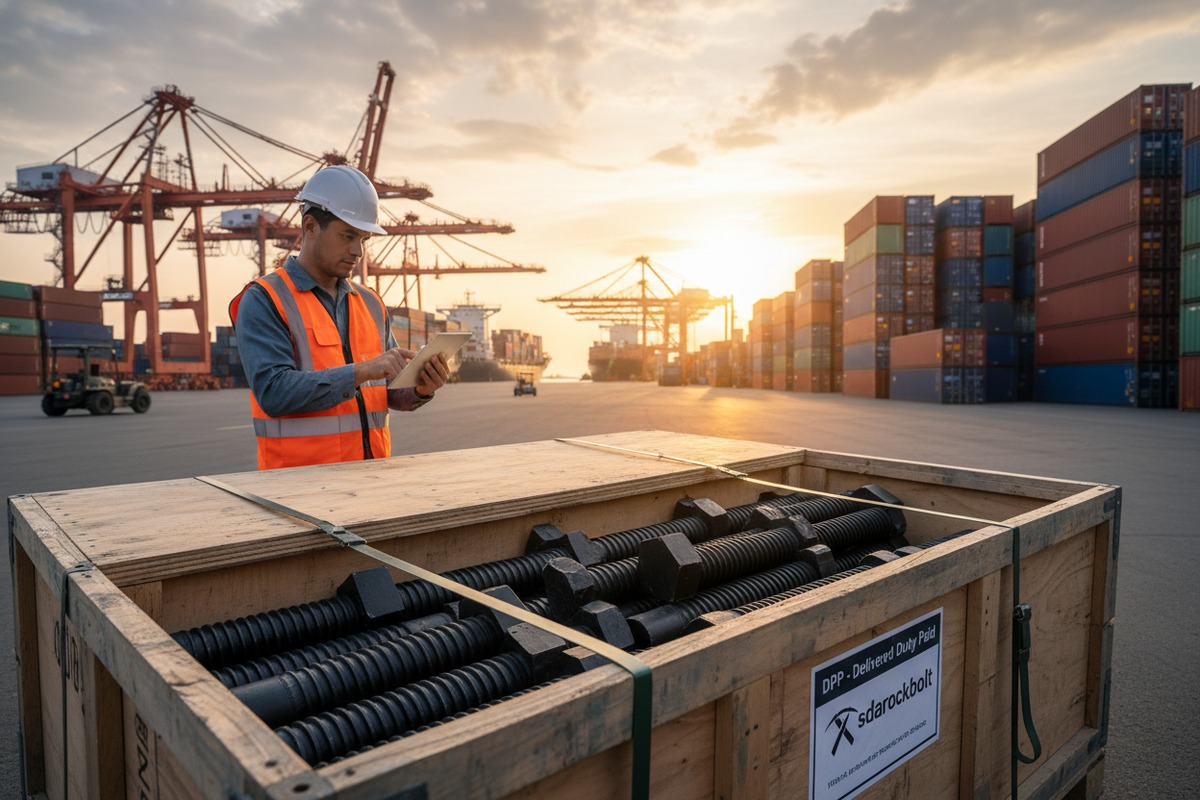
The key AD order to watch is on "certain steel threaded rod" from China. The scope language matters enormously. It typically covers steel threaded rod that is carbon or alloy steel, solid, with threads along part or all of the shaft. The critical question is whether your self-drilling anchor bolt matches this description.
Here is where it gets interesting. Our self-drilling anchor bolts are:
- Hollow, not solid — they have a through-hole for grout injection.
- Equipped with a sacrificial drill bit on the tip, making them a tool, not just a fastener.
- Part of a system that includes couplers, centralizers, bearing plates, and nuts.
These characteristics may place the product outside the scope. But "may" is not "does." You need a definitive answer.
Three-Step Verification Process
Step 1: Check the HTS code. Work with your customs broker to classify the product correctly. Self-drilling hollow bar anchors may fall under 7228 (other bars and rods of alloy steel) or 7304 (tubes and pipes), rather than 7318.15 (bolts and screws). The classification changes everything.
Step 2: Compare against the scope language. Pull the Federal Register notice 7 for the AD order. Read the product scope paragraph word by word. Look for exclusions. Some orders explicitly exclude certain types of anchors, tubes, or specialized construction products.
Step 3: File a scope ruling if needed. If there is any ambiguity, do not guess. A scope ruling from the Department of Commerce is the only legally binding answer. Yes, it takes 6–12 months. But it protects you from retroactive duty claims and penalties.
Product Characteristics Comparison
| Feature | Certain Steel Threaded Rod (AD Scope) | Self-Drilling Hollow Bar Anchor |
|---|---|---|
| Cross-section | Solid | Hollow (through-hole) |
| Threading | External threads, full or partial | External threads along full length |
| End treatment | Cut or chamfered | Sacrificial drill bit attached |
| Function | General fastening | Drilling, anchoring, grouting |
| System components | Standalone rod | Part of multi-component system |
| Typical HTS | 7318.15.xx | Potentially 7228.xx or 7304.xx |
This table highlights key differences. The hollow cross-section and integrated drill bit are often the strongest arguments for exclusion. However, final determination rests with the Department of Commerce.
Common Pitfalls to Avoid
Do not rely on your supplier's assurance alone. We always tell our customers: get independent legal verification. Some importers have been caught off guard when CBP reclassified their product at the port and demanded cash deposits at the full AD rate. Others discovered during an audit that their broker used the wrong HTS code for years.
Also, watch for anti-circumvention investigations. In July 2023, the Department of Commerce initiated an inquiry into whether certain alloy and carbon steel threaded rods were being circumvented through minor modifications. If your product sits near the boundary, stay vigilant and keep documentation impeccable.
Can I partner with a Chinese manufacturer that offers DDP services to handle these customs complexities for me?
Over the past five years, our company has built a dedicated DDP logistics channel for US-bound shipments, precisely because so many of our buyers asked us to take the customs headache off their plate.
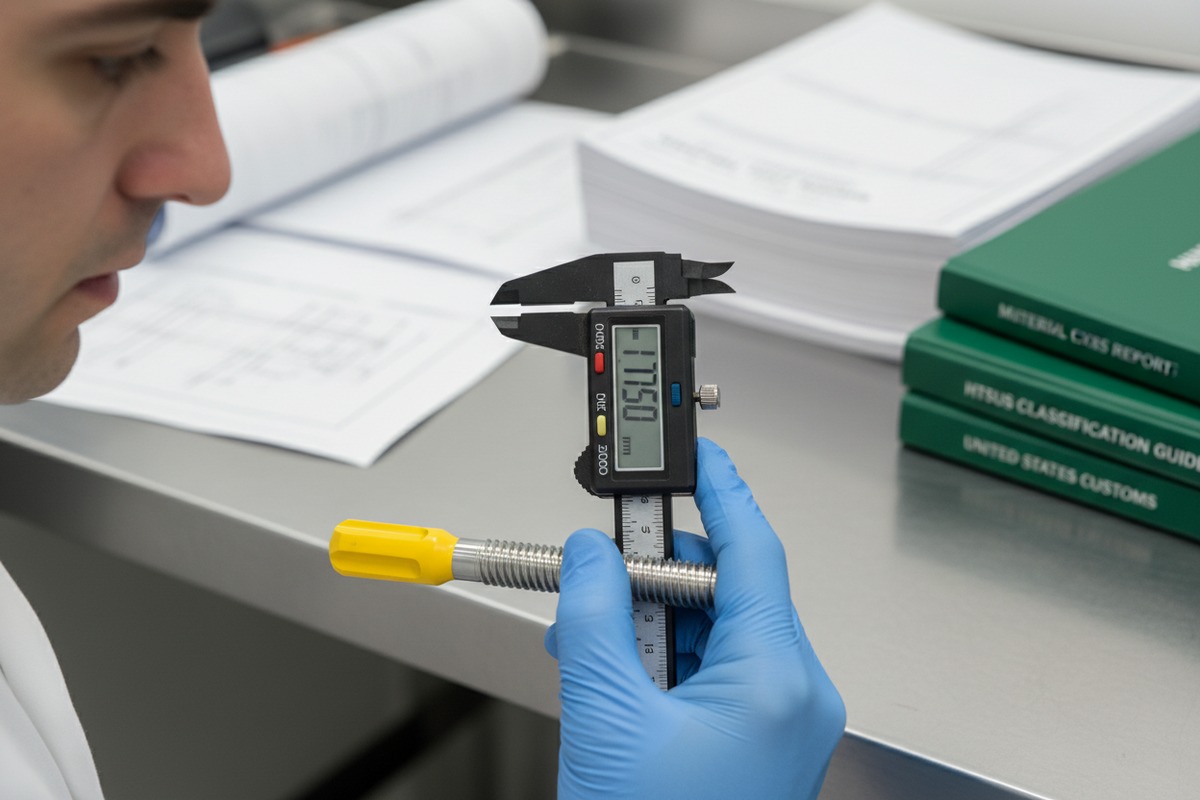
Yes, partnering with a Chinese manufacturer offering DDP (Delivered Duty Paid) services transfers customs responsibility to the supplier, who handles freight, import clearance, duty payment, and last-mile delivery. This simplifies procurement but requires choosing a manufacturer with proven US import experience, transparent pricing, and proper compliance infrastructure.
What DDP Actually Means for You
Under DDP Incoterms 8, the seller bears all costs and risks until the goods arrive at your specified US location. That includes ocean freight, marine insurance 9, customs clearance, all duties and taxes, and inland delivery. You receive the goods at your warehouse or job site with one simple invoice.
For products facing complex AD/CVD duty structures, this is a game-changer. Instead of juggling customs brokers, bonded warehouses, duty deposits, and HTS disputes yourself, you let the manufacturer's logistics team handle it.
What to Look for in a DDP Partner
Not every Chinese manufacturer can actually deliver on a DDP promise. Here is what separates credible DDP suppliers from those who simply quote low and create problems later.
Customs expertise. The manufacturer should have an in-house or contracted US customs broker who understands AD/CVD classification for steel products. Ask them directly: which HTS code do you use? Have you handled an AD scope issue before?
Transparent cost breakdowns. A trustworthy DDP supplier will show you exactly how the price is built — FOB cost, freight, duties, broker fees, and delivery charges. If they refuse to itemize, walk away.
Track record with US deliveries. Ask for references. How many DDP shipments have they completed to the US in the past year? Have any been held at customs? How were issues resolved?
Financial stability. DDP means the supplier fronts significant cash for duties and logistics. A manufacturer with thin margins and no cash reserves may cut corners or disappear when problems arise.
The Risk-Benefit Tradeoff
| Factor | DDP from China Manufacturer | Self-Managed Import (FOB/CIF) |
|---|---|---|
| Customs compliance burden | On supplier | On you |
| Cost transparency | Bundled — ask for breakdown | Full visibility |
| AD duty risk | Supplier manages classification | You manage classification |
| Cash flow | Pay one invoice on delivery | Pay duties at port entry |
| Control over broker/logistics | Less direct control | Full control |
| Price premium | 5–15% higher than FOB | Lower upfront, higher hidden costs |
| Best for | Buyers wanting simplicity | Buyers with in-house trade teams |
Our Approach to DDP
From our production base in Shandong, we ship DDP to multiple US destinations each month. Our logistics team works with licensed US customs brokers 10 who specialize in steel product classifications. We maintain detailed product documentation — material certificates, engineering drawings, test reports — that supports proper HTS classification and, where applicable, scope exclusion arguments.
We also maintain buffer stock of around 2,000 tons, which means we can ship quickly without long lead times. For US buyers worried about project delays caused by customs holds, having a supplier who already understands the regulatory landscape makes a real difference.
One thing we always recommend: even with DDP, keep your own records. Ask your supplier for copies of all customs entries, duty receipts, and classification documents. If CBP ever audits the importer of record, you need to be prepared.
When DDP May Not Be the Right Choice
DDP is not for everyone. If you have a large in-house procurement team with trade compliance expertise, you may prefer to control the import process directly. You might secure better freight rates through your own logistics contracts. And if you are pursuing a scope ruling or administrative review, you need direct involvement with the legal process — your manufacturer cannot do that for you.
But for mid-size distributors and contractors who need reliable supply without the regulatory complexity, DDP from a capable Chinese manufacturer is often the most practical path forward.
Conclusion
Handling US anti-dumping duties on Chinese self-drilling anchor bolts requires careful classification, accurate cost modeling, smart mitigation strategies, and the right manufacturing partner who understands both the product and the regulatory landscape.
Footnotes
1. Official US resource for identifying specific tariff codes and rates. ↩︎
2. Primary US agency responsible for calculating and enforcing anti-dumping rates. ↩︎
3. Official information on trade enforcement actions against specific countries. ↩︎
4. Definition of the value used for calculating import duties. ↩︎
5. Government guide on using zones to defer or reduce duties. ↩︎
6. Global trade organization explanation of anti-dumping measures and rules. ↩︎
7. Official government portal for accessing published trade orders and notices. ↩︎
8. Standardized international rules for the delivery of goods and liability. ↩︎
9. Background on insurance for goods transported by sea. ↩︎
10. Official CBP information on the role of licensed import professionals. ↩︎