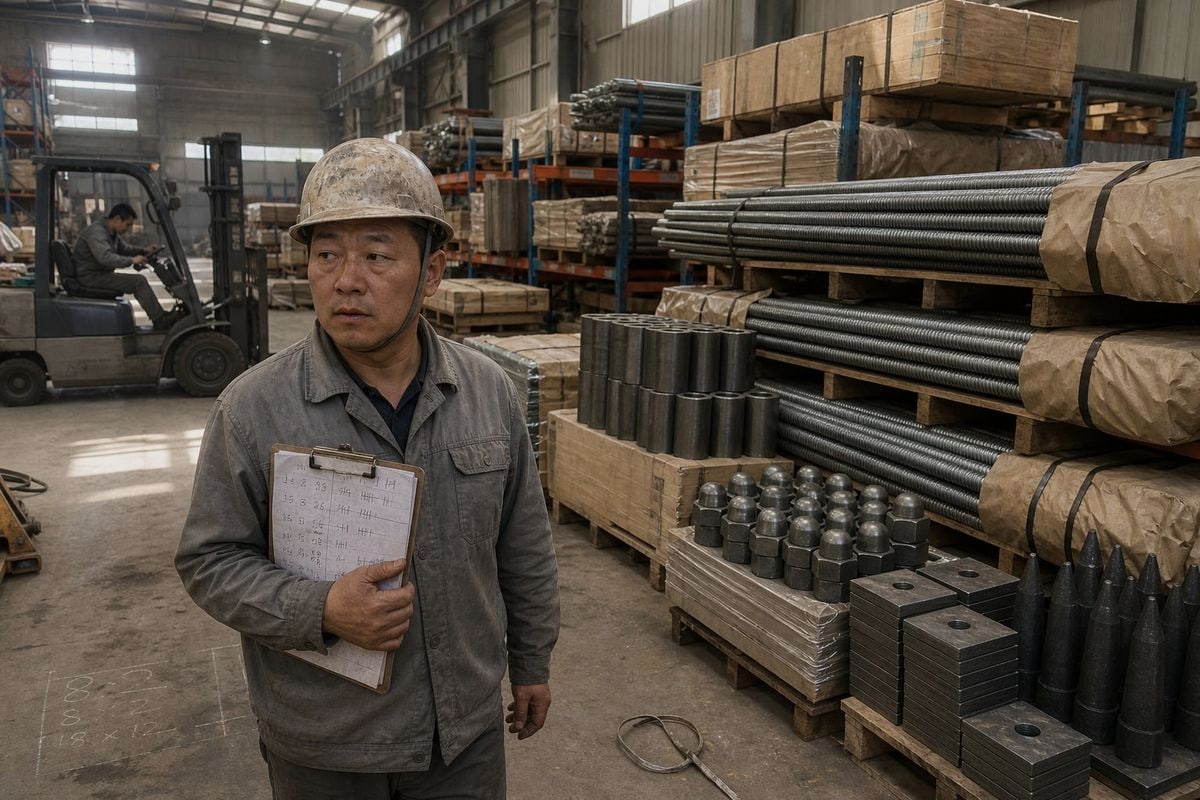
Bulk self-drilling anchor bolt 1 procurement can stall an entire tunnel face when stock runs dry. I have watched buyers scramble after one missed reorder, and our Shandong plant has shipped many emergency orders because of it.
Plan bulk self-drilling anchor bolt inventory by converting your installation rate into weekly demand, setting reorder points that cover supplier lead time plus safety stock, and matching delivery cadence to project phases. Order enough to reach the next replenishment cycle, and keep every shipment matched to the approved specification.
That is the short answer. Now let me walk through each piece: safety stock, lead times, multi-site forecasting, and the strategies that keep costs under control.
How much safety stock should I keep for self-drilling anchor bolts to avoid project delays?
A drilling crew in Chile once told me their downtime cost more per shift than a full container of bolts. That conversation changed how I advise buyers on safety stock.
Keep safety stock equal to two to four weeks of average consumption for stable projects, and four to eight weeks when demand is volatile or shipping is unreliable. Safety stock should buffer short disruptions such as port delays, not fund an entire project phase.
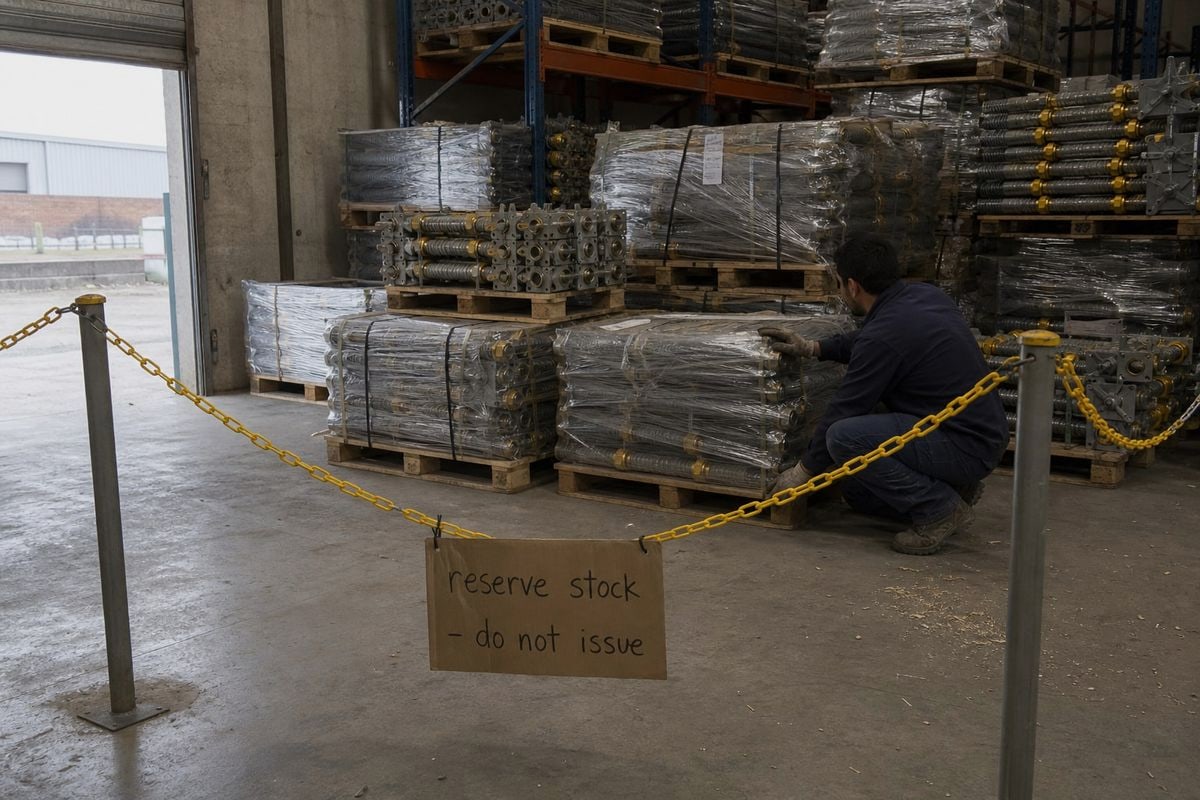
Safety stock exists for one reason. It absorbs the gap between what you planned and what actually happens. In geotechnical engineering work 2, that gap appears often. Ground conditions change. Crews advance faster than the schedule. A vessel misses its sailing.
The real cost of a stockout is not expedited freight. It is idle labor. A tunneling crew standing around waiting for anchor bolts burns money every hour. Downstream trades slip too. So your safety stock must reflect three things: your supplier's lead time reliability, your demand variation, and the cost of stopping a crew.
A simple way to size the buffer
Start with your average weekly usage. Then look at how much that usage swings. The bigger the swing, the bigger the buffer you need to hold a given service level.
| Project situation | Suggested safety stock | Why |
|---|---|---|
| Stable install pace, reliable shipping | 2–3 weeks of usage | Low variation needs a small buffer |
| Variable ground conditions | 4–6 weeks of usage | Consumption can spike suddenly |
| Long ocean freight, remote site | 6–8 weeks of usage | Lead time risk dominates |
| Multiple crews, peak phase | 4–8 weeks of usage | Demand and timing both vary |
Some buyers push back and say lean or just-in-time inventory 3 frees up cash. That is true on paper. But when your bolts travel by sea from China and your jobsite demand spikes, lean turns into a gamble. I have seen the opposite mistake too. One distributor buried his warehouse in slow-moving stock, and when the project spec changed, that stock became dead capital. The answer is a measured buffer, reviewed monthly, not an extreme in either direction. Our factory holds a consistent 2,000-ton stock precisely so buyers can keep their own buffers reasonable.
What lead times can I expect when reordering bulk rock bolts from a Chinese manufacturer?
When we quote lead times from our Shandong facility, I always split the answer into production time and transit time, because buyers who merge the two get surprised.
Expect 15 to 30 days of production for custom bulk orders from a Chinese manufacturer, plus 20 to 45 days of ocean transit depending on destination. Stocked standard sizes can ship in 7 to 10 days. Total door-to-door lead time typically runs 6 to 11 weeks.
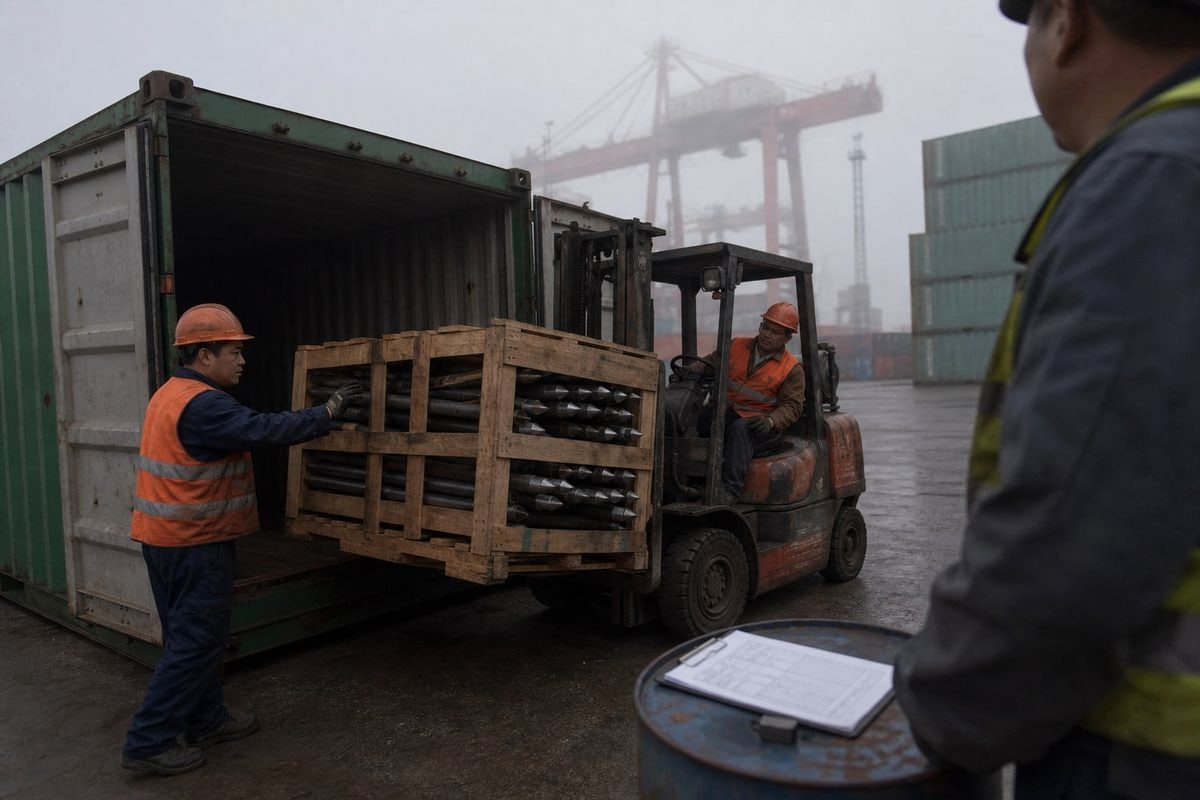
Lead time management is the backbone of every replenishment plan. If you do not know your true lead time, your reorder points are guesses. Let me break down where the weeks actually go.
Where the time goes
Production time depends on whether your item is a standard high-runner or a custom specification. Our annual output is around 30,000 tons, and we keep roughly 2,000 tons of common sizes in stock. A stocked R32 or R38 system can leave the factory in about a week. A custom thread, special corrosion protection coating, or non-standard plate adds forging, coating, and QC time.
Transit time depends on your port and your trade lane. Here is what we typically see when exporting to our main markets.
| Destination region | Ocean transit (typical) | Total lead time with production |
|---|---|---|
| Southeast Asia (Indonesia, Vietnam, Philippines) | 10–18 days | 4–7 weeks |
| Australia | 15–25 days | 5–8 weeks |
| Middle East (Saudi Arabia) | 20–30 days | 6–9 weeks |
| Europe (Norway, Switzerland, Italy) | 30–40 days | 7–10 weeks |
| USA, Chile, Peru, Colombia | 25–45 days | 6–11 weeks |
Then add your side of the chain. Customs clearance 5 can take two days or two weeks, depending on documentation quality and tariff handling. One US procurement manager we work with insisted on DDP terms 6 after a clearance dispute cost her three weeks. That was smart. Whoever controls the clearance controls the tail end of your lead time.
Two practical rules follow. First, always plan reorders against total door-to-door lead time, not factory lead time. Second, ask your supplier which items they hold in stock. Splitting your order into stocked and custom lines can shorten the critical path dramatically.
How do I forecast replenishment quantities for multi-site tunneling and mining projects?
Our engineers once helped an EPC contractor untangle demand across three tunnel portals. Each site drew bolts at a different pace, yet purchasing treated them as one pool. Stockouts hit anyway.
Forecast each site separately using drilling meters or advance rate, bolts per meter, and crew count to build weekly demand. Sum the site forecasts, adjust for phase transitions and lead time, then size each replenishment order to cover demand until the next delivery plus safety stock.
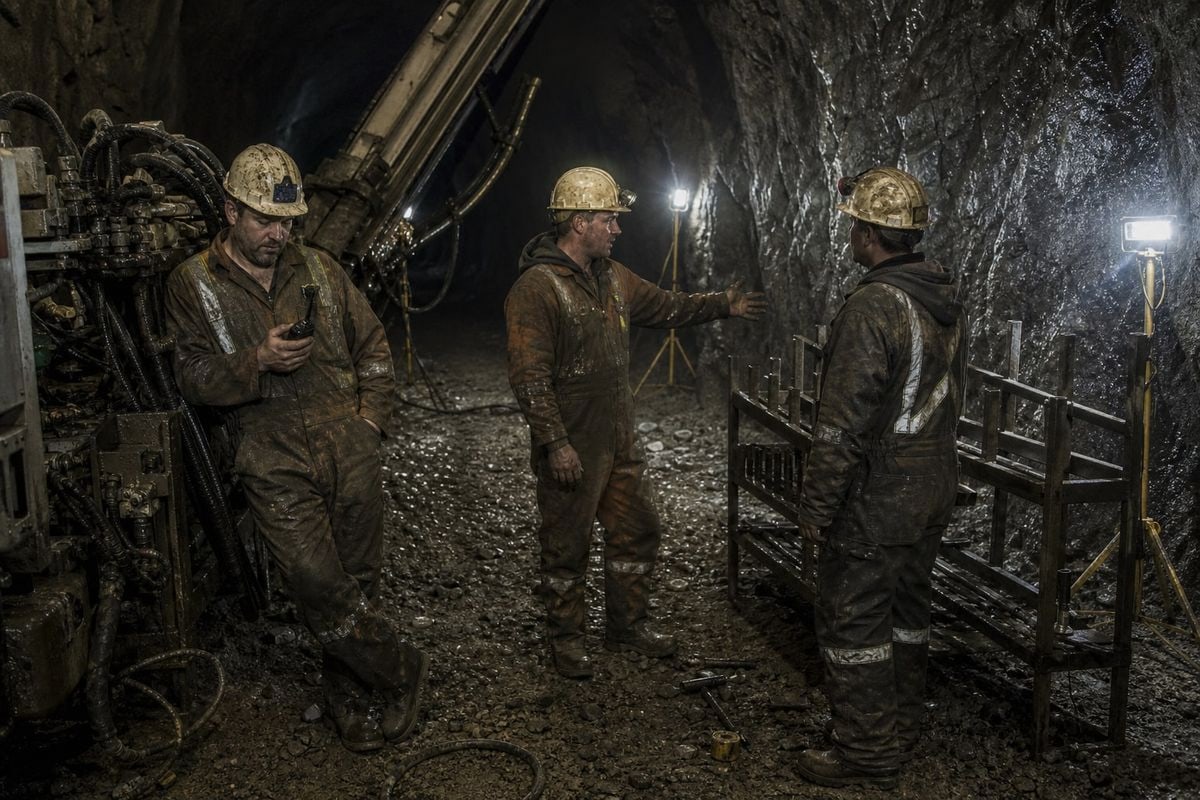
Demand forecasting for construction fasteners fails when it relies on purchase history alone. Purchase history tells you what you bought, not what crews installed or when. Install rates are the honest signal. So build your forecast from the ground up.
A five-step forecasting process
- Start with the design takeoff. Your drawings and support patterns tell you bolts per meter of advance, or bolts per square meter of slope face in ground stabilization work.
- Convert schedule into pace. Multiply planned advance rate by crew count and shifts per week. That gives weekly consumption per site.
- Segment by phase. Portal excavation, main drive, and cross-passages consume anchors at very different rates. A pooled average hides the peaks.
- Forecast each site on its own. Stockouts are local. A surplus at Site A does not save an idle crew at Site B two hundred kilometers away, at least not quickly.
- Reconcile monthly against actual consumption. Compare forecast to installed quantities and adjust. Ground conditions will force revisions.
Some buyers object that separate site forecasts create too many small orders and lose volume pricing. There is a clean fix. Forecast locally, but consolidate purchase orders centrally. You keep the bulk fastener purchasing leverage of combined container loads while protecting each site with its own reorder logic and delivery schedule. We often ship one consolidated order from Shandong with clearly marked, site-specific packing lists so the distributor can cross-dock without repacking. Integrating these forecasts with your project management software also lets you spot material-driven schedule risks before they land on the critical path.
Which inventory management strategies help me balance warehousing costs with supply reliability?
There is a trade-off I weigh with almost every distributor client: hold more stock and sleep well, or hold less and free up cash. Neither extreme wins.
Use min/max replenishment for predictable high-runners, reorder point logic for continuous demand items, and forecast-based ordering for volatile project peaks. Add FIFO rotation, cycle counts, and an inventory management system for real-time visibility. This mix protects supply while capping carrying costs.

Inventory planning really comes down to two questions: when to order and how much to order. The control logic you choose answers both. Different logic fits different demand patterns, so most serious buyers run a blend.
Matching control logic to demand
| Method | How it works | Best fit for anchor bolts |
|---|---|---|
| Reorder point | Order when stock falls to a trigger level | Continuous demand, known lead time |
| Min/max | Restock up to a ceiling when stock hits the floor | Predictable high-runners like R32 bars and nuts |
| Fixed order quantity | Buy in set pallet or container quantities | Contract minimums and freight optimization |
| Lot-for-lot | Order exactly what the next period needs | Rare custom items with lumpy demand |
For standardized, predictable items, min/max is often the simplest and best. For volatile project-driven demand, forecast-based replenishment outperforms static rules. Do not force one method on everything.
Controls that keep the numbers honest
Manual spreadsheets break down fast with high-velocity fasteners. Modern inventory management system 7s support automated replenishment triggers, min/max levels, and demand-based rules, and they pay for themselves the first time they prevent a stockout. Pair the software with physical discipline: organized pallet racking, clear labeling by size and lot, barcode scanning, and regular cycle counts.
FIFO rotation matters more than buyers expect. Even with good corrosion protection, coatings age in humid warehouses, so older lots should ship first. Traceability matters too. Every replenishment shipment should match the originally approved submittal, including load data, coating certificates, and lot records. Our QC team attaches full documentation to repeat orders for exactly this reason, because jobsite inspection depends on spec consistency. Finally, treat supplier selection as part of your inventory strategy. A partner with real stock depth and stable quality lets you carry less buffer yourself, which is supply chain optimization in its most practical form.
Conclusion
Stockouts stop crews; overbuying buries cash. I have seen both hurt good projects. Build replenishment around real install rates, true lead times, phase-based forecasts, and disciplined controls. Get those four right, and bulk self-drilling anchor bolt procurement becomes a quiet, reliable system instead of a recurring emergency.
Footnotes
1. Defines self-drilling anchors and their use in underground construction. ↩︎
2. Replaced 404 link with an authoritative .edu source providing a definition of geotechnical engineering. ↩︎
3. Provides a comprehensive definition and explanation of just-in-time inventory. ↩︎
4. Defines working capital and its significance for business operations. ↩︎
5. Official government information on the customs clearance process for imports. ↩︎
6. Explains DDP (Delivered Duty Paid) Incoterms and their implications. ↩︎
7. Replaced 404 link with an authoritative technology company's explanation of an inventory management system. ↩︎