Evaluating Chinese self-drilling anchor bolt suppliers for U.S. ESG compliance is harder than it looks. I know, because our Shandong factory answers these audits every quarter.
To evaluate Chinese self-drilling anchor bolt suppliers for U.S. ESG compliance, verify ISO 9001, ISO 14001, and ISO 45001 certificates directly with issuers, request mill test certificates and traceability records, commission third-party factory audits, and confirm UFLPA-aligned labor documentation before signing any contract.
That single paragraph is the short answer. But the details matter, and getting them wrong can cost you a shipment, a project, or a reputation. Let me walk you through each step, drawing on more than 20 years of exporting anchor systems to the USA, Europe, and beyond.
How can I verify a Chinese supplier's ESG documentation before signing a contract?
Last spring, a procurement manager from Colorado emailed our sales team asking for our business license, ISO certificate 1s, and export registration before she would even discuss pricing. We respected that instantly.
Verify ESG documentation by requesting the supplier's business license, checking ISO certificate numbers against the issuing body's online registry, confirming the legal entity name matches across all documents, and asking for recent third-party audit reports from firms like SGS or Bureau Veritas.

Marketplaces such as Made-in-China list over 400 self-drilling anchor bolt manufacturers and suppliers. That is a crowded field. Certification badges on a listing page are marketing signals, not proof. Real supply chain due diligence means checking documents at the source.
Start with legal and corporate legitimacy
Ask for the Chinese business license first. It shows the registered legal name, the registered capital, the business scope, and the registration date. Then compare that name against the name on the ISO certificates, the export registration, and the proforma invoice. If the names do not match, stop and ask why. Sometimes there is an innocent reason, such as a trading arm handling exports. Sometimes there is not.
Check certificates against the issuer, not the supplier
Every legitimate ISO certificate carries a certificate number and the name of the certification body. Most certification bodies run free online verification portals. It takes ten minutes to confirm a certificate is real, current, and covers the actual factory address. In our experience, buyers who skip this step are the ones who later discover expired or borrowed certificates.
Here is a practical document checklist we recommend to every U.S. buyer:
| Document | What It Proves | How to Verify |
|---|---|---|
| Business license | Legal entity, scope, age | Chinese national enterprise registry |
| ISO 9001 certificate 2 | Quality management system | Issuer's online portal |
| ISO 14001 certificate | Environmental management | Issuer's online portal |
| ISO 45001 certificate | Occupational health and safety | Issuer's online portal |
| Mill test certificates | Raw steel chemistry and strength | Cross-check heat numbers with steel mill |
| Third-party audit report | On-site factory conditions | Contact the audit firm directly |
| Export registration | Legal export capability | Customs record confirmation |
One more tension worth naming. Some U.S. procurement teams worry that China's supply chain security laws restrict data collection and audits. In practice, established exporters like us plan for this. We prepare audit-ready document packages in advance, so foreign due diligence requests never collide with local data rules. A supplier who cannot navigate both sets of regulations is a supplier who has not exported seriously.
What quality certifications should I require to ensure ESG compliance in my supply chain?
There is a trade-off I discuss with buyers constantly: more certifications mean higher supplier costs, which flow into pricing. So which certificates actually matter, and which are decoration?
Require ISO 9001 for quality control standards, ISO 14001 for environmental management, and ISO 45001 for worker safety as the core trio. Add CE marking for European-spec projects, plus mill test certificates and third-party tensile, pull-out, and salt-spray test reports for product-level proof.
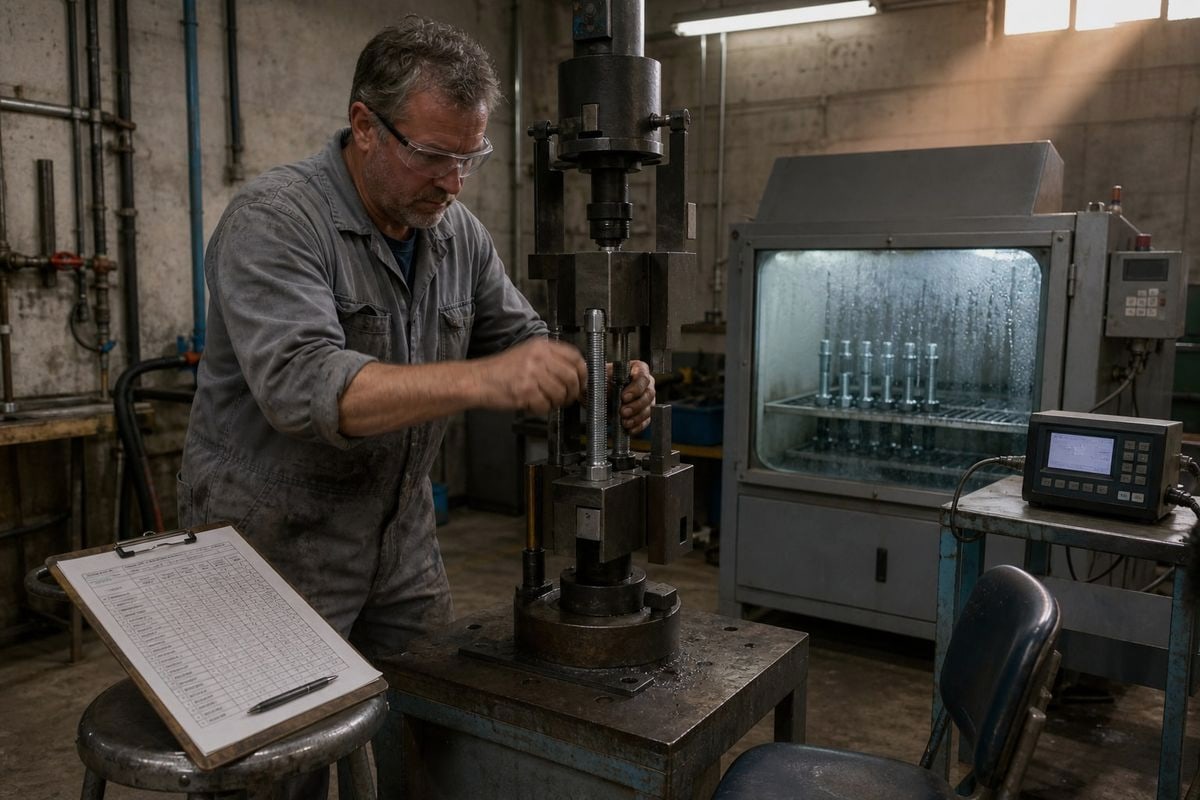
Certificates split into two layers, and confusing them is the most common mistake I see. Company-level certificates prove a management system exists. Product-level documents prove a specific batch performs. You need both. A factory can hold a valid ISO 9001 certificate and still ship a bad batch if nobody tests it.
Company-level versus product-level proof
| Layer | Examples | What It Tells You | What It Does NOT Tell You |
|---|---|---|---|
| Company system | ISO 9001, ISO 14001, ISO 45001 | Processes exist and are audited annually | Whether your specific order meets spec |
| Product evidence | Mill certificates, tensile tests, pull-out tests, salt-spray reports | Your batch's actual chemistry and performance | Whether the factory can repeat it consistently |
| Third-party inspection | SGS or Bureau Veritas pre-shipment reports | Independent eyes checked your order | Long-term durability in service |
On our production line, every heat of steel arrives with a mill test certificate, and we log the heat number against each production batch. That is what material traceability 3 means in practice. When a tunneling contractor in Norway asks which mill produced the R32 bars in container number so-and-so, we answer within a day.
Why corrosion documentation belongs in ESG
This surprises some buyers. Corrosion protection 4 is an environmental issue, not just a quality issue. Self-drilling anchor bolts sit in wet rock, aggressive soils, and marine-influenced ground for decades. A bolt that fails early triggers replacement work, wasted steel, and safety risk. So ask for hot-dip galvanizing thickness records or epoxy coating documentation, plus salt-spray test results. Lifecycle durability is responsible sourcing in its most concrete form.
Skeptics on procurement teams sometimes argue that ISO and CE claims are meaningless because paper does not equal performance. They are half right. The certificates alone are insufficient. But the answer is not to ignore certificates. The answer is to pair them with batch-level testing and factory audit China programs, so paper and performance confirm each other.
How do I assess a supplier's environmental and labor practices from overseas?
A lesson we learned early: buyers who never visit Shandong still form accurate judgments about our factory. They do it through structured remote assessment, and the good ones follow a repeatable process.
Assess overseas suppliers through virtual factory audits via live video, commissioned third-party supplier social audits, ISO 14001 and ISO 45001 verification, wastewater and coating-process documentation review, worker training records, and UFLPA compliance declarations tracing raw material origins away from prohibited regions.
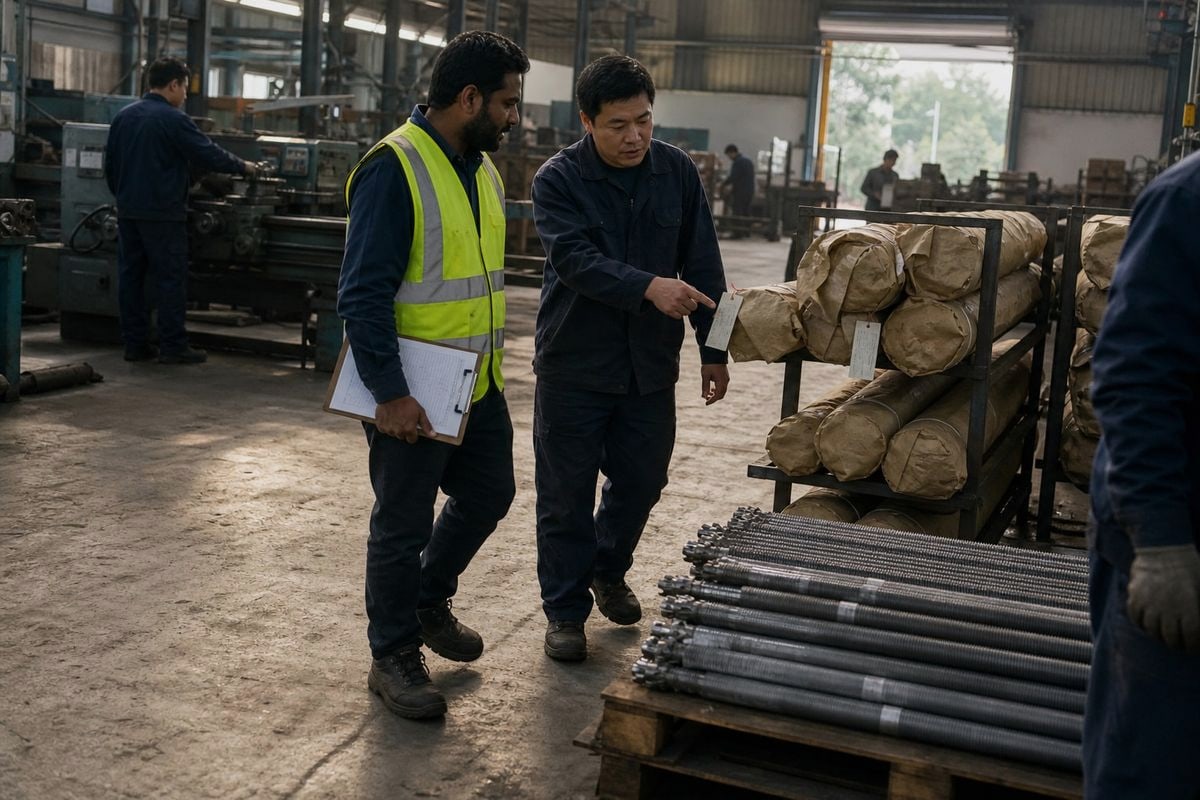
You cannot smell a coating shop through a spreadsheet. But you can get remarkably close with the right sequence. Here is the workflow we see sophisticated U.S. buyers use, and the one we recommend to first-time importers.
A five-step remote assessment process
- Digital prequalification. Score the supplier on documents alone: licenses, certificates, audit history, export records. Eliminate anyone who responds slowly or incompletely. Response behavior is itself an ESG risk management signal.
- Live virtual factory tour. Ask for an unedited video walkthrough. Request specific stations: the threading line, the coating area, the testing lab, the warehouse. Watch for housekeeping, machine guarding, and whether workers wear protective equipment without being staged.
- Commissioned social audit. Hire SGS, Bureau Veritas, or a similar firm for supplier social audits covering wages, hours, age verification, and forced labor prevention controls. This is your strongest evidence for UFLPA compliance, because U.S. Customs can detain shipments under the Uyghur Forced Labor Prevention Act if origin documentation is weak.
- Environmental document review. Request the environmental impact assessment filed with local authorities, wastewater discharge permits, and waste-handling contracts for coating byproducts. Galvanizing and epoxy lines generate regulated waste. A factory with nothing to show here is a red flag.
- Deeper-tier mapping. Push past Tier 1. Ask where the steel comes from, which mill, and whether the supplier can produce mill certificates naming that mill. Multi-tier supply chain transparency is now a baseline expectation, not an advanced practice.
Two emerging topics deserve a question each during your assessment. First, can the supplier estimate Scope 3 emissions data 5 for steel and transport? Few can do this precisely today, but willingness to engage signals maturity. Second, does the factory have a business resilience plan 6 for power restrictions or extreme weather? Our team maintains roughly 2,000 tons of finished stock partly for this reason. Buffer inventory is a climate adaptation tool as much as a delivery tool.
One cultural note. Assessments work better as collaboration than interrogation. When buyers explain why a document matters for their sustainability reporting 7, our engineers respond faster and more completely than when requests arrive as bare demands. Cultural competency in ESG engagement is not softness. It is efficiency.
Can I trust a Chinese self-drilling anchor bolt manufacturer to meet my company's sustainability reporting standards?
A U.S. distributor once told me bluntly: "I don't need you to be perfect. I need you to be documentable." That sentence reshaped how we prepare our export files.
Yes, provided the manufacturer supplies verified certifications, batch-level traceability, third-party audit reports, and responds transparently to data requests. Trust should rest on documented evidence and ongoing monitoring, not on marketing claims, price advantages, or marketplace transaction badges alone.
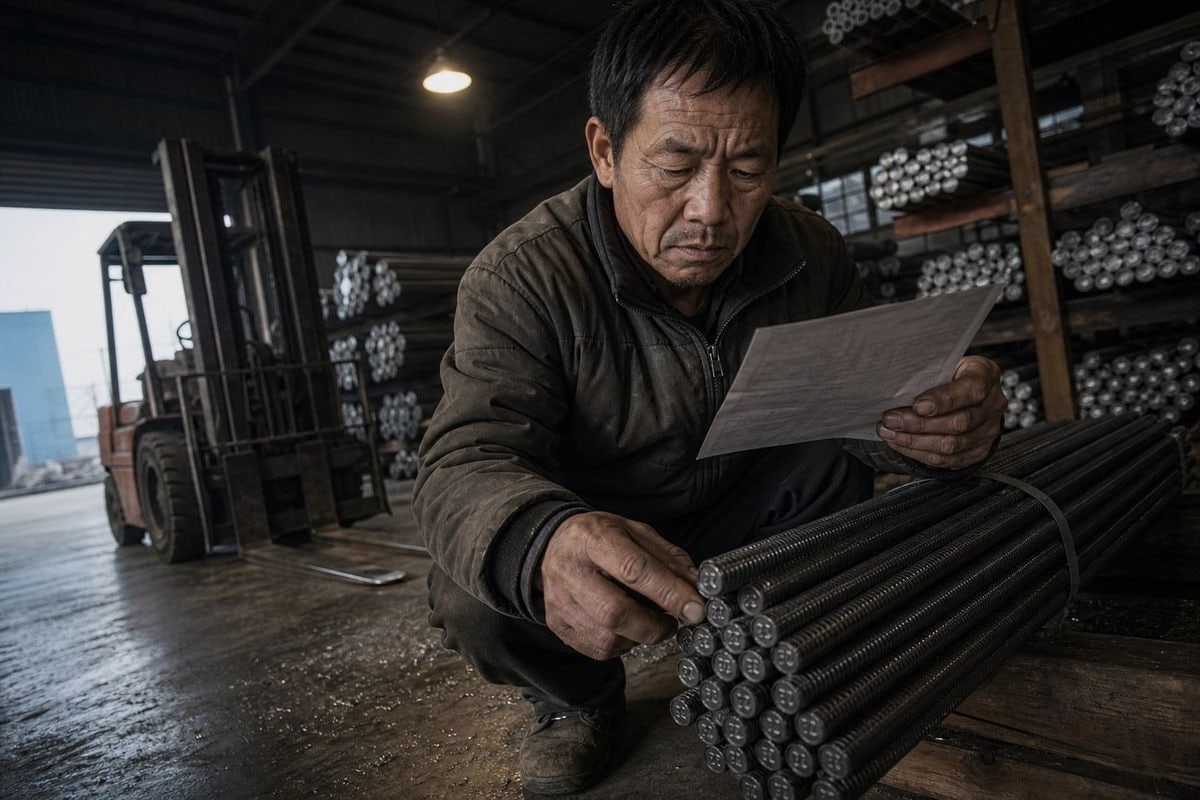
Trust is not a feeling in procurement. It is a scorecard. The suppliers worth long-term partnerships are the ones who make your sustainability reporting easier, because they hand you audit-ready data instead of excuses. Here is a practical five-category scorecard you can adapt for your own supplier files.
A working ESG supplier scorecard
| Category | Weight | Pass Indicators | Disqualifying Red Flags |
|---|---|---|---|
| Legal legitimacy | 15% | Consistent entity name, 10+ years operating, true manufacturer | Mismatched names, unclear ownership, trader posing as factory |
| Quality maturity | 25% | ISO 9001, documented inspection points, corrective-action process | No batch testing, no complaint-handling procedure |
| Environmental controls | 20% | ISO 14001, coating process records, waste permits | No environmental filings, no corrosion documentation |
| Labor and safety | 20% | ISO 45001, training records, clean social audit | Refusal of social audits, no origin declarations |
| Governance and transparency | 20% | Fast document sharing, mill certificates, traceability by lot | Slow or evasive responses, no third-party testing |
The manufacturer-versus-trader question
Some buyers accept trading companies if the paperwork is managed well. Others insist on direct manufacturers. My honest view, even though our factory obviously benefits from the second position: for ESG-sensitive supply chains, direct manufacturers are structurally easier to verify. Traceability has fewer hand-offs. Audits examine the actual production site. Corrective actions land on the people who run the machines. If you do work with a trader, require them to disclose the producing factory and extend your audits there.
Ongoing monitoring beats one-time approval
Approval is a snapshot. US import regulations shift, anti-dumping duties get reviewed, and factory conditions change. Sensible buyers re-verify certificates annually, rotate third-party inspections across shipments, and keep a live risk file per supplier. Some are now piloting blockchain-anchored traceability records for raw material origins. We think that trend will grow, and suppliers who already keep clean heat-number logs will adopt it easily. Suppliers who never kept records will not.
Price pressure is the last objection to address. Verified compliance costs more than unverified promises. But a detained container under forced labor scrutiny, or a failed pull-out test discovered mid-tunnel, costs far more than the audit fees you saved. Mid-range pricing with full documentation is almost always the cheaper total outcome.
Conclusion
Evaluate Chinese self-drilling anchor bolt suppliers on verified certificates, traceability, audits, and transparency. Documented evidence beats marketing claims every time, and it protects your projects, budgets, and reputation.
Footnotes
1. Explains the verification process for ISO certifications. ↩︎
2. Authoritative source for ISO 9001 certification and verification, including how to get certified and verify certificates. ↩︎
3. Directly addresses 'material traceability' within supply chains from a relevant industry source. ↩︎
4. Definition and importance of preventing material degradation. ↩︎
5. Definition and importance of indirect emissions in sustainability. ↩︎
6. Official and authoritative source from the U.S. Small Business Administration, directly addressing business resilience plans. ↩︎
7. Frameworks for disclosing environmental, social, and governance performance. ↩︎