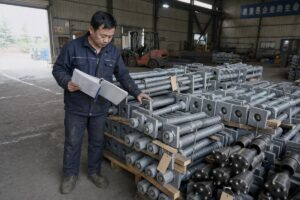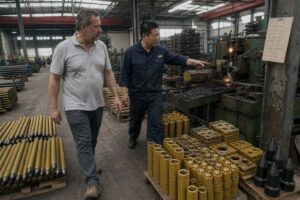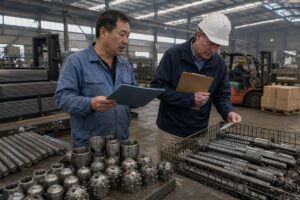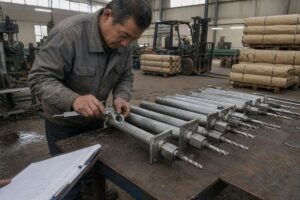
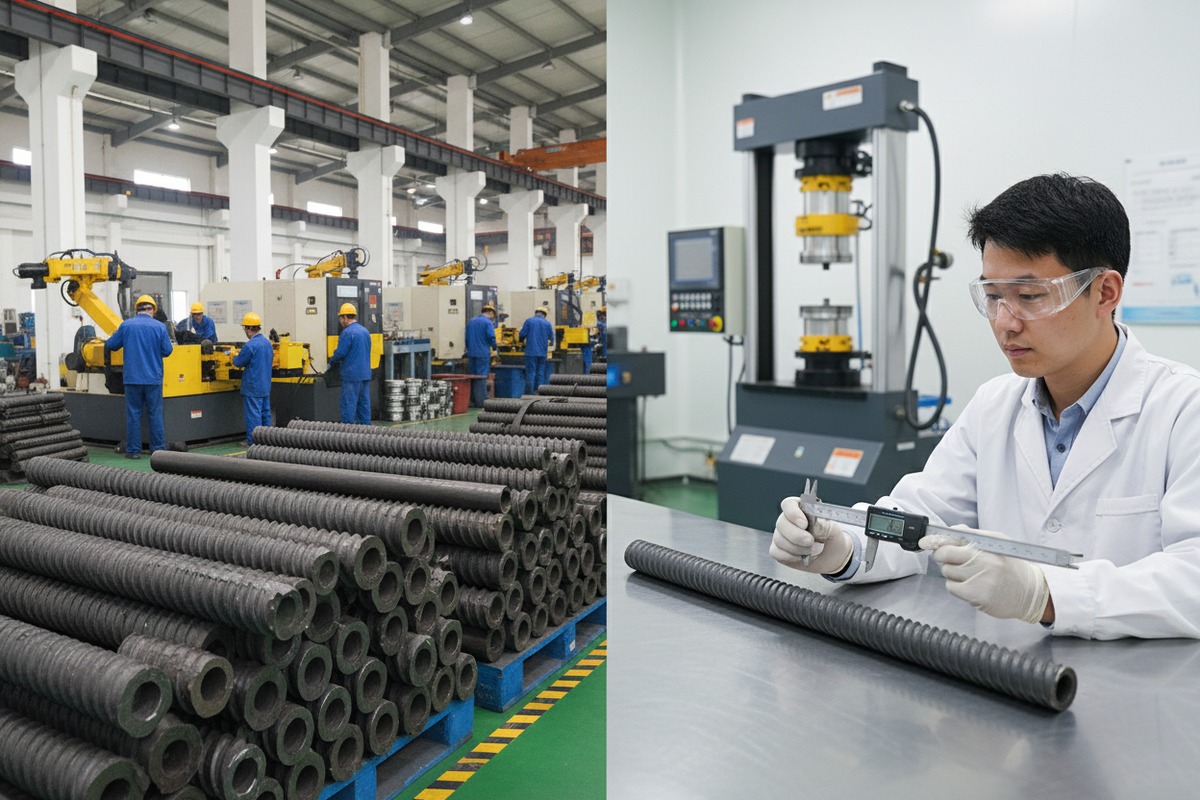
Every year, our production lines push out thousands of tons of self-drilling anchor bolts 1 — and yet, the question we hear most from overseas buyers isn't about price. It's about trust. How do you know the bolts you receive in bulk will perform the same as the ones you tested commercial invoice 2? That gap between a sample approval and a full container delivery is where projects succeed or fail, and it's where most procurement headaches begin.
To arrange sample testing for self-drilling anchor bolts from China, contact the manufacturer with your specifications and standards, request a small trial batch, ship samples to an ISO-accredited lab, run mechanical and pull-out tests, then compare results against your project requirements before committing to bulk orders.
This guide walks you through the full process — from your first email to a Chinese factory, through lab testing protocols, shipping logistics, and quality locks for mass production. Let's break it down step by step.
How do I start the process of requesting self-drilling anchor bolt samples from a Chinese factory?
The first contact with a supplier sets the tone for everything that follows. Over the years, our export team has learned that vague requests lead to vague samples — and that wastes everyone's time and money.
Start by sending the manufacturer a detailed specification sheet that includes bolt diameter, thread type, steel grade, length, and the international standard (ASTM, EN, or ISO) you need. Request 10–20 sample pieces, ask for mill certificates, and confirm lead time and sample pricing upfront.

Prepare Your Specification Sheet First
Before you even search for a supplier, write down exactly what you need. Self-drilling anchor bolts are hollow rock bolts that combine drilling, grouting, and anchoring into one system. They come in different diameters (typically R25, R32, R38, R51, and T76), steel grades 3, and thread profiles. If you skip this step, the factory will guess — and guesses lead to wrong samples.
Your specification sheet should cover:
- Bolt diameter and wall thickness
- Thread type (continuous or partial)
- Steel grade (e.g., 500/600 or 830/1030 based on yield/tensile strength)
- Total length and cut tolerances
- Drill bit type (cross, X-type, or clay bit)
- Coupler, plate, and nut requirements
- Target standard (ASTM A615, EN 14199, ISO 22477, etc.)
Where to Find Reliable Suppliers
Most buyers start on Alibaba, Google, or at trade shows like Bauma. Look for suppliers with at least 10 years of export history, a verifiable factory address, and documented shipments to your region. Our facility in Shandong, for example, has shipped to over 30 countries. We keep 2,000 tons in stock at any time, which means sample orders ship fast.
What to Include in Your First Email
| Item to Include | Why It Matters |
|---|---|
| Project location and application (soil nailing, tunneling, mining) | Helps the factory recommend the right bolt type and steel grade |
| Required international standard (ASTM, EN, ISO) | Ensures the factory tests to the correct specification |
| Quantity needed (samples + estimated bulk) | Factories prioritize buyers with clear volume intent |
| Preferred shipping method (air for samples, sea for bulk) | Affects lead time and cost estimates |
| Request for mill certificates and QC reports | Verifies steel source and in-house testing |
| Photos or drawings of your current bolt (if switching suppliers) | Reduces miscommunication on dimensions and thread type |
Expect a Back-and-Forth
Good factories ask questions. If a supplier says "yes" to everything without clarifying your soil conditions or load requirements, that's a red flag. When our engineers review a new inquiry, they typically ask about the installation method, grout type, and expected pull-out load. This dialogue is normal and healthy.
Request a pre-production sample first. This is usually 10–20 pieces, enough to run lab tests and a few field trials. Confirm whether the sample cost is refundable against a future bulk order — many reputable factories, including ours, offer this arrangement.
What key performance metrics should I focus on during my laboratory testing of the samples?
When the sample box arrives at your lab, the real work begins. From our experience shipping to EPC contractors in Norway, Chile, and the USA, we know that skipping even one test category can lead to costly surprises during installation.
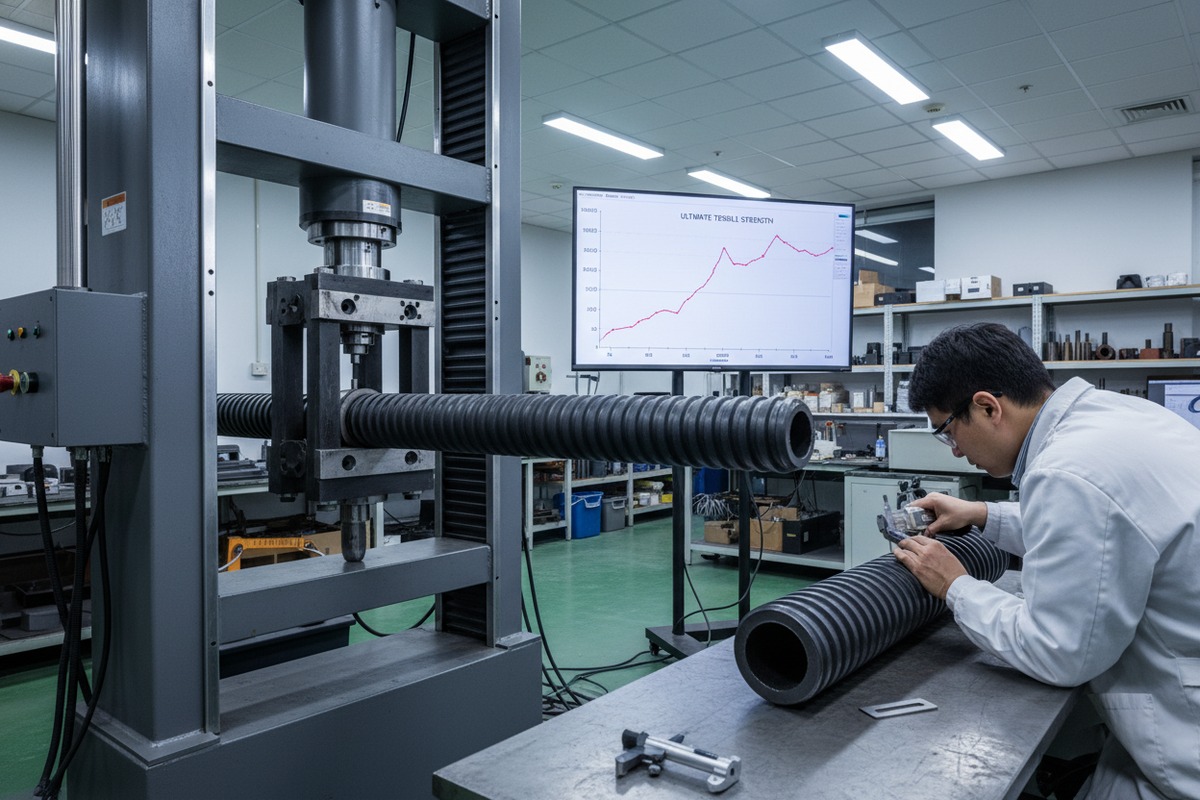
Focus on five core metrics: tensile strength and yield strength of the steel bar, dimensional accuracy of threads and hollow core, pull-out resistance under proof load (1.5–2× design load held for 60 seconds), hardness after heat treatment, and chemical composition to verify the steel grade matches the mill certificate.
Mechanical Property Tests
These are non-negotiable. You need to confirm that the steel performs as claimed. The two most important numbers are yield strength 4 and ultimate tensile strength 5. For a typical R32 bolt rated at 500/600, that means a minimum yield of 500 MPa and ultimate tensile of 600 MPa.
| Test | Method | Pass Criteria (Example: R32 500/600) |
|---|---|---|
| Tensile strength | ASTM A370 or equivalent | ≥ 600 MPa |
| Yield strength | ASTM A370 or equivalent | ≥ 500 MPa |
| Elongation at break | ASTM A370 | ≥ 8% (depends on grade) |
| Hardness (Rockwell or Brinell) | ASTM E18 / E10 | Within specified range for grade |
| Chemical composition (C, Mn, Si, P, S) | Spectrometry (OES) | Matches mill certificate and standard |
Dimensional Accuracy Checks
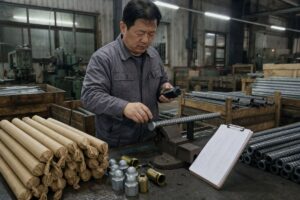
Thread pitch, outer diameter, inner bore diameter 6, and wall thickness all affect how the bolt drills, how grout flows, and how the coupler connects. Use calipers and go/no-go gauges. Even a 0.5 mm deviation on the inner bore can restrict grout flow and weaken the anchor.
Pull-Out and Load Testing
This is where theory meets reality. A pull-out test measures the actual resistance of the installed anchor in soil or rock. Here's the standard protocol:
- Install the sample bolt in a representative substrate (or a concrete test block for controlled lab conditions).
- Grout the anchor and allow full curing (typically 7–28 days depending on grout type).
- Attach a hydraulic jack and load cell to the bolt head.
- Apply load incrementally up to 1.5–2× the design load.
- Hold the proof load for 60 seconds minimum.
- Record displacement at each load increment.
A critical rule: position the tester frame legs at a distance from the anchor at least equal to the embedment depth. If the legs are too close, they compress the concrete cone around the anchor and give you falsely high readings.
Destructive vs. Non-Destructive Testing
Destructive tests load the bolt to failure. You get the ultimate capacity, but you lose the sample. Non-destructive methods like ultrasonic pulse velocity 7 can detect internal voids and grout bonding issues without damaging the bolt. Both have value. For sample evaluation, we recommend destructive testing on at least 2–3 pieces and non-destructive screening on the rest.
Corrosion Resistance
If your project is in a coastal, humid, or chemically aggressive environment, request salt spray testing 8 (ASTM B117) on the bolt surface and any galvanized or epoxy coating. This test simulates years of exposure in a few hundred hours. Some buyers skip this and regret it when bolts corrode within two years of installation.
How can I handle the shipping costs and customs documentation for my anchor bolt sample order?
Shipping a few dozen steel bolts across the ocean sounds simple until you hit customs codes, import duties, and freight surcharges. Our logistics team handles sample shipments weekly, and the most common delay we see is missing or incorrect paperwork — not slow boats.
For sample orders, use air freight or express courier (DHL, FedEx) for speed. Request a commercial invoice, packing list, mill test certificate, and HS code classification (typically 7318.15 or 7228.60) from the supplier. Confirm import duties and any anti-dumping tariffs with your customs broker before shipment.
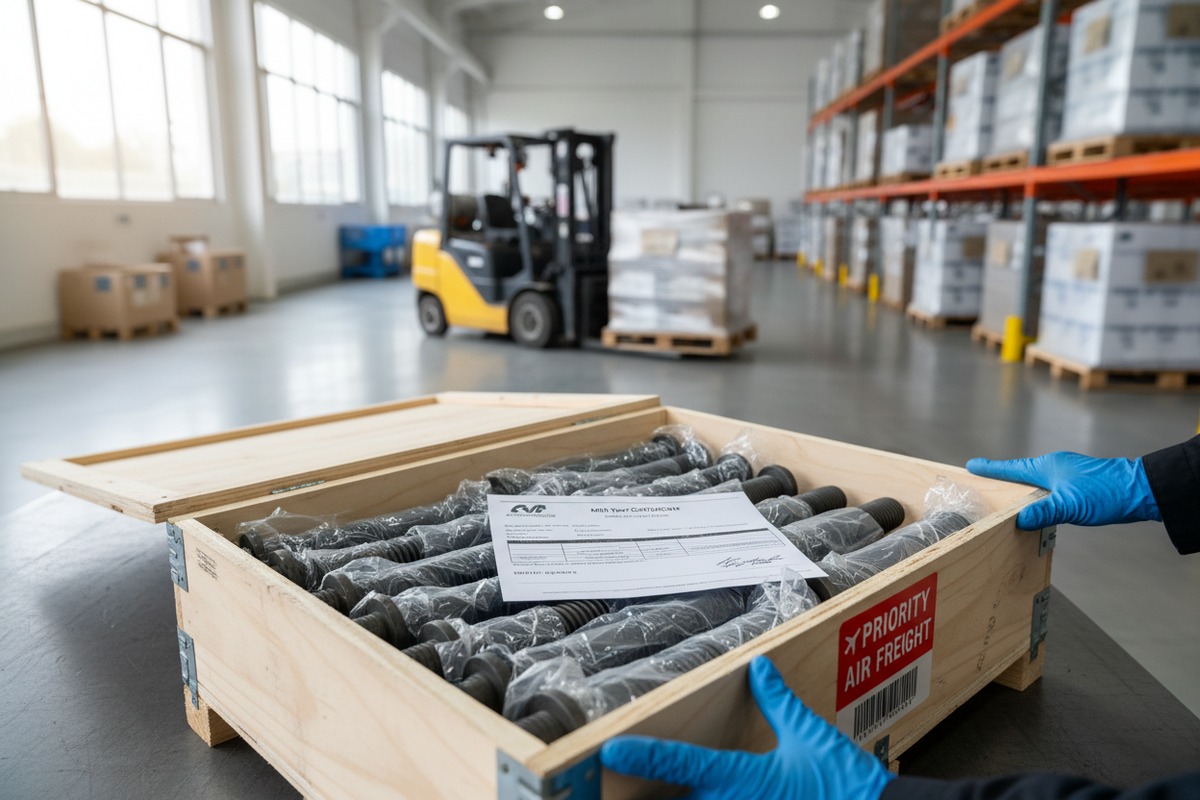
Choosing the Right Shipping Method
For 10–20 sample bolts, air express is the fastest option — typically 5–7 days door-to-door. Sea freight doesn't make economic sense for small quantities because minimum container charges apply. Some buyers ask us to combine samples with another customer's shipment via LCL (Less than Container Load), but this adds 2–3 weeks.
| Shipping Method | Typical Transit Time | Best For | Estimated Cost (10–20 pcs, ~50 kg) |
|---|---|---|---|
| DHL / FedEx Express | 5–7 days | Urgent sample testing | $150–$350 |
| Air freight (airport to airport) | 7–10 days | Larger sample batches (50+ pcs) | $200–$500 |
| LCL sea freight | 25–40 days | Non-urgent, combined with other cargo | $100–$250 + local fees |
Key Documents You Need
Your customs broker will ask for these. Make sure the Chinese supplier provides them before the shipment leaves:
- Commercial Invoice: Lists product description, quantity, unit price, total value, and Incoterms (FOB, CIF, or DDP).
- Packing List: Weight, dimensions, number of packages.
- Mill Test Certificate (MTC): Proves the steel grade and chemical composition.
- Certificate of Origin: May reduce or increase duty rates depending on trade agreements.
- HS Code: Self-drilling anchor bolts typically fall under 7318.15 (screws and bolts of iron or steel) or 7228.60 (hollow drill bars). The correct code matters — a wrong classification can trigger delays or extra duties.
Watch Out for Anti-Dumping Duties
Some countries, including the USA and EU, impose anti-dumping duties 9 on certain Chinese steel products. Check with your customs broker whether self-drilling anchor bolts fall under any active anti-dumping order in your country. This can add 10–25% to your landed cost and completely change the economics of your purchase.
Who Pays for Sample Shipping?
This is negotiable. Many factories, ours included, offer free samples but ask the buyer to cover shipping. For high-value prospects with clear bulk order plans, we sometimes absorb the full cost. Be upfront about your order timeline — it helps the supplier justify the investment.
DDP Option for Hassle-Free Delivery
If customs paperwork feels overwhelming, ask the supplier for a DDP (Delivered Duty Paid) quote. Under DDP, the seller handles all export and import clearance, duties, and delivery to your door. It costs more per unit, but it eliminates your customs risk entirely. Many of our US and European clients prefer this for their first sample order.
How do I ensure the final bulk order maintains the same quality as the samples I approved?
This is the question that keeps procurement managers up at night. The samples pass every test. The bulk order arrives — and something is off. Wall thickness is thinner. Thread pitch is inconsistent. Heat treatment wasn't held long enough. Our quality team has seen these issues at competitor factories, and we've built our own QC process specifically to prevent them.
Lock in quality by requiring a pre-shipment inspection from an independent third-party agency (SGS, Bureau Veritas, or TÜV), specifying that bulk production must use the same steel supplier and heat treatment parameters as the approved samples, and implementing batch traceability with unique lot numbers tied to mill certificates and test reports.
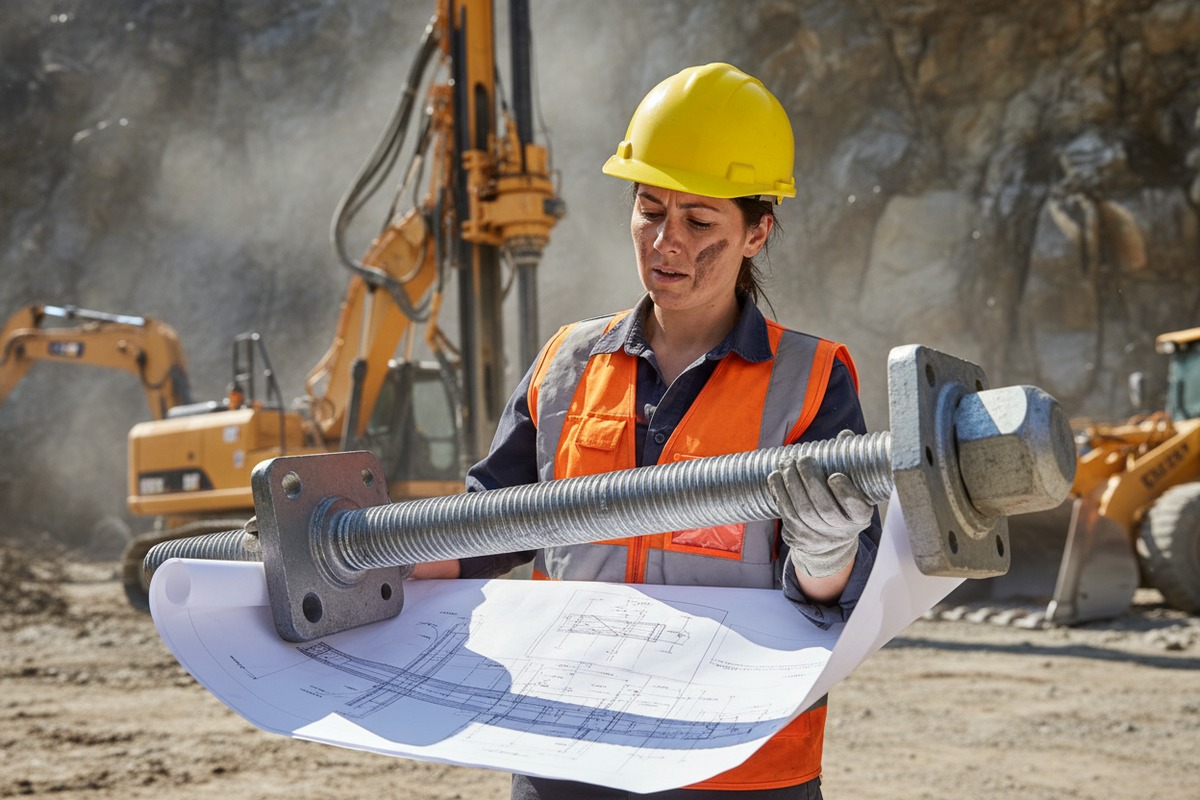
Why Bulk Quality Can Drift
It's not always intentional. Batch variability in raw steel, shifts in furnace temperature during heat treatment, or a new operator on the threading machine can all cause drift. Chinese factories that export high volumes sometimes prioritize throughput over per-unit consistency. That's why external verification is essential — even when you trust the supplier.
The Three-Layer Quality Lock
Here's the system we recommend (and practice ourselves):
Layer 1: Production Control Agreement
Before bulk production starts, sign a quality agreement that specifies:
- Exact steel grade and source mill
- Heat treatment temperature range and hold time
- Thread dimensional tolerances
- Surface treatment requirements
- Acceptance criteria with clear pass/fail numbers
Layer 2: In-Process Inspection
Hire a third-party inspector to visit the factory during production — not just at the end. Key checkpoints include:
- Raw material verification (check steel bars against MTC before cutting)
- Threading accuracy after machining
- Hardness test after heat treatment (sample 5–10% of the batch)
- Visual inspection for surface cracks and deformation
Layer 3: Pre-Shipment Inspection (PSI)
This is the final gate. The inspector pulls random samples from the packed goods and runs a defined checklist.
Recommended Pre-Shipment Inspection Checklist
| Inspection Item | Method | Acceptance Standard |
|---|---|---|
| Outer diameter | Caliper measurement | ±0.5 mm of spec |
| Wall thickness | Ultrasonic thickness gauge | ≥ minimum per drawing |
| Thread pitch | Thread gauge | Within tolerance per ISO/ASTM |
| Hardness (post heat treatment) | Portable Rockwell tester | Within specified HRC range |
| Tensile test (2–3 pcs destructive) | Universal testing machine | ≥ specified yield and UTS |
| Visual defects (cracks, rust, bends) | Visual + magnetic particle | Zero critical defects |
| Marking and labeling | Visual | Correct grade, size, lot number |
| Packaging integrity | Visual | No damage, proper bundling |
Implement Batch Traceability
Every bundle of bolts should carry a lot number that links back to the raw steel MTC, heat treatment record, and QC test report. Some of our clients now request QR codes on each bundle that link to a digital folder with all documents. This isn't futuristic — it's standard practice for serious infrastructure projects.
What If You Find Defects After Delivery?
Negotiate warranty terms before placing the bulk order. A reasonable arrangement includes:
- 12-month defect liability period from delivery date
- Supplier covers replacement cost for manufacturing defects
- Clear dispute resolution process (third-party lab re-test as final arbiter)
- Retention of 5–10% payment until installation verification is complete
This protects both parties. It also motivates the factory to maintain quality because their revenue depends on it.
Consider Long-Term Partnership Over One-Time Deals
Factories invest more in quality for repeat customers. When we work with a distributor who orders quarterly, our QC team assigns a dedicated inspector to their production runs. First-time buyers get standard QC. Long-term partners get priority attention, faster issue resolution, and sometimes custom testing beyond the standard scope. This is how the industry works — relationships matter.
Conclusion
Arranging sample testing for self-drilling anchor bolts from China is a structured process — specify clearly, test rigorously, ship smartly, and lock in quality before bulk production. Every step protects your project and your budget.
Footnotes
1. Provides background on the core product type. ↩︎
2. Explains the required document for international shipping and customs. ↩︎
3. ISO standard for the classification of steel grades. ↩︎
4. ScienceDirect overview of the engineering concept of yield strength. ↩︎
5. Defines the mechanical property being tested for material strength. ↩︎
6. ISO standard for geometrical product specifications and tolerances. ↩︎
7. Explains the non-destructive testing method for evaluating material integrity. ↩︎
8. Standard practice for operating salt spray (fog) apparatus. ↩︎
9. WTO is the definitive international authority on anti-dumping trade measures. ↩︎
10. Official site of a major international inspection agency. ↩︎