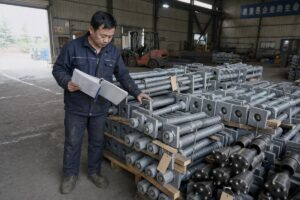
Batch consistency in self-drilling anchor bolts can make or break a project ISO 9001 documentation 1. I have seen one weak lot from an unvetted mill stall an entire tunneling contract, and it taught our team a hard lesson.
To ensure batch consistency when sourcing self-drilling anchor bolts, qualify suppliers through audits and trial orders, demand material test reports and ISO-certified quality control procedures, verify samples against production lots, and require lot-numbered traceability documentation with mechanical and coating test results for every shipment.
Consistency is not luck. It is a system you build with your supplier. Below, I break that system into four practical steps any procurement team can follow.
How can I verify a supplier's quality control process before placing a bulk order?
A buyer from Norway once asked to video-call our workshop floor before signing anything first article samples 2. That request impressed me. It showed she understood that quality control procedures matter more than a polished datasheet.
Verify a supplier's quality control by auditing their factory in person or by video, reviewing their ISO 9001 documentation, checking incoming, in-process, and final inspection records, requesting first article samples, and running a small trial batch before committing to any bulk purchase order.
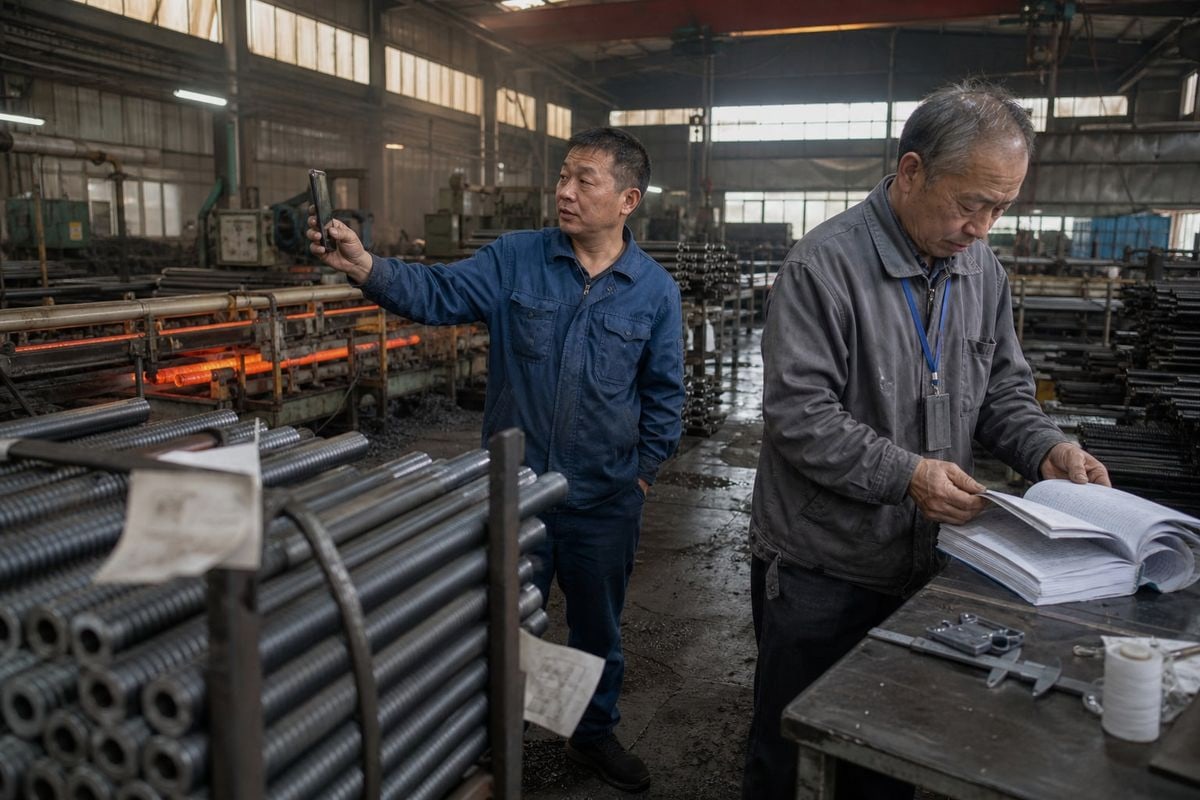
Supplier qualification should work like a phased validation process, not a one-time quote comparison. In our experience exporting to contractors in Chile, Saudi Arabia, and the USA, the buyers who avoid trouble are the ones who treat approval as a series of gates. Each gate must be passed before the next order size is unlocked.
Start With a Structured Audit
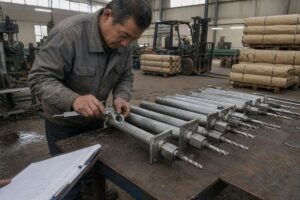
Ask the supplier to walk you through three inspection stages: incoming raw material inspection, in-process inspection, and outgoing inspection. A serious factory can show records for all three. At our plant in Shandong, every heat of steel is checked against its mill certificate before it touches a forming line. If a supplier cannot show that step, the risk starts at the very first meter of hollow bar.
Use a Phased Approval Model
| Phase | What You Do | What It Proves |
|---|---|---|
| 1. Document review | Check ISO 9001 scope, manufacturing standards, test equipment list | The QC system exists on paper |
| 2. Factory audit | Visit or video-tour production and testing labs | The system runs in practice |
| 3. First article inspection | Approve a signed-off reference sample | The product meets your spec |
| 4. Trial batch | Order a small lot and test it independently | The process is repeatable |
| 5. Batch supply verification | Compare the first bulk lot to the trial lot | Consistency holds at scale |
Also probe process control directly. Ask how they manage thread tooling wear, heat treatment temperature, and coating line speed. These process variables, not just material choice, decide whether lot 40 behaves like lot 1. A supplier who answers with specifics is a supplier who actually controls them.
What certifications and testing standards should I request to confirm consistent bolt quality?
There is a trade-off I weigh with every new client: full-batch testing gives certainty but raises cost, while sampling keeps prices competitive. The right answer depends on how critical your geotechnical anchoring application is.
Request ISO 9001 certification, mill-issued material test reports covering chemical composition and tensile yield strength, lot-level mechanical test reports for load and elongation, coating thickness reports for corrosion protection, and compliance with relevant standards such as ASTM F1554, EN, or project-specified geotechnical norms.
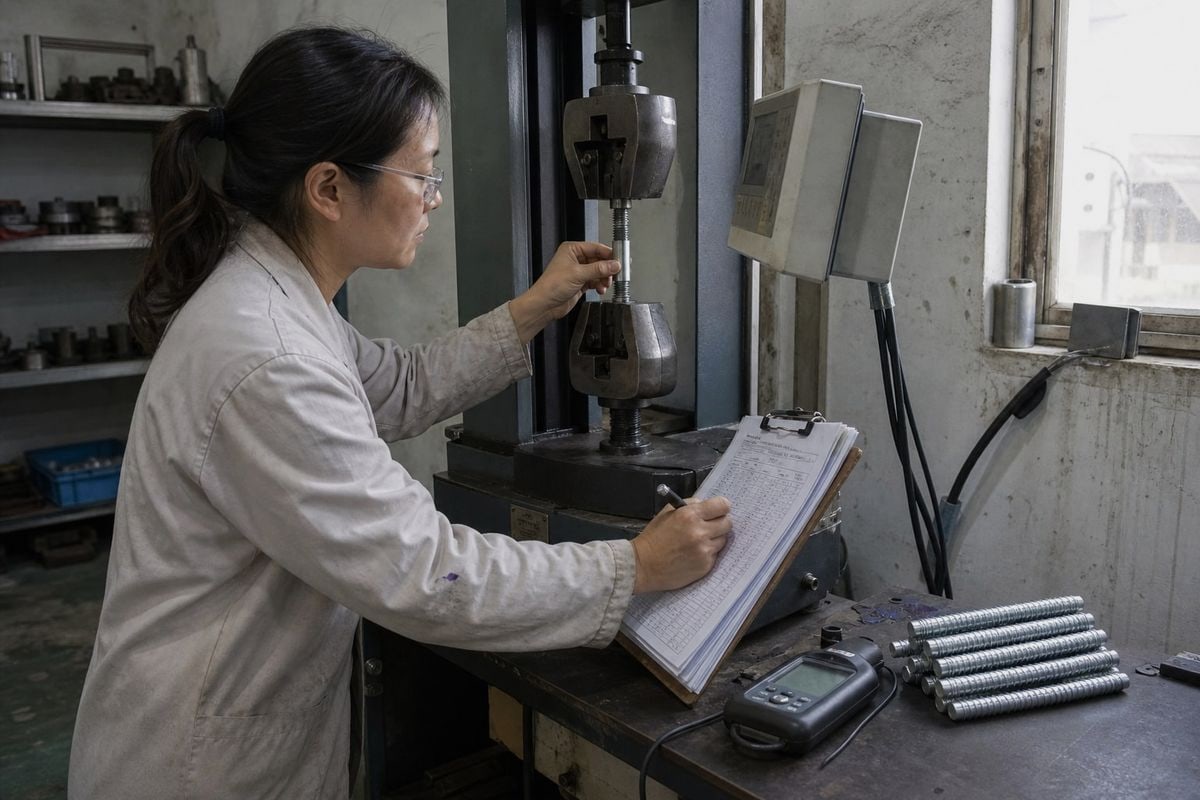
Certificates only matter when they connect to the exact lot you receive. I have reviewed plenty of generic test reports that describe "typical" properties. Those documents prove nothing about your shipment. Insist that every report carries the same batch number stamped on the hollow bar anchors themselves.
The Core Document Set
Material test reports (MTRs) are the foundation. They tell you which steel mill produced the bar, its chemical composition 3, and its measured mechanical properties. For self-drilling systems, you should also see lot-specific results for tensile yield strength, ultimate load, and elongation, because these values drive the design safety factor.
Standards give those numbers meaning. ASTM F1554 4 is a useful reference framework for anchor bolt grades in North American projects, while European buyers often specify EN standards for hollow bar systems. Some rail and tunnel authorities go further and set hard floors; one tunnel guidance document, for example, specifies a minimum 32 mm diameter and a 200 kN minimum yield load for temporary support anchors. Your procurement spec should name the standard, the grade, and the acceptance limits explicitly.
Tests to Require Per Batch
| Test | What It Confirms | Typical Basis |
|---|---|---|
| Tensile / yield load | Structural capacity | Sample per lot |
| Elongation | Ductility under ground movement | Sample per lot |
| Coupling / thread pullout | Thread integrity under load | Sample per lot |
| Coating thickness | Corrosion protection 5 and thread fit | Multiple points per lot |
| Dimensional check | Bore, OD, thread pitch | Statistical sampling |
| Destructive verification | Ultimate failure behavior | e.g., one unit per defined quantity |
One objection I hear often: "Sampling still leaves risk." That is true. Sampling reduces cost but does not eliminate risk. For safety-critical mining or slope stabilization work, it is reasonable to tighten sampling frequency or add independent third-party testing on receipt. We support that; a supplier who resists outside verification is telling you something.
How do I compare product samples against mass-produced batches to catch inconsistencies early?
Years ago, we shipped a trial order to a Peruvian mining contractor who measured every dimension of our sample and filed the data. When bulk cargo arrived, he re-measured. That discipline caught issues for him elsewhere, and it is a habit I now recommend to everyone.
Compare samples to production batches by recording baseline measurements from the approved first article, then re-checking dimensions, thread integrity, coating thickness, and mechanical performance on random units from each bulk lot, flagging any deviation beyond agreed tolerances before the material reaches the job site.
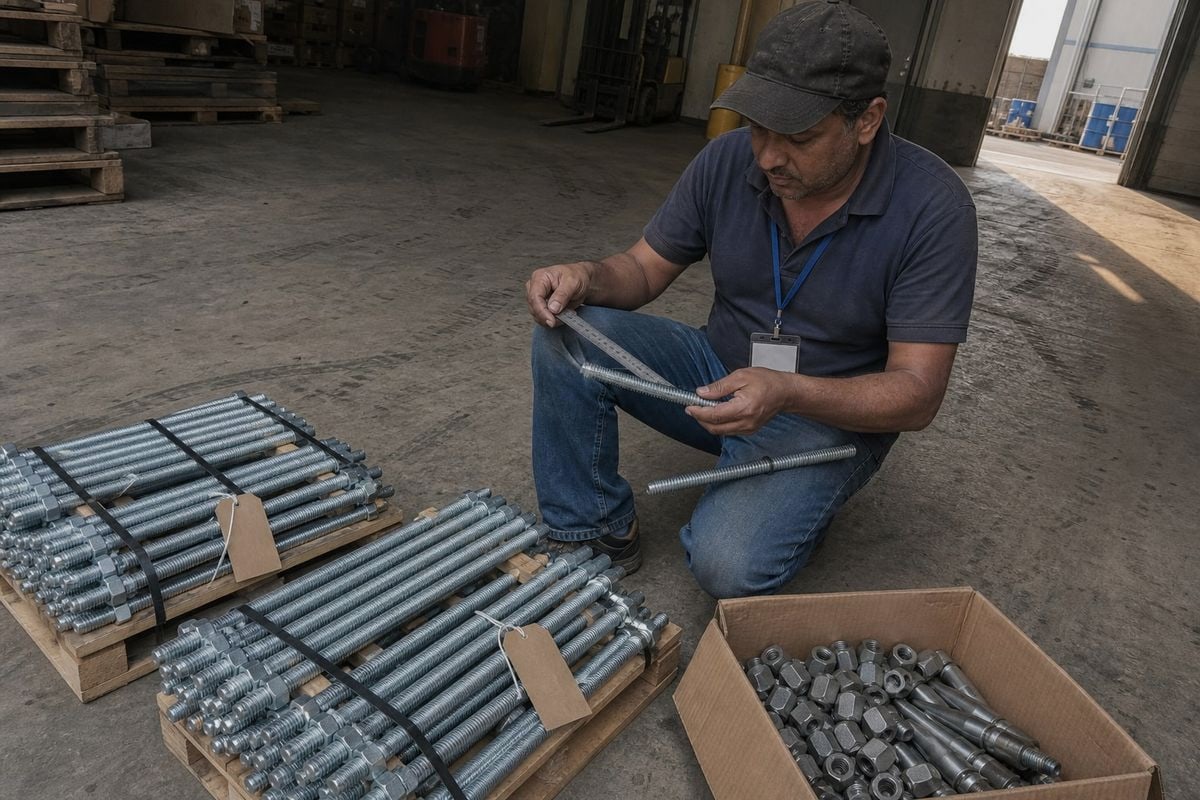
The approved sample is your contract in physical form. Treat it that way. Seal one signed reference sample at your office and, ideally, leave a matching one at the supplier's factory. Every future dispute then has a neutral referee.
A Simple Incoming Comparison Routine
- Pull random units from different pallets and different bundles, never just the top layer.
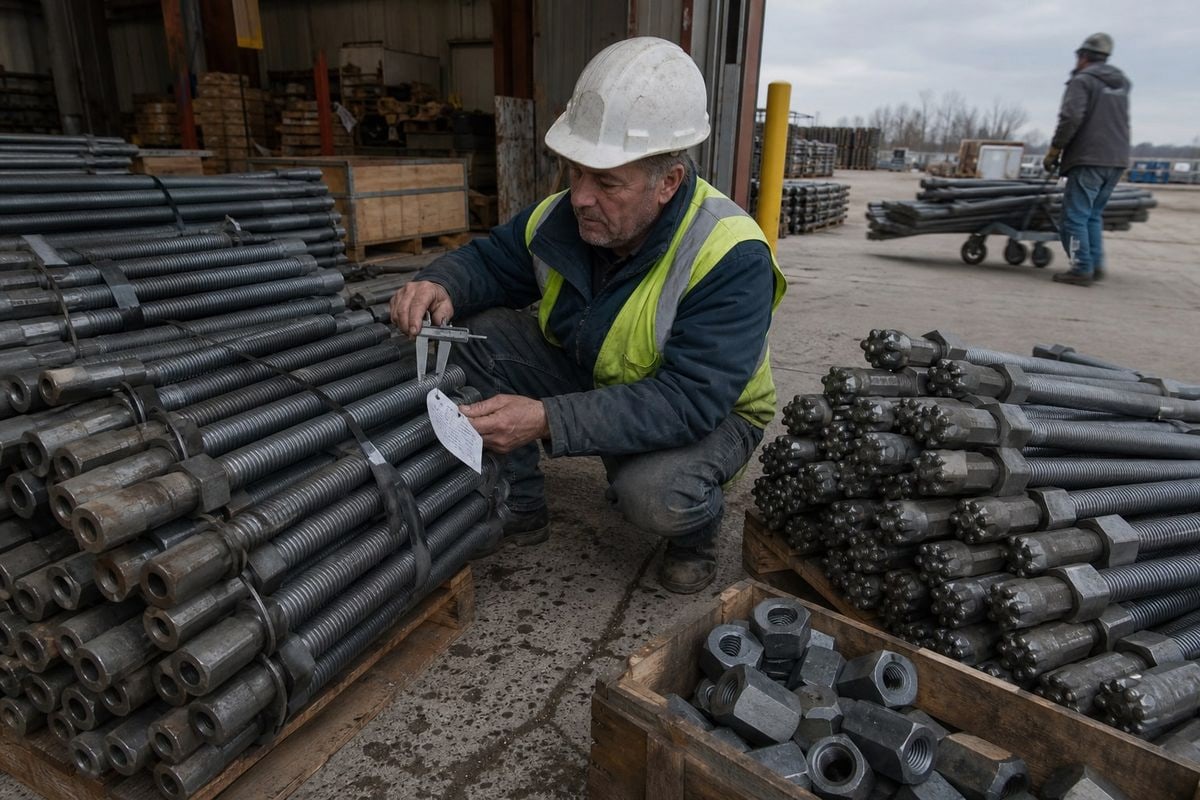
- Measure outer diameter, bore diameter, thread pitch, and overall length against the reference sample.
- Run a coupler onto the bar by hand. Rough engagement signals thread tooling drift or coating buildup.
- Check coating thickness at several points along the bar, since galvanizing variation affects both corrosion life and thread fit.
- Inspect surface condition for cracks, laps, or transit damage.
- Send a small sample set for tensile testing when the application is critical.
- Record everything against the batch number so trends appear across shipments.
Separate Product Variation From Installation Variation
Here is a point many buyers miss. Not every field problem is a manufacturing defect. One experimental study found that even with steel and resin controlled from the same batches, changing the drilling cycle reduced energy dissipation by around 33 percent. Drilling method, grout mix, and curing all shape observed performance, including grout bond strength. So before blaming a lot, compare installation records too. If bolts from one batch behave differently across two crews, the crews may be the variable. This distinction protects your supplier relationship and, more importantly, points you to the real fix.
What documentation should I require from my supplier to trace quality across multiple shipments?
Product traceability 6 was the first thing our team formalized when we scaled past small export orders. Once you ship thousands of tons a year across multiple continents, a defect without a batch number is a defect you cannot contain.
Require lot-numbered packing lists, batch-linked material test reports, per-shipment inspection and coating reports, product stamping or tagging that matches the paperwork, and a retained-sample policy, so any field issue can be traced back to its steel heat, production run, and remaining inventory.
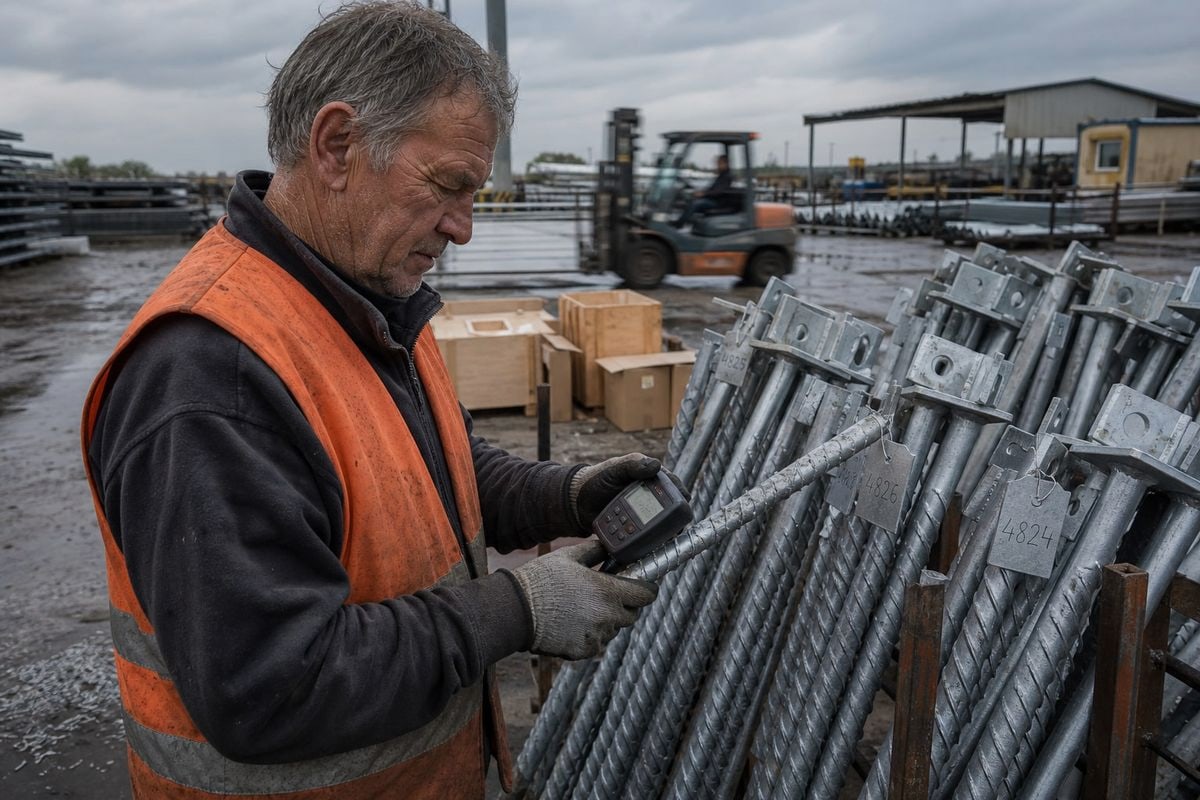
Traceability is a risk-control tool, not paperwork for its own sake. When every hollow bar carries a batch mark, a single field failure can be traced to a specific steel heat and production window. You can then quarantine only the affected lot instead of rejecting an entire warehouse. Without that chain, one bad report contaminates everything you hold in stock.
The Documentation Package Per Shipment
| Document | Purpose | Red Flag If Missing |
|---|---|---|
| Lot-numbered packing list | Links physical bundles to records | Cannot isolate a defective lot |
| MTR per steel heat | Verifies chemistry and mechanicals | Unknown material origin |
| Mechanical test report per lot | Confirms load performance | No proof of tensile capacity |
| Coating thickness report | Confirms corrosion protection | Durability risk in wet ground |
| Final inspection report | Confirms dimensions and thread checks | QC step possibly skipped |
| Product stamping / tags | Matches bolts to documents on site | Traceability breaks at delivery |
Build the Chain Across Shipments, Not Just Within One
Ask your supplier to keep retained samples from each lot for an agreed period. We hold retained samples and full batch records precisely so that a question raised months later can still be answered with physical evidence. Some buyers now go further with digital batch records or blockchain-backed supply chain logs; the technology varies, but the principle is identical. Every claim about quality must be checkable after the fact. Suppliers sometimes argue their internal QC makes buyer-side records redundant. I disagree. Manufacturer assurance and buyer verification are two layers of the same defense, and critical geotechnical anchoring work deserves both.
Conclusion
Batch consistency is engineered, not assumed. Qualify suppliers in phases, demand lot-linked certificates, verify samples against bulk lots, and require full traceability on every shipment.
Footnotes
1. Explains the international standard for quality management systems. ↩︎
2. Defines First Article Inspection and its role in quality assurance. ↩︎
3. Wikipedia provides a comprehensive and authoritative explanation of steel's chemical composition. ↩︎
4. Provides a detailed and authoritative overview of the ASTM F1554 standard for anchor bolts. ↩︎
5. Outlines various methods used to prevent corrosion in materials. ↩︎
6. Explains the concept of tracking a product's lifecycle from raw materials. ↩︎