
Choosing the wrong self-drilling anchor bolt supplier can derail an entire project occupational health and safety 1. Delayed shipments, inconsistent tensile strength, or bolts that fail under load — these problems cost far more than the product itself. With over 20 years on our production lines, we have seen buyers make costly mistakes that could have been avoided with a proper evaluation process.
To evaluate a self-drilling anchor bolt supplier, verify their quality control systems through certifications like ISO 9001 and CE marking, assess production capacity with historical order data, review raw material traceability with mill test certificates, and request independent tensile strength testing reports that match your project's geotechnical requirements.
This guide breaks down the evaluation process into four critical areas. Each section gives you practical checklists, benchmarks, and red flags so you can confidently select a supplier that meets your standards — whether you need 500 bolts or 50,000.
How can I verify that a manufacturer's quality control processes meet my project standards?
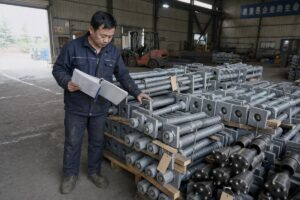
When we first set up our three-inspection system on the factory floor, the defect rate dropped significantly within the first quarter. Many buyers assume all manufacturers follow similar quality protocols, but the gap between a disciplined factory and a careless one is enormous — and invisible until bolts fail underground.
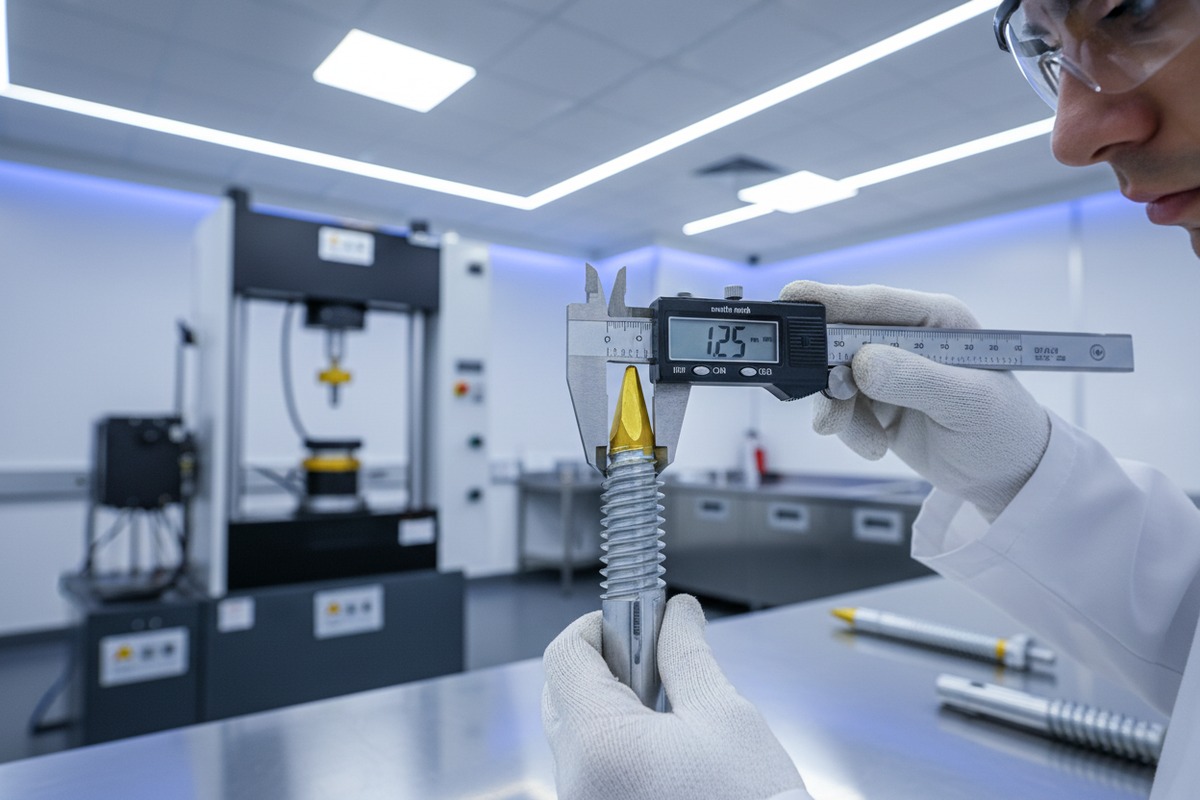
Verify a manufacturer's quality control by requesting their ISO 9001 certificate, auditing their incoming raw material inspections, reviewing in-process control records, and examining outgoing inspection sampling ratios. Ask for specific documentation like mill test certificates with heat-number traceability.
Start with Certifications — But Don't Stop There
Certifications like ISO 9001 2 prove that a quality management system exists. But a certificate on a wall does not guarantee the system is actively used. Ask the supplier for their most recent internal audit report. Ask when they last had an external audit. If they hesitate, that is a warning sign.
For projects in Europe, look for CE marking 3 or European Technical Assessment (ETA). For projects in the US, confirm that products meet ASTM standards. These are not optional — they are baseline requirements.
Inspect the Three-Stage Quality Control Flow
A reliable manufacturer uses a multi-stage inspection system. Here is what to look for:
| Inspection Stage | What to Check | Key Documents |
|---|---|---|
| Incoming Raw Materials | Steel grade 4 verification, diameter tolerance, surface defects | Mill test certificates (MTCs) with heat numbers |
| In-Process Controls | Thread rolling precision, heat treatment hardness, weld quality | Process inspection records, hardness test logs |
| Outgoing Final Inspection | Tensile strength, dimensional accuracy, visual defects | Final QC reports, sampling ratio documentation |
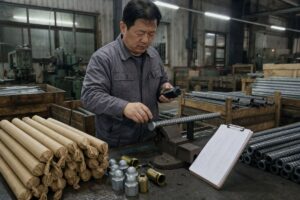
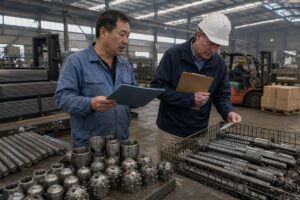
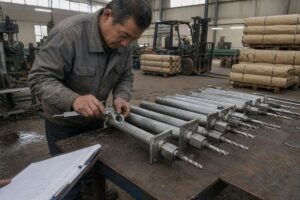
At our facility, every batch goes through self-inspection by the operator, mutual inspection by a peer, and special inspection by a dedicated QC engineer. This "three-inspection system" catches defects that a single checkpoint would miss.
Raw Material Traceability Is Non-Negotiable
One of the most overlooked quality indicators is traceability. Can the supplier trace a finished bolt back to the specific steel heat at the mill? This matters because if a failure occurs on site, you need to know whether it was a material issue or an installation issue.
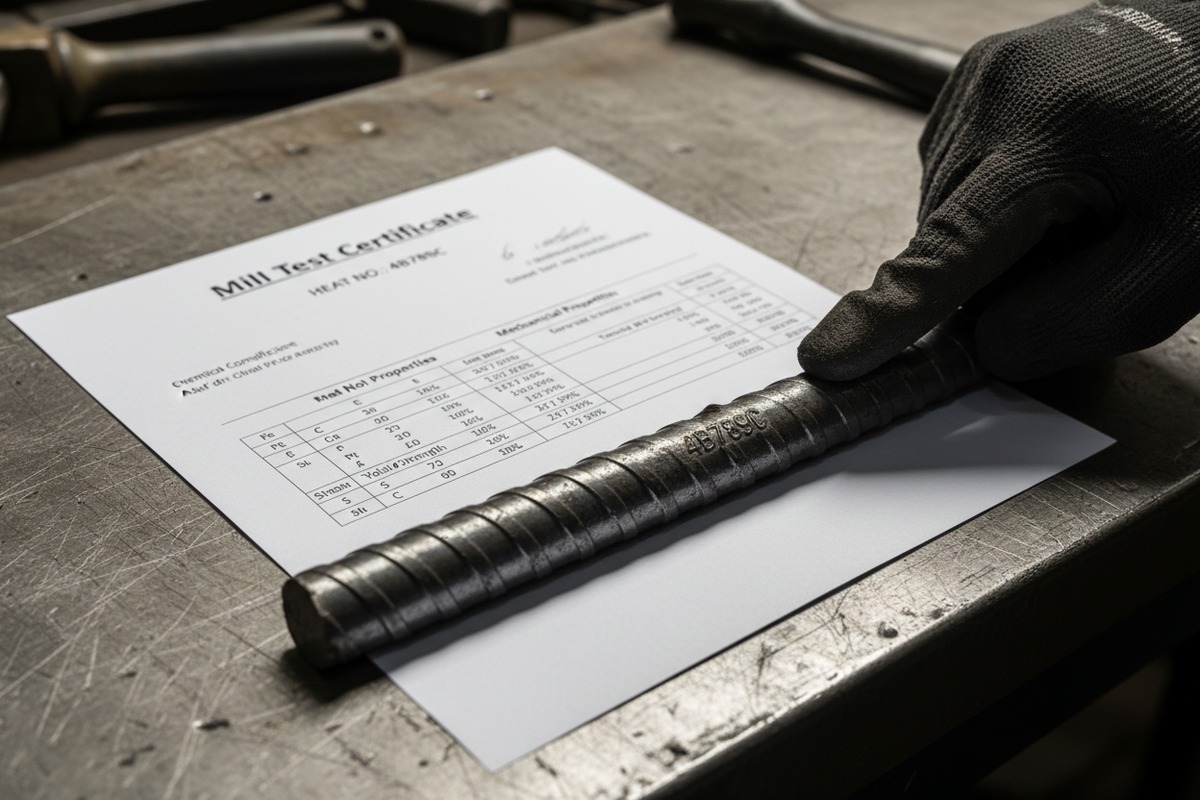
Ask for a sample mill test certificate. It should include the heat number, steel grade (such as A-36 or A-55), chemical composition 5, and mechanical properties. If the supplier cannot provide this, their raw material sourcing is not under control.
Request a Virtual or On-Site Factory Audit
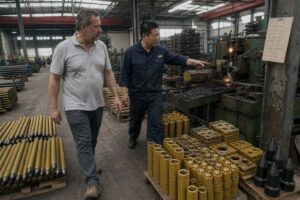
If you cannot visit in person, request a virtual factory tour. Pay attention to the shop floor organization, equipment condition, and whether workers follow documented procedures. A clean, organized factory correlates strongly with consistent quality. Look for calibrated measuring instruments at workstations — this small detail reveals a lot about a manufacturer's discipline.
Our team regularly hosts video calls with international buyers who want to see our production lines, testing labs, and inventory systems before placing orders. This transparency builds trust faster than any brochure.
What indicators should I check to ensure the supplier can handle my large-scale production needs?
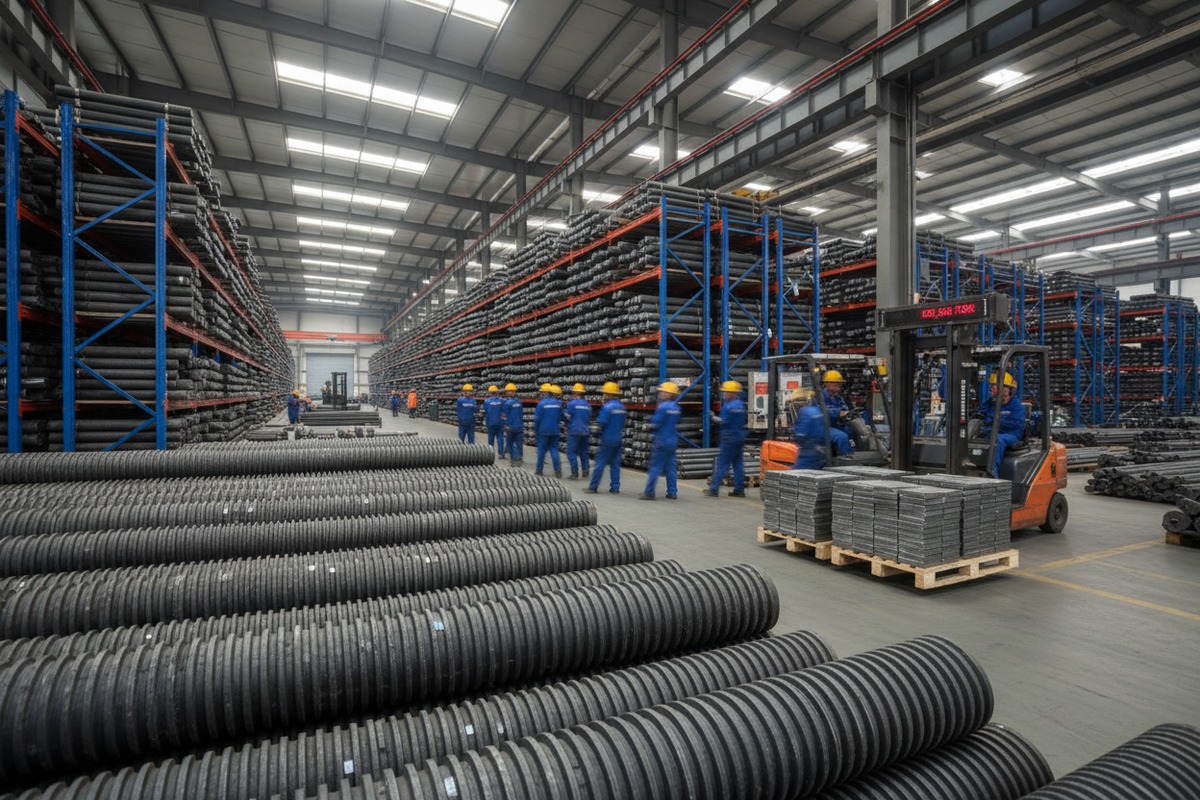
We maintain a standing inventory of 2,000 tons and an annual output capacity of 30,000 tons — but these numbers only matter if they are backed by real infrastructure. A supplier who quotes large volumes without the machinery, workforce, or logistics to deliver on time is a liability to your project timeline.
Check the supplier's annual production capacity, current equipment list, workforce size, inventory levels, and historical order fulfillment records. Request references from past large-scale projects and verify lead times against your delivery schedule to confirm they can scale without sacrificing quality.
Define Your Volume and Timeline First
Before evaluating any supplier, know your own numbers. How many tons do you need? Over what period? With what delivery frequency? A supplier who can produce 30,000 tons per year may still not meet your needs if their existing orders already consume 90% of that capacity.
Ask directly: "What percentage of your current capacity is committed?" This question reveals more than a brochure number ever will.
Key Production Capacity Indicators
| Indicator | What to Ask | Why It Matters |
|---|---|---|
| Annual Output | Total tons produced per year | Confirms overall manufacturing scale |
| Equipment List | Number and type of CNC machines, thread rolling machines, heat treatment furnaces | Modern equipment = consistent output |
| Workforce Size | Total employees, QC staff ratio | Understaffed factories cut corners under pressure |
| Standing Inventory | Tons of finished goods in stock | Buffer stock shortens your lead time |
| Lead Time History | Average days from order to shipment for past large orders | Real data beats promises |
| Shift Structure | Single, double, or triple shifts | Multi-shift operations handle surge demand |
Evaluate Their Supply Chain Resilience
A manufacturer is only as reliable as their supply chain. If the raw steel supplier 6 has a disruption, your anchor bolts do not get made. Ask whether the supplier has multiple steel mill relationships or relies on a single source. Diversified sourcing means lower risk of delays.
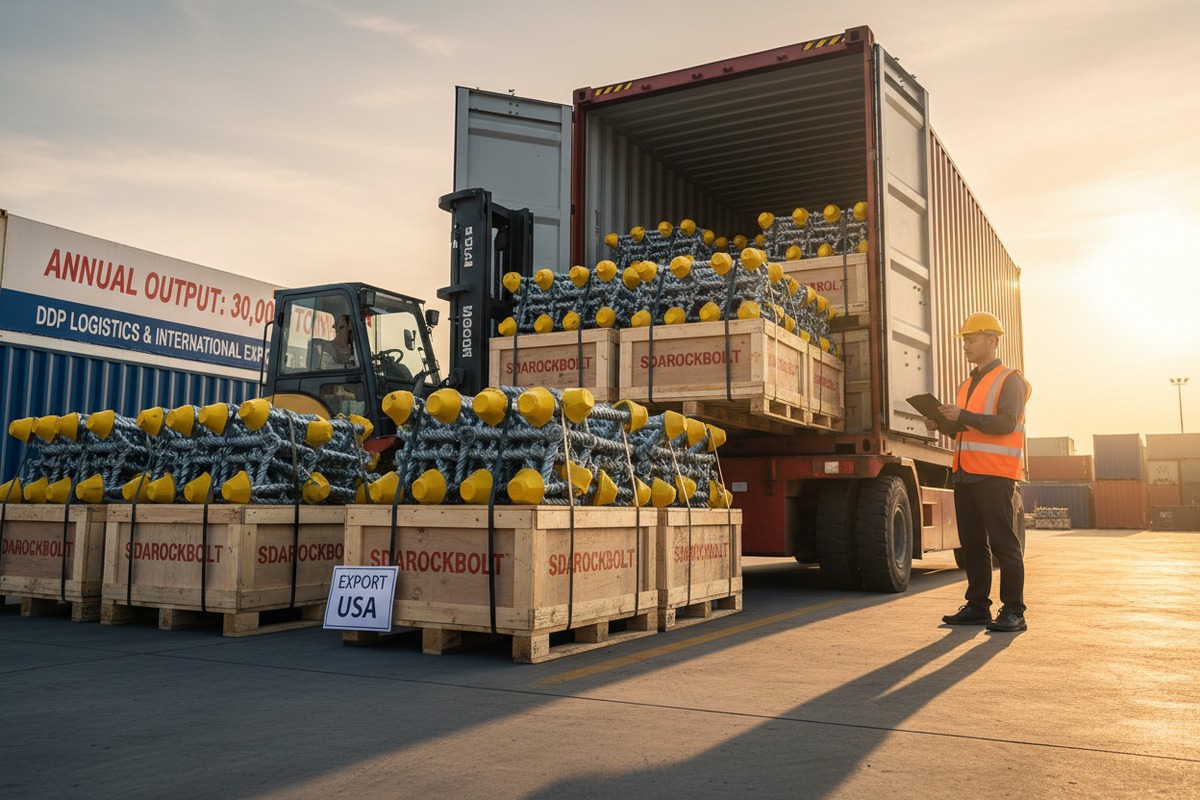
Also ask about their logistics partnerships. For international buyers, a supplier with experience handling DDP (Delivered Duty Paid) shipments understands customs documentation, container loading optimization, and port logistics. Our team in Shandong regularly handles shipments to the US, Europe, Chile, Peru, and Southeast Asia, so we understand that production capacity means nothing if the product sits at a port.
Look for Evidence, Not Promises
Request a list of past projects where they supplied similar volumes. Ask for references you can contact. A confident supplier will share this information willingly. If a supplier claims high capacity but cannot name three large-scale projects they have fulfilled in the past two years, treat that as a red flag.
Also review their inventory management system 7. Do they use an ERP or digital tracking system? Or are they managing thousands of tons with spreadsheets? Modern inventory management reduces errors and gives you real-time visibility into order status.
How do I assess if a supplier has the technical expertise to provide my custom OEM solutions?
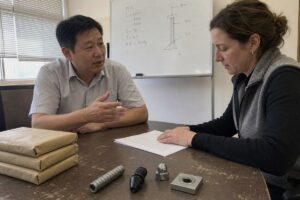
Our engineering team recently developed a custom drill bit geometry for a tunneling project in squeezing ground conditions in South America. The client needed a sacrificial component that could handle high water ingress while maintaining grout integrity. That kind of problem-solving requires more than a factory — it requires deep technical expertise.
Assess a supplier's technical expertise by reviewing their R&D team qualifications, past custom project portfolios, available bar diameters and thread types, drill bit design capabilities, and their ability to provide technical documentation such as load-displacement curves, installation manuals, and BIM-compatible 3D CAD files.
What Does "Custom OEM" Actually Mean for Anchor Bolts?
Customization in self-drilling anchor bolts is not just about branding. It includes modifying bar diameters, thread profiles, drill bit configurations, coupler types, bearing plate dimensions, and even the grouting approach. A technically capable supplier can adjust these parameters based on your specific geological conditions.
For example, a project in hard rock requires a different drill bit design than one in soft, fractured soil. A competent supplier will ask you about the ground conditions before recommending a product — not just take your order blindly.
Evaluate Their R&D Investment
Ask the supplier how many engineers work in their R&D department. Ask what new products they have developed in the past three years. A supplier that invests in research and development is far more likely to solve your unique technical challenges than one that only replicates standard designs.
Here is a quick checklist for evaluating technical capability:
| Technical Capability Area | Questions to Ask | Strong Answer Looks Like |
|---|---|---|
| Drill Bit Customization | Can you modify bit design for specific rock types? | Yes, with examples of past custom bits for squeezing ground, karst, or high-water conditions |
| Thread & Bar Range | What diameters and thread types do you offer? | Full range (e.g., R25, R32, R38, R51, T76) with UNC or metric options |
| Grouting Expertise | Do you support repeated grouting techniques? | Yes, with documentation showing 2+ stage grouting for improved bond strength |
| Technical Documentation | Can you provide load-displacement curves? | Yes, for multiple soil/rock conditions with site-specific recommendations |
| Digital Support | Do you offer BIM objects or 3D CAD files? | Yes, available for download or on request for integration into design workflows |
| Installation Guidance | Do you provide on-site technical support? | Yes, including installation manuals, torque specifications, and remote or on-site engineering assistance |
Grouting Expertise Is a Differentiator
One area where technical capability truly separates good suppliers from average ones is grouting. The anchor bolt itself is only half the system — the grout bond is equally critical. Repeated grouting (two or more stages) significantly improves the anchor's bond strength and load-bearing capacity. A technically strong supplier will proactively discuss grouting protocols, recommend grout types, and provide hole inspection guidance covering depth, diameter, and cleanliness.
We have seen projects where poor grouting — not bolt failure — caused anchoring systems to underperform. A supplier that understands this and provides grouting support demonstrates real-world expertise, not just manufacturing capability.
Test Their Problem-Solving Ability
Send the supplier a hypothetical scenario. Describe a challenging geological condition — say, a tunnel face with mixed soft clay and fractured limestone with groundwater ingress. Ask what product configuration they would recommend and why. The quality of their response tells you everything about their technical depth. A supplier who gives a generic answer lacks the expertise. A supplier who asks clarifying questions and proposes a tailored solution is worth partnering with.
What specific certifications and testing reports should I request to validate my supplier's claims?
When we prepare shipment documentation for a project in Norway or a tunnel contractor in the US, every bolt is backed by traceable test data. Yet we still encounter buyers who accept supplier claims at face value without requesting a single test report. This oversight can be expensive.
Request ISO 9001 quality system certification, CE marking or ETA for European projects, mill test certificates with heat-number traceability, tensile strength and yield strength test reports, elongation test data, and independent third-party testing results. For geotechnical applications, also ask for load-displacement curves and pull-out test documentation.
The Certification Hierarchy
Not all certifications carry equal weight. Here is a practical hierarchy for self-drilling anchor bolt suppliers:
Tier 1 — Mandatory: ISO 9001 (quality management system). This is the absolute minimum. Without it, walk away.
Tier 2 — Market-Specific: CE marking for European markets. European Technical Assessment (ETA) for structural applications. ASTM compliance documentation for US projects. These certifications confirm that products meet regional regulatory requirements.
Tier 3 — Value-Added: Environmental management certifications (ISO 14001 8), occupational health and safety (ISO 45001), and ESG (Environmental, Social, Governance) reporting. These are increasingly required for government-funded infrastructure tenders, especially green projects.
Testing Reports You Must Request
| Test Type | What It Measures | Why You Need It |
|---|---|---|
| Ultimate Tensile Strength (UTS) | Maximum pulling force before failure | Confirms the bolt can handle your project's design loads |
| Yield Strength | Force at which permanent deformation begins | Ensures the bolt performs within elastic limits under working loads |
| Elongation | Percentage of stretch before breaking | Indicates ductility — low elongation means brittle failure risk |
| Hardness Test | Surface and core hardness after heat treatment | Verifies consistent heat treatment across batches |
| Pull-Out Test | Load at which the anchor system extracts from ground | Validates real-world performance in specific soil or rock |
| Load-Displacement Curve | Relationship between applied load and anchor movement | Shows system behavior under progressive loading |
Understand the Limits of Lab Testing
Here is an important nuance that many buyers miss. Lab tests on individual bolts measure material properties 9 under controlled conditions. But field performance depends on installation quality, ground conditions, and grout integrity. Studies on self-drilling anchor types have shown wide capacity variations under increased torque, which means a bolt that passes a lab tensile test can still underperform if installed incorrectly or in unexpected ground conditions.
This is why you should request both material test reports (lab-based) and field pull-out test data (site-based) when available. A supplier who provides both understands the gap between laboratory numbers and real-world performance.
Verify, Don't Just Collect
Receiving certificates and reports is step one. Verifying them is step two. Cross-check ISO certificates against the issuing body's online database. Verify that the mill test certificate heat numbers match the steel grade specified in your purchase order. If the supplier provides tensile test data, check whether the testing lab is accredited by a recognized body.
We have heard of cases where suppliers present outdated or borrowed certifications. A simple verification call or online check can save you from this risk. If you are sourcing from China-based suppliers through platforms like Alibaba or Made-in-China, ask the platform for verified supplier badges and trade assurance records as an additional layer of validation.
ESG and Sustainability Are No Longer Optional
For government-funded projects, particularly in Europe and North America, carbon intensity data and ESG metrics 10 are becoming prerequisites in tender evaluations. If your project requires this documentation, confirm early that the supplier can provide it. Asking after the contract is signed often leads to delays or incomplete data.
Conclusion
Evaluating self-drilling anchor bolt suppliers requires checking quality systems, production scale, technical expertise, and verified certifications. Use the checklists and tables in this guide to make confident, data-driven sourcing decisions for your next project.
Footnotes
1. WHO fact sheet on global occupational health and safety standards. ↩︎
2. Authoritative source for the international quality management standard. ↩︎
3. Background on the European regulatory marking for construction products. ↩︎
4. Reference for the classification system of different steel types. ↩︎
5. Scientific explanation of chemical composition in engineering materials. ↩︎
6. ISO standard for security and resilience in supply chains. ↩︎
7. Provides background on digital inventory management systems. ↩︎
8. Official standard for environmental management systems in manufacturing. ↩︎
9. Scientific overview of mechanical and material properties in engineering. ↩︎
10. Explains the concept of ESG reporting and metrics. ↩︎