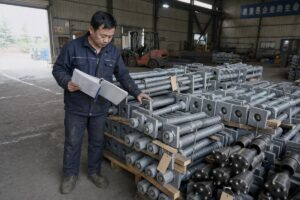
Setting acceptance criteria for a trial order of self-drilling anchor bolts 1 is where most buyers stumble. On our production line, I have seen vague specs turn pilot batches into expensive disputes.
Acceptance criteria for a trial order of self-drilling anchor bolts should combine three layers: documentary compliance (mill certificates, traceability), material verification (tensile strength, yield strength, dimensional tolerances), and field performance testing (pull-out tests on at least 2.5% of installed anchors, minimum three bolts, with defined pass/fail rules).
A trial order only protects you if the rules are written before the goods ship HS classification 2. In this guide, I will walk through each layer, step by step, so you can approve or reject a pilot batch with confidence.
What Quality Tests Should I Require Before Accepting a Trial Order?
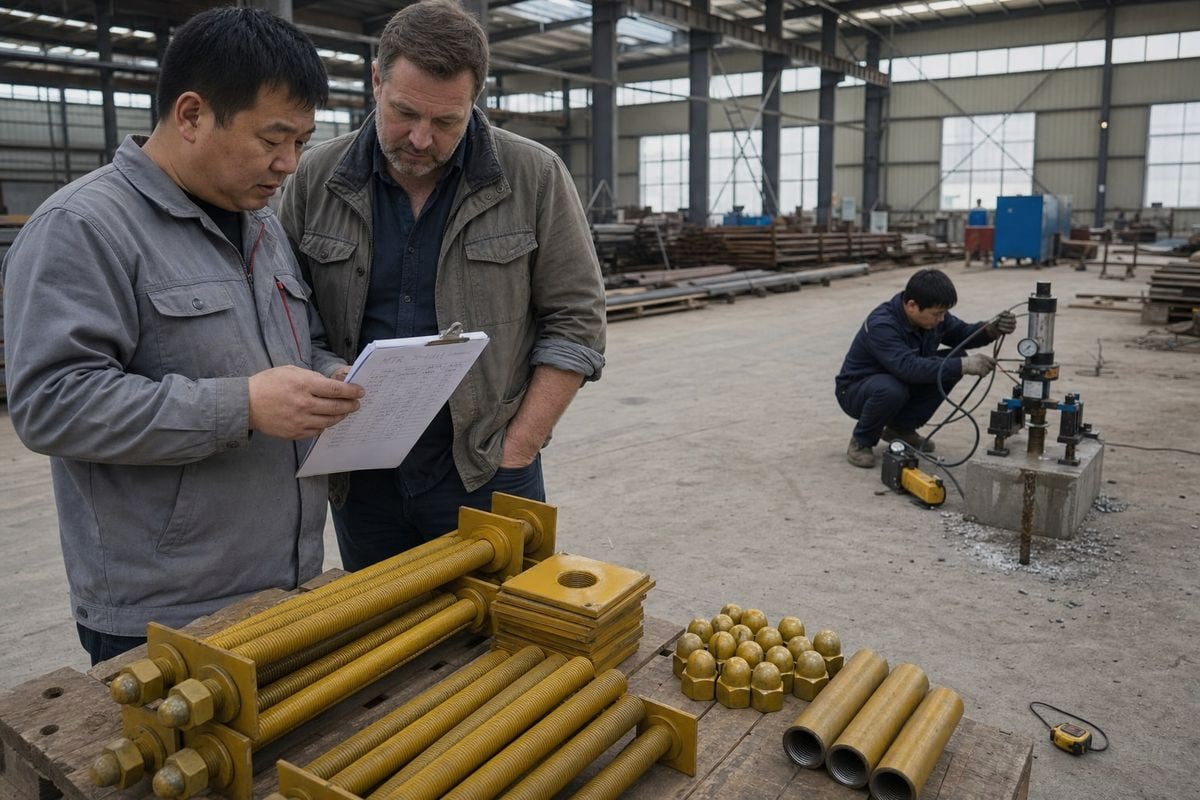
Last year, a Norwegian tunneling contractor sent us a two-page test protocol before placing a pilot batch. That document saved both sides weeks of back-and-forth. Most buyers send nothing.
Require factory tensile, yield, and elongation tests on the bar and couplers, plus field pull-out tests on installed anchors. A common rule is proof loading at twice the working load on a sample of 2.5% of anchors, with a minimum of three bolts tested.
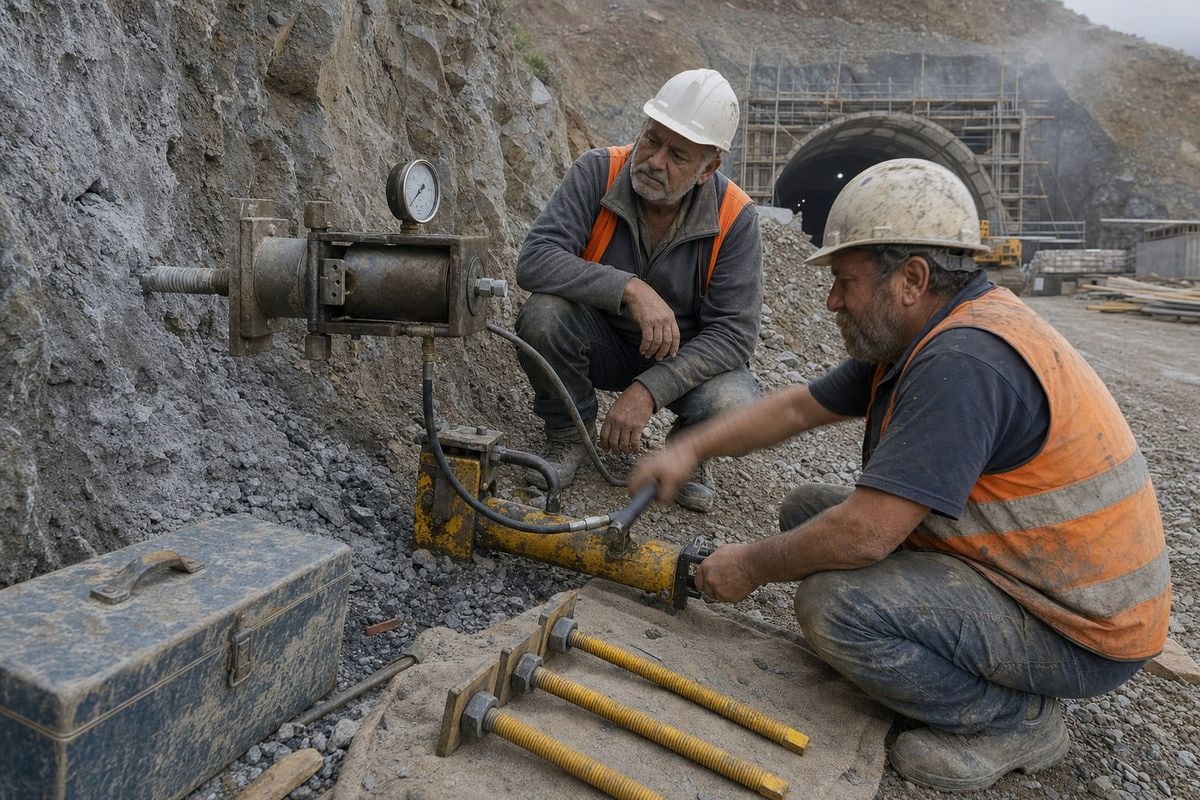
Quality tests for a trial order fall into two groups: what happens at the factory, and what happens on your site. Both matter. A bolt can pass every lab test and still fail in weak rock because of poor grout quality or wrong installation procedures. So your acceptance criteria must cover the full chain.
Factory Tests to Specify
At minimum, ask for tensile strength, yield strength, and elongation results on every heat of steel. For cold climates, add a Charpy impact requirement 3 at your project's minimum metal temperature. Our lab runs these tests on every production lot, but we only report what the purchase order asks for. If you do not specify it, you may not receive it.
Field Tests to Specify
Field load testing verifies the whole system: bar, grout, and ground. One published procedure requires testing at least 2.5% of installed anchors, with no fewer than three bolts. A pull-out test at twice the working load is a widely used proof level for trial installations. The anchor passes if there is no separation, no plastic deformation, and recovery after unloading reaches at least 80% of total deformation at maximum load.
| Test Type | Where Performed | Typical Requirement |
|---|---|---|
| Tensile / yield / elongation | Factory lab | Match specified grade per certificate |
| Charpy impact (cold climates) | Factory lab | CVN at minimum metal temperature |
| Pull-out (proof) test | Job site | 2× working load, no discernable movement |
| Deformation recovery | Job site | ≥80% recovery after unloading |
| Grout cube strength | Job site | Per project grout mix specification |
Remember: proof tests confirm suitability without destroying the anchor. Do not confuse them with ultimate-capacity tests, which load a sacrificial anchor to failure. A good trial protocol often includes both, but on different bolts.
How Do I Verify Dimensional Accuracy and Material Certifications for Self-Drilling Anchor Bolts?
There is a real trade-off I weigh every week: tighter dimensional tolerances raise machining cost, but loose threads ruin coupler engagement underground. Your trial order is exactly the right time to check this balance.
Verify dimensions with calibrated gauges against the drawing: outer diameter, inner diameter, wall thickness, and thread profile. Then match the mill test report to the heat number stamped or tagged on the delivered bars. Any bolt without traceable certification should be tested independently or rejected.
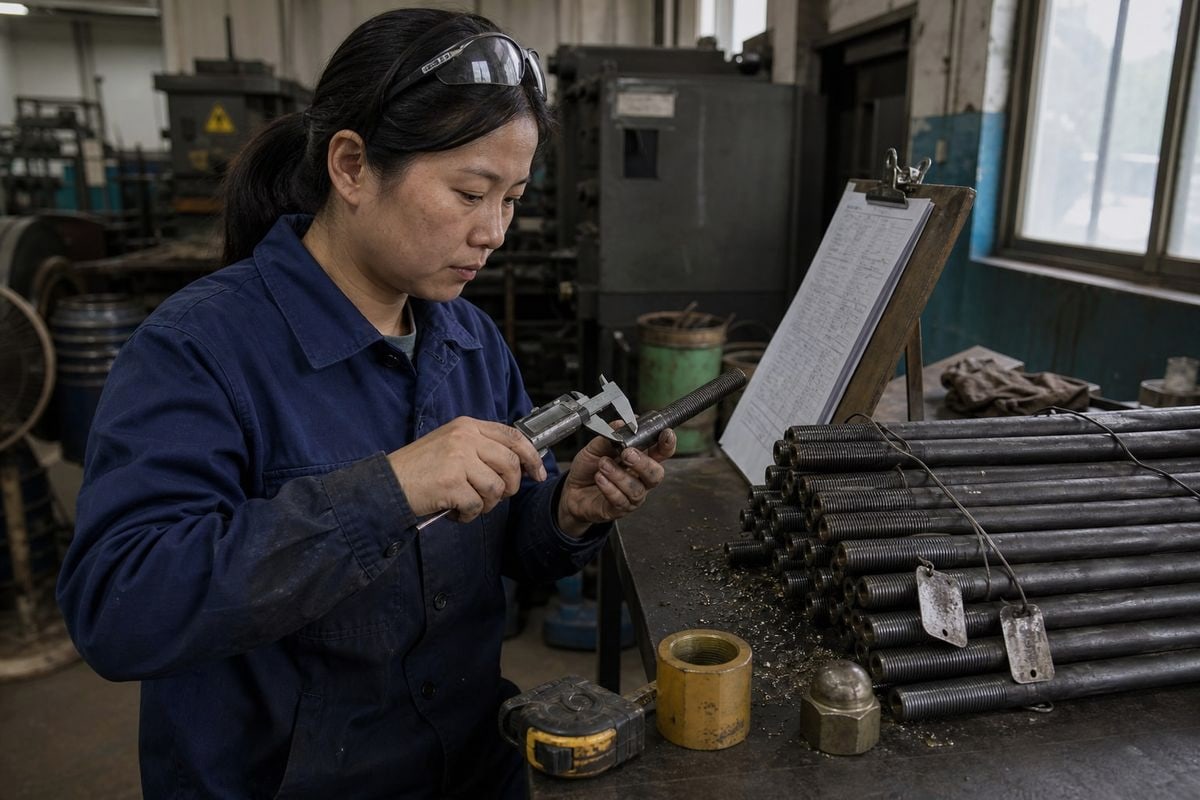
Dimensional accuracy is not cosmetic. A self-drilling anchor bolt is a hollow bar that must couple, flush drilling fluid, and carry load simultaneously. If the wall thickness is under tolerance, the cross-sectional area drops, and so does the real tensile capacity, no matter what the certificate claims.
The Three-Step Verification I Recommend
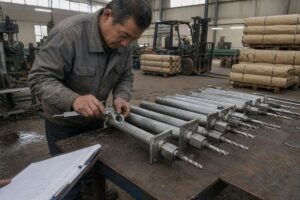
First, measure. Take a random sample from the trial shipment and check outer diameter, inner diameter, wall thickness, and total length against the agreed drawing. Screw a coupler onto both ends of each sampled bar; it should run on smoothly by hand without excessive play. Second, cross-reference. Every bundle should carry a tag linking it to a heat number, and that heat number must appear on the mill test report 4. Third, spot-test. If your project is critical, send one or two bars to a third-party lab and compare the results with the supplier's certificate.
What the Material Specifications Should Cover
| Parameter | What to Check | Why It Matters |
|---|---|---|
| Steel grade | Chemical composition on MTR | Confirms weldability and strength class |
| Yield strength | Certificate vs. independent test | Governs design working load |
| Ultimate tensile strength | Certificate vs. independent test | Governs safety margin at proof load |
| Elongation | Certificate value meets spec | Indicates ductility under ground movement |
| Coating thickness | Micrometer or magnetic gauge | Corrosion protection for design life |
| Thread pitch and profile | Go/no-go gauge | Coupler and nut compatibility |
In our workshop, we photograph the gauge readings for each export lot and attach them to the shipping file. I encourage buyers to demand the same evidence rather than a bare statement of conformity. One of our US customers audits us this way on every first-article order, and it has made both sides sharper. Guidance from some US authorities is blunt on this point: anchor bolts that cannot be identified or traced should be sampled and tested, or removed and replaced.
What Documentation Should I Request to Confirm Compliance with My Project Standards?
A hard lesson from our export desk: paperwork failures cost more than product failures. One wrong code on a customs entry can freeze a shipment at the port and wipe out your project schedule.
Request mill test reports for every heat, a certificate of conformity to the referenced ASTM standards or project specification, coating certificates, dimensional inspection records, installation procedures, and a correct HS classification confirmed before shipment. Tie every document to lot numbers on the physical goods.
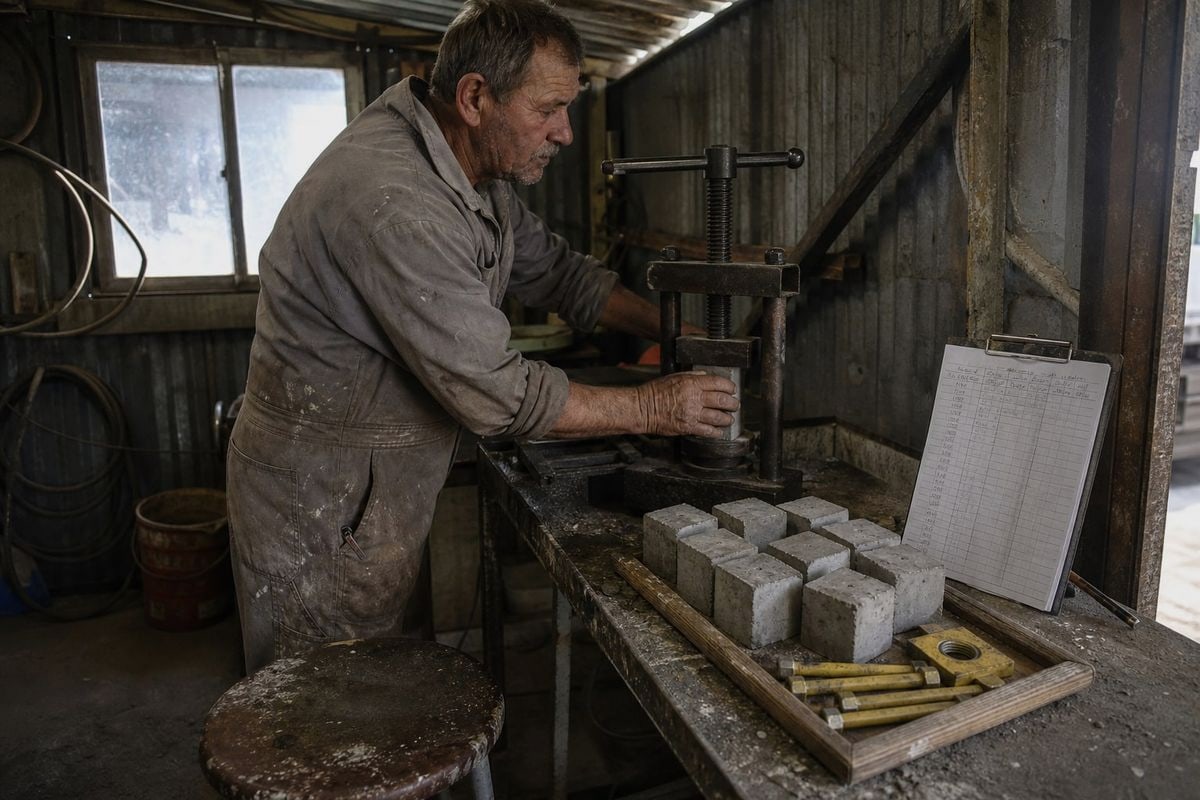
Documentation does two jobs. It proves technical compliance for your engineer, and it clears customs for your logistics team. Buyers often prepare well for the first job and ignore the second. That is a mistake, especially for US-bound steel products.
The Technical File
Your trial order acceptance criteria should list every document by name. Here is the checklist I attach to our own proforma invoices:
| Document | Purpose | When Delivered |
|---|---|---|
| Mill test report (per heat) | Verifies chemistry and mechanical properties | Before shipment |
| Certificate of conformity | Confirms compliance with ASTM standards 5 or project spec | Before shipment |
| Dimensional inspection record | Evidence of measured dimensional tolerances | With shipment |
| Coating/galvanizing certificate | Confirms corrosion protection thickness | With shipment |
| Installation procedures manual | Guides correct drilling, grouting, torque | Before installation |
| Packing list with heat/lot tags | Enables traceability on site | With shipment |
The Customs File
Do not underestimate this side. We recently handled a case where a US customer imported a batch of steel goods from China, and just before arrival the destination agent flagged the shipment for anti-dumping duties. The root cause was simple: the customer had declared the wrong HS code. We reviewed the classification with the clearance broker several times, confirmed the correct code, supplied product photos and end-use descriptions, and helped file the exemption application. Approval came within one working day. The shipment cleared the same day, was delivered on time, and no extra tax or fees were charged. The lesson applies directly to self-drilling anchor bolts: agree on the HS code, product description, and supporting photos with your supplier before the goods leave the factory. Customs officers verify physical goods against declarations, and a mismatch can trigger full duty recovery. Quality assurance covers paper, not just steel.
How Can I Set Clear Rejection Criteria to Protect My Business from Defective Batches?
A buyer in Chile once asked me a sharp question during a video audit: "What happens if one bolt fails your test?" That single question exposed a gap in our own standard contract, and we fixed it.
Define rejection in writing before ordering: any specimen failing the proof load triggers retesting of an additional 2.5% sample with a minimum of three anchors; if any retest specimen fails, the entire lot is rejected. Add automatic rejection for missing certificates, out-of-tolerance dimensions, and untraceable material.
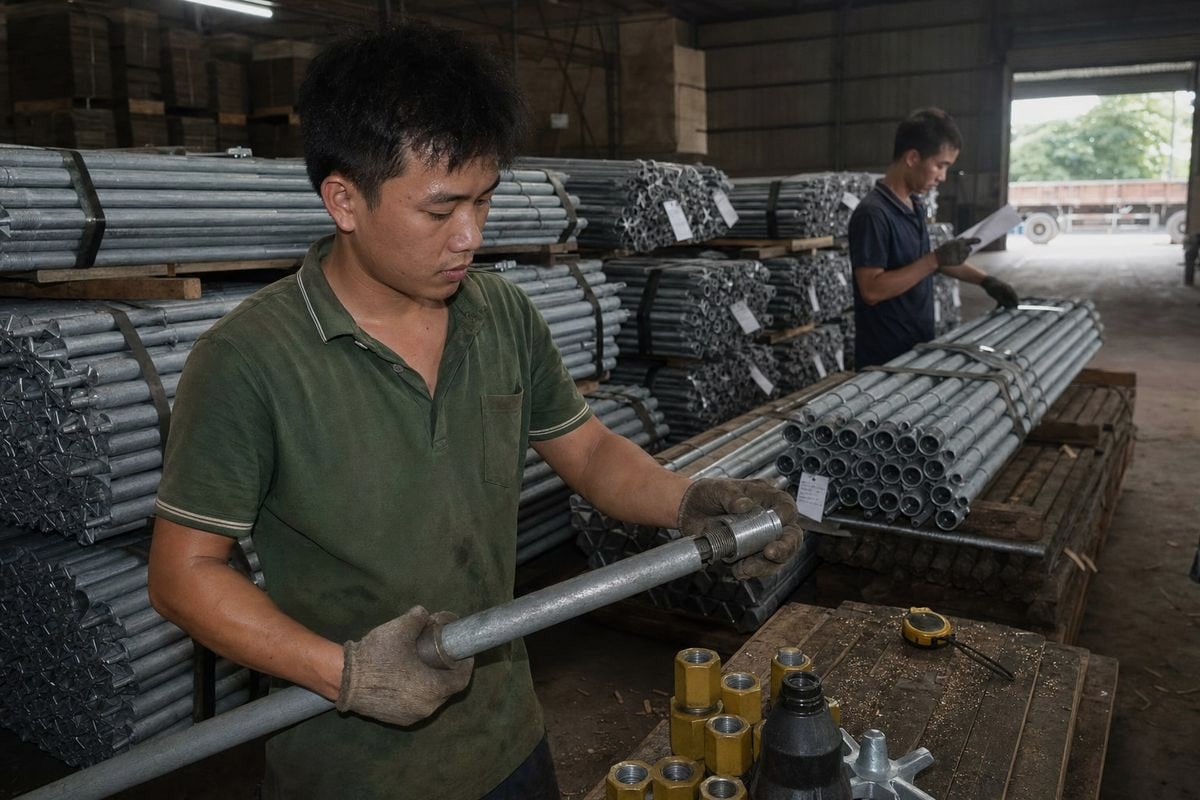
Rejection criteria are the teeth of your acceptance framework. Without them, a failed pull-out test just starts an argument. With them, everyone knows the consequence in advance. In my experience exporting to five continents, suppliers respect clear rules; they fear ambiguity, because ambiguity breeds disputes that damage both sides.
A Practical Rejection Framework
I suggest writing your rules as a numbered escalation, because a single pass/fail line is too crude for real site conditions:
- Immediate rejection triggers. No mill certificate, untraceable heat numbers, wrong steel grade, or dimensions outside agreed dimensional tolerances. These reject the lot without any load testing.
- First test failure. If one anchor fails the proof load or shows plastic deformation, do not reject yet. Test an additional 2.5% sample, minimum three more anchors, from the same lot.
- Retest failure. If any anchor in the expanded sample fails, reject the entire lot. This mirrors published installed-anchor acceptance procedures and is defensible in a contract dispute.
- Installation-caused failure. If investigation shows the failure came from wrong grout quality, insufficient anchorage length, or poor drilling alignment rather than the product, the test does not count against the lot. Repeat it under correct installation procedures.
Point four matters more than buyers expect. An anchor system is only as reliable as its installation and its substrate. I have seen good bars fail tests because the grout never cured, and I have seen buyers blame the steel. Your rejection clause should separate product defects from workmanship defects, and name who investigates. Finally, state the remedy: replacement, refund, or credit, and who pays freight. A trial order that ends with clear consequences, either way, builds the foundation for a long-term supply relationship.
Conclusion
Weak acceptance criteria turn trial orders into gambles. Define documents, tests, and rejection rules before ordering, and your pilot batch of self-drilling anchor bolts becomes real protection.
Footnotes
1. Provides a comprehensive guide on self-drilling anchors. ↩︎
2. Authoritative government source explaining Harmonized System codes for trade. ↩︎
3. Explains the Charpy impact test and its importance for cold temperatures. ↩︎
4. Defines mill test reports and their role in material traceability. ↩︎
5. Official website of ASTM International, a leading standards development organization. ↩︎