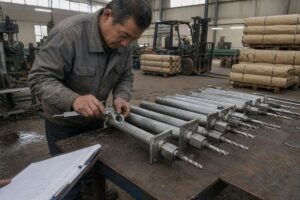
Every year, tunnel collapses 1 in fractured rock and loose soil formations cause devastating project delays and safety incidents. Having spent over two decades on our production lines engineering solutions for exactly these ground conditions, we understand what keeps procurement managers up at night—unreliable anchoring in unpredictable geology.
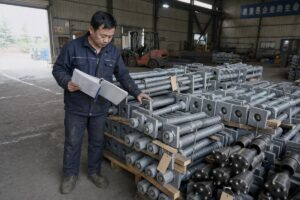
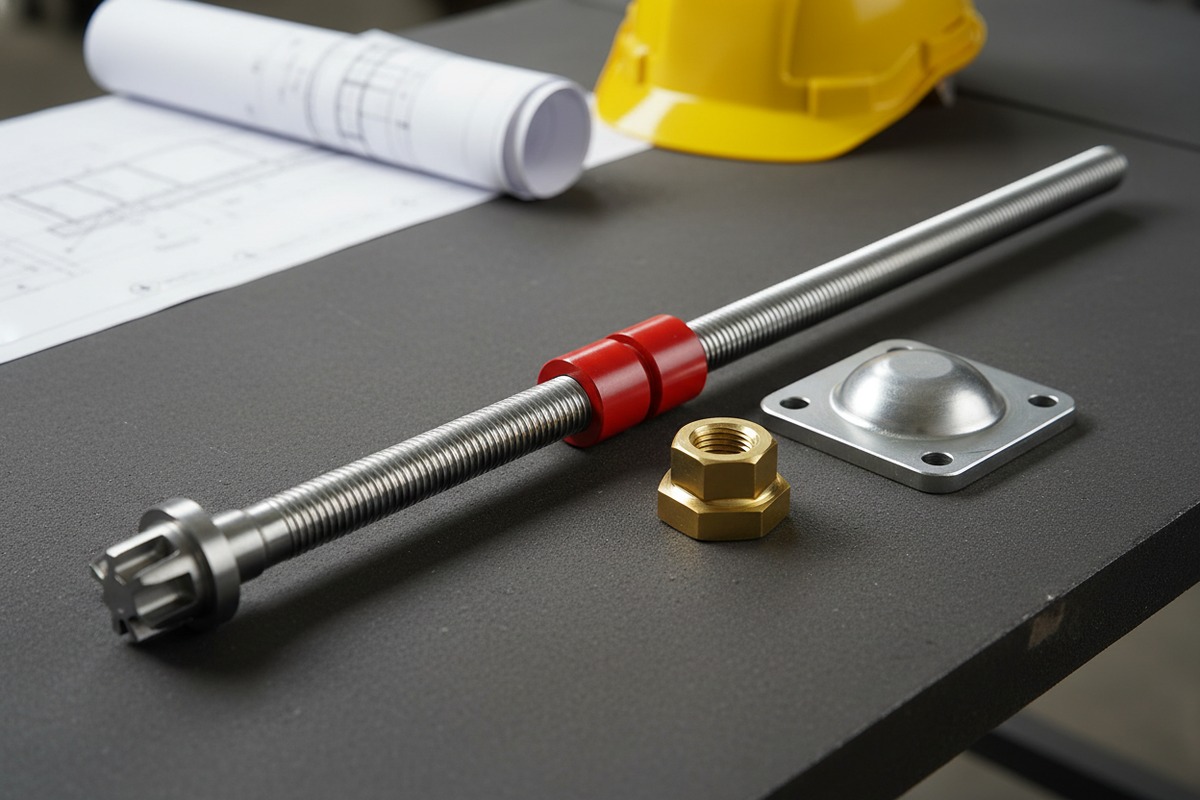
Self-drilling anchor bolts are hollow, threaded steel rods that combine drilling, grouting, and anchoring into one streamlined operation. They consist of a sacrificial drill bit, hollow bar, coupler, centralizer, nut, and bearing plate. Procurement requires matching bolt specifications, steel grades, and bit types to your specific tunnel geology and project standards.
This guide walks you through everything you need to know—from choosing the right specifications and verifying quality certifications, to finding a dependable supplier and understanding why self-drilling systems save money on complex underground projects loose soil formations 2. Let's dig in.
How do I choose the right self-drilling anchor bolt specifications for my tunnel project requirements?
Selecting the wrong bolt diameter or bit type for your geology is one of the most common and costly mistakes we see from first-time buyers Hollow Steel Bar 3. Our engineering team has helped contractors across 30+ countries avoid this pitfall by matching specifications to real ground conditions.
To choose the right self-drilling anchor bolt, match the bolt diameter (25–76 mm), thread type (R-type or T-type), steel grade, and drill bit style to your tunnel's geology, excavation method, and required load capacity. Always consult geotechnical reports before finalizing specifications for procurement.
Understanding Core Components
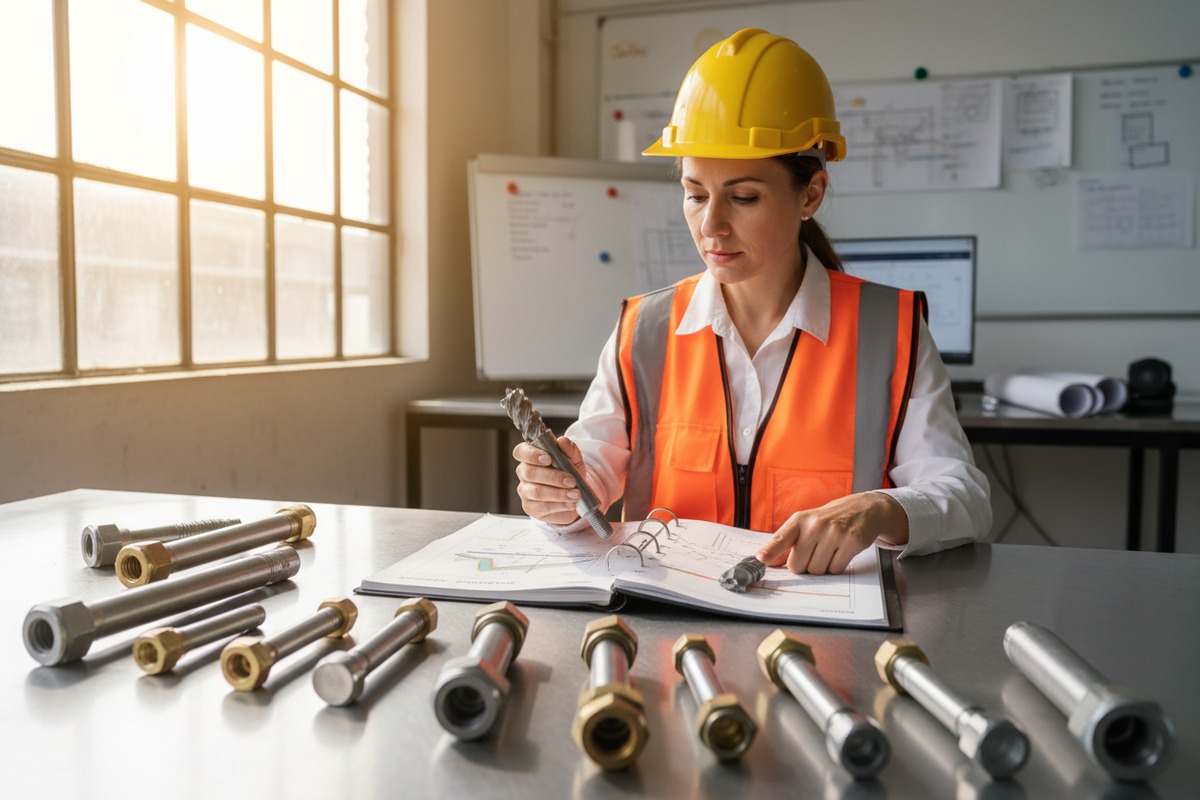
A self-drilling anchor bolt system is not just a single rod ISO 9001 quality management certification 4. It is a complete assembly. Here are the key parts:
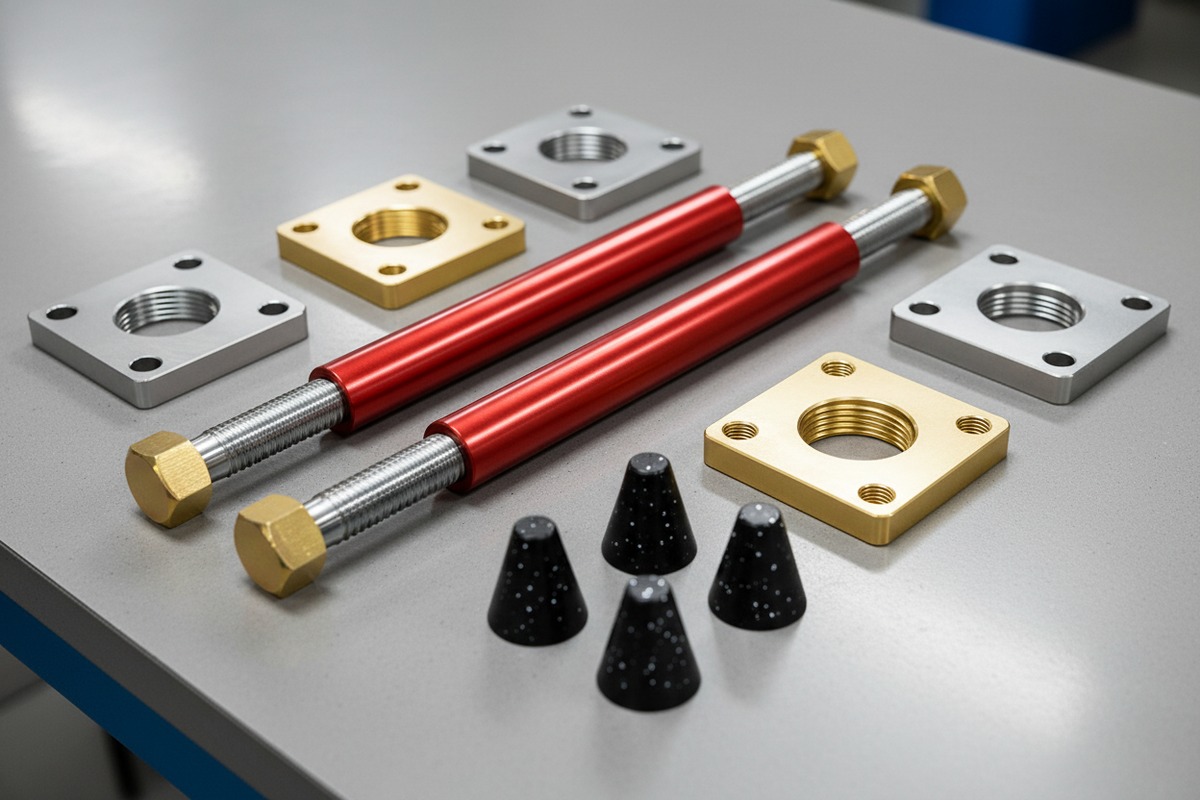
- Hollow Steel Bar: The backbone. It has continuous external threads and a hollow center EN 14490 5. The hollow core allows flushing fluid or grout to pass through during drilling. This removes debris and fills the borehole simultaneously.
- Sacrificial Drill Bit: This stays in the ground after installation. You choose the bit based on rock hardness. Alloy cross bits work for soft to medium rock. Full-steel crown bits handle hard, abrasive formations.
- Coupler: Connects two bars end-to-end for deeper installations. Essential for long tunnels where single bar lengths are not enough.
- Centralizer: Keeps the bar centered in the borehole. This ensures even grout coverage around the entire bar.
- Bearing Plate and Nut: The plate sits against the tunnel surface. The nut tightens the system, applying load to the surrounding ground.
Matching Specifications to Geology
Different ground conditions demand different setups. Here is a practical reference:
| Ground Condition | Recommended Diameter | Bit Type | Thread Type |
|---|---|---|---|
| Loose soil / alluvial deposits | 25–32 mm | Alloy cross bit | R-type (R25, R32) |
| Fractured or weathered rock | 32–51 mm | Alloy or full-steel bit | R-type (R32, R38) or T-type (T30, T40) |
| Hard, abrasive rock | 38–76 mm | Full-steel crown bit | T-type (T52, T76) |
| Water-bearing formations | 32–51 mm | Alloy cross bit with enhanced flushing | R-type (R32, R38) |
Key Factors for Your Procurement Checklist
When placing an order, you need to specify more than just diameter. Here is what our sales team always confirms with buyers:
- Bar length per section — Standard lengths are 1 m, 2 m, 3 m, or 4 m. Couplers allow extension.
- Steel grade — Higher grades mean higher tensile strength. Common grades include 500/550 and 830/1030 (yield/ultimate in MPa).
- Total bolt length — This depends on the depth of unstable ground your geotechnical report identifies.
- Application type — Face bolts, umbrella arch support, or permanent lining reinforcement each have different load requirements.
- Grout type and pressure — Cement-based grout is standard. High-pressure grouting (above 2 MPa) is used for fractured zones.
Getting these details right up front prevents costly reorders and project delays. When our team receives an inquiry, we ask for the geotechnical survey first. That single document drives 80% of the specification decisions.
What quality certifications should I verify to ensure my anchor bolts meet international safety standards?
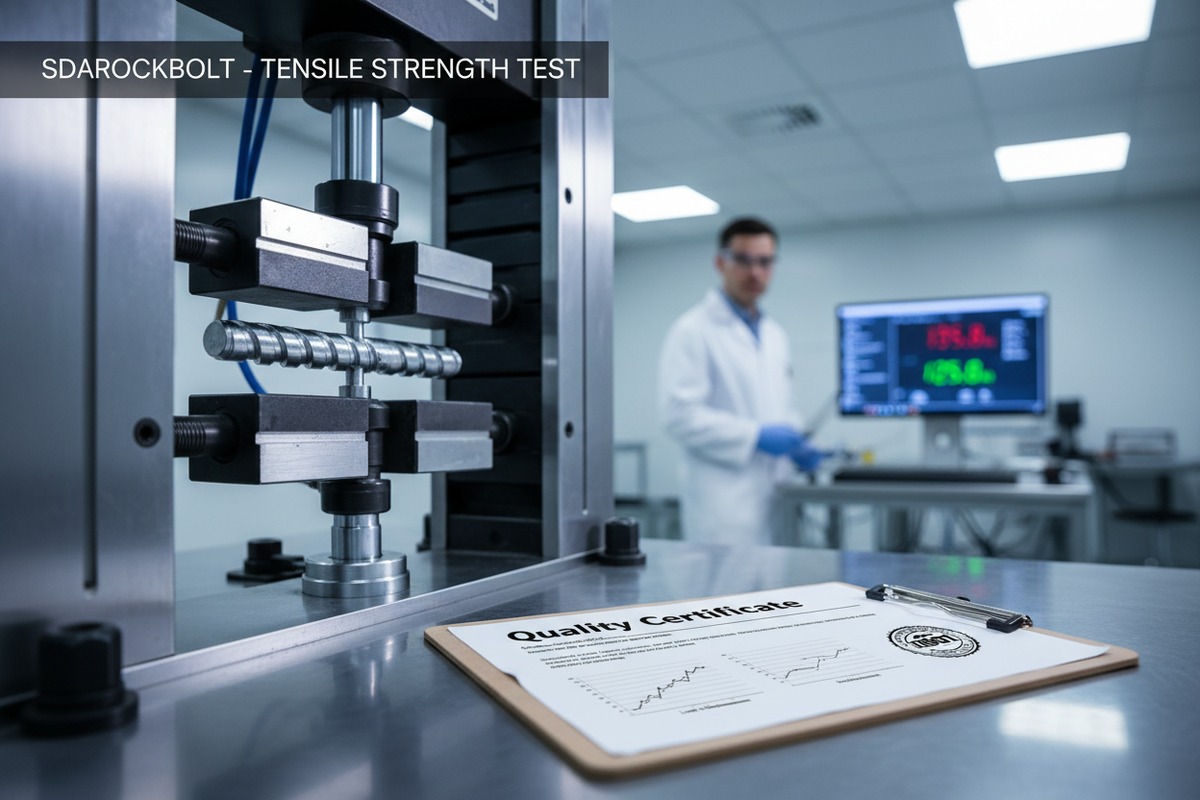
We have had clients tell us about receiving shipments that looked perfect on the outside but failed tensile testing on site. That experience taught us early on to invest heavily in third-party quality verification at every stage of our production process.
Verify that your self-drilling anchor bolts carry ISO 9001 quality management certification, CE marking for European markets, and comply with EN 14490 or equivalent standards. Request mill certificates, independent tensile/shear test reports, and batch traceability documentation before accepting any shipment.
Why Certifications Matter in Tunnel Construction
Underground anchoring is safety-critical. If a bolt fails, the consequences range from costly rework to catastrophic collapse. Certifications are not just paperwork. They are proof that materials and manufacturing processes have been audited and verified by independent bodies.
For international procurement, different markets require different standards. Here is a breakdown:
| Market / Region | Required Certification | Relevant Standard |
|---|---|---|
| European Union | CE Marking 7 | EN 14490 (Execution of special geotechnical works) |
| International (General) | ISO 9001:2015 | Quality Management System |
| USA / North America | ASTM compliance | ASTM A615 / A722 (steel grades) |
| Australia | AS/NZS compliance | AS 4678 (Earth retaining structures) |
| Project-specific | Independent lab test reports | Per engineer's specification |
What Documents to Request from Your Supplier
Before you approve a purchase order, ask for these documents:
- Mill Test Certificate (MTC): Shows the chemical composition and mechanical properties of the steel used. Every batch should have one.
- Tensile and Shear Test Reports: Conducted by a third-party lab, not just the factory. These confirm the bolt meets the stated yield and ultimate strength.
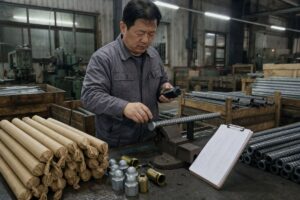
- Dimensional Inspection Report: Verifies thread pitch, outer diameter, inner diameter, and wall thickness are within tolerance.
- Batch Traceability Records: Links every delivered bolt to its raw material batch, production date, and quality checks. If a problem surfaces on site, traceability allows you to isolate the issue quickly.
Red Flags to Watch For
Not all suppliers treat quality the same way. Watch out for these warning signs:
- Certificates that list no specific testing lab or accreditation number.
- Refusal to provide batch-level documentation.
- Test results that show suspiciously uniform numbers across different batches.
- No willingness to allow pre-shipment inspection by a third party like SGS or Bureau Veritas.
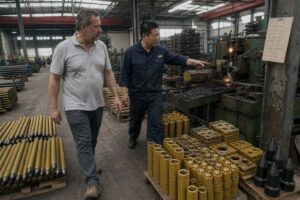
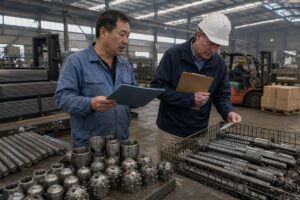
At our facility in Shandong, every production run goes through a strict internal QC process before a third-party inspector even arrives. We maintain this discipline because our clients—contractors in Europe, the Middle East, South America, and Southeast Asia—demand it. And frankly, so do we. A failed bolt on a tunnel site reflects on everyone in the supply chain.
How can I find a reliable Chinese supplier who can handle my custom OEM needs and DDP logistics?
Over the years, we have worked with procurement managers who told us horror stories—containers arriving late, wrong specifications packed, customs clearance nightmares adding weeks to their timelines. These experiences shaped how we built our export and logistics operations from the ground up.
To find a reliable Chinese supplier, evaluate their manufacturing capacity, OEM customization capabilities, export experience to your specific market, and ability to provide DDP (Delivered Duty Paid) logistics. Prioritize suppliers with proven track records, transparent communication, and willingness to handle customs, duties, and door-to-door delivery.
What to Look for in a Supplier
Finding the right supplier is more than comparing unit prices. Here is what experienced buyers evaluate:
Production Capacity: Can the supplier handle your volume? A tunnel project might need hundreds of tons of anchor bolts delivered on a tight schedule. Our factory maintains a year-round inventory of 2,000 tons and an annual production capacity of 30,000 tons. This means we can respond to urgent orders without long lead times.
OEM and Customization: Many tunnel projects have unique requirements—special thread profiles, non-standard lengths, custom bit designs, or branded packaging for distribution. A good supplier has an R&D team that can work from your drawings or specifications and produce samples before mass production.
Export Experience: Shipping self-drilling anchor bolts internationally involves proper HS code classification, export documentation, and compliance with destination country regulations. A supplier who has shipped to your country before knows the pitfalls.
Understanding DDP Logistics
DDP means the supplier takes responsibility for the goods until they arrive at your door—including freight, insurance, import customs clearance, and duties. This is the most buyer-friendly Incoterm. But not every supplier can handle it.
Here is a comparison of common Incoterms used in anchor bolt trade:
| Incoterm | Supplier Responsibility | Buyer Responsibility | Risk Level for Buyer |
|---|---|---|---|
| EXW (Ex Works) | Goods available at factory gate | All transport, customs, duties | High |
| FOB (Free on Board) | Delivery to port, export clearance | Ocean freight, import customs, duties | Medium |
| CIF (Cost, Insurance, Freight) | Delivery to destination port, freight, insurance | Import customs clearance, duties, inland transport | Medium-Low |
| DDP (Delivered Duty Paid) | Full door-to-door, all duties and taxes paid | None (receive goods) | Lowest |
For procurement managers who want to minimize risk and simplify their logistics, DDP is ideal. We handle the entire chain—from our Shandong warehouse to your project site or distribution center—including all customs paperwork and duty payments.
Vetting Your Supplier: A Practical Approach
- Request a factory audit — Either visit in person or hire a third-party inspection firm. Check raw material storage, production lines, QC labs, and packing areas.
- Ask for client references — A credible supplier will connect you with existing clients in your region or industry.
- Order samples first — Before committing to a full container, test samples on site. Verify dimensions, thread quality, and bit performance.
- Evaluate communication speed — Reliable suppliers respond within 24 hours and provide detailed technical answers, not vague promises.
- Check trade platform ratings — Alibaba Gold Supplier status, verified reviews, and transaction history provide additional confidence.
Building a long-term partnership with a supplier who understands your market saves time and money on every subsequent order. It also gives you priority during peak demand periods when production slots fill up fast.
Why are self-drilling anchor systems more cost-effective for my complex underground excavation projects?
When we first started supplying self-drilling anchors to tunnel contractors in Southeast Asia and South America, many were still using traditional two-step methods—pre-drill the hole, then insert the bolt and grout separately. The switch to self-drilling systems cut their installation timelines dramatically, and the cost savings followed.
Self-drilling anchor systems are more cost-effective because they combine drilling, grouting, and anchoring into a single step, reducing installation time by 20–30%, cutting labor and equipment needs, and eliminating borehole collapse risks in unstable ground—delivering significant savings on complex underground projects.
The Single-Step Advantage
Traditional anchoring in tunnels follows a multi-stage process: drill a borehole, remove the drill string, insert the bolt, then grout the annulus. In stable rock, this works fine. But in fractured, loose, or water-bearing ground, the borehole often collapses before you can insert the bolt. You end up re-drilling—wasting time, materials, and money.
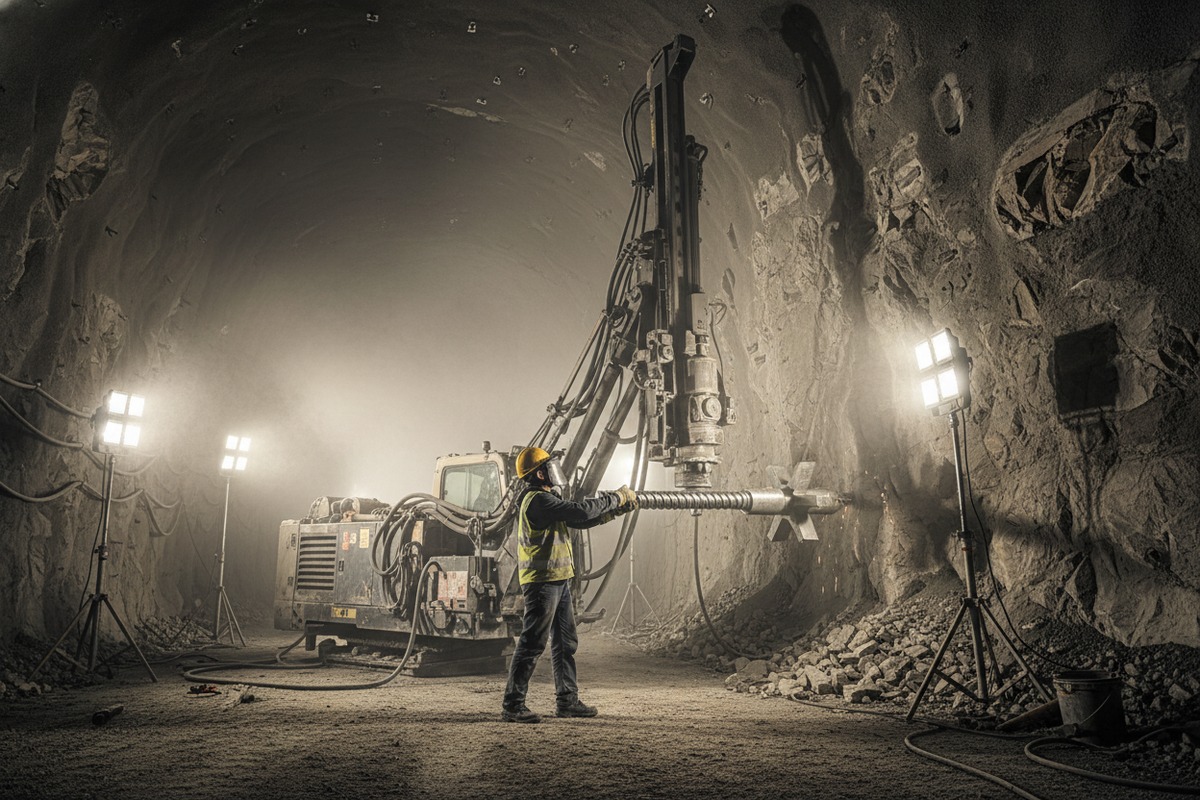
Self-drilling anchors eliminate this problem entirely. The bolt itself is the drill string. Grout flows through the hollow center and exits through the sacrificial bit during or immediately after drilling. The hole never has a chance to collapse. You drill, grout, and anchor in one continuous operation.
Real-World Cost Savings
The MOHMAND Hydroelectric Dam project in Pakistan provides a documented case. Contractors working in weathered sand and gravel formations reduced drilling time per hole to 16–30 minutes using self-drilling anchors. Compared to traditional methods in the same ground conditions, they achieved 20–30% overall cost savings. These savings came from three areas:
- Reduced equipment: No need for separate drilling rigs and grouting pumps operating in sequence.
- Fewer workers on site: One crew handles the entire process instead of specialized teams for each stage.
- Less downtime: No waiting between drilling and grouting. No re-drilling collapsed holes.
Comparing Self-Drilling vs. Traditional Anchoring
| Factor | Self-Drilling Anchor | Traditional Anchor (Drill + Insert) |
|---|---|---|
| Installation steps | 1 (simultaneous drill-grout-anchor) | 3+ (drill, remove string, insert, grout) |
| Risk of borehole collapse | Eliminated | High in weak ground |
| Installation time per bolt | 16–30 minutes (typical) | 45–90 minutes in unstable ground |
| Labor requirement | 1 crew | 2–3 specialized crews |
| Full-length grout bonding | Yes (pressurized through hollow bar) | Partial (gravity-fed, often incomplete) |
| Suitability for fractured rock 10 | Excellent | Poor without casing |
| Upfront material cost | Slightly higher per unit | Lower per unit |
| Total project cost | 20–30% lower | Higher due to time and rework |
Tunnel-Specific Applications
Self-drilling anchors are not limited to one type of support. In tunnel construction, they serve multiple roles:
- Face Bolts: Installed horizontally into the tunnel face to stabilize the ground ahead of excavation. This prevents face collapse during advance.
- Umbrella Arch / Pipe Roof Replacement: Installed at an angle above the tunnel crown to create a protective canopy. Self-drilling anchors can replace traditional pipe roof systems in many geologies, with faster installation and better grout penetration.
- Initial Support: Combined with shotcrete and steel arches, self-drilling anchors provide immediate reinforcement after excavation.
- Permanent Support: With full-length grout bonding and corrosion protection, they can serve as part of the final lining system.
Honest Limitations
No system is perfect. Self-drilling anchors work best under quasi-static loading conditions. In environments with high dynamic loads or extreme impact forces, traditional prestressed anchors or other specialized systems may be more appropriate. Also, in extremely abrasive rock, premium full-steel bits are required, which increases material cost. Proper inspection after installation is critical—grout integrity should be verified to avoid voids that compromise long-term performance.
Still, for the vast majority of complex tunnel projects—especially in challenging geologies—the self-drilling approach delivers the best balance of speed, safety, and total cost.
Conclusion
Self-drilling anchor bolts simplify tunnel construction procurement when you match specifications to geology, verify certifications, and partner with a capable supplier. Contact us at sales@sdarockbolt.com to discuss your project needs.
Footnotes
1. Explains the causes and impacts of tunnel failures, aligning with the article's introduction. ↩︎
2. Describes the physical properties and engineering characteristics of loose soil. ↩︎
3. Explains what a hollow bar is and its applications in engineering. ↩︎
4. Explains the purpose and requirements of ISO 9001 for quality management systems. ↩︎
5. Describes the European standard for execution of special geotechnical works, specifically soil nailing. ↩︎
6. Details the function and importance of sacrificial drill bits in self-drilling anchors. ↩︎
7. Defines CE marking as a mandatory conformity mark for products in the EU. ↩︎
8. Provides a comprehensive definition and explanation of self-drilling anchor bolts. ↩︎
9. Explains DDP Incoterms, where the seller bears maximum responsibility for delivery. ↩︎
10. Defines geological fractures and their significance in engineering, relevant to ground conditions. ↩︎