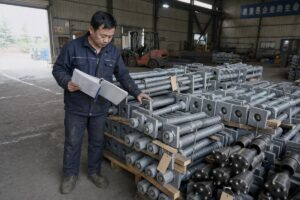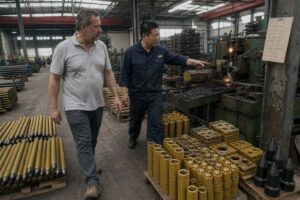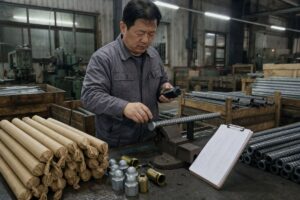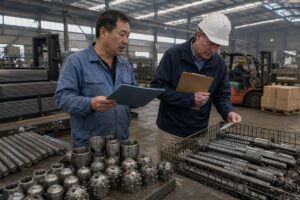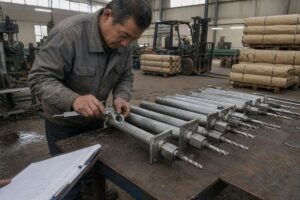
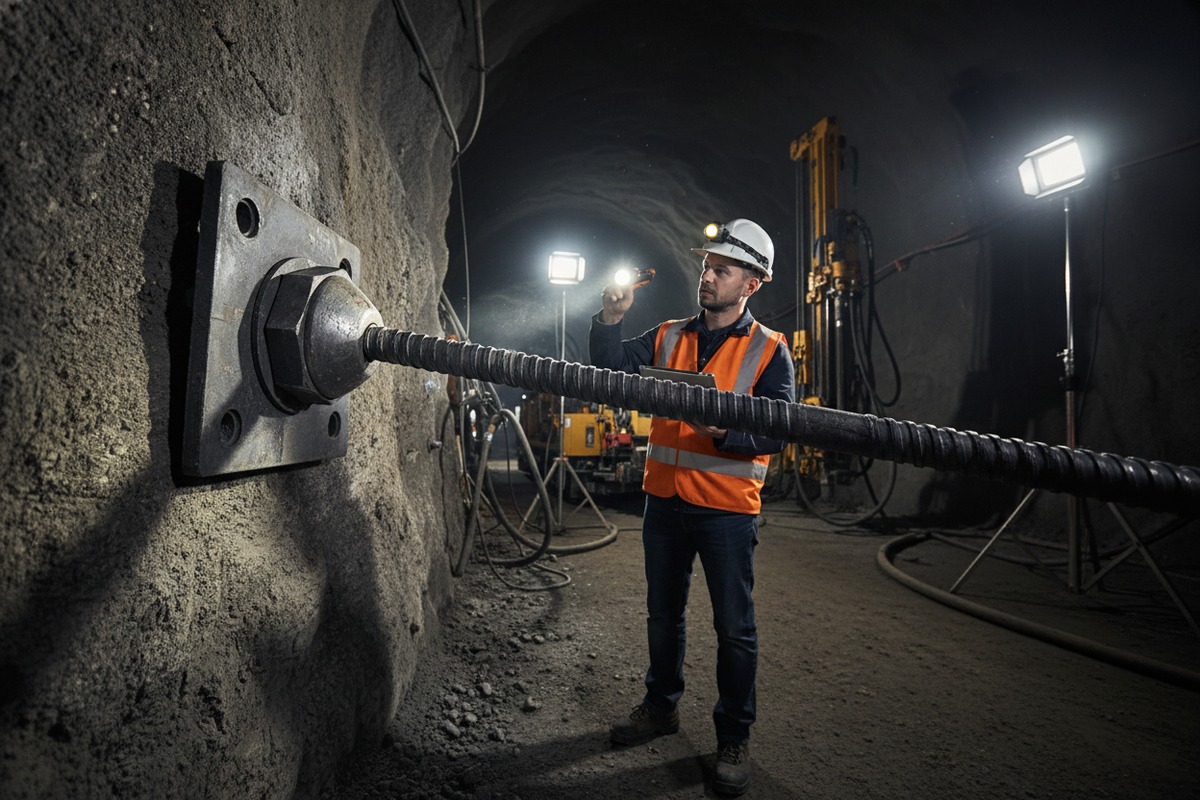
Every year, we see tunnel projects stalled or compromised because someone picked the wrong anchor bolt specs. It's a costly mistake. On our production floor in Shandong, our engineers test thousands of bolts annually—and the technical details that get overlooked are often the ones that matter most.
The technical parameters that matter most for tunnel contractors selecting self-drilling anchor bolts include steel grade and tensile strength, load capacity ratings, thread profile compatibility, corrosion protection level, hollow bar inner diameter for grouting, and drill bit geometry matched to your specific rock mass conditions.
This article breaks down each critical parameter so you can compare suppliers with confidence, avoid common pitfalls, and match your bolt selection to the real demands of your tunnel project. Let's walk through them one by one.
How do I choose the right steel grade to ensure my tunnel supports meet safety standards?
We've shipped self-drilling anchor systems to over 20 countries, and the single most common question from procurement teams is about steel grade. Get this wrong and no other parameter matters.
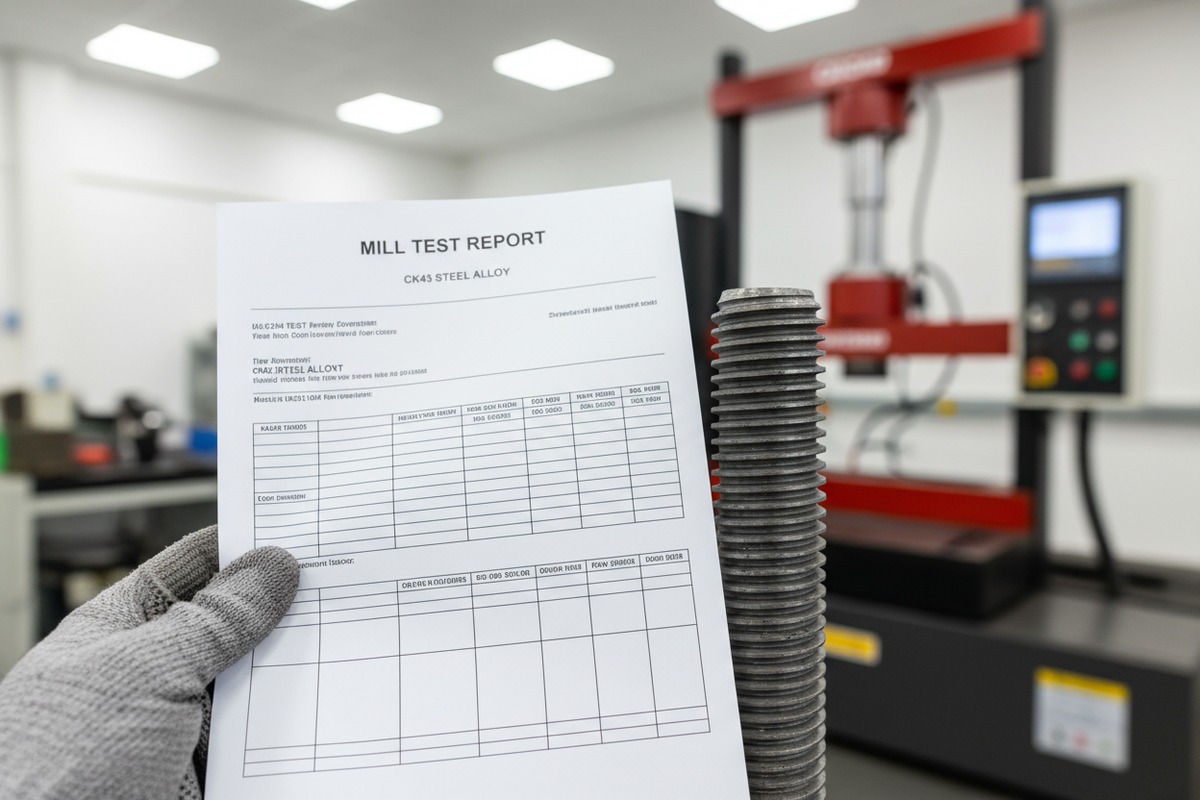
Choose a steel grade with a minimum yield strength matching your design load, typically CK45 or equivalent per EN10083-1, with chemical composition verified through certified Mill Test Reports (MTRs) to ensure predictable ductility and failure behavior under tunnel ground pressures.
Why Steel Grade Is the Foundation of Bolt Performance
Steel grade determines two things: how much load a bolt can carry, and how it will behave when that load is exceeded. In tunnel applications, you need a steel that yields before it snaps. This ductile failure mode 1 gives warning before catastrophic collapse.
Most self-drilling anchor bolts use medium-carbon steels like CK45 or grades conforming to EN10083-1. These steels balance strength and workability. They can be heat-treated to achieve the hardness range needed for both the bar and its accessories.
Key Mechanical Properties to Verify
When you request technical data from a supplier, focus on these numbers:
- Yield strength: The stress at which permanent deformation begins.
- Ultimate tensile strength (UTS): The maximum stress before failure.
- Elongation at break: A measure of ductility. Minimum 6% is standard.
- Hardness (HRC): Couplers should fall in the 23–30 range; nuts 25–30.
Comparing Common Steel Grades for Self-Drilling Anchor Bolts
| Parameter | CK45 (EN10083-1) | Grade 60 (ASTM A615) | 20MnSi |
|---|---|---|---|
| Carbon Content | ~0.45% | ~0.60% | ~0.20% |
| Yield Strength 2 (MPa) | 340–400 | 420+ | 340+ |
| UTS (MPa) | 620–700 | 620+ | 530+ |
| Elongation (min) | 14% | 9% | 16% |
| Typical Use | Anchor bars, couplers | Rebar (not ideal for hollow bars) | General anchoring |
Our team always recommends requesting the full MTR from your supplier. This document traces the steel back to the mill and confirms the exact chemical composition—carbon, manganese, phosphorus, sulfur content—all of which affect weldability, hardness, and long-term fatigue performance.
What About Hardness Standards for Accessories?
Couplers and nuts are often overlooked. But if a coupler fails, your entire bolt string fails. We test every batch of couplers to ensure HRC values stay within 23–30. Nuts are held to HRC 25–30. These ranges ensure the accessories can transfer 100% of the bar's load without cracking or stripping.
A common mistake is assuming all steel is the same. It is not. Two bolts can look identical but have very different chemical compositions and heat treatments. Always verify with documentation—not just visual inspection.
Matching Steel Grade to Tunnel Conditions
In soft ground tunnels, moderate yield strength (around 230 kN for R32) is often sufficient. In hard rock or deep tunnels with high overburden pressure, you need higher-grade steel with ultimate loads exceeding 400 kN. For seismic zones, prioritize elongation and energy absorption over raw tensile strength. A bolt that stretches slightly under a rockburst is safer than one that snaps.
What load capacity specifications should I look for when comparing different anchor bolt suppliers?
When our sales team sits down with contractors from Chile, Norway, or the US, load capacity is always the first number on the table. But not all load ratings tell the full story.
Compare suppliers by verifying both minimum yield load and ultimate tensile load for each bolt size, cross-referencing with the bar's cross-sectional area, weight per meter, and coupling efficiency—ensuring the full system, not just the bar, can deliver the required anchorage force.
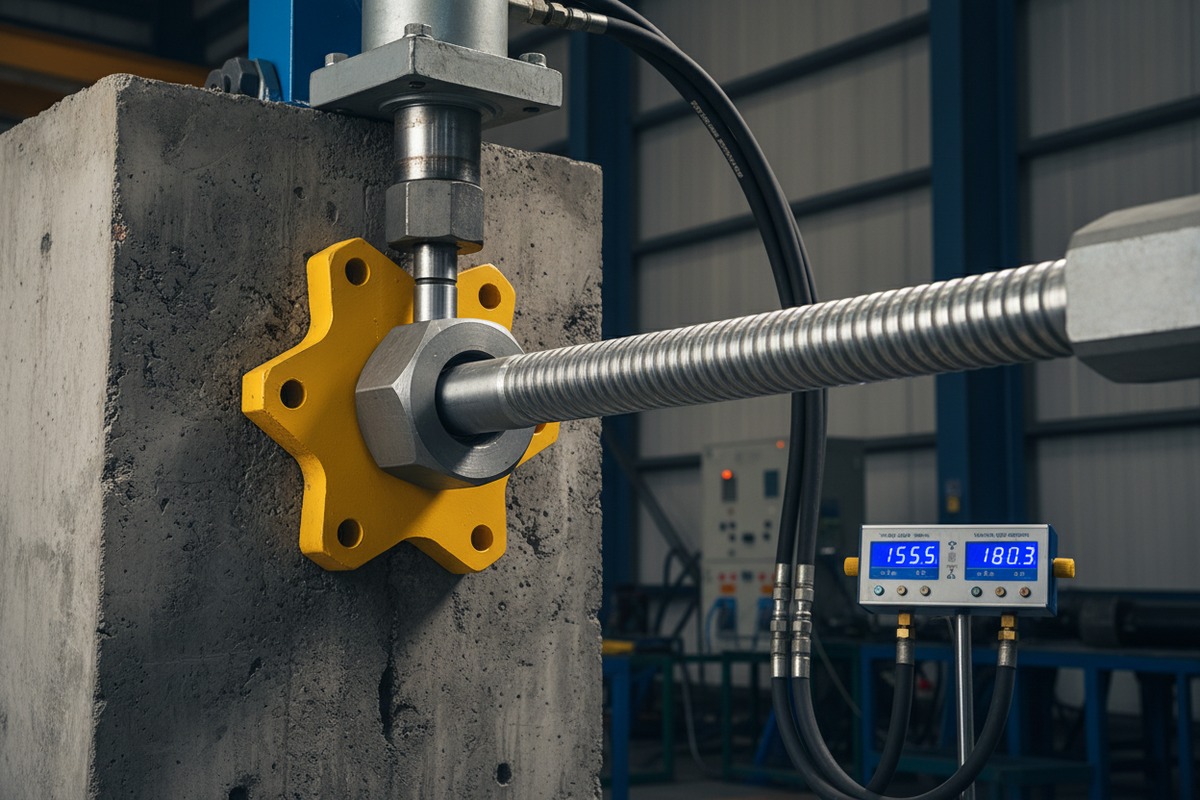
Understanding the Load Capacity Chain
A self-drilling anchor bolt is a system, not a single part. The total load capacity depends on the weakest link in the chain: the hollow bar, the coupler, the nut, the bearing plate, and the grout-to-rock bond. If your coupler transfers only 80% of the bar's capacity, your system capacity is 80%—not 100%.
This is why we always publish system-level load data, not just bar-only numbers.
Load Capacity by Bolt Size: R25 to R51
| Bolt Size | Outer Diameter (mm) | Weight (kg/m) | Min Yield Load (kN) | Min Ultimate Load (kN) |
|---|---|---|---|---|
| R25 | 25 | 2.6 | 150 | 200 |
| R32 | 32 | 3.5 | 230 | 280 |
| R38 | 38 | 4.2 | 280 | 360 |
| R51 | 51 | 5.5 | 400 | 500+ |
These values vary slightly between manufacturers. The important thing is that your supplier provides test certificates—not just catalog claims. Ask for third-party pull-out test results or in-house tensile test data with sample sizes and testing standards referenced.
How to Match Load Capacity to Your Project
Start with your design load. Your geotechnical engineer will specify the required anchorage force per bolt based on tunnel diameter, overburden depth 3, rock mass rating 4 (RMR), and support spacing. Then add a safety factor—typically 1.5 to 2.0 for permanent tunnel support.
For example, if your design calls for 150 kN per bolt with a safety factor of 1.5, you need a minimum ultimate capacity of 225 kN. An R32 bolt at 280 kN ultimate would work. An R25 at 200 kN would be marginal.
The Diameter vs. Cost Trade-Off
Larger bolts are stronger but heavier and more expensive. An R51 bar weighs 5.5 kg/m versus 2.6 kg/m for an R25. In a long tunnel with thousands of bolts, this difference adds up fast—in material cost, shipping weight, and installation time.
Some contractors use smaller R25 or R32 bolts in low-load zones (portal areas, stable rock) and switch to R38 or R51 in fault zones or fractured ground. This mixed approach saves cost without sacrificing safety where it counts.
Inner Diameter Matters Too
The hollow bar's inner diameter controls grout flow. A bar with too narrow an inner bore will resist high-pressure grouting, leading to incomplete grout fill and weak anchorage. But a larger bore means thinner walls and less cross-sectional steel area. This is a real engineering trade-off. Always check that the wall thickness provides enough sectional area for your load requirement while still allowing smooth grout passage.
Which thread profile will offer the best performance for my specific drilling and grouting equipment?
When we design a new anchor bolt product, the thread profile is one of the first decisions our R&D team makes. It affects everything—grout bonding, coupler fit, drilling torque transfer, and equipment compatibility.
For most tunnel applications, the ISO 10208 R-type rope thread provides the best combination of grout bond strength, coupler load transfer, and compatibility with standard rotary-percussive drilling rigs, available in both left-hand and right-hand configurations to suit your equipment.
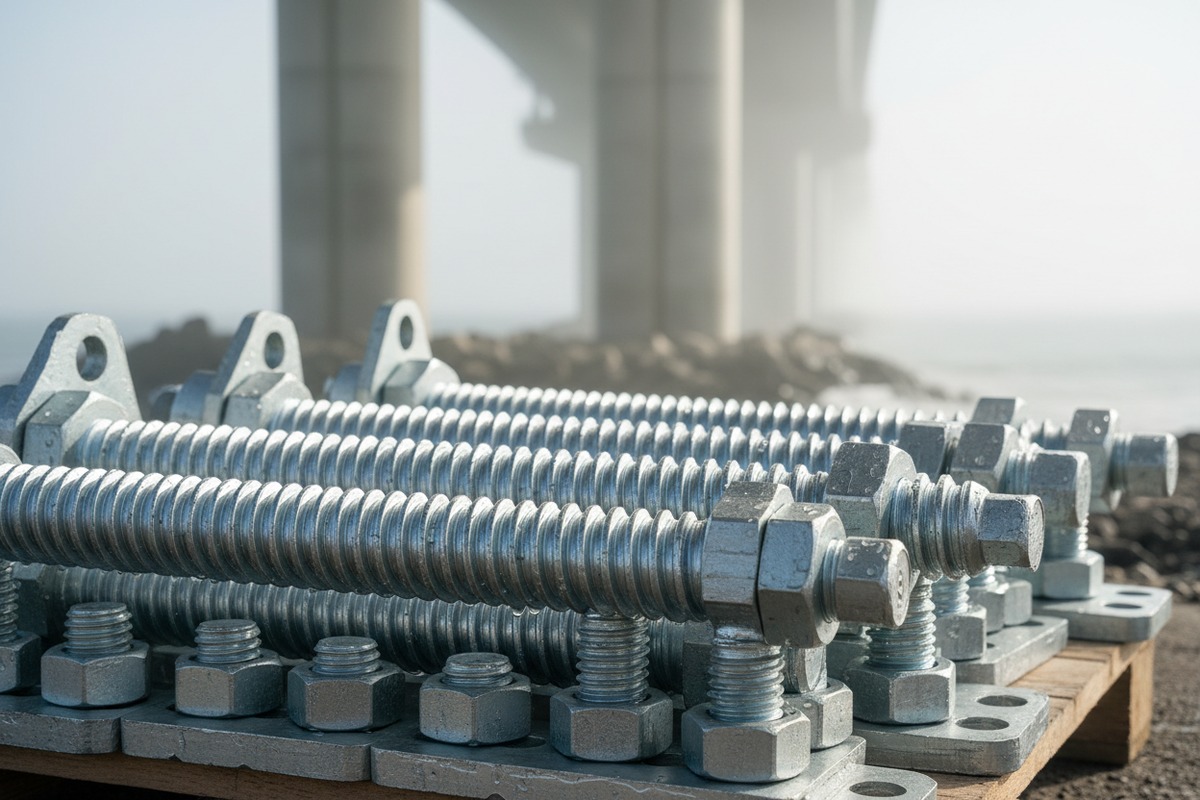
R-Thread vs. T-Thread: What's the Difference?
The two most common thread profiles for self-drilling anchor bolts are the R-thread (rope thread 5 per ISO 10208) and the T-thread (trapezoidal thread). Each has strengths.
The R-thread features a rounded, continuous spiral that creates a deep channel for grout to fill. This maximizes the mechanical interlock between the steel bar and the surrounding grout body. It also provides a standardized fit for couplers, nuts, and adapter sleeves across most equipment brands.
The T-thread has a flatter, wider profile. It transfers torque well and is common in some European systems. However, it tends to have a smaller grout contact surface area per linear meter compared to R-threads.
Thread Profile Comparison
| Feature | R-Thread (ISO 10208) | T-Thread |
|---|---|---|
| Grout Bond Surface | High (deep spiral channel) | Moderate (shallower profile) |
| Coupler Compatibility | Standardized, widely available | Brand-specific in some cases |
| Torque Transfer | Good | Very good |
| Equipment Fit | Most rotary-percussive rigs | Some rigs require adapters |
| Available Sizes | R25, R32, R38, R51 | T30, T40, T52, T76 |
| Standard | ISO 10208 | Varies by manufacturer |
Left-Hand vs. Right-Hand Thread
This detail often gets missed. The thread direction matters when you need to remove a drill bit after installation. If your bar has a right-hand thread and your drill bit screws on with a right-hand rotation, the drilling torque tightens the bit. That's fine during drilling. But if you want to retrieve the bit, you cannot unscrew it without reversing the rotation—and in some rigs, that's not possible.
Left-hand thread bars solve this. The drilling rotation (clockwise) loosens the bit connection, allowing bit retrieval after the hole is drilled. This saves money on expendable bits.
However, in many tunnel applications the drill bit is expendable by design. It stays in the hole. In that case, right-hand thread works perfectly and simplifies the coupler and nut connections.
How Thread Profile Affects Grout Performance
The grout-to-steel bond is critical for load transfer. A deeper thread profile creates more surface area and more mechanical interlock. When the anchor is loaded in tension, the grout "keys" into the thread valleys and resists pull-out.
Our lab tests show that R-thread bolts consistently achieve 10–15% higher pull-out resistance than smooth-bar anchors of the same diameter, purely from the improved grout interlock. This is why threaded hollow bars have largely replaced smooth bars in modern tunnel support.
Matching Thread to Your Rig
Before ordering, confirm the thread specification your drilling rig accepts. Most modern rotary-percussive rigs used in tunneling accept R-type adapters. But older or specialized rigs may need T-type connections. Ordering the wrong thread means your bolts won't connect to your rig's chuck or adapter—a costly mistake that delays the project.
We always ask our customers to send us their rig model and adapter specifications before confirming the thread type. It takes five minutes and prevents weeks of delay.
How can I verify that the corrosion protection will withstand the environmental conditions of my project?
On a recent shipment to a coastal tunnel project in Southeast Asia, the client specifically requested enhanced corrosion testing documentation. The tunnel sat below the water table in chloride-rich soil. Standard protection was not enough. This scenario is becoming more common across our order book.
Verify corrosion protection by requesting test certificates for hot-dip galvanizing thickness per ISO 1461, adhesion testing per ISO 2409 for epoxy coatings, and salt spray test results, then match the protection level to your tunnel's groundwater chemistry, pH, and design service life.
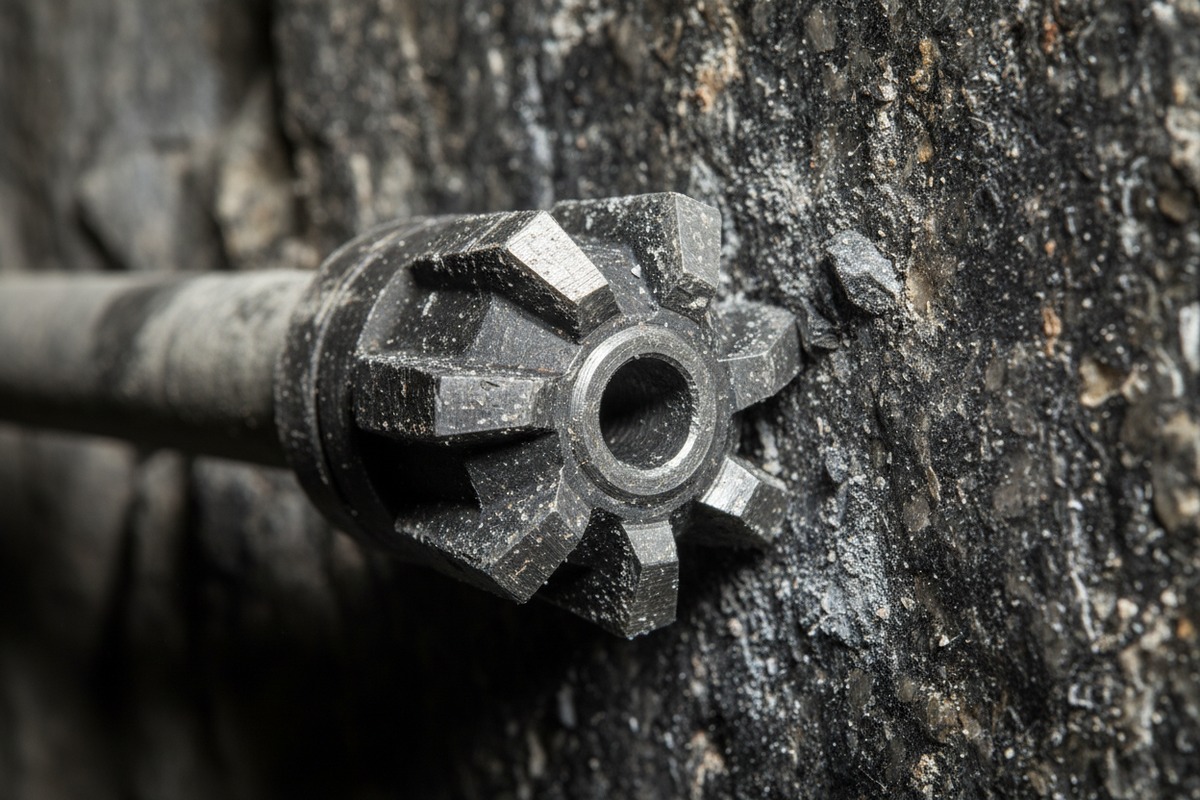
The Three Main Corrosion Protection Methods
Not all tunnel environments are equally aggressive. A dry rock tunnel in stable granite is very different from a subsea tunnel in saline groundwater. The corrosion protection you need depends on the environment.
Hot-Dip Galvanizing (HDG): The bolt is dipped in molten zinc, creating a metallic coating 6 that sacrificially protects the steel. It's the most common protection for permanent anchors. The zinc layer thickness should meet ISO 1461—typically 85 microns minimum for steel sections over 6mm thick. HDG is durable, cost-effective, and well-proven in underground applications.
Epoxy Coating: A polymer coating is applied to the bar surface. It provides a chemical barrier against water and aggressive ions. Adhesion is tested per ISO 2409 (cross-cut test 7) and impact resistance per ASTM D2794. Epoxy works well in moderately aggressive environments but can chip during rough handling or installation.
Duplex Systems: Some projects require both HDG and epoxy. The zinc provides sacrificial protection 8 if the epoxy is damaged, while the epoxy extends the zinc's life by shielding it from direct chemical attack. This is the premium option for 50+ year design life tunnels.
How to Match Protection to Your Environment
Consider these factors:
- Groundwater pH: Below 4.5 or above 9.5 indicates aggressive conditions.
- Chloride concentration: Above 500 mg/L requires enhanced protection.
- Sulfate levels: High sulfate attacks both steel and grout.
- Design life: Temporary support (2–5 years) needs less protection than permanent anchors (50–100 years).
- Temperature: Geothermal tunnels above 60°C can accelerate corrosion and degrade some epoxy formulations.
What Documentation to Request from Your Supplier
Ask for these specific certificates and test results:
- Galvanizing thickness report with measurement method (magnetic or microscopic per ISO 1461).
- Salt spray test results (hours to red rust, per ISO 9227). For HDG, expect 500+ hours minimum.
- Adhesion test for epoxy coatings (ISO 2409 cross-cut, Class 0 or 1 preferred).
- Bend test for coating flexibility (ISO 1519)—confirms coating does not crack when the bolt flexes during installation.
- Chemical resistance data if the tunnel has known acid or sulfate exposure.
The HDG vs. Epoxy Debate
There is an ongoing debate among tunnel engineers about whether hot-dip galvanizing or epoxy is better for wet tunnels. HDG excels in longevity and does not depend on surface preparation as critically as epoxy. However, some engineers worry that the zinc layer can interfere with thread engagement in couplers and nuts. Our experience shows this is manageable—we galvanize after threading and then chase the threads to ensure clean fit.
Epoxy coatings offer excellent chemical resistance 9 and a smooth finish that does not affect thread dimensions. But in field conditions—rough handling, abrasive rock contact during installation—epoxy is more prone to damage. Once scratched through, the bare steel beneath corrodes quickly without sacrificial protection.
For most tunnel projects with moderate groundwater aggression, HDG per ISO 1461 is the reliable default. For highly aggressive environments, duplex coating or stainless steel options should be evaluated despite their higher cost.
Thermal Expansion Compatibility
One often-overlooked factor: the coefficient of thermal expansion 10 for the steel and the grout should be reasonably close. In geothermal tunnels, temperature cycling can cause differential expansion, leading to micro-cracking at the grout-steel interface. This creates pathways for water ingress and accelerates corrosion from the inside out. If your tunnel has temperature variations above 40°C, raise this issue with your design engineer and your bolt supplier.
Conclusion
Selecting self-drilling anchor bolts comes down to matching verified technical parameters—steel grade, load capacity, thread profile, and corrosion protection—to your tunnel's specific geological and environmental demands. Always request certified test documentation from your supplier.
Footnotes
1. ScienceDirect provides authoritative engineering definitions for failure modes in steel. ↩︎
2. Defines the fundamental mechanical property used to select appropriate steel grades for tunnel supports. ↩︎
3. Clarifies the geological factor that determines the required anchorage force in tunnel design. ↩︎
4. Wikipedia offers a comprehensive overview of this standard geotechnical classification system. ↩︎
5. References the ISO 10208 standard for rope threads used in rock drilling and anchoring equipment. ↩︎
6. Explains the science of protective coatings used to prevent corrosion in underground steel structures. ↩︎
7. References the ISO 2409 standard for testing the adhesion of protective epoxy coatings. ↩︎
8. Wikipedia provides a solid foundational explanation of galvanic and sacrificial protection principles. ↩︎
9. Discusses how epoxy coatings protect steel from aggressive groundwater and chemical ions. ↩︎
10. Wikipedia covers the fundamental physics of thermal expansion in materials. ↩︎