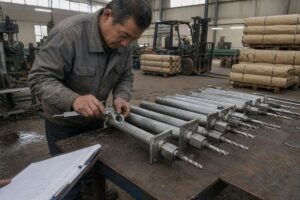
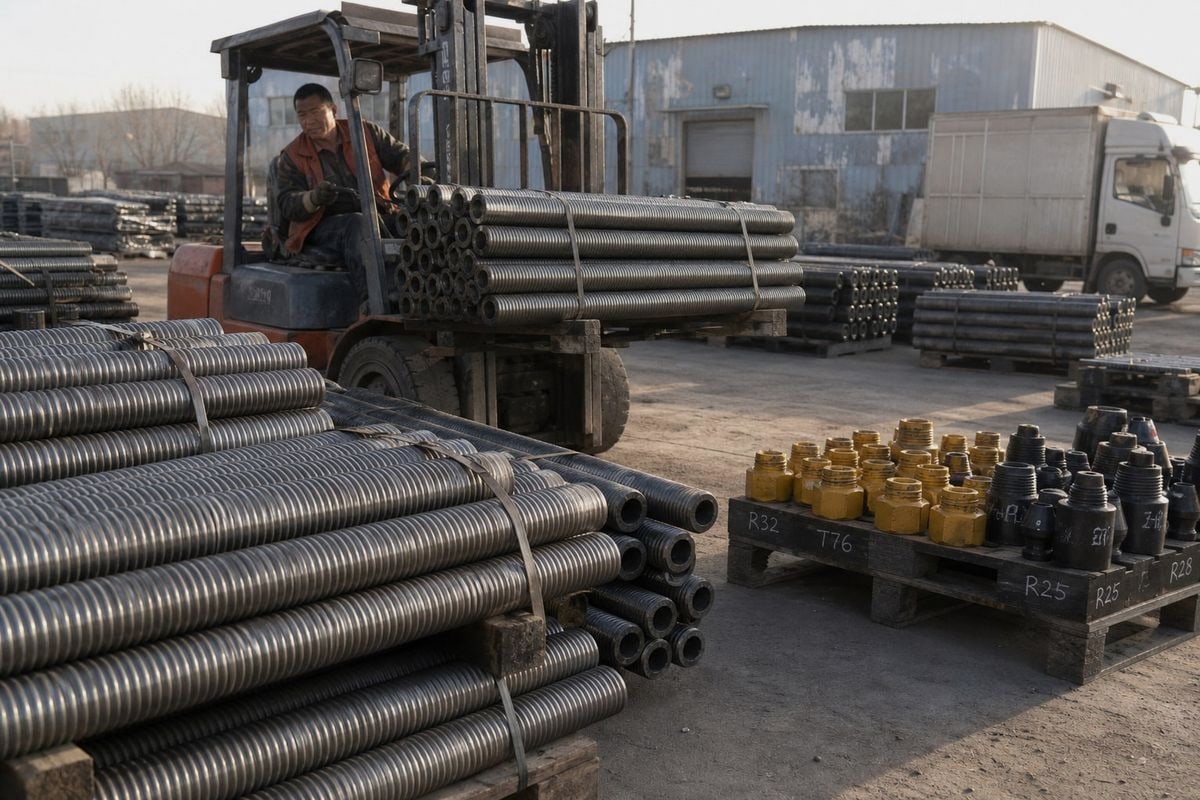
Buyers ask me weekly where self-drilling anchor bolts actually come from in China. Choose the wrong region, and our industry has seen quality failures, shipment delays, and blown project budgets.
Self-drilling anchor bolt manufacturing in China is concentrated in several regional clusters: Handan/Yongnian in Hebei for fastener scale, Jiaxing/Haiyan in Zhejiang, Wuxi and Ningbo along the Jiangsu-Zhejiang coast, Luoyang in Henan for rock-bolt specialization, plus Shandong and Chengdu in Sichuan.
No single province dominates this market. Each hub has different strengths. Let me walk you through how to evaluate them, compare them, and ship from them safely.
How do I evaluate the quality standards of self-drilling anchor bolt manufacturers in these Chinese regions?
A batch of T-thread hollow bars once arrived at our Shandong facility from a subcontractor with thread tolerances outside spec. We rejected the whole lot. That day taught our team why regional quality habits matter.
Evaluate quality by checking whether the manufacturer follows ISO, ASTM, or GB standards, tests ultimate load and yield strength on every batch, controls thread tolerances on R-thread and T-thread hollow bars, and holds documented traceability from raw steel to finished bolt.
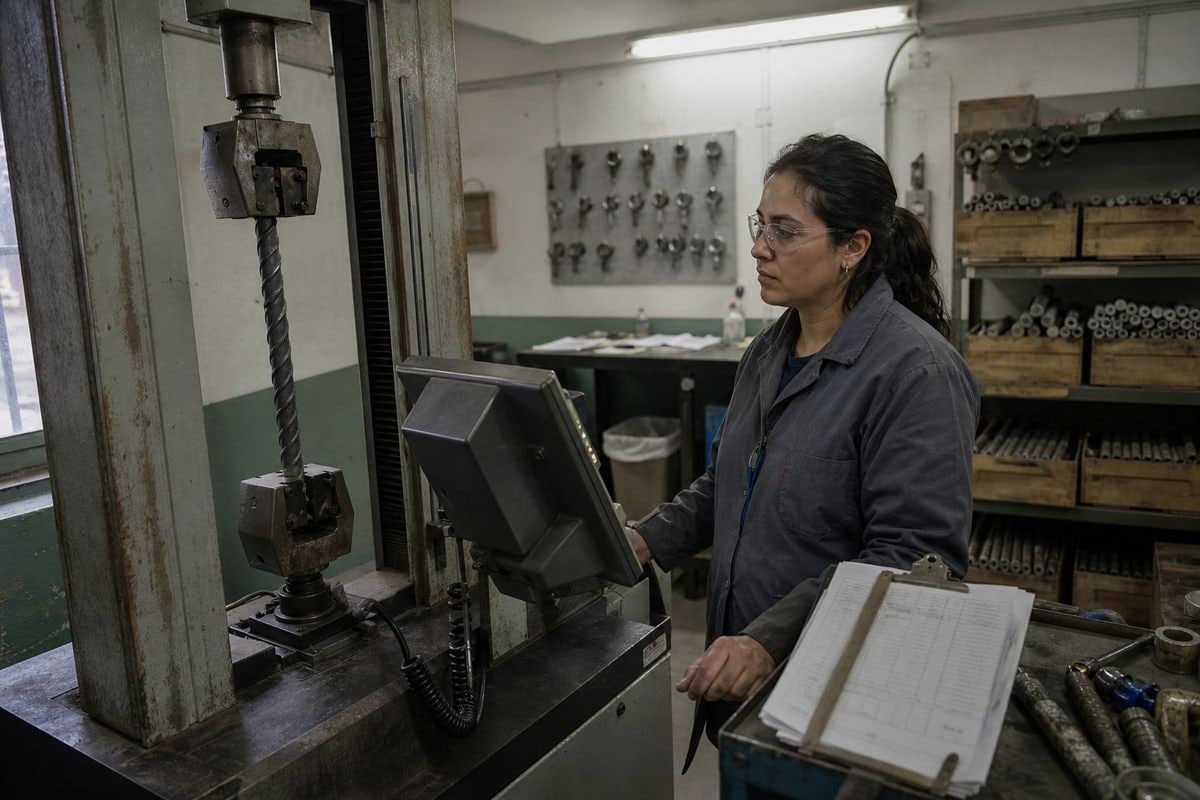
Quality varies more between factories than between regions. Still, regional patterns exist. In Hebei fastener manufacturing clusters like Yongnian, you find enormous volume. Some plants there run rigorous fastener quality standards. Others chase price and cut corners on heat treatment. In Zhejiang anchor bolt suppliers around Jiaxing and Haiyan, the fastener ecosystem is mature, so process control tends to be more consistent. Luoyang in Henan grew around mining ground reinforcement, so its factories usually understand load requirements for tunneling support better than pure fastener plants do.
What to test before you order
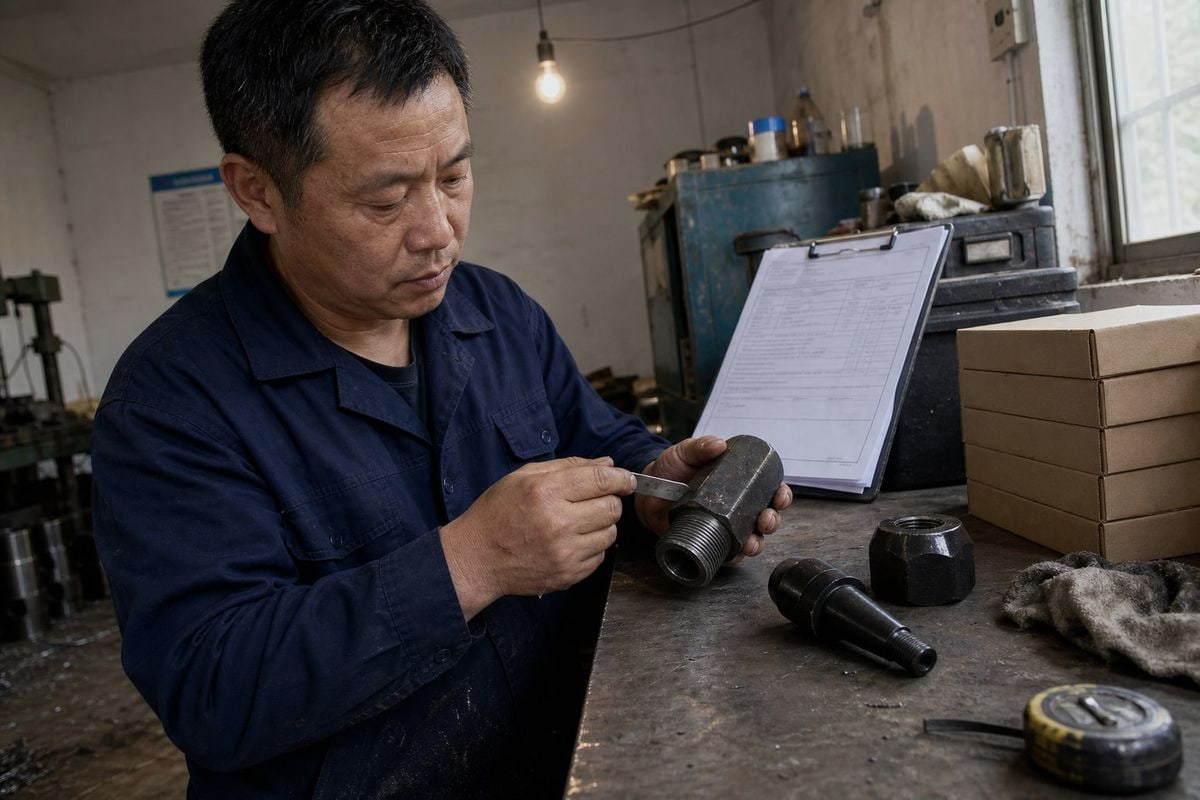
I always tell buyers to demand three things. First, a mill certificate for the steel 1. Second, batch test reports covering ultimate tensile load, yield load, and elongation. Third, thread gauge checks on the R-thread anchor bolts or T-thread hollow bar couplings. A coupler that binds in the field stops a tunnel crew cold.
Regional quality snapshot
| Region | Typical strength | Common risk |
|---|---|---|
| Handan/Yongnian, Hebei | Massive fastener output, low cost | Wide quality spread between plants |
| Jiaxing/Haiyan, Zhejiang | Mature process control | More standard fasteners than geotechnical parts |
| Wuxi/Ningbo, Jiangsu-Zhejiang coast | Export experience, modern equipment | Some listings are traders, not factories |
| Luoyang, Henan | Rock bolt systems expertise | Smaller export volumes |
| Shandong | Balanced production and geotechnical focus | Must verify individual factory capability |
Our own plants run every production lot through pull testing before release. Over 20 years, we have learned that documented QC beats any regional reputation. Ask for the test data, not the sales pitch.
What factors should I consider when comparing production capacity across different Chinese manufacturing hubs?
One trade-off we weigh constantly at our Shandong headquarters is stock depth versus flexibility. Our 30,000-ton annual output and 2,000-ton standing stock exist because tunneling contractors cannot wait for a slow production queue.
Compare capacity by annual tonnage, standing inventory, lead time for custom sizes, whether the supplier is a factory or trader, OEM/ODM capability, and product breadth across hollow bars, couplers, nuts, plates, and drill bits for complete rock bolt systems.
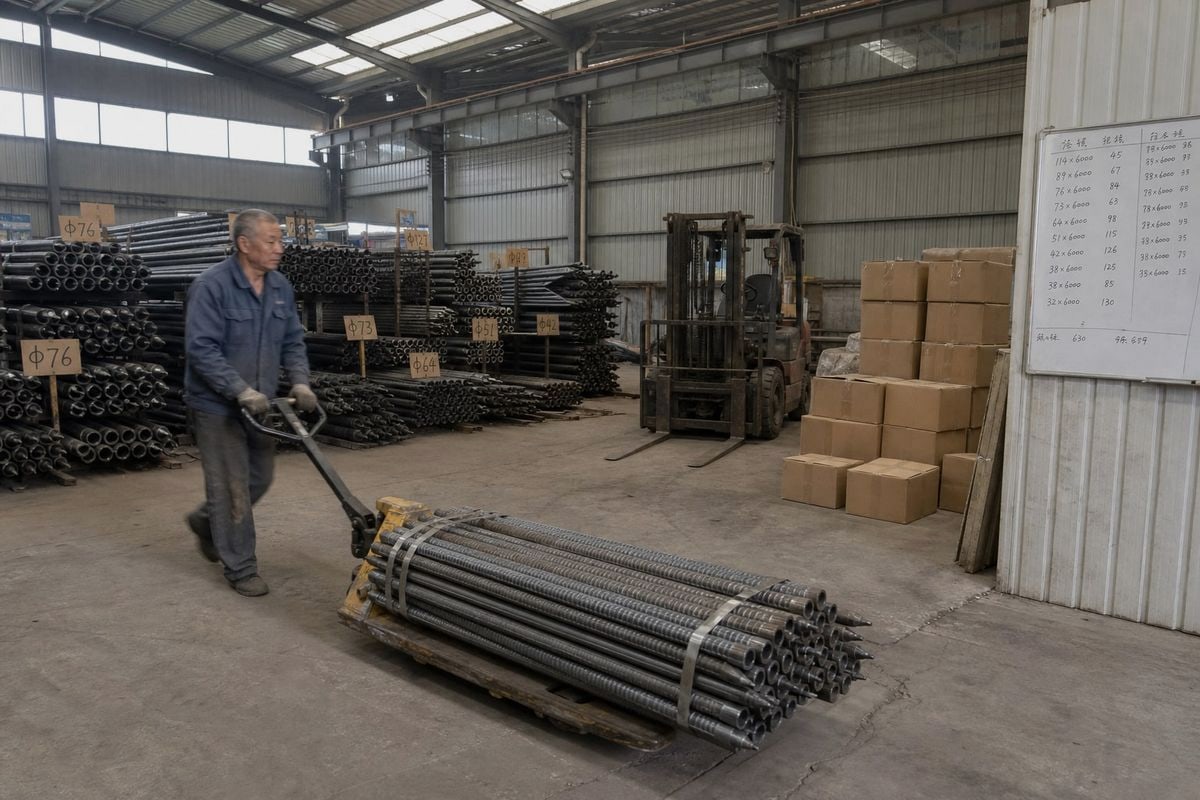
Raw tonnage is only the start. A directory may list 413 suppliers for self-drilling anchor bolts, and one factory database claims over 2,000 verified anchor bolt factories across China. Most of those are not what you need. Many are trading companies. Many make standard construction hardware production items, not geotechnical anchoring systems.
The questions that reveal real capacity
- Do you roll or cut your own threads in-house, or outsource them?
- What is your monthly output for hollow bars specifically, not all fasteners?
- How much finished stock do you hold in common sizes like R32 and T76?
- Can you supply the full system, including sacrificial drill bits, couplers, plates, and nuts?
- What is your lead time for a customized stainless steel anchor bolts order?
Hub-by-hub capacity character
| Hub | Capacity character | Best fit buyer |
|---|---|---|
| Handan, Hebei | Huge volume, standard fasteners dominate | High-volume Chinese fastener export buyers |
| Jiaxing, Zhejiang | One of China's three largest fastener bases | Mixed fastener and anchor orders |
| Wuxi, Jiangsu | Advanced production, customization focus | Engineered SDA systems |
| Luoyang, Henan | Mining and tunneling product depth | Underground support projects |
| Shandong | Integrated systems, export-oriented plants | Complete geotechnical anchoring packages |
In my experience, buyers like EPC contractors care most about lead time reliability. A supplier with real standing stock can ship partial orders immediately while custom items are produced. That single factor has saved more project schedules than any price discount ever did. Ask for a factory audit video or a third-party inspection before you commit serious volume.
How can I ensure reliable logistics and DDP shipping when sourcing from these Chinese regions?
A client from Bosnia and Herzegovina once asked us for full DDP terms. We told him honestly: his country is outside the EU, and DDP there carries high risk. We delivered to a local warehouse instead, and he cleared customs himself. He accepted, and the shipment went smoothly.
Ensure reliable DDP by confirming the destination country supports compliant duty-paid channels, verifying the supplier has a legal Importer of Record solution, avoiding gray-channel low-declaration schemes, and choosing DAP with buyer-side clearance in high-risk markets like Brazil, Russia, or Argentina.
Here is a truth most suppliers will not tell you. In theory, almost every country allows DDP. In practice, it does not work smoothly everywhere. The biggest barrier is that DDP requires a local Importer of Record 2 or fiscal representative in the destination country to pay duties and VAT. In many markets, compliant channels barely exist, so freight forwarders push gray "tax-inclusive" schemes with low declarations. If customs inspects, the shipper eats the seizure, fines, destruction, and demurrage.
Where DDP works well
For the USA, customs requires a local EIN holder as IOR, and a Chinese exporter cannot fill that role directly. US inspections have tightened recently, so for B2B bulk cargo the industry generally recommends DAP, letting the buyer clear customs, pay duties, and deduct input VAT. If a client lacks import qualifications, we can step in: we operate our own importer company in the USA with complete import credentials, and we continuously optimize our DDP double-clearance plans as US and Canadian port inspections tighten. In the EU (Germany, France, Netherlands, Belgium, Italy, Spain, Poland, Czechia) and the UK, DDP needs a fiscal representative plus EORI and VAT; many B2B buyers with their own VAT still prefer DAP for the input-tax deduction. Japan, Korea, Singapore, Malaysia, Thailand, Vietnam, Hong Kong, and Macau have transparent rules and ample compliant DDP channels. Australia and New Zealand work too, but require GST agents and honest declaration—low declarations get reassessed. In the Middle East, the UAE, Qatar, Kuwait, and Saudi Arabia are workable, but Saudi shipments must have SABER/SASO certification or the goods get held.
DDP risk map
| Risk level | Countries | Recommendation |
|---|---|---|
| Mature, stable | EU, UK, Japan, Korea, Singapore, UAE, Australia | DDP viable through compliant channels |
| Workable with caution | USA (needs local IOR/EIN), Saudi Arabia (SABER required) | DAP preferred, or use our US importer entity |
| Elevated risk, assess first | India (IEC + GSTIN required), Philippines, Turkey | Pre-evaluate every shipment |
| Extreme risk, avoid DDP | Brazil, Argentina, Russia, Indonesia, Nigeria, Angola | Use DAP; buyer clears customs |
Brazil is the global DDP disaster zone: extreme combined taxes, zero tolerance on documents, minimum customs valuations, and high inspection rates. Russia enforces EAC certification and AI-driven valuation checks. Indonesia detains uncertified SNI-catalog goods and back-audits low declarations. For any of these, we steer clients to DAP. Whether you ship by sea or air, consult us early on DDP details—we will match the current situation with the safest, most cost-effective routing.
Which certifications should I verify when selecting a self-drilling anchor bolt supplier from these hubs?
Before one Saudi Arabia shipment, our export team spent two weeks confirming SABER documentation. It felt slow. Then a competitor's uncertified container got detained at Dammam, and our client understood why we insist.
Verify ISO 9001 quality management certification, product test reports against ISO, ASTM, or GB standards, mill certificates for steel traceability, CE marking for European projects, SABER/SASO for Saudi Arabia, and third-party load test results from accredited laboratories.
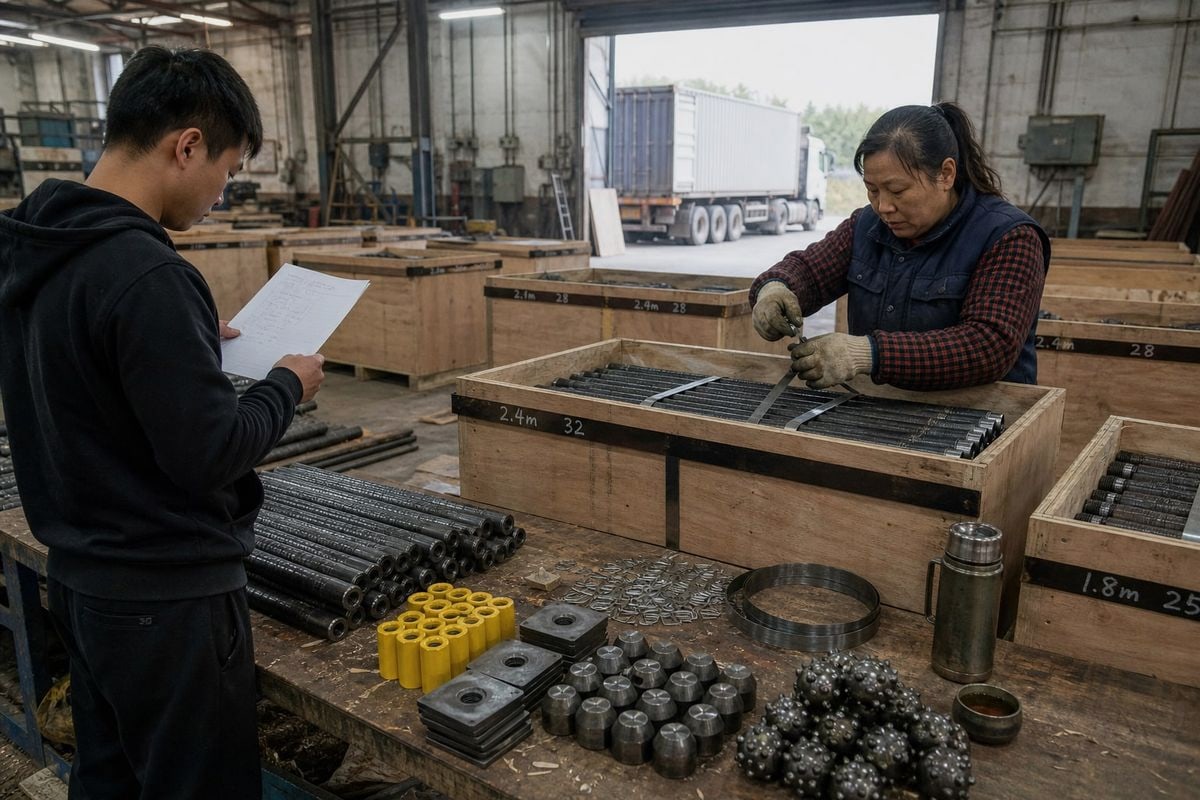
Certificates fall into three layers, and buyers often confuse them. The first layer is factory-level: ISO 9001 shows a documented quality system exists. ISO 9001 quality management certification 3 The second layer is product-level: test reports proving your R-thread anchor bolts meet the stated ultimate load, yield load, and elongation values. The third layer is market-entry: the paperwork your destination country demands before goods clear customs.
Match certificates to your market
Exporting to Europe? Norwegian and Swiss tunneling clients we serve expect CE-aligned documentation and full traceability for tunneling support hardware. Selling into Saudi Arabia? SABER/SASO is not optional—missing certificates mean detained cargo, so confirm them before goods leave the port. Shipping to Russia? EAC certification is mandatory. Indonesia enforces SNI on catalog products. Australia expects honest declarations backed by proper documents for GST processing.
Red flags in the hubs
Some trading companies in large clusters borrow certificates from partner factories. That is dangerous. The certificate holder and the actual producer must match. I recommend three checks. First, verify the ISO certificate number with the issuing body. Second, request test reports dated within the last year, not five-year-old PDFs. Third, for corrosion-critical jobs like slope stabilization near coastlines, ask for salt-spray test data on coatings or specifications for stainless steel anchor bolts. Suppliers rooted in geotechnical anchoring, rather than general fastener trading, usually produce this paperwork within a day. If a supplier stalls for a week, that delay itself is your answer.
Conclusion
China's self-drilling anchor bolt hubs—Hebei, Zhejiang, Jiangsu, Henan, Shandong—each offer distinct strengths. Verify quality data, real capacity, market certifications, and safe DDP routing before you buy.
Footnotes
1. Defines what a mill test report is and its role in material traceability. ↩︎
2. Explains the legal entity responsible for customs compliance in international shipping. ↩︎
3. Explains the international standard for quality management systems. ↩︎
4. Original Wikipedia page for fastener standards was inaccessible (HTTP 403). This is a general Wikipedia page on technical standards, which encompasses ISO, ASTM, and GB standards. ↩︎