

Setting a price adjustment clause 1 for self-drilling anchor bolt contracts saved several of our long-term buyers from painful renegotiations. Steel spikes hit fast. Fixed quotes crack. A clear clause protects everyone.
To set a price adjustment clause for self-drilling anchor bolt contracts, define the covered cost components, pick an objective steel or fabricated-metal index, fix a base date and price, set a trigger threshold, allow up-and-down adjustments, require written notice with evidence, and cap total movement.
That is the short answer. Now let me show you how each piece works in practice, based on the supply agreements we sign with contractors and distributors every year.
How do I structure a price adjustment clause to protect against raw material cost fluctuations?
A few years back, a tunneling contractor in Chile asked our team to hold a fixed price for eighteen months hot-dip galvanizing 2. Steel rebar coil jumped mid-project. We both learned why structure matters.
Structure the clause around five parts: the specific materials covered (steel, coatings, freight), a defined base price and base date, a trigger threshold such as a 5% index change, a transparent adjustment formula, and symmetrical caps that limit both increases and decreases.

Self-drilling anchor bolts are steel-intensive products steel Producer Price Index 3. The hollow bar, the sacrificial drill bit, the coupling, the nut, and the bearing plate are all exposed to raw material costs. In our cost sheets, steel typically drives the largest share of the unit price Fabricated structural metal index 4. So the clause must name steel explicitly, not hide behind vague "market conditions" language.
Name the covered cost components
A workable clause lists exactly what can move the price. In our contracts, we usually cover the hollow steel bar 5, hot-dip galvanizing or epoxy coating inputs, and ocean freight. We usually exclude our own margin, packaging, and overhead. That keeps the clause honest and easy to audit. Vague "price subject to change" wording invites disputes. Precise contractual provisions prevent them.
Set the base, the trigger, and the cap
The formula only works if the starting point is clear. Fix the base index value on the quotation date or the contract signing date, and write that number into the contract. Then add a deadband. Federal procurement models are a useful reference here: the FAR economic price adjustment framework 6 requires a minimum net change (around 3%) before any adjustment, and caps increases at 10% of the original unit price. Private construction contracts do not need to copy those exact numbers, but the logic is sound.
Here is the skeleton we recommend:
| Clause element | What to specify | Typical example |
|---|---|---|
| Covered items | Steel bar, coating, freight | Hollow bar steel only |
| Base reference | Index value on a fixed date | PPI steel value at signing |
| Trigger threshold | Minimum change before adjustment | ±5% from base index |
| Review frequency | When recalculation happens | Quarterly or per release order |
| Direction | Up and down | Symmetrical escalation and de-escalation |
| Cap / floor | Maximum total movement | ±10% of original unit price |
| Notice | Written, with evidence | 30–60 days with index data |
One more point. The adjustment should apply only to future deliveries or future release orders, never to shipments already completed. That single sentence has ended more arguments than any other line in our supply agreements.
What index or benchmark should I use to calculate self-drilling anchor bolt price adjustments?
When our export team quotes DDP shipments to the USA, buyers often ask which benchmark we track. The honest answer: no single index fits every anchor bolt contract perfectly.
Use a published, objective index that closely tracks the dominant cost input — typically a steel Producer Price Index category or a fabricated structural metal index. Alternatively, use documented actual costs via mill certificates and invoices, and always name a fallback index in the contract.

The guiding rule from procurement guidance is simple: the index should be closely related to the unstable cost component. For self-drilling anchor bolts, that component is steel bar and tube. But "steel" is not one price. Alloy grades, thread rolling, heat treatment, and proprietary coatings each have distinct supply chain vulnerabilities. So you should match the benchmark to your actual bill of materials.
Compare your benchmark options
| Benchmark type | Best for | Strengths | Weaknesses |
|---|---|---|---|
| Steel PPI (e.g., steel mill products) | Contracts where raw bar dominates cost | Published, neutral, hard to manipulate | May lag spot prices; may not match your alloy |
| Fabricated structural metal PPI | Finished bolt assemblies | Reflects fabrication labor too | Broader basket, less steel-sensitive |
| Regional steel price reports (CRU, SteelBenchmarker) | International supply | Tracks real trade prices | Subscription cost; regional mismatch risk |
| Actual documented costs (invoices, mill certs) | Small or custom orders | Exact, project-specific | Heavy paperwork; buyer must trust supplier data |
Use a weighted basket when one index is not enough
A single steel index rarely mirrors a full material cost index for a finished anchor bolt system. Many of our larger contracts use a weighted formula instead:
Adjusted Price = Base Price × [0.70 × (Steel Index ÷ Base Steel Index) + 0.20 × (Labor Index ÷ Base Labor Index) + 0.10 × (Freight Index ÷ Base Freight Index)]
The weights must match the real cost structure, not a guess. When a buyer's engineering design institute audits our quotation, they check whether the 70/20/10 split reflects our actual production economics. If steel is only 55% of your cost, do not sign a 70% steel weight.
Two more cautions. First, address tariffs and trade policy separately. Broad economic indicators do not capture a sudden duty change on Chinese steel products, and our US customers know this pain well. Second, always include a fallback: if the named index is discontinued or materially revised, the parties agree to substitute the closest successor index. Without that line, one government statistical change can void your whole mechanism.
How can I negotiate a fair price adjustment clause with my rock bolt supplier?
Last year, a procurement manager from a US distributor pushed back hard on our proposed escalation clauses. Her worry was fair: she resells to contractors on fixed-price agreements and cannot pass every increase downstream.
Negotiate fairness by demanding symmetry (prices fall when the index falls), a deadband the supplier absorbs, a hard cap on total escalation, verification rights over the supplier's calculations, and clarity on whether adjustments apply to all quantities or only future release orders.
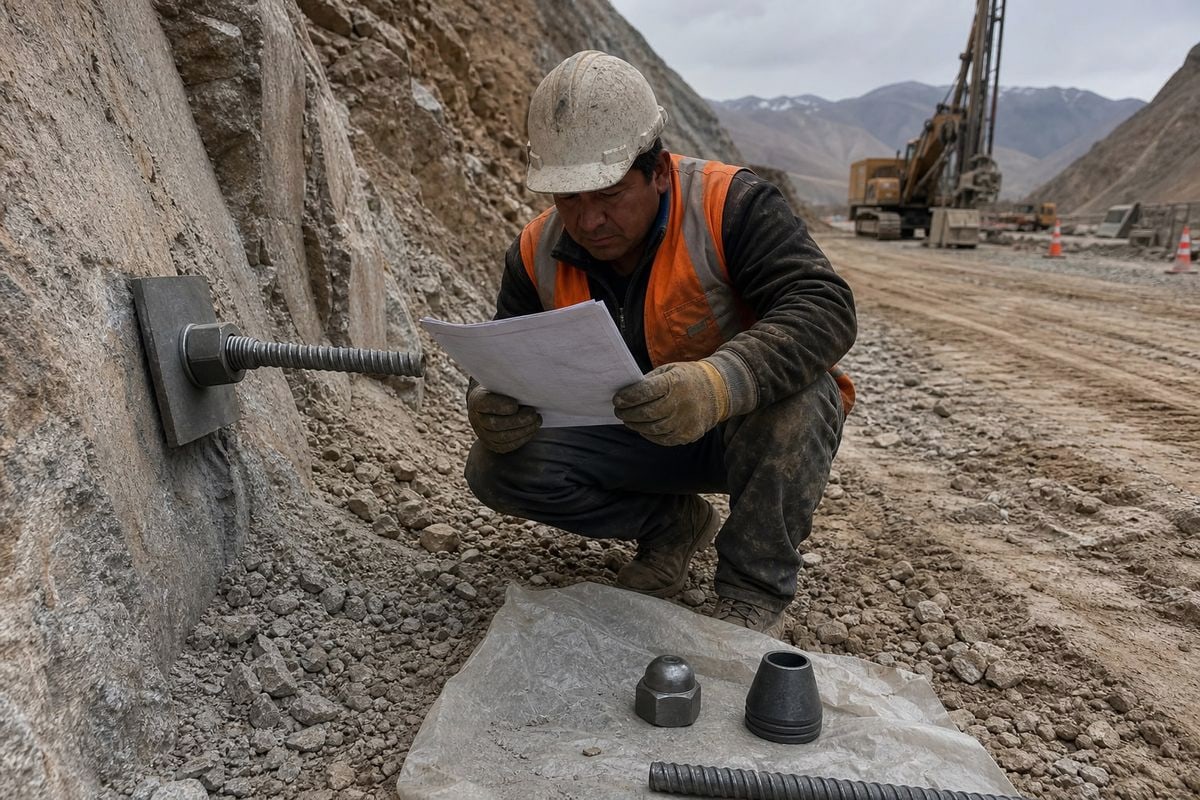
Both sides come to this table with real objections. Buyers argue adjustment clauses reduce price certainty and add administrative burden. That objection deserves a direct answer: without a clause, a supplier must either bake a large risk contingency into every quote or refuse long lead-time commitments entirely. You end up paying for volatility either way — the clause just makes the payment visible and refundable. A narrowly tailored, index-based clause protects both sides more cheaply than blanket escalation language or padded fixed pricing.
Key negotiation points, in order of leverage
- Symmetry. Insist that de-escalation works exactly like escalation. If steel drops 8%, your price drops by the formula. Any supplier who resists downward adjustment is asking for insurance, not fairness.
- The deadband. Agree that the supplier absorbs the first few percentage points of movement — say 3–5% — before any adjustment triggers. This kills administrative churn on minor index noise.
- Risk sharing above the trigger. Some contracts split movement beyond the threshold, for example 50/50, or have the buyer absorb changes only above a defined band. This pass-through sharing structure is common in broader procurement and works well for annual supply frameworks.
- Scope of quantities. Decide whether an adjustment hits all undelivered quantities or only orders released after the adjustment date. For contractors on staged geotechnical engineering projects, per-release adjustment usually aligns better with billing.
- Inclusions and exclusions. Nail down whether freight, tariffs, coatings, packaging, and overtime labor cost adjustments are inside or outside the formula. Ambiguity here is where disputes breed.
- Verification. Reserve the right to check the supplier's math against the published index, and require supporting data with every notice.
From our side of the table, we actually welcome buyers who negotiate hard on these points. A clause both parties understand and trust is the foundation of the long-term cooperation that our best customers — and our production planning — depend on.
What common mistakes should I avoid when drafting a price escalation clause for my supply contract?
Reviewing draft contracts from new buyers, our sales team keeps seeing the same handful of drafting errors repeat across countries and project types. Most are cheap to fix before signing.
Avoid vague "subject to change" language, one-directional escalation, missing base dates, mismatched indices, no trigger threshold, no cap, no fallback index, and clauses that conflict with the contract's payment terms, delivery milestones, or change-order process.

The most damaging mistake is treating the clause as boilerplate. Escalation clauses in construction contracts fail when they are copied from an unrelated agreement and never mapped to the actual product. A clause written for concrete supply will not administer well for threaded hollow-bar systems. Below is a checklist built from the errors we see most often.
Mistake-and-fix checklist
| Common mistake | Why it hurts | The fix |
|---|---|---|
| "Prices subject to market change" | Unenforceable, invites disputes | Use a named index and formula |
| Escalation-only clause | One-sided; buyers resist or litigate | Make adjustments symmetrical |
| No base date or base index value | Formula has no starting point | Write the base number into the contract |
| No trigger threshold | Constant recalculation, admin churn | Add a 3–5% deadband |
| No cap or floor | Unlimited exposure for one party | Set a collar, e.g., ±10% |
| Index mismatch | Adjustments drift from real costs | Match index to the bill of materials |
| No fallback index | Clause dies if index is discontinued | Name a successor-index rule |
| Copying FAR clauses verbatim | Federal models fit federal procurement | Use FAR as a model, adapt for private deals |
| Conflict with payment terms | Two clauses give two answers | Align with milestones and change orders |
| No documentation duty | Claims cannot be verified | Require notice, index data, and evidence |
Align the clause with the rest of the contract
A price escalation clause never operates alone. It must reconcile with the payment basis, the delivery schedule, and the change-order process. If your contract pays against shipment milestones but the clause adjusts quarterly, you need a rule for orders straddling an adjustment date. Also think beyond the purchase order: on long infrastructure programs, initial material price fluctuations can ripple into lifecycle costing for maintenance and replacement stock, so distributors holding safety inventory should decide whether stocked goods reprice.
Finally, keep the administration realistic. A notice window of 30–60 days with supporting data is standard and workable. Some of our larger customers now use digital contract management tools to monitor indices automatically, which turns trigger identification from a monthly argument into a shared dashboard. That is good risk mitigation at almost no cost.
Conclusion
Steel volatility will not wait for your project schedule. Left unmanaged, supply chain volatility turns fixed quotes into disputes and delays. A well-drafted price adjustment clause solves this: name the covered inputs, anchor a base date, pick a matching index, set triggers and symmetrical caps, and require documented notice. In our two decades supplying self-drilling anchor bolt systems to contractors across Europe, the Americas, and Asia-Pacific, the contracts with clear, index-based contract price adjustments have consistently produced the longest and calmest partnerships. If you want a sample clause tailored to your project's cost structure, our team is happy to share what has worked.
Footnotes
1. Replaced with an authoritative legal definition from Cornell Law School. ↩︎
2. Describes the process and benefits of hot-dip galvanizing for corrosion protection. ↩︎
3. Provides official data and information on the Producer Price Index for steel mill products. ↩︎
4. Provides official data and information on the Producer Price Index for fabricated structural metal. ↩︎
5. Replaced with a manufacturer's product page for hollow bars. ↩︎
6. Provides the official text and details of the Federal Acquisition Regulation clause. ↩︎